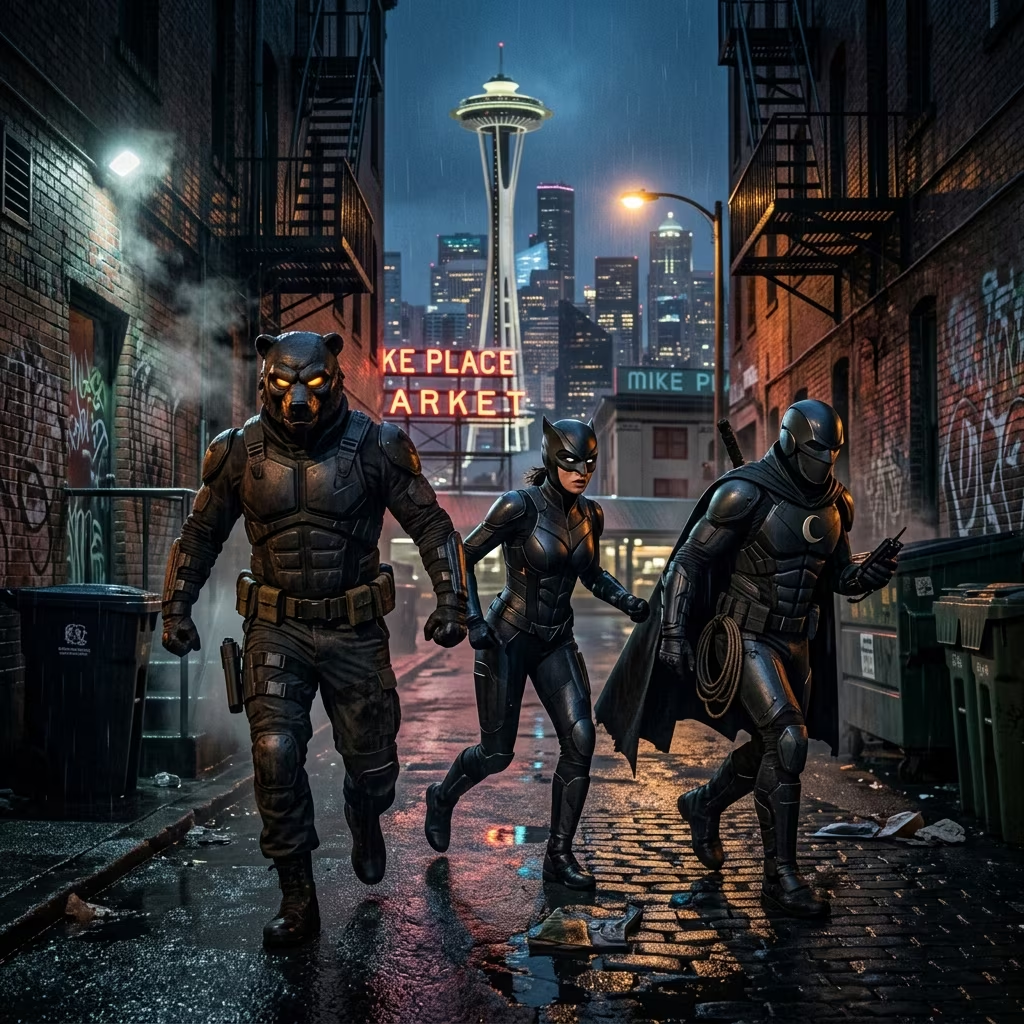
In recent years, Seattle has gained a peculiar distinction: it became one of the most visible hubs for real-life superheroes—ordinary citizens who don masks, capes, and tactical gear to patrol the streets at night. Inspired by comic books but grounded in real urban challenges, these costumed figures step into neighborhoods, claim to deter crime, and offer help where they believe traditional systems fall short.
This article explores the world of Seattle’s costumed vigilantes: why they emerged, how they operate, what the law says about citizen crime-fighting, and the complex mix of admiration and concern they provoke among police, residents, and legal observers.
From Comic Panels to City Streets
The idea of ordinary people putting on costumes to fight crime has long belonged to the realm of fiction. Yet in Seattle, that concept took a tangible form when a handful of residents began patrolling the city at night, most notably under the banner sometimes described as a superhero movement.
Among these figures, one of the best-known personalities has been Phoenix Jones, a mixed martial artist who adopted a superhero persona and led a citizen patrol group based in Seattle. He and other costumed volunteers claimed to respond to assaults, robberies, and disturbances, sometimes arriving on scenes before police and intervening to protect bystanders.
- Visual identity: Distinct costumes, masks, logos, and color schemes to stand out—and, they say, to deter crime by presence.
- Night patrols: Regular late-night walks or drives through areas viewed as hotspots for street crime.
- Self-defined missions: Activities ranging from breaking up fights and reporting crimes to handing out supplies to homeless residents.
While these individuals see themselves as part of a civic-minded tradition, their methods raise questions about where responsible community engagement ends and risky vigilantism begins.
Why Do Citizens Become Costumed Crime Fighters?
The motivations behind Seattle’s night vigilantes are layered and often deeply personal. Interviews and coverage of real-life superheroes across U.S. cities suggest a blend of moral conviction, frustration with crime, and a desire for meaning or identity in public life.
Perceived Gaps in Public Safety
Many costumed volunteers argue that they step in because they see everyday crime and disorder that, in their view, is not adequately addressed. They point to street assaults, public intoxication, harassment, and theft as issues that demand a more immediate local response.
In urban areas, law enforcement agencies must prioritize calls and cannot station officers on every corner. This reality sometimes fuels the sense that citizens should help fill the gap, whether by reporting incidents or attempting direct intervention.
Symbolism and Moral Messaging
Adopting a superhero persona offers a powerful symbolic platform. By wearing a costume and pseudonym, these individuals project a message about responsibility and courage, hoping to inspire others to speak up or assist when crimes occur.
- Visibility: A unique outfit makes them instantly recognizable to local residents during patrols.
- Deterrence through presence: Some believe that visible guardians can discourage opportunistic crime.
- Narrative of heroism: The superhero frame helps communicate values of protection, altruism, and civic duty.
Personal Identity and Community Belonging
For some participants, joining or forming a superhero-style patrol creates a sense of belonging and purpose. Taking part in a group with shared rules and missions can be energizing, especially in cities where people may feel disconnected from neighbors or institutions.
However, this powerful sense of mission can also encourage individuals to overestimate their capacity to handle dangerous situations, which is one reason authorities emphasize caution and legal boundaries.
How Costumed Vigilantes Operate on the Ground
Seattle’s real-life superheroes are diverse in background, but media coverage offers a rough portrait of how such patrols typically function.
Patrol Routines and Tools
Many costumed citizens patrol areas with nightlife, bars, and high foot traffic, where fights and disturbances are more likely. They often move as small teams, combining walking patrols with vehicle support.
| Typical Activity | Purpose | Key Risks |
|---|---|---|
| Walking nighttime routes | Visibility, early detection of conflicts | Confrontations with intoxicated or armed individuals |
| Observing and calling police | Reporting crimes, providing information | Misinterpretation by officers or suspects |
| Verbal intervention in fights | De-escalation, protecting bystanders | Escalation into physical violence |
| Providing aid (e.g., basic supplies) | Community assistance, goodwill | Limited training in health or social services |
Equipment varies, but responsible groups typically avoid firearms, relying instead on cell phones, flashlights, and sometimes defensive gear. Police agencies and legal experts stress that possession and use of weapons dramatically changes legal risk and potential criminal liability.
Relationship with Law Enforcement
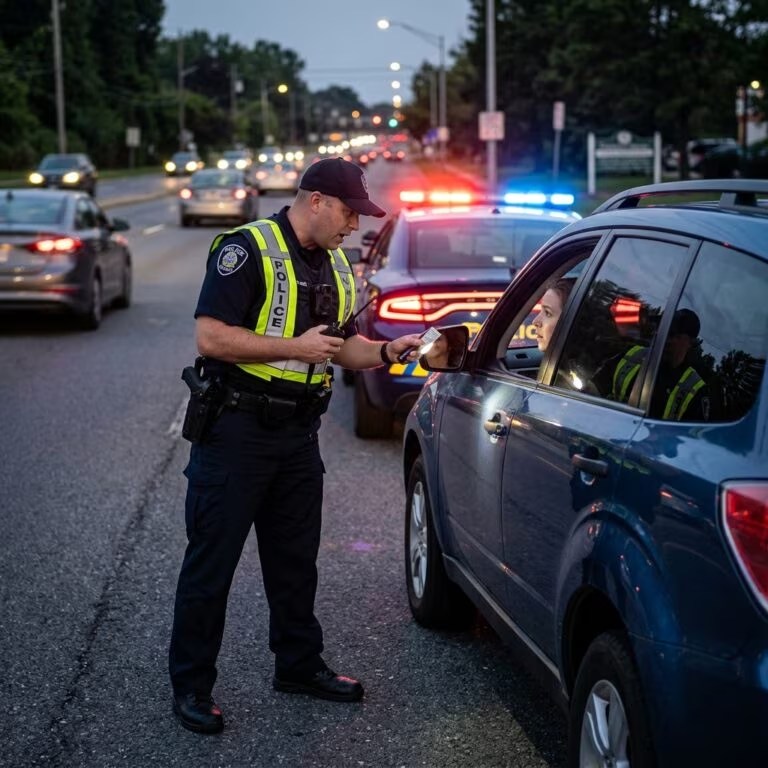
Seattle police, like many departments, have expressed ambivalence about costumed patrols. On one hand, they support citizens reporting crime and acting as witnesses. On the other, they warn against physical intervention that could endanger both the vigilantes and the public.
Law enforcement concerns often include:
- Interference with investigations: Untrained intervention can disrupt crime scenes or complicate evidence collection.
- Misidentification: Officers arriving on scene may mistake costumed citizens for suspects, especially in chaotic environments.
- Liability and injury: Severe harm to vigilantes—or to people they confront—can trigger complex legal consequences.
Legal Boundaries: Where Civic Duty Ends and Vigilantism Begins
Under U.S. law, ordinary citizens are not prohibited from observing public behavior, calling police, or, in some circumstances, performing a citizen’s arrest. However, they must obey the same criminal statutes and civil liability rules as everyone else. Dressing like a superhero does not grant new legal powers.
Citizen’s Arrest and Use of Force
States differ in how they regulate citizen’s arrest, and the rules can be technical and narrow. As a general principle, civilians acting to detain others risk legal exposure if they use unreasonable force, misidentify an innocent person, or fail to contact authorities promptly.
Academic and legal analyses emphasize that untrained individuals are more likely to make mistakes under stress, increasing the chance of wrongful detention or injuries. When those mistakes occur, courts may view them as assault, false imprisonment, or other offenses.
Vigilantism vs. Community Policing
Scholars sometimes distinguish between vigilantism—private, often illegal punishment or coercion—and constructive community policing, which focuses on cooperation with official agencies and non-violent prevention.
- Community policing-style actions: Reporting crimes, escorting vulnerable individuals, organizing neighborhood watch, offering information to authorities.
- Vigilante-style actions: Seeking out suspects, initiating confrontations, administering unofficial punishment, or ignoring police instructions.
Seattle’s costumed crime fighters occupy a contested middle ground. Some emphasize de-escalation and reporting, while others have been involved in more direct confrontations, raising the specter of vigilantism.
Safety Concerns and Ethical Questions
Beyond legal technicalities, costumed citizen patrols raise ethical questions about risk, responsibility, and public perception. Police departments and public safety experts highlight several pressing concerns.
Risk of Injury and Escalation
Engaging in street-level conflict is inherently dangerous. Individuals may face armed opponents, intoxicated people who act unpredictably, or groups that turn on them. Even trained fighters, like some members of Seattle’s superhero scene, cannot fully control outcomes when a situation spirals.
Authorities worry that costumed vigilantes may underestimate dangers or assume that protective gear and martial arts skills are enough. When serious injuries occur, not only do individuals suffer, but emergency responders must dedicate resources that might have been avoided through earlier police involvement.
Public Trust and Fear
Some residents enjoy seeing colorful guardians on the streets and feel safer knowing that others are watching out for trouble. Others perceive masked figures as unsettling, especially if they cannot easily distinguish them from potential offenders.
Trust is critical to public safety. If citizens begin turning to vigilante groups instead of calling police, it may shift expectations about who handles crime, potentially undermining coordinated responses that law enforcement agencies rely on.
Representation and Accountability
Police departments and city officials are accountable to elected leaders, oversight bodies, and, ultimately, courts. Costumed citizen groups, by contrast, often operate informally, without clear mechanisms for complaint or discipline.
- No formal training standards: Members may vary widely in judgment and skill.
- Limited transparency: Decision-making processes are rarely public.
- Weak accountability: Aside from general law, there may be no internal checks on behavior.
This structural gap magnifies concerns that well-intentioned actions might slide into coercion or bias, especially in tense situations.
Benefits and Contributions: Can Real-Life Superheroes Help?
Despite the risks, supporters argue that costumed vigilantes offer distinctive benefits to the communities they patrol. Media reports and interviews have documented cases where citizen heroes helped stop assaults or robbery attempts and provided valuable witness information.
Crime Deterrence and Rapid Response
Having recognizable guardians visible on streets may discourage impulsive violence or property crimes. Even when they do not intervene physically, their presence can prompt potential offenders to reconsider actions, especially in crowded nightlife districts.
Moreover, citizen patrols can sometimes react faster than distant responders. A small team walking a neighborhood may encounter trouble and immediately call police, shortening the time between incident and official response.
Community Engagement and Volunteerism
Beneath the masks, many real-life superheroes view their mission as broader than crime fighting. They often promote volunteerism, organize charity efforts, and encourage residents to check on neighbors, report vandalism, or support local resources.
- Distributing food, clothing, or basic supplies to unhoused residents.
- Encouraging safer nightlife practices, such as walking in groups and avoiding high-risk areas.
- Building informal networks of shopkeepers and residents who quickly communicate about local problems.
In these roles, citizen heroes resemble traditional neighborhood watch programs—only with more dramatic branding.
Comparing Real-Life Superheroes to Neighborhood Watch
To understand Seattle’s vigilantes, it helps to compare them with more conventional community safety initiatives, such as neighborhood watch programs widely promoted by law enforcement agencies.
| Aspect | Real-Life Superheroes | Neighborhood Watch |
|---|---|---|
| Appearance | Costumes, masks, distinctive logos | Ordinary clothing, often discreet |
| Formality | Informal, self-organized groups | Structured, often supported by police |
| Main activities | Patrols, deterrence, occasional intervention | Observation, reporting, information sharing |
| Training | Varies widely; some have combat skills | Basic guidance from police or community groups |
| Legal risk | Higher if involved in confrontations | Lower, focused on reporting and prevention |
While the aesthetics differ sharply, the underlying goals—safer streets, empowered residents, closer attention to local problems—overlap. The key distinctions involve methods, risk tolerance, and integration with official institutions.
Guidelines for Responsible Citizen Crime-Fighting
Experts in policing and public safety emphasize that citizens can help improve security without putting themselves in unnecessary danger or stepping over legal lines. For individuals tempted by the superhero model, several guidelines are crucial.
- Prioritize observation over confrontation: Watch, document, and report, rather than physically intervene whenever possible.
- Coordinate with police: Inform local authorities about organized patrols and follow their guidance.
- Avoid weapons: Carrying firearms or offensive weapons greatly increases risk and liability.
- Learn de-escalation: Basic training in conflict de-escalation and first aid can be valuable.
- Respect privacy and rights: Avoid profiling, harassment, or recording people unnecessarily.
For some, this path may look less dramatic than donning a mask and diving into fights. Yet it aligns better with both public safety and legal norms, making it more sustainable over time.
FAQs: Real-Life Superheroes and the Law
Are costumed vigilantes legal in Seattle?
Wearing a costume in public is generally lawful, provided it does not conceal identity in violation of specific mask or disguise laws and does not facilitate crime. However, any actions taken while in costume—such as using force or detaining people—must comply with state and local laws on assault, false imprisonment, and weapons.
Can ordinary citizens perform a citizen’s arrest?
In many states, civilians may conduct a citizen’s arrest in limited circumstances, usually when they personally witness a serious crime. However, misuse of this authority can lead to criminal charges and civil lawsuits. Legal experts advise that citizens focus on reporting incidents rather than detaining suspects themselves.
Do police support real-life superhero groups?
Law enforcement agencies generally welcome tips, witness information, and community engagement, but they are wary of untrained individuals intervening directly in dangerous situations. Public statements often encourage residents to call 911 and let officers handle active crime scenes.
Have real-life superheroes actually stopped crimes?
Media coverage has reported instances in which costumed citizen patrols disrupted assaults or robberies and helped protect potential victims. Nonetheless, these anecdotal successes must be weighed against the potential for harm and legal complications.
Is joining a neighborhood watch safer than becoming a vigilante?
Yes. Neighborhood watch models are designed to integrate with police guidance, emphasize reporting over confrontation, and reduce personal risk. Citizens interested in contributing to safer streets are generally better served by these established frameworks than by adopting a unilateral vigilante approach.
Citizen Heroes in a Complex Urban Landscape
Seattle’s costumed crime fighters dramatize an enduring tension in modern cities: the desire for immediate, visible protection versus the need for accountable, lawful, and coordinated public safety. Real-life superheroes capture imaginations and sometimes do help people in distress. Yet they also highlight the delicate balance between private initiative and public responsibility.
As debates over policing, community trust, and urban crime continue, the presence of masked vigilantes serves as a vivid reminder that many citizens feel both the burden of insecurity and the call to act. Whether they channel that impulse through formal neighborhood watch programs, volunteer organizations, or more theatrical patrols, the core question remains the same: how can communities share responsibility for safety without sacrificing legality, fairness, or personal well-being?
References
- Seattle’s real-life superheroes: An instant guide — The Week. 2011-01-11. https://theweek.com/articles/489098/seattles-reallife-superheroes-instant-guide
- Phoenix Jones — ABC News (Vigilante Justice: Real Life Superheroes Fight Crime). 2011-01-13. https://abcnews.com/US/real-life-superhero-phoenix-jones-tackles-streets-seattle/story?id=12562715
- Phoenix Jones — Wikipedia (background reference, citing primary news sources). Accessed 2024-10-01. https://en.wikipedia.org/wiki/Phoenix_Jones
- Real-Life ‘Superheroes’ Fight City Crime … In Costume — NPR. 2011-03-14. https://www.npr.org/2011/03/14/134532773/Real-Life-Superheroes-Fight-City-Crime-In-Costume
- TIL That there was an actual “Super Hero Movement” in Seattle — Reddit (summarizing news coverage). 2015-04-05. https://www.reddit.com/r/todayilearned/comments/324g2x/til_that_there_was_an_actual_super_hero_movement/