
NFL Draft Lessons for Smarter Employment Contracts
What NFL rookie deals can teach every worker and employer about negotiating fair, clear, and legally sound employment contracts.
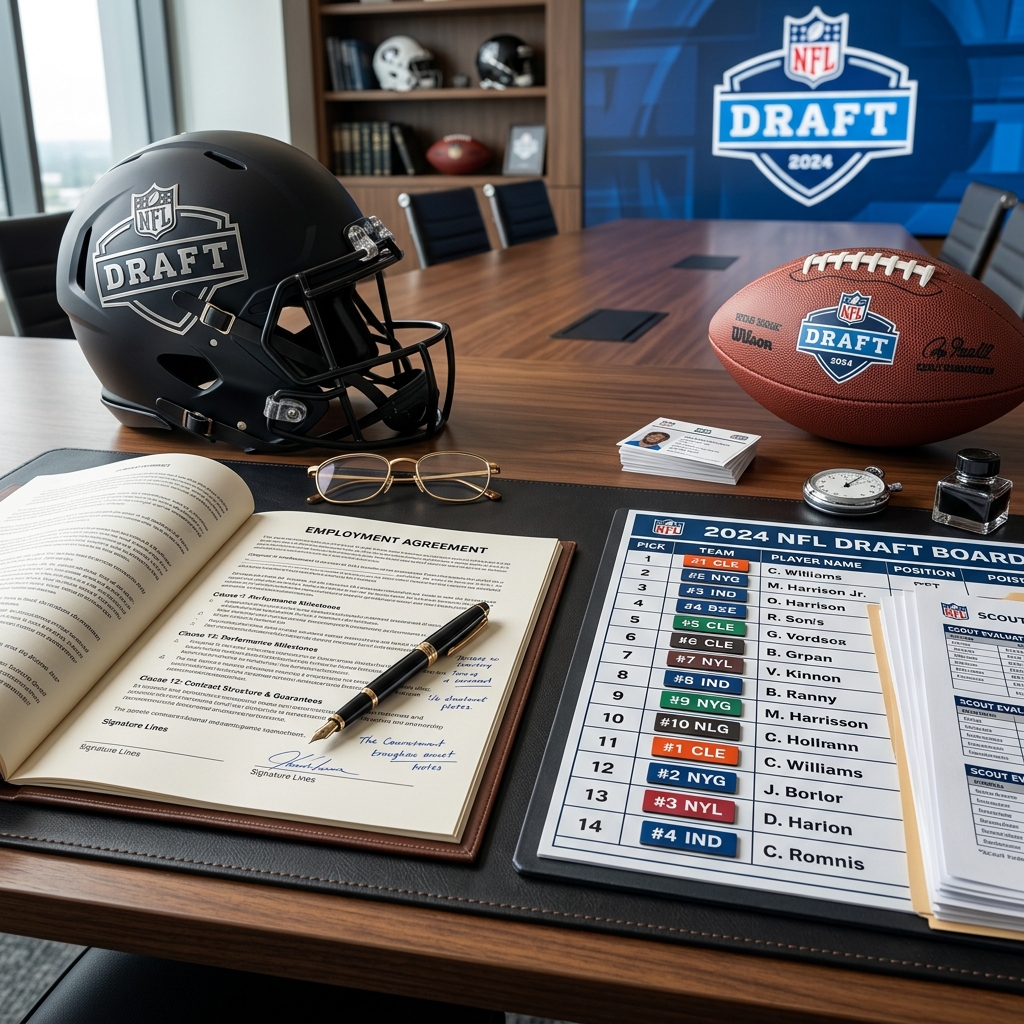
The NFL Draft is often portrayed as pure spectacle: hats on tables, highlight reels, and teary phone calls. Beneath that drama, however, lies something lawyers and HR professionals focus on much more than the televised excitement—employment contracts. Rookie deals, franchise tags, and free agency negotiations are all governed by carefully drafted agreements that balance risk, reward, and legal protections for both the team and the player.
While most employees will never sign a multimillion-dollar deal with a professional sports franchise, the same legal principles that shape NFL contracts apply to everyday jobs. Understanding those principles makes you better prepared to negotiate your own agreement, whether you are an employer drafting contracts or an employee reviewing an offer.
This article uses the NFL Draft as a practical lens to explain how employment contracts work, why they matter, and what key terms you should watch for. The goal is simple: to help you protect your interests and avoid unpleasant surprises after you sign.
From Rookie Deals to Office Desks: Why Contracts Matter
In the NFL, a player selected in the draft does not simply “join” a team; they enter an employment relationship governed by a written contract that defines their rights, obligations, and compensation. The same is true in the wider labor market. An employment contract is a legally binding agreement that outlines the terms under which an employee will work for an employer.
Whether the job is on the field or behind a desk, a well-drafted contract serves several critical purposes:
- Clarifies expectations about duties, performance standards, and reporting lines.
- Reduces disputes by spelling out pay, benefits, and termination rules in advance.
- Addresses risk through provisions on confidentiality, intellectual property, and non-compete obligations.
- Ensures compliance with employment laws on minimum wage, leave, notice, and discrimination.
Professional leagues like the NFL layer individual player contracts on top of a collective bargaining agreement and league rules, which tightly control matters such as rookie pay scales and free agency timelines. Ordinary workplaces may not have a union contract or league-wide rules, but they still operate under national and local labor laws that set minimum standards for terms such as pay, hours, and notice periods.
Key Building Blocks of Any Employment Contract
Teams and players negotiate within a structured framework. Rookie deals, for example, have non-negotiable elements, such as contract length and bonus structures, but also contain terms that can be adjusted, like guarantees and incentives. In typical employment, the framework is less rigid, but good contracts share a set of core elements.
Here are the building blocks you should expect to see—and understand—before signing:
1. Nature and Duration of Employment
One of the first questions both sides must answer is the type and length of the employment relationship. In many jurisdictions, employment is either “at-will” (terminable by either party, subject to anti-discrimination and other laws) or term-based, where the contract lasts for a specific period.
- At-will employment: Either side can end the relationship, usually with or without cause, though not for unlawful reasons such as discrimination.
- Fixed-term employment: The contract covers a defined period (for example, one year), and may include renewal options or conditions for early termination.
- Probationary periods: Some contracts define an initial phase where performance and fit are assessed, often with shorter notice or different termination rules.
In the NFL, rookie contracts are typically set for a fixed term and cannot be renegotiated until after the third season, which gives teams predictable control over early career years. Employers outside sports may not enjoy that level of restriction, but they can still use term-based arrangements to plan staffing and limit exposure.
2. Role, Responsibilities, and Performance Standards
The equivalent of a team’s playbook in an employment contract is the job description. It should be detailed enough that both sides understand what success looks like.
- Job title and reporting structure (who you report to, and whether you supervise others).
- Core tasks and responsibilities, tailored to the business and the employee’s role.
- Performance metrics, especially where bonuses or incentive pay depend on meeting specific goals.
Being too vague in defining responsibilities creates room for disputes. Employers benefit from clarity, while employees gain protection against being asked to perform duties they never agreed to and may not be qualified for.
3. Pay, Benefits, and Incentives
Compensation is often the most scrutinized part of a contract. In sports, salary caps, minimum salary rules, and negotiated bonus structures define what players can earn. In a typical employment contract, you should expect detail on:
- Base salary or hourly wage: amount, pay frequency, and method of payment.
- Bonuses and commissions: performance thresholds, timing of payments, and whether they are discretionary.
- Benefits: health coverage, retirement plans, paid leave, and any stock options or profit-sharing.
- Deductions: lawful deductions such as taxes and agreed deductions like training cost recovery, where permitted.
Many disputes arise when bonus criteria are vague or benefits are described imprecisely. Clarity helps employees understand their total compensation and helps employers manage expectations.
4. Working Time, Leave, and Flexibility
Professional athletes follow grueling schedules defined by league calendars: training camp, regular season, playoffs, and off-season activities. Outside sports, contracts should clearly state working hours and when employees are entitled to rest and time off.
- Standard work hours, including start and end times or expected weekly totals.
- Overtime rules, including any premium pay obligations under applicable law.
- Annual leave and holidays, respecting statutory minimums and explaining how leave accrues.
- Flexible or remote work terms, where applicable.
Many jurisdictions set minimum paid leave requirements and maximum working hours for health and safety reasons. Employers should ensure their contracts comply with these rules, and employees should verify that leave provisions meet or exceed legal minimums.
5. Termination, Notice, and “For Cause” Clauses
In the NFL, a player may be released, traded, or allowed to enter free agency depending on contract terms and league rules. In regular employment, the termination section of the contract explains how, when, and why the relationship can end.
Critical elements include:
- Notice periods: how much advance notice each party must give. Laws in some countries require minimum notice that increases with service length.
- Termination for cause: defined misconduct or poor performance that justifies immediate dismissal, often with no notice.
- Termination without cause: situations where an employer ends the relationship for business reasons, such as restructuring, usually with notice or severance pay.
- Payment in lieu of notice: whether an employer can pay instead of requiring the employee to work out the notice period.
For employers, careful drafting helps enforce discipline and manage risk. For employees, understanding these clauses is essential to knowing how secure their position is and what happens if the job ends unexpectedly.
Protecting Business Interests: Confidentiality, IP, and Non-Competes
Teams invest heavily in playbooks, scouting reports, and proprietary analytics. They cannot afford to have that information walk straight to a competitor. Companies face similar risks with trade secrets, client lists, and software.
Contracts often include three kinds of protective clauses:
1. Confidentiality and Non-Disclosure
Confidentiality provisions restrict employees from disclosing or using sensitive information outside their work. These clauses should:
- Define confidential information clearly (for example, business plans, financial data, client information).
- State how long the obligations last, often extending beyond the end of employment.
- Include reasonable exceptions, such as information already public or legally required disclosures.
Clear definitions reduce disputes over what is protected and help both sides understand their obligations.
2. Intellectual Property Ownership
Where an employee creates works, designs, code, or content, the contract should explain who owns the resulting intellectual property. Employers often require that any work produced in the course of employment belongs to the company.
Important points include:
- Scope of covered work (for example, anything produced using company resources or on company time).
- Assignment of rights from the employee to the employer, often including copyrights and patent rights.
- Moral rights and authorship where relevant, especially in creative industries.
3. Non-Compete and Non-Solicitation Clauses
Non-compete clauses restrict an employee’s ability to work for competitors or start a competing business for a specified time and within a defined geographic area after leaving the job. Non-solicitation clauses focus more narrowly on preventing the employee from poaching clients or staff.
Courts are often cautious about enforcing broad non-competes, and in some jurisdictions they are heavily restricted or banned for certain categories of workers. To improve enforceability, these clauses should be:
- Limited in time (often months rather than many years).
- Reasonable in geographic scope, based on the actual market where the employer operates.
- Targeted in activity, focusing on genuine competitive risk, not general employment.
Employees should pay close attention to these provisions, as they can significantly affect future career moves. Employers should seek legal advice to ensure their restrictions comply with modern labor and competition laws.
Dispute Resolution: What Happens When Things Go Wrong
Even well-written contracts cannot eliminate all conflict. The important question then becomes: how will disputes be resolved?
Common mechanisms include:
- Court litigation: resolving disputes through the ordinary court system under specified governing law.
- Arbitration: a private, often faster process, where an arbitrator or panel issues a binding decision. Many commercial agreements—and some employment agreements—include arbitration clauses.
- Mediation: non-binding negotiation with the help of a neutral facilitator, sometimes required before litigation or arbitration.
Contracts may also specify choice of law (which jurisdiction’s law applies) and venue (where disputes will be heard). These choices can significantly affect the cost, timing, and outcome of disputes, particularly for remote or international roles.
Lessons from the NFL Draft for Everyday Negotiations
While the average employee does not have an agent staging press conferences, the logic behind professional contract negotiations can still be applied in more modest settings.
| NFL Draft Concept | Everyday Employment Contract Lesson |
|---|---|
| Rookie wage scale and fixed contract length | Know which terms are non-negotiable under law or policy, and focus bargaining on what can change. |
| Signing bonuses and incentives | Clarify bonus criteria, timing, and guarantees; understand how performance affects pay. |
| Franchise tags and team control | Examine renewal, notice, and non-compete clauses to understand how long an employer may effectively control your career moves. |
| Agents negotiating on behalf of players | Consider seeking legal or professional advice before signing, especially for senior or complex roles. |
Practical Tips for Employees
- Read every clause, not just the salary line. Pay attention to termination, non-compete, and dispute resolution sections.
- Ask questions when something is unclear. Ambiguity often works against the party with less information.
- Compare against legal minimums for pay, leave, and notice in your jurisdiction.
- Negotiate respectfully where appropriate. Employers expect reasonable negotiations, especially for senior or specialized roles.
- Seek independent advice from an employment lawyer or knowledgeable advisor for high-stakes or complex contracts.
Practical Tips for Employers
- Use clear language to avoid misunderstandings and reduce dispute risk.
- Standardize core terms but remain flexible enough to tailor agreements to specific roles.
- Ensure compliance with wage, hour, leave, and anti-discrimination laws.
- Protect legitimate interests through reasonable confidentiality and non-compete clauses, avoiding overreach.
- Review contracts regularly as laws and business needs change.
FAQs: Employment Contracts and NFL-Inspired Questions
Do I need a written contract, or is an offer letter enough?
In some jurisdictions, employment terms can be agreed verbally, but a written contract is strongly recommended. It documents rights and obligations, reduces misunderstandings, and helps both parties comply with legal requirements. An offer letter may summarize terms, but a full contract provides the detail necessary for complex roles.
Can employees negotiate their contracts like NFL players do?
Yes, although the scale differs. Employees—particularly those in senior, specialized, or competitive roles—can negotiate salary, bonuses, benefits, notice periods, and sometimes non-compete terms. The key is to understand which provisions are flexible and which are constrained by law or company policy.
What should I look for in the termination clause?
Focus on the notice period, grounds for immediate dismissal, severance pay (if any), and whether the employer can pay in lieu of notice. Compare these terms to statutory minimums and evaluate how they would affect you if the job ended unexpectedly.
Are non-compete clauses always enforceable?
No. Many courts enforce non-competes only when they are reasonable and necessary to protect legitimate business interests, and some jurisdictions have significantly limited their use for ordinary workers. If you are concerned about a clause, consult an employment lawyer familiar with local rules.
Why do contracts include arbitration or choice-of-law clauses?
Arbitration clauses and choice-of-law provisions give parties more control over how disputes are handled, including which legal rules apply and whether conflicts are addressed in court or privately. These clauses can affect cost and strategy, so they should be considered carefully before signing.
References
- Guide to Employment Contracts — U.S. Chamber of Commerce. 2023-06-01. https://www.uschamber.com/co/good-company/ask-the-board/guide-to-employment-contracts
- Drafting Tips for Contracts of Employment — Crossland Employment Solicitors. 2022-09-15. https://www.crosslandsolicitors.com/site/media/knowledge/drafting-tips-contracts/
- Draft Employment Contract: Everything You Should Know — ContractsCounsel. 2022-04-10. https://www.contractscounsel.com/b/draft-employment-contract
- Contract Language — NFL Football Operations. 2021-03-10. https://operations.nfl.com/calendar-events/nfl-free-agency/contract-language
- Best Practices for Drafting Employment Contracts — Burruezo & Burruezo PLLC. 2023-02-20. https://burruezolaw.com/best-practices-for-drafting-employment-contracts/
Similar Articles








Read full bio of Sneha Tete




