
Class B Felony In New York: Essential Guide To Sentencing Risks
Understand how New York treats Class B felonies, from penalties to defense strategy.
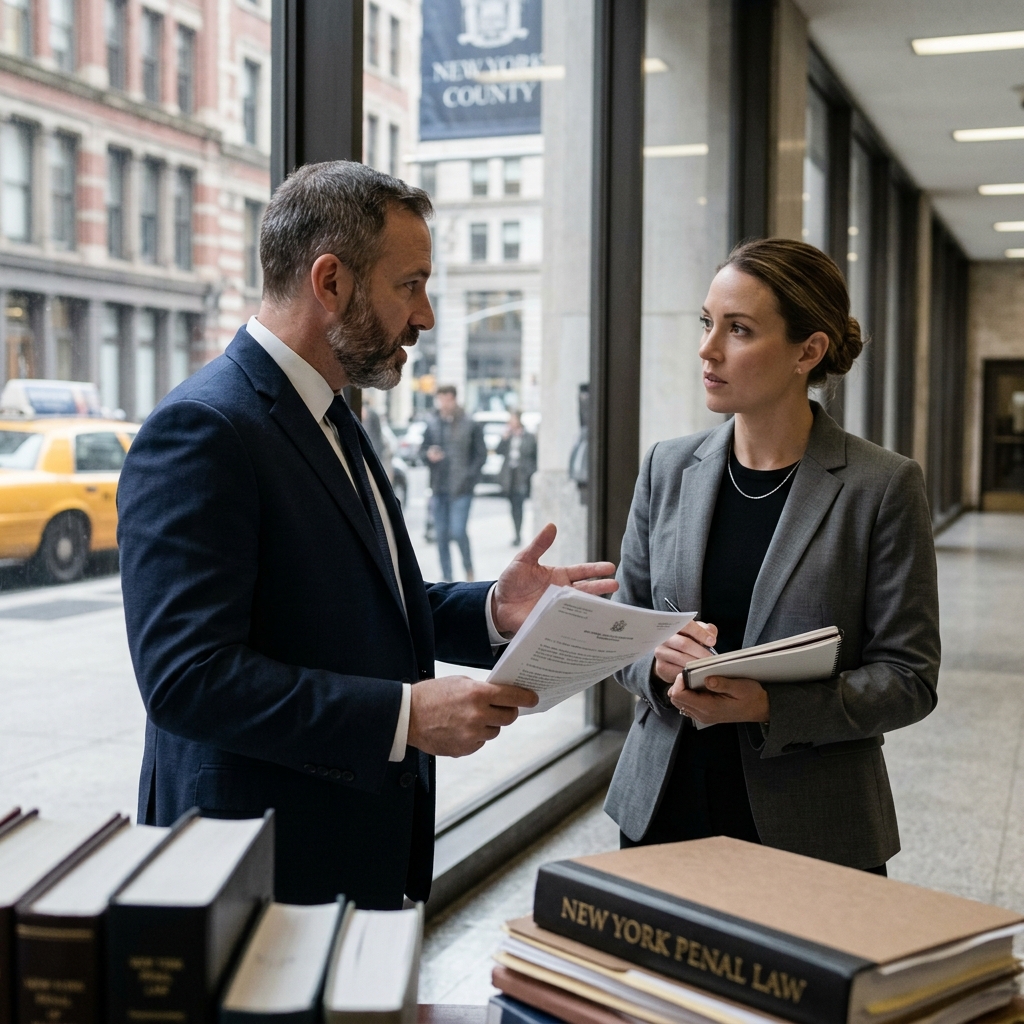
In New York, a Class B felony is a serious criminal charge that can lead to substantial prison time and long-term consequences. The exact sentence depends on whether the offense is classified as violent or non-violent, the person’s criminal history, and the facts of the case. New York law sets specific sentencing ranges for felony classes, and a Class B felony sits near the more serious end of that system.
People often focus on the prison term first, but a felony conviction can also affect employment, housing, firearm rights, immigration status, and future sentencing exposure. Because of that, Class B charges are usually handled with careful attention to plea negotiations, evidence review, and statutory sentencing rules.
What a Class B felony means
New York divides felonies into categories from the most serious to the least serious: A, B, C, D, and E. Class B is below Class A but still carries major punishment and is treated as a grave offense under state sentencing law.
Under New York law, felony sentences are often imposed as indeterminate terms, meaning the court sets a minimum and maximum term within the limits allowed by statute. For Class B violent felonies, the sentencing range is generally five to 25 years in prison.
| Felony class | General severity | Typical sentencing range |
|---|---|---|
| Class A | Most serious | Can include life imprisonment |
| Class B | Very serious | Up to 25 years, depending on the offense |
| Class C | Serious | Up to 15 years in many cases |
Violent and non-violent Class B offenses
Class B felonies are not all treated the same. New York distinguishes between violent and non-violent felony offenses, and that distinction has a major effect on sentencing.
A violent felony offense includes certain Class B offenses listed in the state’s violent felony statute. The law specifically identifies Class B violent felonies as part of the violent felony category, which triggers stricter punishment rules.
- Class B violent felonies generally carry a five-to-25-year sentencing range.
- Class B non-violent felonies may still carry a maximum sentence of up to 25 years, depending on the offense and the defendant’s record.
- The classification affects whether a person may be eligible for a lower sentence, probation in limited situations, or enhanced punishment based on prior convictions.
In practice, the label attached to the offense often matters as much as the label of the felony class itself. A violent felony usually creates more difficult plea options and more restrictive sentencing outcomes than a non-violent charge.
Examples of crimes that may be charged as Class B felonies
Class B felony charges can cover a wide range of conduct. Examples commonly associated with this level include serious assaults, arson, robbery-related offenses, sexual offenses, and major drug crimes.
- Assault in the first degree
- Burglary in the first degree
- Arson in the second degree
- Gang assault in the first degree
- Course of sexual conduct against a child in the first degree
- Aggravated sexual abuse in the first degree
- Bribe receiving in the first degree
- Aggravated insurance fraud
- Some homicide-related or weapons-related allegations, depending on the facts and charging theory
These examples show that Class B is not limited to one kind of crime. Instead, it can include crimes against a person, property crimes with aggravating factors, and offenses involving fraud or corruption.
How New York sentences Class B felonies
Sentencing in New York depends on the exact statute violated, whether the offense is violent, and whether the defendant is a first-time offender or has a criminal record.
For violent felony offenses, New York law sets mandatory sentencing structures. Class B violent felonies typically fall within a five-to-25-year range, and judges must sentence within the boundaries established by law.
For non-violent felonies, the court may have more flexibility. Still, a Class B non-violent felony can lead to a long prison term, and the maximum may reach 25 years in some situations.
- Minimum term: Often determined by the offense classification and prior record.
- Maximum term: Limited by statute, with Class B offenses reaching up to 25 years in serious cases.
- Prior convictions: Past felony convictions can increase the risk of a harsher sentence.
- Persistent felony offender status: Repeat offenders may face very severe punishment under New York sentencing rules.
Why criminal history matters
New York sentencing law gives judges and prosecutors more leverage when a defendant has prior felony convictions. A person with no prior felony convictions may face a different outcome from someone with repeat felony history.
State sentencing materials also recognize persistent felony offender treatment for certain people with multiple prior felony convictions, which can substantially increase the risk of a long prison sentence.
This means two people charged with the same Class B felony may face very different results. One defendant may qualify for a favorable plea offer, while another may face a much harsher sentence because of prior record, probation violations, or related aggravating facts.
What prosecutors and defense lawyers examine
Class B felony cases are often built around detailed factual and legal issues. Prosecutors will look at the strength of the evidence, the severity of harm, the presence of weapons, any victim injury, and the defendant’s record. Defense lawyers often focus on whether the state can prove every element of the offense beyond a reasonable doubt.
- Whether police had lawful grounds for the arrest or search
- Whether witness statements are consistent and reliable
- Whether physical evidence supports the charge
- Whether the defendant’s conduct matches the specific felony statute charged
- Whether the offense was overcharged compared with the actual facts
In many cases, the most important question is not only whether the accusation is serious, but whether the prosecution can prove the specific Class B offense charged.
Possible defense approaches
There is no single defense that fits every Class B felony case. The right strategy depends on the allegations and the evidence. Still, several common defense themes appear across felony cases in New York.
- Challenging the legality of the police investigation
- Disputing identification or witness credibility
- Showing lack of intent or lack of the required mental state
- Arguing that the facts support a lesser offense rather than a Class B felony
- Negotiating a plea to reduce sentencing exposure
In some matters, a strong defense can lead to dismissal or reduction of charges. In others, the main objective is limiting prison exposure by reaching an agreement that avoids the most severe consequences.
Collateral consequences beyond prison time
The direct sentence is only one part of the impact of a Class B felony conviction. A felony record can create lasting obstacles in many parts of life, and these effects may continue long after the criminal case ends.
- Difficulty finding work in certain fields
- Barriers to renting housing
- Loss or restriction of firearm rights
- Immigration consequences for non-citizens
- Possible limits on professional licensing
Because these consequences are broad and sometimes unpredictable, many defendants focus on avoiding a felony conviction altogether or reducing the charge to a lower level offense.
How Class B felonies compare to other felony classes
Looking at the felony structure helps explain where Class B fits. Class A is the most severe category and can include life sentences. Class C, D, and E offenses are less severe in the statutory hierarchy, though they can still be serious and may involve prison time.
| Class | Relative seriousness | General sentence level |
|---|---|---|
| Class A | Highest | Life-level penalties may apply |
| Class B | Very high | Up to 25 years |
| Class C | High | Often up to 15 years |
| Class D | Moderate to high | Often lower than Class C |
| Class E | Lowest felony class | Typically shorter terms |
That hierarchy matters because prosecutors often use the class of the offense as a starting point for negotiations. A reduction from Class B to a lower felony class can significantly change the sentencing outlook.
Frequently asked questions
Is a Class B felony always a violent felony?
No. New York law distinguishes between violent and non-violent offenses, and a Class B felony can fall into either category depending on the statute involved.
Can a Class B felony lead to probation?
Probation is generally less common in the most serious Class B cases, especially violent felony cases, but the exact outcome depends on the charge, the facts, and sentencing law. Non-violent cases may offer more flexibility than violent ones.
How long can someone go to prison for a Class B felony?
For Class B violent felonies, the sentencing range is generally five to 25 years. Some Class B non-violent felonies can also carry substantial prison exposure, including up to 25 years.
Why do people charged with Class B felonies need legal help quickly?
Early legal intervention can affect bail issues, evidence preservation, plea discussions, and trial preparation. In felony cases, decisions made early in the process can shape the final result.
Why early defense planning matters
A Class B felony case should be approached as soon as possible after arrest or indictment. The earlier a defense team reviews the charging instrument, police reports, and witness statements, the more options may remain available.
That early review can uncover legal weaknesses, identify evidence problems, and improve the chances of reducing the charge or sentence exposure. In serious felony cases, timing often has a direct impact on strategy.
Additional FAQs
What makes a felony different from a misdemeanor in New York?
Felonies are more serious offenses that can carry more than one year in prison, while misdemeanors are less severe and generally carry shorter maximum sentences.
Does every Class B felony go to trial?
No. Many felony cases are resolved through plea negotiations, charge reductions, or other pretrial outcomes before a trial begins.
Can prior convictions affect sentencing for a Class B felony?
Yes. New York sentencing law allows prior convictions to play a major role in determining the final sentence, especially for repeat offenders.
References
- Sentence of Imprisonment for Felony — New York State Senate. 2026-07-10. https://www.nysenate.gov/legislation/laws/PEN/70.00
- Violent Felony Offense — New York State Senate. 2026-07-10. https://www.nysenate.gov/legislation/laws/PEN/70.02
- Felonies vs. Misdemeanors in New York — O’Connell & Aronowitz. 2026-07-10. https://oalaw.com/blog/criminal-defense/felonies-vs-misdemeanors-in-new-york/
- The Different Levels of Felonies in New York — Tilem & Associates, PC. 2026-07-10. https://www.tilemlawfirm.com/our-practice-areas/criminal-defense/the-different-levels-of-felonies-in-new-york/
- Felony Criminal Defense Lawyers — Hacker Murphy LLP. 2026-07-10. https://www.hackermurphy.com/practice-areas/criminal-defense/felony-criminal-defense-lawyers/
- New York State Penal Law – Felony Classes Sentences — ypdcrime.com. 2026-07-10. https://ypdcrime.com/penal.law/felony_sentences.php
Similar Articles








Read full bio of medha deb




