
New York City DUI & DWI: Essential Guide to Charges and Penalties
A practical, plain‑language overview of New York City DUI and DWI charges, penalties, and the steps drivers should expect after an arrest.
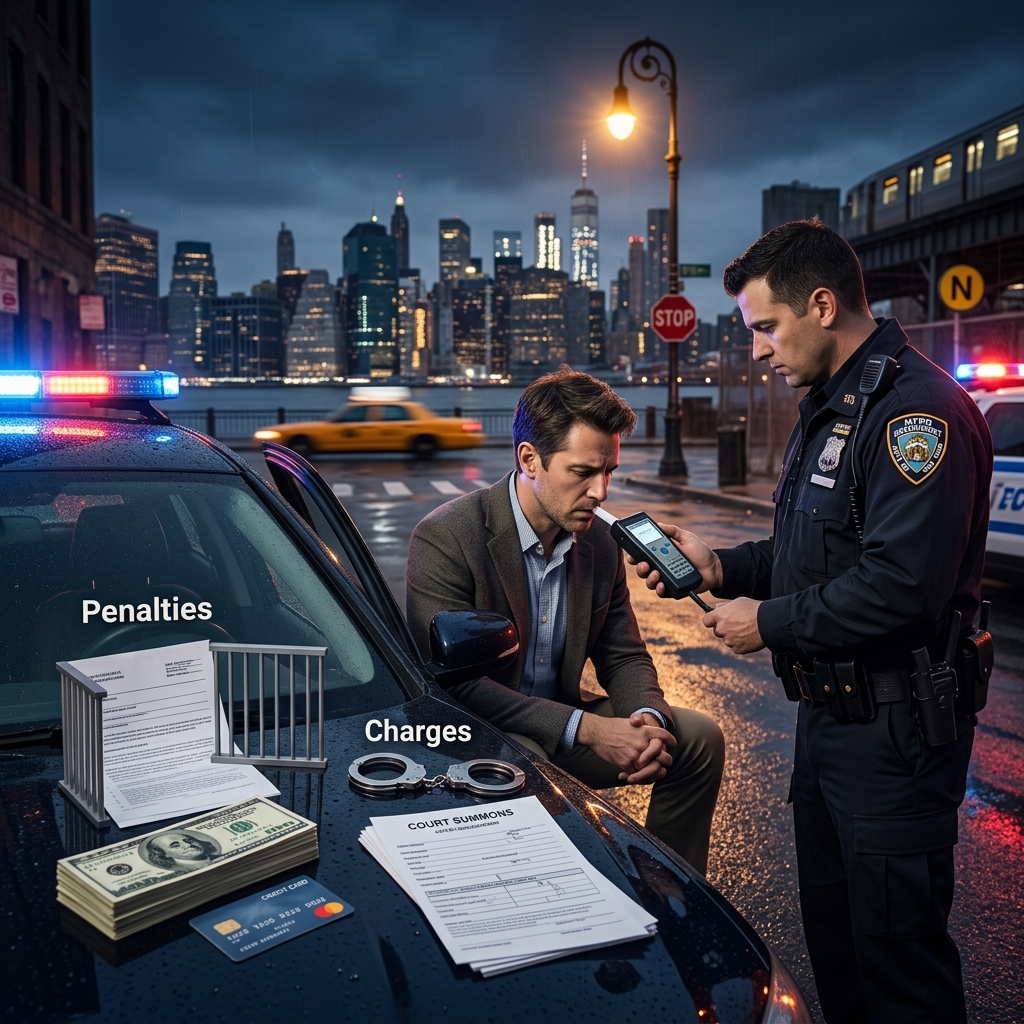
Drunk and drugged driving laws in New York City are among the toughest in the country. New York uses precise blood alcohol concentration (BAC) thresholds and a range of offenses—such as DWI (Driving While Intoxicated), DWAI (Driving While Ability Impaired), and Aggravated DWI—to address different levels of impairment and risk on the road.
This guide explains how those offenses work, what penalties you may face, and what typically happens after a drunk driving arrest in New York City. It is a general overview and not a substitute for legal advice from a licensed attorney.
Core Impaired Driving Offenses in New York
New York does not rely on a single “DUI” label. Instead, state law recognizes multiple impaired driving offenses with different BAC thresholds and levels of severity.
Key Terms You Will Encounter
- DWI (Driving While Intoxicated) – Operating a vehicle with a BAC of 0.08% or higher, or with other evidence of intoxication showing you cannot drive safely.
- Aggravated DWI (AGG DWI) – Driving with a very high BAC of 0.18% or higher, which the law treats as especially dangerous.
- DWAI–Alcohol – Driving with a BAC above 0.05% but below 0.08%, or with other signs of mild impairment.
- DWAI–Drug – Impaired ability to drive because of a single drug other than alcohol, such as a controlled substance or certain prescription medications.
- DWAI–Combination – Impairment caused by a mix of alcohol and drugs.
- Zero Tolerance – Special rules for drivers under age 21, who can face consequences with BACs as low as 0.02%.
While people often use the term “DUI” informally, New York statutes and court documents generally refer to these specific offenses instead of “DUI.”
BAC Thresholds at a Glance
| Offense Type | Typical BAC Range | Notes |
|---|---|---|
| DWI | 0.08% and above | Per se intoxication; can also be based on observed impairment. |
| Aggravated DWI | 0.18% and above | Higher penalties due to extreme intoxication. |
| DWAI–Alcohol | More than 0.05% but less than 0.08% | Treated as a lower-level offense, but still serious. |
| Commercial DWI | 0.04% and above | Stricter standard for commercial driver’s license (CDL) holders. |
| Zero Tolerance | 0.02%–0.07% (age < 21) | Administrative penalties through DMV for underage drivers. |
Criminal Penalties: Fines, Jail, and Probation
New York’s impaired driving laws combine criminal penalties with administrative sanctions from the Department of Motor Vehicles (DMV). Even a first offense can lead to jail time, substantial fines, and years of monitoring.
Typical Range of Criminal Penalties
Depending on the exact offense and prior record, penalties often include:
- Fines in the hundreds or thousands of dollars, plus mandatory surcharges and fees.
- Jail time ranging from several days up to a year for first misdemeanors, and up to several years for felony-level repeat offenses.
- Probation, commonly 2–3 years for misdemeanor DWI, and longer for felony cases.
- Driver responsibility assessments paid annually for multiple years after conviction.
Penalties for Common First Offenses
| Offense | Mandatory Fine | Maximum Jail Term | Other Notable Consequences |
|---|---|---|---|
| DWI (first offense) | $500 – $1,000 | Up to 1 year | License revocation for at least 6 months; driver responsibility assessment of $250/year for 3 years. |
| Aggravated DWI (first offense) | $1,000 – $2,500 | Up to 1 year | License revocation for at least 1 year; higher likelihood of strict court conditions. |
| DWAI–Alcohol (first offense) | $300 – $500 | Up to 15 days | License suspension for 90 days. |
These ranges are set by statute, but the judge has discretion within them based on the facts of the case, prior record, and any mitigating or aggravating circumstances.
Repeat Offenders and Felony-Level DWI
Multiple impaired driving convictions within a 10-year period dramatically increase penalties. New York treats second and third aggravated DWI or DWI as felonies with longer prison exposure and extended revocation periods.
- Second aggravated DWI in 10 years – Typically a Class E felony, with fines of $1,000–$5,000, up to 4 years in prison, and license revocation of at least 18 months.
- Third aggravated DWI in 10 years – Often a Class D felony, fines of $2,000–$10,000, up to 7 years in prison, and extended revocation of at least 18 months.
- Three or more alcohol or drug-related incidents in 10 years – Can result in permanent revocation, with only a limited opportunity to request relief after a multi-year waiting period.
DMV Consequences: License Actions and Assessments
In addition to criminal court sanctions, the New York State DMV imposes separate penalties. These administrative actions can occur even when criminal charges are reduced or resolved differently.
Suspension vs. Revocation
- Suspension – Temporary removal of your driving privilege for a defined period (for example, 90 days for a first DWAI–Alcohol).
- Revocation – Termination of your license; you must reapply after the revocation period and satisfy all conditions. A first DWI commonly carries a minimum 6‑month revocation.
Additional DMV Costs
Administrative penalties often include mandatory fees and program requirements, such as:
- Civil penalties and reinstatement fees after suspensions or revocations.
- Driver Responsibility Assessment of $250 per year for 3 years following eligible convictions.
- Alcohol and drug education or treatment programs, often required to regain full driving privileges.
Zero Tolerance for Drivers Under 21
Underage drivers face special rules under New York’s zero tolerance law. If a driver under 21 is found operating a vehicle with a BAC between 0.02% and 0.07%, a DMV hearing can lead to:
- Suspension of the license for six months.
- Payment of a suspension termination fee and civil penalty.
- Future consequences if another violation occurs while underage.
Financial Impact: Total Costs Beyond the Fine
The fine listed in statutes is only part of the financial impact of a DUI/DWI case in New York City. When all costs are added, a single conviction can be financially overwhelming.
Common Out-of-Pocket Expenses
- Towing and impound fees – Vehicles are often towed following an arrest, and you are responsible for towing and storage costs.
- Court surcharges – Alcohol-related misdemeanors carry mandatory surcharges, often around several hundred dollars, and felonies require even higher amounts.
- DMV assessments – The annual driver responsibility assessments add hundreds of dollars over three years.
- Ignition interlock devices – Courts frequently require installation of an ignition interlock following certain DWI convictions, with monthly fees for monitoring.
- Insurance consequences – Premiums often rise sharply after a conviction, and some insurers may decline coverage.
Long-Term Financial Effects
A drunk driving conviction can also affect employment prospects, particularly for jobs requiring driving or professional licenses. Many people underestimate these indirect costs when they first encounter a DWI charge.
What Happens During a Typical DUI/DWI Case?
Procedures can vary by borough and by the specific facts of the case, but most New York City impaired driving prosecutions follow a general sequence.
Traffic Stop and Investigation
Police officers may initiate a stop due to observed driving behavior, a traffic violation, or at a sobriety checkpoint. After approaching the vehicle, they look for signs of impairment such as:
- Odor of alcohol or drugs
- Bloodshot eyes or slurred speech
- Difficulty following instructions
- Open containers or drug paraphernalia
Officers may request field sobriety tests and a preliminary breath test to estimate BAC. A formal chemical test (breath, blood, or urine) is usually performed at the station or medical facility.
Arrest, Booking, and Arraignment
If the officer concludes that you are impaired, you can be arrested and transported for booking. After booking, you will typically appear in criminal court for arraignment, where charges are formally presented and bail or release conditions may be set.
Pretrial and Possible Resolutions
After arraignment, the case proceeds through discovery and pretrial motions. Potential outcomes include:
- Plea negotiations that may change or reduce charges within the limits of state law.
- Pretrial hearings on issues such as the legality of the stop or admissibility of test results.
- A trial, where the prosecution must prove the case beyond a reasonable doubt.
New York law limits the ability to plead a DWI down to non-alcohol-related traffic offenses, especially for more serious charges.
Comparing Offense Types: DWI vs. DWAI vs. Aggravated DWI
Understanding the differences between the main categories helps clarify why two people stopped on the same night might face very different legal outcomes.
| Offense | Impairment Level | Typical BAC | General Severity |
|---|---|---|---|
| DWAI–Alcohol | Mild impairment | More than 0.05% but less than 0.08% | Lower-level offense, but still carries criminal and DMV consequences. |
| DWI | Intoxication that affects ability to drive safely | 0.08% or more (or other evidence of intoxication) | Misdemeanor for first offense, with higher fines and longer revocations. |
| Aggravated DWI | Severe intoxication | 0.18% or more | More serious penalties than standard DWI, increases risk of felony charges if repeated. |
Frequently Asked Questions About NYC DUI & DWI
Is a New York DWI the same as a DUI?
In everyday conversation, people often use “DUI” to mean any drunk driving charge. New York statutes use specific terms like DWI and DWAI instead of the general term DUI. The practical impact is similar—both refer to criminal charges for impaired driving—but the exact legal language matters for court, DMV, and insurance purposes.
Can I be charged with DWI if my BAC is below 0.08%?
Yes. While 0.08% is the per se limit for intoxication, a driver may still be charged with DWI based on observed impairment even if the chemical test is below 0.08%. Alternatively, drivers in the 0.05%–0.07% range often face DWAI–Alcohol charges.
What happens to my license after a first DWI conviction?
A first DWI conviction typically triggers a license revocation of at least six months, along with fines and assessments. You may need to complete alcohol education or treatment and pay multiple DMV fees before you can reapply for your license.
How serious is an aggravated DWI compared to a regular DWI?
An aggravated DWI indicates a very high BAC (0.18% or more) and carries more severe penalties. For a first offense, the fine range and revocation period are higher than for a standard DWI, and repeat aggravated DWI convictions can escalate quickly into felony charges.
Can a New York DWI be reduced to a non-alcohol traffic ticket?
State law significantly restricts plea reductions for DWI and related offenses. While some cases may result in reduced charges, prosecutors generally cannot dismiss the alcohol-related nature of the offense except under narrow circumstances.
Does a New York DWI affect my record outside the state?
New York reports many convictions to national driver databases and often shares information with other states. That means a New York DWI can affect your out-of-state driving record and insurance, particularly if you hold a license from another state.
Is it possible to get my license back after multiple DWI convictions?
In some cases, three or more alcohol or drug-related incidents within 10 years can lead to permanent revocation. State rules allow limited opportunities to request a waiver after several years, but there is no guarantee of reinstatement.
Practical Tips for New York Drivers
While this article focuses on what happens after an impaired driving allegation, prevention and informed decision-making are always preferable. Consider the following practical steps:
- Plan ahead – Arrange a designated driver, use taxis or ride-share services, or avoid driving if you expect to drink or take impairing medications.
- Understand your medication – Many prescription and over-the-counter drugs can impair ability to drive, especially when combined with alcohol. Review warnings and talk with your healthcare provider.
- Be cautious with borderline BAC levels – Even if you believe you are “under the limit,” New York’s DWAI laws can still lead to charges and license consequences.
- Consult an attorney promptly – If you are arrested or receive a summons for an impaired driving charge, professional legal guidance is critical.
References
- Penalties for Alcohol or Drug-Related Violations — New York State Department of Motor Vehicles. 2024-03-01. https://dmv.ny.gov/points-and-penalties/penalties-for-alcohol-or-drug-related-violations
- Chapter 9: Alcohol and Other Drugs — New York State Department of Motor Vehicles Driver’s Manual. 2023-07-15. https://dmv.ny.gov/new-york-state-drivers-manual-and-practice-tests/chapter-9-alcohol-and-other-drugs
- New York DWI Laws — National College for DUI Defense. 2023-09-10. https://www.ncdd.com/new-york-dwi-laws
- DRUNK DRIVING PENALTIES — STOP-DWI New York / Sullivan County. 2022-11-01. https://www.sullivanny.gov/sites/default/files/departments/stopdwi/NYDWIPenalties.pdf
- Consequences & Costs — STOP-DWI New York. 2023-05-12. https://stopdwi.org/resources-consequences-cost/
- DUI Convictions in New York: A Breakdown of Penalties and Cost — Aidala, Bertuna & Kamins, P.C. 2024-06-20. https://aidalalaw.com/dui-convictions-in-new-york-a-breakdown-of-penalties-and-cost-2/
- Understanding the Differences Between DUI and DWI in New York — WNY Lawyers. 2025-09-01. https://www.wny-lawyers.com/2025/09/understanding-dui-vs-dwi-new-york/
Similar Articles








Read full bio of Sneha Tete




