
New Year, New Wages: How State Minimum Pay Is Changing
A clear guide to annual minimum wage increases, why they happen, and what workers and employers should expect when the calendar resets.
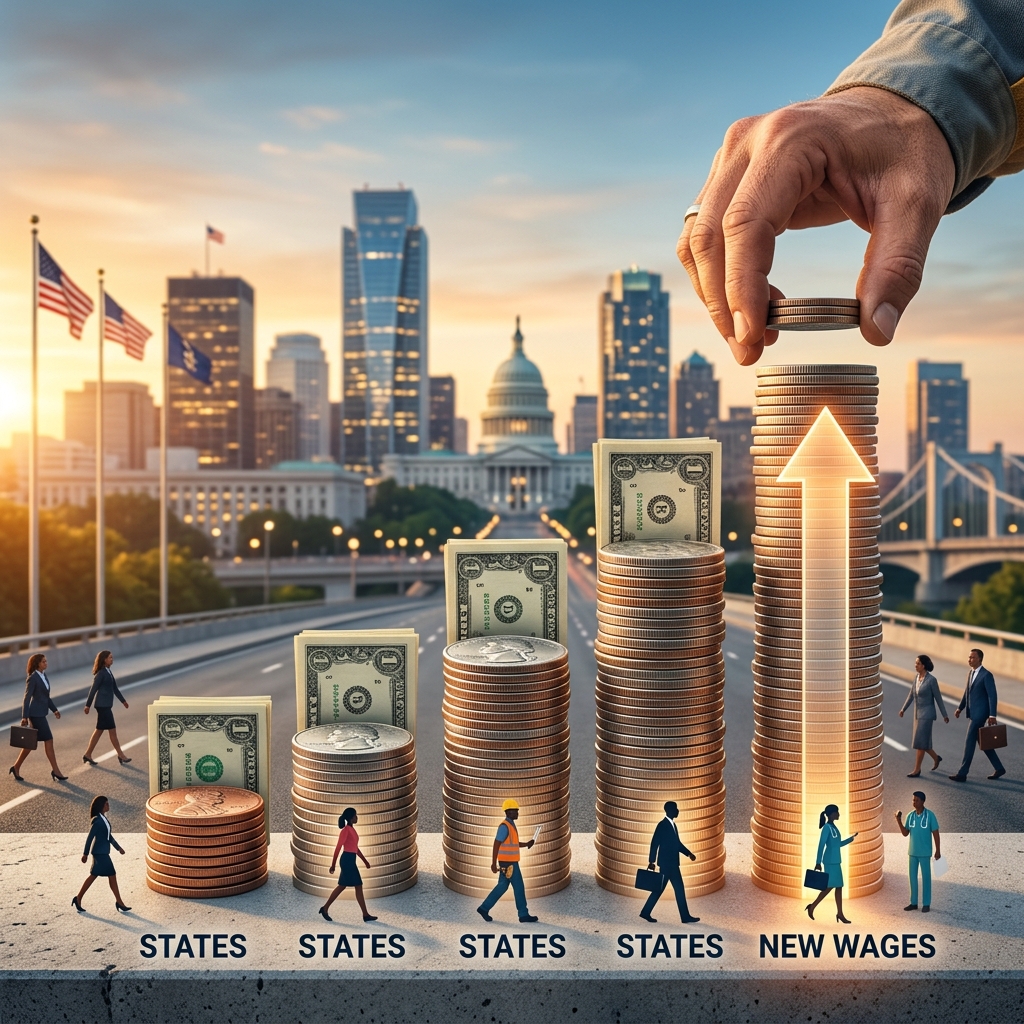
Across the United States, the turn of the calendar year has quietly become a built-in pay raise for millions of workers. In many states, minimum wage rates now change automatically on or around January 1, either because of laws that schedule specific increases or because rates are indexed to inflation. For employers and employees alike, understanding these annual adjustments is critical for planning, budgeting, and legal compliance.
This guide explains why so many minimum wage changes cluster around the New Year, how states decide their rates, and what the latest trends mean for paychecks, payroll systems, and workplace policies.
1. The Basics: Federal vs. State Minimum Wage
The starting point for any discussion of minimum wage is the federal rate under the Fair Labor Standards Act (FLSA). The federal minimum wage is currently $7.25 per hour, a level that has not increased since 2009. States are free to set their own higher minimums, and most have done so.
| Jurisdiction | Minimum Wage Approach | Key Point |
|---|---|---|
| Federal (FLSA) | Single nationwide floor | $7.25 per hour; applies where state or local law does not set a higher rate. |
| States with higher rates | State-specific minimums | Many set higher wages and often index them to inflation. |
| States with no state minimum | Default to federal | Employers covered by FLSA must pay at least $7.25. |
| Local jurisdictions | City/county ordinances | Some localities exceed both state and federal wages. |
When different laws conflict, the general rule is that employers must pay the highest applicable minimum wage among federal, state, and local requirements.
2. Why So Many Wage Changes Happen in January
The New Year has become the most common effective date for minimum wage updates for several reasons:
- Predictability: A fixed annual date gives employers time to adjust payroll and budgets.
- Alignment with cost-of-living data: Many states tie wage increases to the consumer price index (CPI); those adjustments are typically calculated and applied on January 1.
- Legislative design: Ballot initiatives and statutes often specify January 1 as the effective date for scheduled increases.
According to recent analyses, more than twenty states now raise their minimum wage in a typical year, and a large portion of those increases take effect on January 1. In addition, dozens of cities and counties follow their own New Year schedules for local wage floors.
3. How States Set and Adjust Minimum Wage Rates
States use a mix of policy tools to decide how and when the minimum wage will change. While the details vary, most approaches fall into a few broad categories.
3.1 Fixed Schedules and Phase-Ins
Some states adopt laws that set out a multi-year path to a target hourly wage. These laws typically include:
- Specific rates for each future year (for example, stepping up to a $15.00 standard over several years).
- Standard effective dates, commonly January 1 or July 1.
- Transition rules that distinguish between large and small employers or industries.
For example, a state might mandate that its minimum wage will rise from $13.00 to $14.00, then to $15.00, with each step occurring on January 1 over consecutive years. After the end of the schedule, many states switch over to inflation-based adjustments.
3.2 Indexing to Inflation
In a growing number of states, the minimum wage no longer requires new legislation to increase. Instead, the rate is indexed to a measure of inflation, such as the Consumer Price Index for Urban Wage Earners and Clerical Workers (CPI-W).
Common features of indexing laws include:
- Automatic annual increases based on CPI changes.
- Caps that limit how much the wage can rise in a single year.
- Rules preventing the wage from being reduced when inflation is negative.
States like California and Colorado now rely on such indexed increases, which means minimum wages can change every New Year even without new legislative action.
3.3 Local Wage Ordinances
On top of state rules, many cities and counties set higher local minimum wages. Several major metropolitan areas have either reached or surpassed $15.00 per hour, with some moving toward $17.00 or more for certain categories of workers.
These local increases often follow their own calendar, but many still choose January 1 effective dates to align with state and federal changes.
4. Current Trends: Toward and Beyond $15 per Hour
Over the past decade, many state-level campaigns have pushed to raise the minimum wage to $15.00 per hour or higher. Research from policy organizations tracking these changes shows several key trends:
- Multiple states have already reached a general minimum wage of at least $15.00 per hour for most workers.
- Other states have enacted laws that phase in a $15.00 wage over time and then tie future increases to inflation.
- Dozens of local jurisdictions have adopted wage floors that reach $15.00, $17.00, or more for certain workers.
An analysis of upcoming wage policies shows that by the end of a typical year, dozens of states and more than sixty local governments will have raised their minimum wage floors, with a significant share reaching or exceeding $15.00.
4.1 Examples of Higher State Minimum Wages
Official state and federal labor resources highlight how divergent minimum wages have become across the country:
- California: The statewide minimum wage for most workers is set in law and is scheduled to reach $16.90 per hour, with future increases tied to inflation and special higher rates for certain sectors.
- Colorado: The state applies indexed annual increases, resulting in a minimum wage above the federal level and adjusted each year based on CPI.
- Missouri: The state has enacted a path that takes its minimum wage to $15.00 per hour, as reflected in official state labor guidance.
- Other states: States such as Arizona, Connecticut, and others have also adopted higher minimum wage levels with either scheduled or indexed increases.
At the same time, some states still either match the federal rate or lack a separate state minimum wage, leaving the federal $7.25 standard in place for covered employers.
5. Special Rules: Tipped, Youth, and Exempt Workers
Minimum wage law is not just about a single hourly number. Many workers fall under special categories with their own rules.
5.1 Tipped Workers
Under federal law, employers may pay a lower cash wage to tipped employees so long as tips make up the difference to at least the full minimum wage. Some states follow this model, while others require the same minimum wage for tipped and non-tipped workers or significantly higher cash wage floors.
Employers must closely track tips to ensure that employees never fall below the required minimum hourly rate when wages and tips are combined.
5.2 Youth and Learner Wages
Certain jurisdictions allow lower minimum wages for specific groups such as learners or minors during an initial training period. For example, California permits a reduced wage (a fixed percentage of the state minimum) for learners for a limited number of hours in jobs where they lack experience. Other states have similar rules, though many restrict the duration and conditions of such lower rates.
5.3 Exemptions
Some categories of workers are exempt from minimum wage requirements under federal or state law. These can include:
- Certain outside sales employees.
- Close family members employed by a business owner, in some states.
- Some disabled workers employed by specific types of nonprofit organizations, under limited licensing systems that are being phased out in some jurisdictions.
Because exemptions can be complex and vary from state to state, employers and workers often need to review state labor department guidance carefully.
6. What Annual Minimum Wage Increases Mean for Workers
When the minimum wage rises at the start of a new year, the impact on workers can be both immediate and long-term.
6.1 Higher Take-Home Pay
The most direct effect is larger paychecks for workers earning at or near the minimum wage. Even a relatively small hourly increase can translate into meaningful gains over a year, especially for full-time workers.
- Overtime calculations: Higher base wages can also raise overtime rates, which are typically calculated at 1.5 times the regular rate for eligible employees.
- Compression effects: Workers earning slightly above the old minimum may see increases too, as employers adjust pay scales to avoid having experienced employees paid the same as new hires.
6.2 Improved Clarity About Rights
Regular, well-publicized wage changes can make it easier for workers to know what they should be paid. Federal and state agencies often update public information and posters when rates change, and many states require employers to post current wage information in the workplace.
6.3 Variation by Location and Job Type
However, the benefits are not uniform. Workers in states or cities that do not raise wages may see no change at all, while others in high-cost urban areas may still find that even $15.00 per hour does not fully keep up with local living costs. Differences between tipped and non-tipped roles, or between large and small employers, can also affect individual outcomes.
7. What Annual Increases Mean for Employers
For employers, New Year wage updates are both a compliance obligation and a budgeting challenge. Failing to pay the correct minimum wage can result in back pay liability, penalties, and litigation.
7.1 Compliance Checklist for the New Year
When approaching January 1 (or any scheduled increase date), employers should:
- Review all applicable laws: Check federal, state, and local minimum wage rates for each location where employees work.
- Update payroll systems: Adjust hourly rates in payroll and timekeeping software to reflect new minimums and differentials for tipped, youth, or other categories.
- Revise posted notices: Ensure current minimum wage posters and required written notices are updated as required by state or federal law.
- Assess pay structures: Evaluate whether pay for lead workers, supervisors, and longer-tenured staff should be adjusted to preserve internal equity.
7.2 Budgeting and Pricing
Annual wage increases may require businesses to revisit their budgets and, in some cases, their pricing. Employers often respond by:
- Improving scheduling efficiency to reduce unnecessary overtime.
- Investing in training to increase productivity per labor hour.
- Adjusting prices or service offerings where feasible.
Because many increases are now predictable through statutory schedules or indexing, employers can look ahead several years to anticipate likely wage floors.
8. How to Stay Informed About Minimum Wage Changes
Given the patchwork of laws and the growing number of jurisdictions with their own standards, staying updated requires a systematic approach.
8.1 Use Official Government Sources
The most reliable way to confirm current and upcoming minimum wages is to consult official government resources:
- U.S. Department of Labor (DOL): Provides a state-by-state summary of minimum wage laws, including federal and state rates and notes on future scheduled increases.
- State labor departments: Many states publish detailed minimum wage information, FAQs, and official posters (for example, Missouri and California provide authoritative guidance on rates and special rules).
- Nonpartisan policy organizations: Groups such as the National Conference of State Legislatures track enacted minimum wage laws and future increases.
8.2 Keep an Internal Calendar
Employers may benefit from creating an internal compliance calendar that includes:
- January 1, July 1, and any other known change dates for relevant jurisdictions.
- Reminder dates several weeks earlier to review rates and update systems.
- Scheduled reviews of state and local law changes each year in the fall.
Employees can also mark expected increase dates to double-check their paystubs after a wage update.
9. Frequently Asked Questions (FAQs)
Do all states raise the minimum wage every New Year?
No. While many states schedule increases for January 1 or use inflation indexing that leads to annual New Year adjustments, some states may keep the same wage for multiple years. Others track inflation but do not raise the minimum in years with low or negative CPI changes.
If a city minimum wage is higher than the state rate, which one applies?
In general, employers must pay the higher applicable minimum wage. If a city or county requires a higher rate than the state or federal government, covered employers in that locality must meet the local standard.
How do I know whether I am covered by the federal minimum wage?
The federal minimum wage under the FLSA applies to most employees of enterprises engaged in interstate commerce, as defined by law. The U.S. Department of Labor provides guidance on coverage rules, and state labor agencies can help clarify how federal and state laws interact for specific jobs.
Can an employer pay less than the minimum wage if the employee agrees?
No. An employee may not waive their right to receive at least the applicable minimum wage. Even if workers sign an agreement to accept less, the employer remains legally obligated to pay at least the required minimum under federal, state, and local law.
What happens if an employer fails to raise wages when the law changes?
Employers that do not comply with new minimum wage rates may be liable for back wages, liquidated damages, and civil penalties. Employees can file complaints with state or federal labor agencies, and in some cases, pursue private legal action to recover unpaid wages and other remedies.
Are service charges or tips the same as wages?
Tips are voluntary payments from customers that may be counted toward a tipped employee’s minimum wage under certain rules, while service charges are typically mandatory fees that belong to the employer unless specifically designated otherwise. Whether these can count toward minimum wage obligations depends on federal and state law, so employers should consult official guidance.
References
- 2026 Minimum Wage Guide: Federal and State Rates — Paylocity. 2025-12-10. https://www.paylocity.com/resources/learn/articles/minimum-wage-guide/
- Minimum Wage Rate in the US by State — Paycom. 2025-11-15. https://www.paycom.com/resources/blog/minimum-wage-rate-by-state/
- State Minimum Wages — National Conference of State Legislatures (NCSL). 2025-02-21. https://www.ncsl.org/labor-and-employment/state-minimum-wages
- Raises from Coast to Coast in 2026 — National Employment Law Project (NELP). 2025-12-18. https://www.nelp.org/insights-research/raises-from-coast-to-coast-in-2026/
- State Minimum Wage Laws — U.S. Department of Labor, Wage and Hour Division. 2025-01-01. https://www.dol.gov/agencies/whd/minimum-wage/state
- Minimum Wage — Missouri Department of Labor and Industrial Relations. 2025-10-01. https://labor.mo.gov/dls/minimum-wage
- Minimum Wage FAQs — California Department of Industrial Relations. 2024-04-01. https://www.dir.ca.gov/dlse/faq_minimumwage.htm
Similar Articles








Read full bio of medha deb




