
New Variations of Jury Duty Scams Targeting Lawyers
How evolving jury duty scams are exploiting legal professionals and what lawyers can do to defend themselves and their clients.
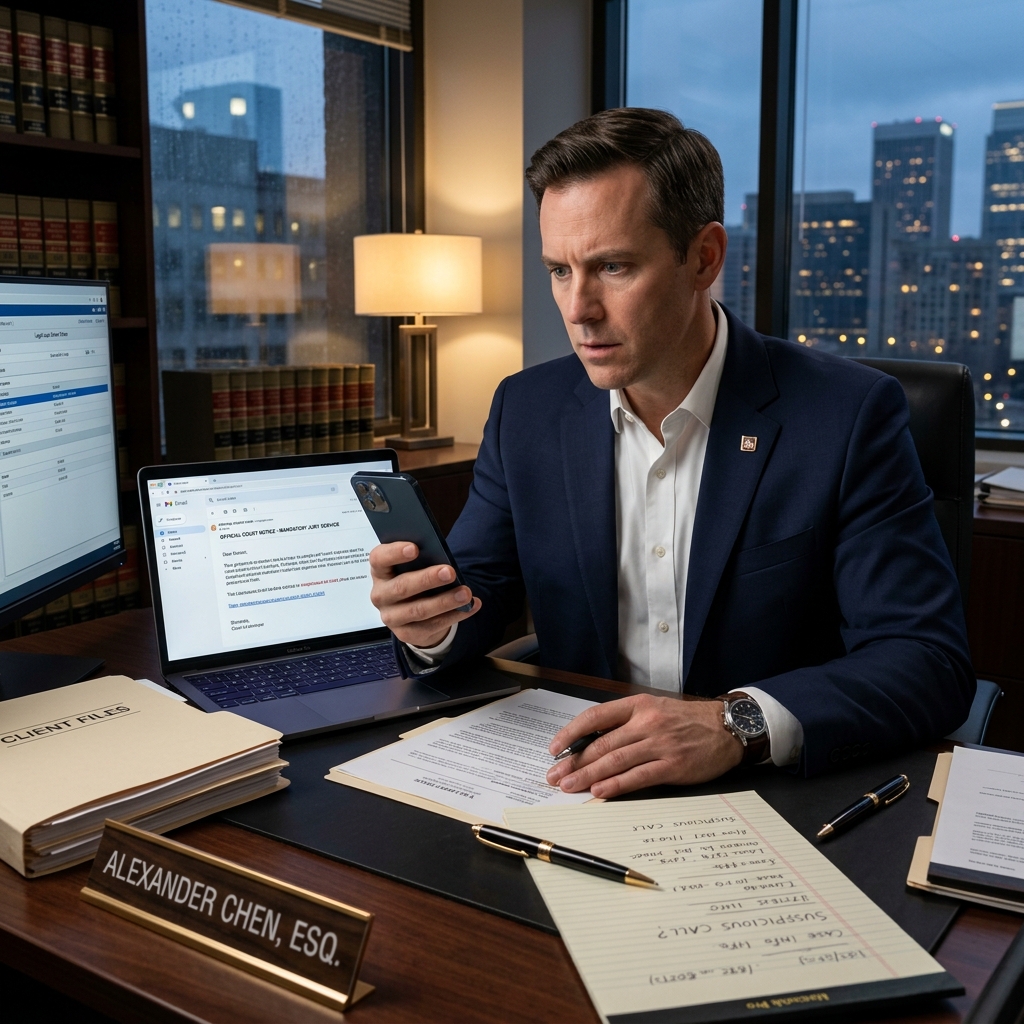
Jury service is a cornerstone of the justice system, but it has also become a convenient pretext for sophisticated fraud schemes. In recent years, jury duty scams have expanded beyond the general public and begun deliberately targeting lawyers, law firm staff, and even court-related personnel. These scams use convincing scripts, official-sounding titles, and realistic threats to extract money or sensitive information from victims.
Legal professionals might assume they are too experienced to fall for such schemes, yet scammers increasingly design their tactics to exploit the routines and pressures lawyers face, such as court appearances, professional discipline concerns, and strict compliance obligations. This article explains how modern jury duty scams work, why lawyers are attractive targets, and what practical steps law firms can take to defend themselves and their clients.
Why Jury Duty Is Attractive Ground for Scammers
Jury duty scams exploit a mix of fear, urgency, and respect for the court system. Courts do impose serious consequences for knowingly failing to appear, including fines or, in extreme circumstances, contempt sanctions. Scammers leverage this reality to make their threats sound plausible.
- High emotional pressure: The idea of a warrant or contempt order triggers anxiety and rapid decision-making.
- Broad familiarity: Nearly every adult has heard of jury duty, even if they have not served.
- Perceived authority: References to “U.S. Marshals,” “court clerks,” or “judge’s chambers” can override skepticism.
- Information-rich context: Courts hold personal information, so requests for data may appear routine.
When scammers target lawyers, they add another layer: attorneys understand the consequences of ignoring a court order and are acutely aware of reputational and disciplinary risks. That professional awareness can be manipulated into hurried compliance.
How Modern Jury Duty Scams Typically Operate
While details vary by jurisdiction and group targeted, jury duty scams often follow a recognizable pattern. Federal and state authorities have repeatedly warned about these schemes, noting common elements that appear in many complaints.
Common Stages of the Scam
- Initial contact: The victim receives an unsolicited phone call, email, text message, or social media message claiming they missed jury duty or a related court appearance.
- Identity claim: The scammer impersonates a court clerk, judge, sheriff, police officer, U.S. Marshal, or juror services representative.
- Alleged violation: The caller asserts that the victim failed to appear for jury selection, grand jury, or a mandatory court proceeding, and now faces sanctions, fines, or arrest.
- Escalating pressure: Threats of arrest, confinement, or professional consequences are introduced, often accompanied by fabricated case numbers or docket references.
- Demand for compliance: The victim is told they must verify personal information or pay an immediate fine or bond to avoid arrest.
- Payment channel: Scammers demand payment via gift cards, cryptocurrencies, wire transfers, payment apps, or other non-reversible methods—never traditional court-approved channels.
Authorities emphasize that legitimate courts do not demand payments over the phone and do not accept gift cards, cryptocurrency, or peer-to-peer payment apps as fines or bail. Any request for those methods is a strong indicator of fraud.
Emerging Variants Targeting Legal Professionals
When lawyers or law firm staff are the targets, scammers may adapt their scripts to sound more credible in a legal setting. These variations can include:
- Referencing specific courts where the lawyer regularly appears.
- Claiming a missed appearance for a jury-related motion, voir dire, or pretrial conference.
- Invoking professional discipline, suggesting that failure to immediately resolve the alleged issue could be reported to a state bar.
- Using terminology such as “administrative hold,” “bench warrant,” or “contempt citation” that sounds familiar to attorneys.
Because these details resemble real court proceedings, lawyers under time pressure may respond quickly, especially if the scam surfaces on the morning of a busy docket or during trial preparation.
Red Flags Lawyers and Law Firms Should Watch For
The U.S. courts and consumer protection agencies have identified clear markers that distinguish legitimate jury communications from fraudulent ones. Attorneys can incorporate these indicators into firm-wide training and internal protocols.
| Scenario | Legitimate Court Practice | Scam Warning Signs |
|---|---|---|
| Initial jury contact | Most courts send jury summons by regular mail. | Unsolicited phone call, text, or email claiming a missed jury duty. |
| Payment requests | Courts do not demand immediate payment over the phone or via informal methods; fines are assessed through formal proceedings. | Demand for payment via gift card, cryptocurrency, payment app, or wire transfer. |
| Information collection | Courts avoid collecting sensitive personal data such as full Social Security numbers by phone or email. | Requests for Social Security number, bank details, or driver’s license image in response to a call or message. |
| Threats and urgency | Legitimate officials do not issue arrest threats in unsolicited calls; enforcement follows formal notice and process. | Immediate arrest threats, pressure to stay on the line, or warnings not to speak to anyone else. |
Why Lawyers Are Attractive Targets
While jury duty scams affect the general public, lawyers present distinctive opportunities for fraudsters. Several factors heighten the risk for legal professionals:
- Time pressure and multitasking: Attorneys often juggle court deadlines, client calls, and administrative work, making them more inclined to respond quickly rather than verify.
- High trust in court communications: Lawyers routinely receive urgent messages from clerks, judges’ chambers, and opposing counsel, so a new “urgent” call may not seem unusual.
- Professional consequences: Even unfounded threats of contempt or missed court obligations can cause serious anxiety about reputation and discipline.
- Access to resources: Law firms typically have business accounts, client trust funds, and company cards that scammers may try to tap through fraudulent payments.
- Gatekeeper role: Lawyers influence client decisions and may inadvertently pass misinformation along if they themselves are misled.
By understanding these vulnerabilities, firms can design policies that slow down responses to unsolicited jury-related contacts and require verification before any action or disclosure.
Protective Measures for Law Firms and Legal Departments
Effective protection against jury duty scams requires both individual awareness and organizational safeguards. Federal courts and consumer agencies recommend a combination of verification, reporting, and internal controls.
Institutional Safeguards
- Verification protocol: Establish a firm-wide rule that any unexpected jury-related communication must be verified by independently contacting the court using known phone numbers or official websites before responding.
- Centralized response: Designate a staff member or small team responsible for interacting with court clerks, so unusual calls are automatically routed to them rather than handled ad hoc.
- Payment authorization controls: Require partner-level or management sign-off for any payment allegedly requested by a court or law enforcement officer, especially if urgent.
- Data handling policies: Train staff never to disclose Social Security numbers, full dates of birth, or bank account information in response to unsolicited contacts.
- Incident logging: Maintain a simple log of suspected scam attempts, including caller ID, script details, and time of contact. This log can assist law enforcement and help identify patterns.
Individual Best Practices for Lawyers
Beyond institutional policies, individual attorneys can adopt habits that reduce risk:
- Pause before responding: Do not act immediately when confronted with threats linked to jury duty; take time to verify through official channels.
- Use trusted contact info: Look up court numbers via official court websites or bar association resources instead of calling back numbers provided by the caller.
- Recognize technical manipulation: Treat caller ID as unreliable. Scammers can spoof numbers associated with courts or police departments.
- Refuse non-standard payments: Under no circumstances agree to pay alleged fines via gift cards, cryptocurrency, or payment apps.
- Inform colleagues: If you receive a suspicious call, immediately notify colleagues and support staff so they can recognize similar tactics.
What to Do If You Encounter a Jury Duty Scam
Authorities encourage prompt reporting of suspected jury duty scams, both to mitigate personal risk and to assist in broader enforcement efforts. Legal professionals are well-positioned to contribute information that supports these efforts.
Immediate Steps
- Do not pay or share data: If the caller or sender demands payment or sensitive information, refuse and end the interaction.
- Verify with the court: Contact the clerk’s office of the relevant court using official contact details to confirm whether there is any genuine issue with jury service or court appearances.
- Document the encounter: Record the date, time, caller ID, script used, and any numbers or email addresses provided.
Reporting Channels
- Federal Trade Commission: Report fraud attempts through the FTC’s dedicated reporting site for scams and suspicious communications.
- Local law enforcement: Notify the local police or sheriff’s office, particularly if the scam involves impersonation of their personnel.
- Court clerks: Inform the clerk’s office of the court that was impersonated so they can warn others and, in some cases, post scam alerts on their websites.
Professional organizations, such as state bar associations, often distribute scam alerts and practical guidance. Lawyers can leverage these channels to ensure recent developments are shared widely within the profession.
Frequently Asked Questions About Jury Duty Scams Targeting Lawyers
1. Can a court or law enforcement officer call me about jury duty?
Courts may occasionally contact potential jurors by phone for administrative reasons, but most official jury summonses are sent by mail. Legitimate officials do not use unsolicited calls to demand payment or threaten arrest for missed jury service.
2. I received an email saying I missed federal jury duty and must pay a fine. Is that ever legitimate?
Federal courts do not collect fines or require payments by email or phone in response to alleged missed jury service. Any email threatening arrest or demanding payment in non-traditional formats (such as gift cards or payment apps) should be treated as a scam and reported.
3. What if a caller knows my bar number or the court where I practice?
Scammers may gather publicly available information about attorneys, including bar numbers, firm addresses, and typical courts of practice. Familiar details do not guarantee authenticity. Always verify by independently contacting the court using official phone numbers listed on court or government websites.
4. Could my failure to respond to a real jury summons cause professional disciplinary issues?
Failure to comply with legitimate court orders can have legal and, in serious cases, professional consequences. However, authentic issues with jury service will be communicated through formal channels—typically mailed notices or court filings—not sudden demands for payment over the phone. If in doubt, contact the court clerk directly for clarification.
5. How should law firms train staff who answer phones about these scams?
Receptionists, legal assistants, and paralegals should receive clear guidance:
- Never disclose personal or financial data to unsolicited callers.
- Route suspicious jury-related calls to a designated attorney or administrator.
- Log details of suspected scam calls and inform firm leadership.
- Know where to find official court contact information for verification.
Building a Culture of Skepticism Around Unsolicited Jury Contacts
As jury duty scams evolve, especially those targeting lawyers, the most effective defense lies in organizational culture. Firms that normalize careful verification, refuse to act on threats without independent confirmation, and regularly educate staff about new fraud tactics are less likely to suffer financial loss or reputational damage.
Legal professionals, as officers of the court, also play a role in broader public protection. By sharing accurate information about how real jury processes work and encouraging clients to ignore and report scam attempts, lawyers help safeguard the integrity of the justice system. Recognizing that courts will not demand immediate payment over the phone, will not threaten arrest via text message, and will not ask for sensitive personal data in unsolicited communications is the foundation of that protection.
References
- That call or email saying you missed jury duty and need to pay? It’s a scam. — Federal Trade Commission. 2025-03-31. https://consumer.ftc.gov/consumer-alerts/2025/03/call-or-email-saying-you-missed-jury-duty-need-pay-its-scam
- Juror Scams — United States Courts. 2024-05-10 (last updated). https://www.uscourts.gov/court-programs/jury-service/juror-scams
- U.S. District Court And U.S. Attorney’s Office Warn Public Of Jury Duty Scam — U.S. Department of Justice, Middle District of Florida. 2022-03-07. https://www.justice.gov/usao-mdfl/pr/us-district-court-and-us-attorneys-office-warn-public-jury-duty-scam
- Jury Duty Scam — Superior Court of California, County of San Mateo. 2023-11-15 (last updated). https://sanmateo.courts.ca.gov/divisions/juror-services/jury-duty-scam
- ‘Jury duty’ scam: How it works and what to watch out for — The Hill / Nexstar. 2024-07-03. https://thehill.com/homenews/state-watch/5930892-jury-duty-scam-how-it-works-and-what-to-watch-out-for/
- With jury duty scams on the rise, Attorney General Moody releases new resource to help keep Floridians protected — The Florida Bar News. 2023-09-28. https://www.floridabar.org/the-florida-bar-news/with-jury-duty-scams-on-the-rise-attorney-general-moody-releases-new-resource-to-help-keep-floridians-protected/
Similar Articles








Read full bio of Sneha Tete




