
Overview of New Mexico Traffic Rules and Penalties
A clear, practical guide to New Mexico traffic laws, points, fines, and license penalties for everyday drivers.
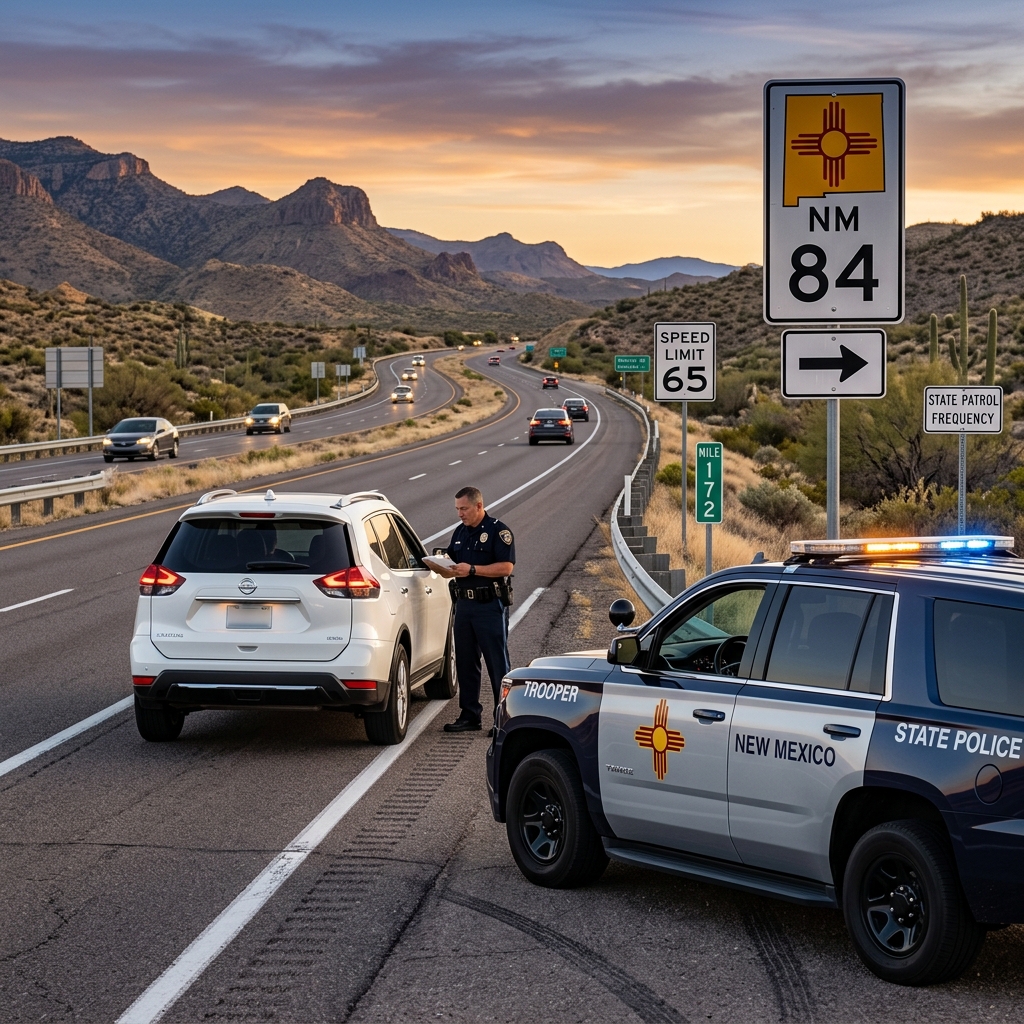
New Mexico drivers are subject to a detailed set of traffic rules found primarily in Chapter 66 of the New Mexico Statutes Annotated, often called the Motor Vehicle Code. These laws govern everything from speeding and seat belts to driving while intoxicated (DWI), license suspensions, and how many points go on your record after a ticket.
This guide explains the main types of violations, how fines and points work, and what can happen if you accumulate too many offenses. It is designed for everyday drivers who want to understand the rules, avoid costly penalties, and stay safe on New Mexico roads.
Main Sources of New Mexico Driving Law
New Mexico traffic rules are not found in a single chart or pamphlet. Instead, they are spread across several official sources that work together:
- Motor Vehicle Code (Chapter 66 NMSA) – The core state laws on vehicle registration, licensing, traffic rules, and penalties.
- Administrative rules – Regulations adopted by the Motor Vehicle Division (MVD) and related agencies that detail procedures and enforcement practices.
- Uniform Traffic Ordinance (UTO) – A model ordinance used by many cities and counties to adopt local traffic rules consistent with state law.
- New Mexico Driver Manual – An official guide summarizing rules for drivers, including safe driving practices and licensing requirements.
While this article focuses on key concepts, drivers should refer to the text of Chapter 66 and official MVD publications for the most precise legal language and recent changes.
How Traffic Violations Are Classified
Not all traffic offenses carry the same weight. New Mexico law distinguishes between different levels of violations, with penalties that range from small fines to potential jail time.
Infractions and Low-Level Offenses
Many everyday traffic tickets fall into the category of minor violations. These can include:
- Driving a few miles per hour over the speed limit
- Failure to use a turn signal
- Failure to wear a seat belt (for drivers and certain passengers)
- Rolling through a stop sign at low speed
Typically, these violations result in a monetary fine and the addition of points to the driver’s record, but no jail time. The exact amount of the fine will depend on the specific offense and any local fee schedules.
Misdemeanors and More Serious Offenses
Some traffic violations are prosecuted as misdemeanors, especially when they significantly increase the risk of harm. Examples can include:
- Excessive speeding well above the posted limit
- Reckless or careless driving behaviors
- Driving while license is suspended or revoked
- Failure to stop at certain railroad crossings when required by law
Misdemeanors may involve higher fines, mandatory court appearances, potential jail time, and more severe impacts on your driving record. In addition, some offenses can trigger automatic license suspensions, probationary conditions, or mandatory educational programs.
Speed Limits and Speeding Penalties
Speeding is one of the most common traffic violations in New Mexico, and the consequences depend on how much you exceed the posted limit and where you are driving.
General Speed Rules
Speed limits are posted based on road type, surrounding land use, and safety concerns. While limits vary by location, some common patterns include:
- Urban or residential streets – Lower limits to protect pedestrians and cross-traffic.
- State highways – Moderate to higher limits, depending on design and traffic conditions.
- Interstate highways – Higher speed limits where the road design supports faster travel.
New Mexico law also restricts how slowly you can travel in the passing lane. For example, a recent bill specifies that a vehicle may not be driven in the farthest left lane of a multi-lane highway at a speed less than 10 miles per hour below the posted speed limit, with violations classified as misdemeanors and fines set by statute.
Typical Speeding Fine Structure
In general, base fines increase as speed increases above the limit. A driver who exceeds the speed limit by a small margin may pay a relatively modest fine, while someone driving 20 or more miles per hour over the limit can face substantially higher penalties, particularly in protected zones such as school areas.
To illustrate the pattern, consider the following example scenario of how fines might escalate (actual amounts are determined by statute and local schedules):
| Speed Over Limit | Typical Consequences |
|---|---|
| 1–10 mph | Lower fine, points added to record |
| 11–20 mph | Higher fine, more points, possible court appearance |
| 20+ mph | Significant fine, maximum points, potential for license action |
| Any speeding in school or construction zones | Enhanced penalties; some fines may be doubled by law |
Drivers should always check posted signs and remember that special zones—such as schools and construction areas—often carry automatic fine increases when speed limits are violated.
Seat Belts, Child Safety, and Other Basic Rules
New Mexico law emphasizes occupant safety through seat belt and child restraint requirements. These rules are part of a broader effort to reduce injuries and fatalities on state roads.
Seat Belt Requirements
In general, drivers and passengers in the front seat must wear seat belts, and many vehicles require seat belts for certain rear-seat passengers as well. Failure to wear a seat belt is normally treated as a minor violation, but it still carries consequences:
- Payment of a fine (specific amount set by statute or ordinance)
- Points added to the driver’s record, often fewer than for moving violations
While seat belt violations are not among the most serious traffic offenses, they can combine with other tickets to push a driver closer to a license suspension.
Child Restraint Laws
New Mexico has specific requirements for how children must be secured in vehicles, based primarily on age, weight, and height. These may include:
- Rear-facing car seats for infants and younger children
- Forward-facing seats with harnesses for toddlers and preschoolers
- Booster seats for older children until they fit properly in adult belts
Using proper child restraints is not only a legal obligation but also a documented safety measure supported by national highway safety research.
Driving While Intoxicated (DWI) and Alcohol-Related Offenses
New Mexico takes driving while intoxicated very seriously. DWI laws combine criminal penalties, administrative license actions, and ignition interlock requirements to deter impaired driving.
Basic DWI Framework
While specific blood alcohol concentration (BAC) limits and penalty ranges are established by statute, key elements of the DWI system typically include:
- A per se BAC threshold for adult drivers (e.g., 0.08 percent) at or above which a driver is presumed impaired under the law.
- Lower thresholds for certain categories, such as commercial drivers or drivers under 21.
- Administrative license revocation by the MVD if a driver refuses testing or tests above the legal limit.
- Criminal penalties that escalate with repeat offenses, including fines, jail, community service, and mandatory treatment.
- Ignition interlock device requirements for many offenders, restricting when and how they can drive after conviction.
Because DWI laws are complex and periodically updated, defendants often need legal counsel to understand all potential consequences.
Other Alcohol- and Drug-Related Driving Rules
New Mexico laws also address driving under the influence of drugs, including controlled substances and certain prescription medications. Impairment can lead to charges even when alcohol levels are below the per se BAC threshold.
The New Mexico Driver’s License Points System
New Mexico uses a points system to monitor driver behavior and identify those with repeated violations. Each qualifying traffic offense adds a set number of points to the driver’s record.
How Points Are Assigned
Although the exact point value depends on the offense, a typical pattern is:
- Minor moving violations (such as a simple seat belt offense) – low point value
- Standard moving violations (speeding, failing to yield, running a red light) – moderate points
- Serious moving violations (excessive speeding, reckless driving) – high points
The more hazardous the conduct, the more points it usually carries. Points may stay on the driving record for a defined period, and accumulating too many points within that window can result in license suspension.
License Suspension Thresholds
New Mexico law provides for license suspensions when drivers accumulate points quickly. A common framework is:
- Reaching a mid-level point total within a year (for example, seven points) can result in a temporary suspension of several months.
- Reaching a higher threshold within the same period (such as 12 points) can trigger a longer suspension, up to a year.
Once a license is suspended, the driver may need to complete a reinstatement process, which can include fees, completion of driver improvement courses, or proof of financial responsibility.
Local Traffic Ordinances and the UTO
In addition to statewide statutes, New Mexico municipalities can adopt their own traffic codes. Many rely on the Uniform Traffic Ordinance (UTO), a model ordinance maintained by the New Mexico Municipal League.
Why Local Rules Matter
Local ordinances allow cities and counties to address particular issues in their communities, such as:
- Parking restrictions in downtown or residential neighborhoods
- Lower speed limits around schools, parks, or business districts
- Special rules for bicycle lanes or pedestrian zones
While these rules must remain consistent with state law, they can add details that drivers need to know when traveling through different jurisdictions.
Consistency with State Law
The UTO is periodically updated to incorporate legislative changes and maintain consistency with Chapter 66. Using a common model helps reduce conflicts between local and state rules and makes enforcement more predictable for drivers.
Administrative Hearings, Appeals, and MVD Actions
The Motor Vehicle Division and related agencies handle license suspensions, revocations, and many administrative aspects of traffic enforcement. Drivers who face such actions may have rights to hearings and appeals.
Role of the Administrative Hearings Office
The New Mexico Administrative Hearings Office oversees hearings involving MVD, including disputes about license suspensions, revocations, and certain compliance issues. Its website provides links to:
- The official Motor Vehicle Code in the New Mexico Compilation Commission’s online statutes system
- Regulations and procedural rules
- Guidance on how hearings are conducted
These administrative proceedings can be crucial in cases involving DWI-related revocations, points-based suspensions, or significant violations that threaten a person’s driving privileges.
MVD Rules and Driver Responsibilities
The MVD publishes rules and guidance on a range of topics, including:
- Driver licensing and renewal
- Registration and titling of vehicles
- Access to driving records and history reports
- Identity and residency documentation requirements
Drivers are responsible for staying informed about these requirements, as failing to comply can result in additional penalties, holds on vehicle registration, or delays in license reinstatement.
Practical Tips for Staying Compliant
Understanding the legal framework is important, but everyday habits play a major role in avoiding tickets and protecting your license.
- Always obey posted speed limits, especially in school zones and construction areas where penalties are often higher.
- Wear your seat belt and ensure children are in appropriate restraints for their age and size.
- Never drive under the influence of alcohol or drugs; arrange alternate transportation if you have been drinking.
- Monitor your driving record to track points and address issues before they lead to suspension.
- Respond promptly to citations by paying fines or appearing in court, as required, to avoid additional penalties or default judgments.
- Consult official sources—such as Chapter 66 statutes, MVD publications, and the driver manual—for the most current rules.
Frequently Asked Questions About New Mexico Traffic Laws
Do all traffic tickets add points to my license?
No. While many moving violations add points, some minor offenses may carry only fines or administrative fees. The number of points depends on the specific violation and the point schedule used by New Mexico’s driver improvement system.
How long do points stay on my driving record?
The duration that points remain on your record is set by New Mexico’s administrative rules and internal MVD policies. Generally, points are tracked over a defined period (such as 12 months) to determine whether you reach suspension thresholds. For exact timelines, check current MVD regulations and the driver manual.
Can I lose my license for speeding alone?
Yes, in some situations. While a single low-level speeding ticket usually does not lead to suspension, repeated speeding violations can accumulate enough points to trigger a suspension. Extremely high speeds or aggravated circumstances may also lead to more serious consequences.
What should I do if I receive a DWI charge?
DWI cases carry both criminal and administrative consequences, including possible license revocation and ignition interlock requirements. You should review your rights, consider consulting an attorney, and pay close attention to deadlines for administrative hearings and court appearances.
Where can I read the exact laws that apply to my case?
You can access the official text of New Mexico’s Motor Vehicle Code, including traffic laws in Chapter 66, through the New Mexico Compilation Commission’s online statute database. The MVD website and the Administrative Hearings Office also provide links and additional guidance.
References
- New Mexico Statutes Chapter 66, Article 7 – Traffic Laws; Signs, Signals and Markings; Accidents; Weight and Size; Traffic Safety — New Mexico Legislature / Justia. 2025. https://law.justia.com/codes/new-mexico/chapter-66/article-7/
- MVD Statutes and Rules — New Mexico Administrative Hearings Office. 2024. https://www.aho.state.nm.us/HearingsConducted/MVDStatutesRules
- Rules and Regulations — New Mexico Motor Vehicle Division. 2024. https://www.mvd.newmexico.gov/rules-and-regulations/
- Uniform Traffic Ordinance (UTO) — New Mexico Municipal League. 2025-07-01. https://nmml.org/185/Uniform-Traffic-Ordinance-UTO
- New Mexico Driver Manual — New Mexico Motor Vehicle Division. 2019-11-19. https://realfile.tax.newmexico.gov/English%20Drivers%20Manualver11.19.19.pdf
- New Mexico Traffic Laws — FindLaw. 2024. https://www.findlaw.com/state/new-mexico-law/new-mexico-traffic-laws.html
- HB0348 – Traffic Violation Left Lane Restrictions — New Mexico Legislature. 2023. https://www.nmlegis.gov/Sessions/23%20Regular/bills/house/HB0348.html
Similar Articles








Read full bio of medha deb


