
New Mexico DWI Laws: 4 Key Rules, Penalties, And License Risks
A clear guide to New Mexico DWI rules, penalties, license impacts, and defense issues.
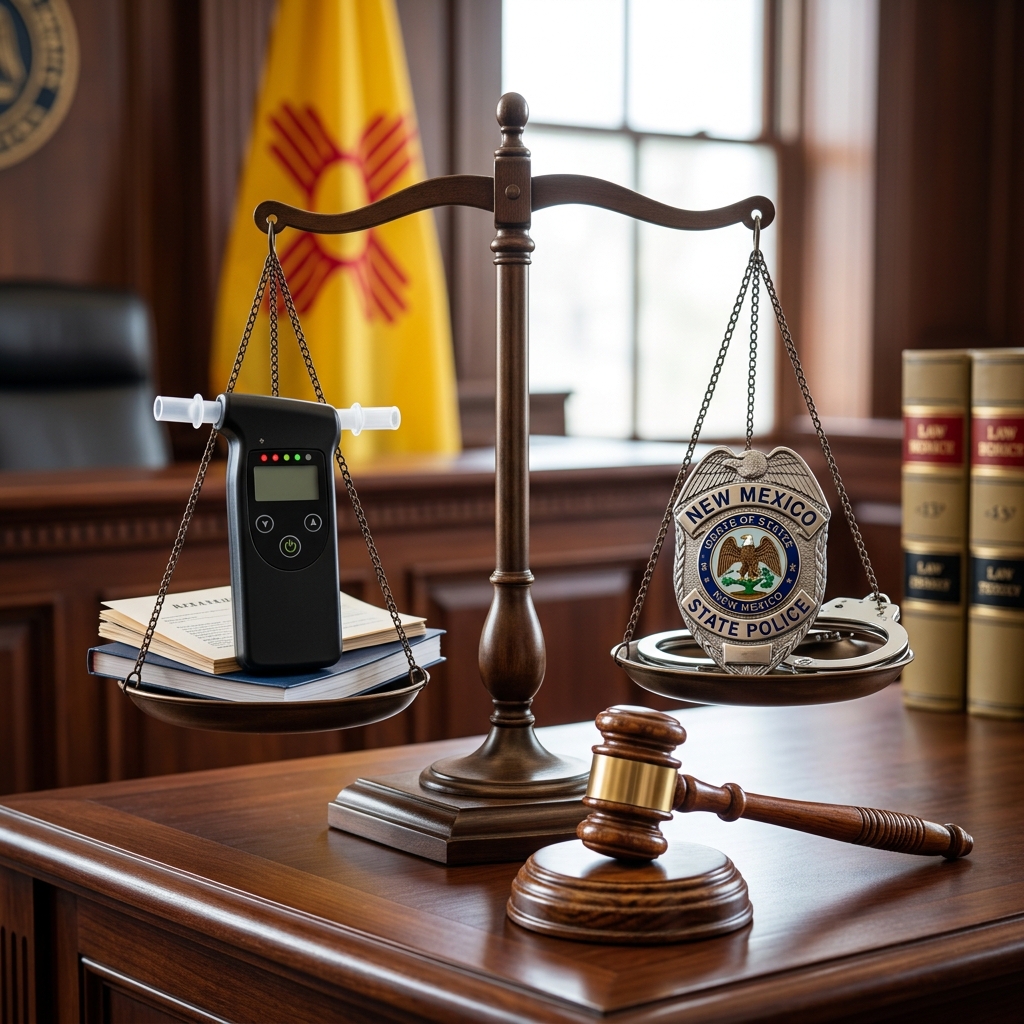
New Mexico takes driving while intoxicated seriously, and its laws apply to alcohol, drugs, and combinations of both. The state’s framework covers the basic offense, special rules for younger and commercial drivers, and harsher consequences when the facts show aggravation such as a high alcohol concentration or a refusal to test. The result is a system that can affect a driver’s criminal record, license status, insurance costs, and long-term mobility.
This guide breaks down the core rules in plain language so you can understand what counts as DWI, how penalties escalate, and why administrative license action can matter just as much as the criminal case.
What Counts as DWI in New Mexico
In New Mexico, a person may be charged with DWI not only for obvious impairment but also for driving with an unlawful alcohol concentration. The law covers a driver who is under the influence of intoxicating liquor, a driver impaired by drugs to the point of unsafe operation, and a driver whose blood or breath alcohol concentration meets or exceeds the legal threshold within the statutory time window. New Mexico law also sets a lower alcohol limit for commercial drivers and a near-zero standard for drivers under 21.
- Adults age 21 and older: alcohol concentration of 0.08 or higher.
- Drivers under 21: alcohol concentration of 0.02 or higher.
- Commercial drivers: alcohol concentration of 0.04 or higher while operating a commercial motor vehicle.
- Drug impairment: any drug use that leaves the driver incapable of safely operating a vehicle.
The statute also allows a DWI charge when the alcohol concentration is measured within three hours of driving and results from alcohol consumed before or while driving. That timing rule matters because it means a driver can still face liability even if the test is taken after the car has stopped.
How New Mexico Separates Standard and Aggravated Cases
Not every DWI is treated the same. New Mexico uses an aggravated DWI designation for cases with more serious facts, and that label can increase the minimum punishment. A high breath or blood alcohol reading is one of the most common aggravating factors, but it is not the only one. Aggravated treatment can also arise when a driver refuses chemical testing or when the incident involves injury linked to unlawful driving.
This distinction matters because it affects jail time, treatment requirements, and other court-ordered conditions. A case that begins as a routine misdemeanor can quickly become more severe if the alcohol concentration is especially high or if the evidence shows conduct that the court treats as more blameworthy.
Penalties by Number of Prior Offenses
New Mexico penalties rise sharply with repeat offenses. The basic structure is designed to punish first-time conduct, but it becomes increasingly demanding for second, third, and later convictions. General sources on New Mexico DWI penalties show that first convictions usually remain misdemeanors, while later cases may carry longer jail exposure, larger fines, and mandatory ignition interlock requirements.
| Offense level | Typical classification | Possible consequences |
|---|---|---|
| First offense | Misdemeanor or petty misdemeanor framework depending on the charge description | Short jail term, fine, community service, screening, education, probation, and license revocation |
| Second offense | Misdemeanor | Longer jail exposure, larger fine, probation, treatment, and multi-year interlock requirements |
| Third offense | Misdemeanor in many descriptions, with harsher consequences | Substantial jail time, higher fine, extended revocation, and strict monitoring |
| Fourth and later offenses | Felony treatment | Prison exposure, significant fines, long-term or lifetime revocation consequences, and extended interlock obligations |
Descriptions of first-offense penalties vary somewhat across secondary sources, but they consistently point to jail exposure up to 90 days, a monetary fine, community service, alcohol screening, education, and probation. New Mexico public guidance also emphasizes that a conviction can trigger revocation and interlock obligations separate from any criminal sentence.
First-Offense Consequences in Practical Terms
For a first conviction, the most immediate concerns are usually the fine, a short jail sentence or mandatory minimum jail time in aggravated cases, and the loss of driving privileges. Some sources describe first-offense jail exposure as up to 90 days, with community service and DWI school commonly ordered. Many descriptions also note alcohol screening, possible counseling, and probation.
For many drivers, the most disruptive result is not only the criminal sentence but the interruption to daily life. A revoked license can affect work, child care, medical appointments, and basic errands. In practice, the court process can feel longer than the actual jail exposure because treatment, probation, and interlock requirements continue long after the initial hearing.
License Revocation and Ignition Interlock
License consequences are central to New Mexico DWI law. State guidance explains that a license can be revoked through both the implied consent process and a criminal conviction. That means a driver may deal with more than one type of suspension-related action arising from the same arrest.
New Mexico also uses ignition interlock devices as a recurring condition after DWI convictions. Several secondary sources describe a one-year interlock requirement for some first convictions and longer periods for repeat offenders. An interlock device is installed in a vehicle and requires the driver to pass a breath test before the vehicle starts. This is not merely a punishment; it is a monitoring tool intended to reduce drunk driving risk while allowing limited driving access.
For drivers trying to regain mobility, the practical question is often not whether the device is annoying but whether they can comply consistently. Missed calibrations, compliance violations, or failed tests can create new problems and may lead to additional penalties.
Under-21 and Commercial Driver Rules
New Mexico does not apply a single alcohol threshold to every driver. Younger drivers face a much lower limit, and commercial drivers face a professional standard that is lower than the ordinary adult rule.
- Drivers under 21 are subject to a 0.02 limit.
- Commercial drivers are subject to a 0.04 limit while operating a commercial motor vehicle.
- Drivers 21 and older are subject to the standard 0.08 rule.
These separate thresholds reflect policy choices about safety risk and public responsibility. Younger drivers are held to a near-zero standard because underage drinking is prohibited and because alcohol affects driving judgment even at low levels. Commercial drivers face stricter expectations because of the size of the vehicles they operate and the potential scale of harm in a crash.
Felony Exposure for Later Offenses
At some point, repeated DWI conduct stops being treated as a routine misdemeanor pattern. Sources discussing New Mexico penalties explain that later convictions, especially fourth and subsequent offenses, can become felonies. Felony status raises the stakes significantly because it can bring prison exposure, longer revocation, and lasting consequences beyond the immediate sentence.
Even when the exact punishment differs across summaries, the direction is clear: repeat offenders face much harsher consequences than first-time defendants. That escalation reflects the state’s emphasis on preventing serial impaired driving and on treating repeated violations as a public safety problem rather than a one-time lapse.
How the Implied Consent Rule Fits In
New Mexico’s implied consent framework gives license consequences independent force. According to the state’s motor vehicle guidance, a driver’s license can be revoked for an implied consent violation as well as for a DWI conviction. In practical terms, that means refusing a breath or blood test is not a neutral choice. It can create its own administrative and licensing consequences.
This is one reason DWI cases often involve both criminal defense issues and administrative hearing issues. A driver may need to challenge the stop, the testing process, or the revocation notice in more than one forum. Missing a deadline or assuming that one process will automatically fix the other can be costly.
Common Defense Questions After an Arrest
People charged with DWI in New Mexico often ask the same questions: Was the stop lawful? Was the testing accurate? Did the officer have enough evidence of impairment? Was the blood draw handled properly? Was the driver actually over the legal limit within the relevant time window? These questions matter because the state must still prove the case, and the details can change the outcome.
Potential defense issues often include:
- whether police had a valid reason to stop the vehicle;
- whether field sobriety tests were administered and interpreted correctly;
- whether breath or blood testing complied with required procedures;
- whether medication or medical conditions affected the signs of impairment;
- whether the alcohol concentration evidence fits the legal time requirements;
- whether the driver was actually operating the vehicle.
Because New Mexico law recognizes both impairment-based and per se theories, a defense can focus on the alleged impairment itself, the chemical test evidence, or both. The strongest response usually depends on the facts of the stop, the test results, and any prior record.
Frequently Asked Questions
Is a DWI the same as DUI in New Mexico? New Mexico commonly uses DWI terminology in statutes and state materials, while some secondary sources use DUI informally. The legal consequences discussed here are based on New Mexico’s DWI framework.
Can I be charged if my test happens after driving? Yes. The law allows a charge when the alcohol concentration is measured within three hours of driving and the alcohol came from drinking before or while driving.
Does refusing a chemical test help my case? Refusal can trigger separate license consequences through the implied consent process, so it may create more problems rather than fewer.
Do DWI convictions stay on record? New Mexico materials and secondary summaries indicate that DWI convictions have long-lasting record consequences, and one public reference notes a very lengthy period on the driving record.
What happens if a minor is in the car? Secondary sources indicate that aggravating facts can substantially increase the seriousness of the case, especially when children are involved. The exact punishment depends on the charge and court findings.
Why the Details Matter
New Mexico DWI law is not just about one BAC number. It is a layered system that considers age, license class, aggravating facts, repeat offenses, and administrative licensing consequences. A driver may face immediate arrest concerns, a criminal case, a revocation process, and long-term monitoring requirements all at once.
That layered structure is why people charged with DWI should pay attention to the exact legal basis of the case. A charge based on impairment, a chemical test result, a refusal, or a prior record can lead to different strategic questions and different possible penalties. Understanding those distinctions is the first step toward making sense of the process.
References
- New Mexico DWI Laws Overview — New Mexico Legal Group. Accessed 2026-07-09. https://www.newmexicolegalgroup.com/dwi-defense/new-mexico-dwi-laws/
- New Mexico DUI Laws — NCDD. Accessed 2026-07-09. https://www.ncdd.com/new-mexico-dui-laws
- New Mexico DWI Laws: FAQ — LawInfo. Accessed 2026-07-09. https://www.lawinfo.com/resources/dui/new-mexico/what-are-the-penalties-for-dwi-in-new-mexico.html
- New Mexico Statutes Section 66-8-102 — New Mexico Statutes / Justia. Accessed 2026-07-09. https://law.justia.com/codes/new-mexico/chapter-66/article-8/part-2/section-66-8-102/
- DUI Penalties in New Mexico — Larsen & Mender Law. Accessed 2026-07-09. https://larsenandmender.com/dui-penalties-in-new-mexico/
- DWI Prevention — New Mexico Department of Public Safety. Accessed 2026-07-09. https://www.dps.nm.gov/nmsp/dwi-prevention/
- General DWI Information — New Mexico Motor Vehicle Division. Accessed 2026-07-09. https://www.mvd.newmexico.gov/nm-drivers-licenses-ids/dwi-information/
Similar Articles








Read full bio of medha deb




