
New Jersey Traffic Rules: 7 Essential Tips To Avoid Tickets Now
A practical overview of New Jersey driving rules, penalties, and roadway responsibilities for everyday motorists.
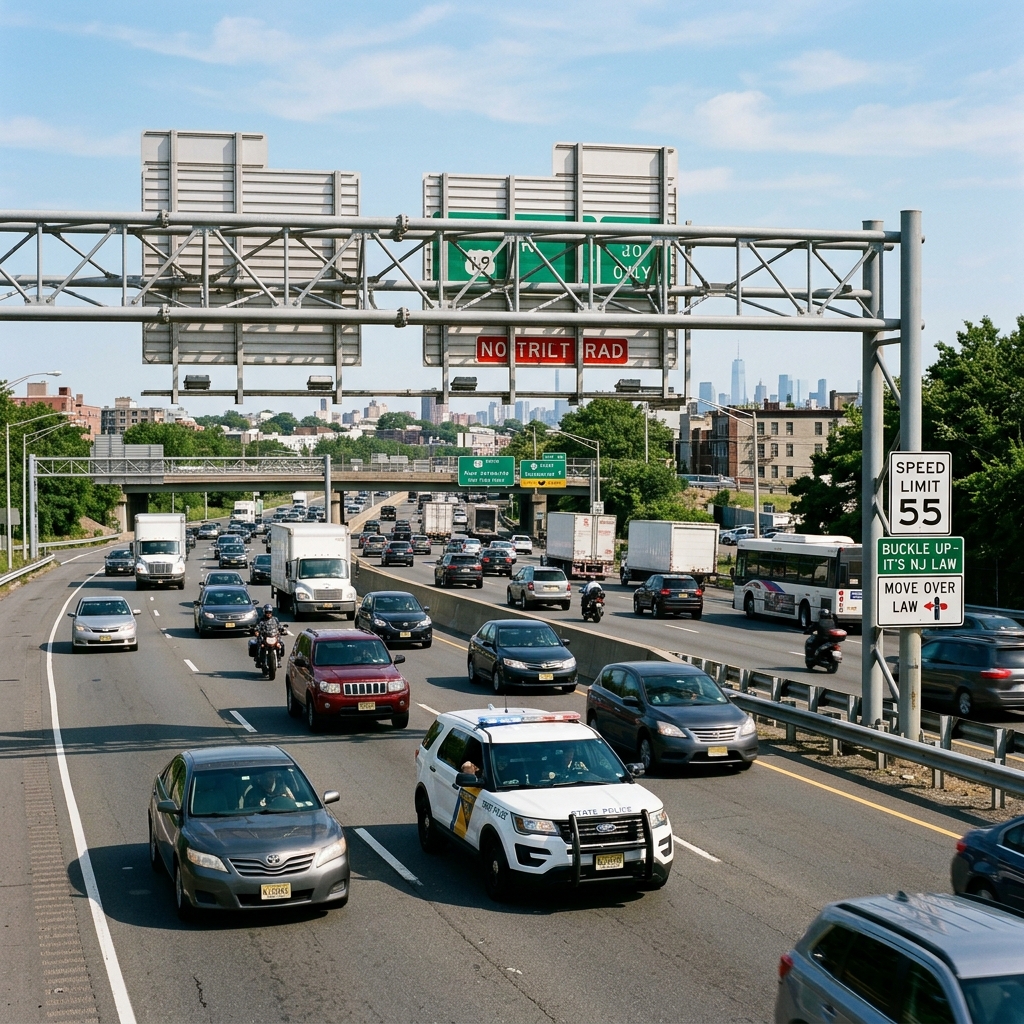
Driving in New Jersey means following a set of traffic rules that are both familiar and unusually specific. Some rules are designed to keep traffic moving smoothly, while others address safety concerns that are easy to overlook until a ticket or accident brings them into focus. Understanding these laws can help drivers avoid citations, reduce risk, and handle everyday travel with more confidence.
This guide explains core New Jersey traffic rules in plain language. It covers speed limits, passing requirements, lane discipline, vehicle equipment restrictions, and a few distinctive state rules that many drivers do not expect. It also highlights the importance of careful driving habits, since New Jersey law includes broad offenses for unsafe behavior beyond the most obvious violations.
How New Jersey’s traffic rules are organized
Most motor vehicle laws in New Jersey are found in Title 39 of the state statutes, and the Motor Vehicle Commission points drivers to that title for the bulk of traffic-related requirements. The state also issues traffic and parking regulations for roads under its jurisdiction through the Department of Transportation. In practice, that means a driver may need to understand both statewide rules and location-specific regulations depending on where they are traveling.
New Jersey traffic laws are not limited to one category of conduct. They address speed, passing, following distance, vehicle equipment, special roadway users, and conduct that interferes with the orderly flow of traffic. Some rules are enforced through fixed fines, while others can lead to broader violations that carry surcharge or insurance consequences.
Speed limits and basic roadway expectations
Speed is one of the most common reasons drivers receive tickets, and New Jersey uses a tiered system rather than one universal limit. According to FindLaw’s summary of the state rules, the maximum speed on many state highways is 65 mph, while some state highways and interstates may allow 55 mph or 65 mph depending on the roadway. Other areas have lower default limits, especially where people are walking, shopping, or commuting in dense neighborhoods.
| Roadway or area | Typical speed limit |
|---|---|
| School zones, business districts, and residential districts | 25 mph |
| Low-density business and residential districts | 35 mph |
| Other public roadways | 50 mph |
| Certain state highways and all interstates | 55 mph |
| Certain state highways | 65 mph |
Even where a road looks wide open, drivers should not assume that a higher posted speed applies. New Jersey road rules can change from one roadway segment to the next, so the posted sign always matters more than a general memory of the “usual” limit.
Keeping traffic flowing: slow driving can also be a problem
New Jersey law does not focus only on speeding. One statute makes it unlawful to drive so slowly that the normal and reasonable flow of traffic is hindered or obstructed, unless the lower speed is necessary for safe operation or compliance with the law. That means a driver can create a violation not only by going too fast, but also by moving unpredictably slowly in a way that disrupts surrounding traffic.
This rule matters on highways, merge lanes, and other roads where traffic depends on coordinated movement. A motorist who slows abruptly without a safety reason may create congestion, increase the chance of rear-end collisions, and expose themselves to enforcement under New Jersey’s broader unsafe-driving rules.
Passing another vehicle safely
Passing rules are another area where New Jersey law is quite specific. In general, a driver overtaking another vehicle moving in the same direction must pass on the left and should not return to the right lane until safely clear of the overtaken vehicle. That basic rule helps prevent sideswipes and confusion about lane position.
There are exceptions. Drivers may pass on the right when the vehicle ahead is turning left, or when the roadway contains at least two lanes moving in the same direction. Even then, the maneuver must be safe. Passing on the right is not a free pass to weave through traffic or squeeze into a narrow opening.
New Jersey law also requires the driver being passed to yield by moving to the right when it is safe and not increasing speed until the overtaking vehicle has fully passed. In other words, passing is a shared responsibility. Both drivers must act predictably so the maneuver can be completed without danger.
Following distance and heavy vehicles
Tailgating is prohibited under New Jersey law. A driver may not follow another vehicle more closely than is reasonable and prudent, taking into account speed, traffic, and road conditions. The point of this rule is straightforward: if the vehicle in front brakes suddenly, the following driver should still have room to react safely.
Commercial and heavy vehicles have an additional restriction in some situations. A motor truck traveling outside a business or residential district generally may not follow another motor truck within 100 feet, although one truck may still overtake and pass another. This recognizes the larger stopping distance and visibility issues that come with heavier vehicles.
Equipment rules that drivers often miss
New Jersey traffic law also reaches into vehicle equipment and cargo handling. One of the most unusual restrictions involves televisions. It is unlawful to operate a motor vehicle on public highways if a television screen is positioned so that the driver can see it while driving. The rule is aimed at preventing distraction, not at passengers watching entertainment from other parts of the vehicle.
Another less obvious rule concerns cargo that creates noise or danger. Drivers transporting metallic or other materials that clank or rattle may be fined under the state’s equipment and loading-related rules. This reflects a broader expectation that vehicles on public roads should be secured, quiet enough not to create hazards, and loaded in a way that protects other motorists.
These provisions show that New Jersey traffic law is not only about how fast a car moves. It also covers whether the vehicle itself is safe and whether its operation creates unnecessary risk or distraction for everyone nearby.
Motorcycles, helmets, and protection requirements
Motorcyclists face special safety rules in New Jersey. Riders and passengers are required to wear helmets approved by the state’s transportation authorities, and the helmet must meet specific design requirements, including a neck or chin strap and reflectivity on both sides. Unlike in some states, there is no broad exception to helmet use for adult riders in New Jersey.
These requirements reflect the higher vulnerability of motorcycle occupants in collisions. Because riders have far less physical protection than drivers in enclosed vehicles, the state treats helmet compliance as a core safety issue rather than a personal preference.
Animal and special-user protections on the road
New Jersey traffic law includes rules intended to protect animals and roadway users with special vulnerabilities. One example is the state’s treatment of horses. Drivers approaching or passing a person riding or driving a horse must reduce speed to 25 mph or less and proceed cautiously. If the rider signals the motorist to stop, the vehicle must remain stopped as long as needed to allow the horse to pass.
The state also addresses the transport of pets. A motorist may not carry a pet in a way that could cause harm, and animals may need to be restrained or secured appropriately depending on the circumstances. The underlying idea is that animals inside a moving vehicle should not become projectiles, distractions, or sources of avoidable injury.
Practical rules that shape everyday driving behavior
Some of New Jersey’s traffic obligations are less about a single act and more about general driving conduct. For example, the state has offenses for careless or reckless driving, and it also recognizes unsafe driving as a separate problem category. These laws can apply when a driver’s behavior does not fit one neat rule violation but still creates a real risk on the road.
That means a driver may face consequences even when no accident occurs. Sudden lane changes, aggressive maneuvering, failure to pay attention, or other unsafe habits can support a citation if they demonstrate disregard for ordinary caution. New Jersey’s approach encourages drivers to think beyond the posted limit and ask whether their conduct is actually safe for the surrounding conditions.
Common violations and what they can mean
Traffic violations in New Jersey can range from straightforward speeding tickets to conduct that carries larger penalties or administrative consequences. Depending on the violation, a driver may face fines, court costs, insurance surcharges, or licensing consequences. Some offenses are also tied to special restrictions, such as limitations on personalized license plates for certain serious convictions.
| Type of issue | Why it matters |
|---|---|
| Speeding | Can lead to fines and points depending on severity |
| Slow or obstructive driving | Can interrupt traffic flow and create unsafe conditions |
| Improper passing | Raises crash risk during lane changes or overtaking |
| Unsafe equipment or distraction | Can make the vehicle itself a hazard |
| General unsafe driving | May trigger broader enforcement even without a single obvious rule breach |
The important point is that New Jersey traffic law is designed to manage both individual choices and the collective movement of vehicles. A driver who follows the speed sign but ignores lane position, distraction risks, or surrounding road users can still run afoul of the law.
Frequently asked questions
What is the default speed limit in New Jersey?
There is no single default for every road, but FindLaw’s summary lists 25 mph in school zones, business districts, and residential districts; 35 mph in certain low-density districts; 50 mph on other public roadways; 55 mph on some highways and interstates; and 65 mph on certain state highways.
Can I pass on the right in New Jersey?
Yes, but only in limited situations such as when the other vehicle is turning left or when there are at least two lanes moving in the same direction, and only if the maneuver can be completed safely.
Is it illegal to have a TV visible to the driver?
Yes. New Jersey law prohibits operating a motor vehicle with a television screen positioned so that the driver can see it while driving on public highways.
Do motorcycle riders have to wear helmets?
Yes. New Jersey requires both riders and passengers on motorcycles to wear approved helmets meeting the state’s safety specifications.
Can I be ticketed for driving too slowly?
Yes. A driver may violate New Jersey law if they move so slowly that they obstruct the normal and reasonable flow of traffic, unless the lower speed is justified by safety or legal compliance.
Tips for staying compliant on New Jersey roads
- Check the posted speed limit every time the roadway changes.
- Use the left lane for passing and complete the maneuver only when it is safe.
- Keep a reasonable following distance, especially in heavy traffic or bad weather.
- Secure cargo, pets, and loose items before driving.
- Keep entertainment screens out of the driver’s line of sight.
- Wear proper motorcycle safety gear and ensure passengers do the same.
- Stay alert for horses, pedestrians, and slower roadway users.
New Jersey roads reward attention to detail. Many tickets are avoidable simply by recognizing that the state expects drivers to be calm, predictable, and considerate of the traffic around them.
References
- New Jersey Traffic Laws — FindLaw. 2025-03-13. https://www.findlaw.com/state/new-jersey-law/new-jersey-traffic-laws.html
- NJ traffic laws: Quirky motor vehicle rules drivers should know — NorthJersey.com. 2025-03-13. https://www.northjersey.com/story/news/new-jersey/2025/03/13/nj-traffic-laws-quirky-motor-vehicle-rules-drivers/82266195007/
- Statutes And Regulations — New Jersey Motor Vehicle Commission. 2026-07-09. https://www.nj.gov/mvc/about/regs.htm
- Traffic Regulations Overview, Reference/Links — New Jersey Department of Transportation. 2026-07-09. https://dot.nj.gov/transportation/refdata/traffic_orders/
- 2025 New Jersey Revised Statutes :: Title 39 — Justia Law. 2025-01-01. https://law.justia.com/codes/new-jersey/title-39/
Similar Articles








Read full bio of Sneha Tete


