Creating a will is one of the most direct ways to control what happens to your property after death. In New Hampshire, the law gives adults a clear path to make a valid will, but it also imposes formal rules about age, mental capacity, writing, signature, and witnesses. If those requirements are not met, a court may refuse to honor the document as a will. New Hampshire law also supplies a default distribution system for people who die without a valid will, which may produce a result very different from what they would have chosen themselves.
Why a Will Matters in New Hampshire
A will is more than a list of beneficiaries. It is a legal instruction sheet that tells the probate court who should receive your assets, who should administer your estate, and sometimes who should care for minor children or manage property left to them. Without a valid will, the state’s intestacy rules decide how your estate is divided, and those rules follow a fixed order rather than your personal wishes.
That difference matters most when your family situation is complex. Blended families, unmarried couples, children from different relationships, and people who want to leave gifts to friends or charities often benefit from a will because intestacy law does not account for those personal preferences.
Who Can Make a Valid Will
New Hampshire requires the person making the will, often called the testator, to meet basic legal capacity standards. The testator must be at least 18 years old, or younger if married, and must be of sound mind at the time the will is signed.
Being of sound mind generally means understanding three things: what property you own, who might reasonably expect to inherit from you, and how you want your property distributed at death. The standard is not perfection. A person may still have a valid will even if they have medical issues or temporary confusion, so long as they understand the will when they sign it.
What Makes a Will Legally Valid
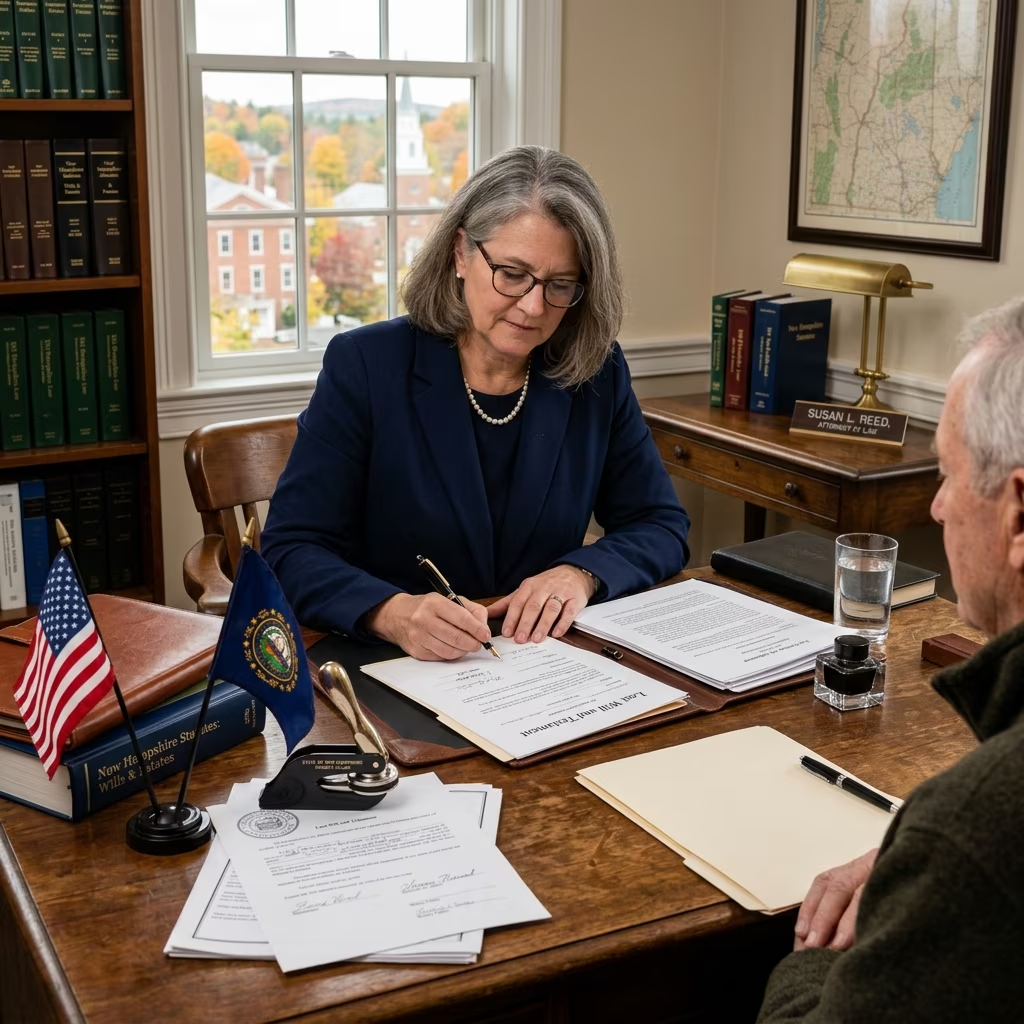
New Hampshire law is formal about execution requirements. A will must be in writing, signed by the testator, and witnessed by two or more credible witnesses who attest to the signature at the testator’s request and in the testator’s presence.
The state does not require a seal, and the law applies to wills executed under the current statutory framework. The central idea is simple: the court needs a reliable record that the document really reflects the testator’s intent.
| Requirement | New Hampshire Rule |
|---|---|
| Age | Generally 18 or older, or married if under 18 |
| Capacity | Must be of sound mind when signing |
| Writing | Must be in written form |
| Signature | Must be signed by the testator or by someone else at the testator’s direction and in the testator’s presence |
| Witnesses | Two or more credible witnesses are required |
Signing and Witness Rules
Witnesses play a key role in reducing disputes. They should be able to testify later if the will is challenged, which is why the law refers to them as credible witnesses. Under New Hampshire law, the witnesses must observe the signing or the testator’s acknowledgment of the signature.
New Hampshire also recognizes modern signing logistics in limited circumstances. The statute allows certain remote presence arrangements for witnessing through electronic communication when the required people can communicate simultaneously by sight and sound at the time of signing. Even so, the law expressly says this does not permit an electronic will.
Interested witnesses can create complications. A witness who receives a gift under the will does not automatically invalidate the document, but the gift to that interested witness may be void unless there are two additional disinterested witnesses. That rule is one reason estate planners often recommend using independent witnesses with no financial stake in the estate.
What New Hampshire Does Not Allow
Not every statement about final wishes counts as a will. New Hampshire does not recognize oral wills as a general rule, and it does not allow electronic wills at this time. The law does contain a narrow exception for soldiers in actual military service and for mariners or seamen at sea, but that exception is limited.
This means people who want to keep their estate plan valid should use a properly drafted written document, signed and witnessed in the way state law requires. Informal notes, text messages, voice recordings, and unsigned drafts usually will not substitute for a valid will.
What Happens If You Die Without a Will
Someone who dies without a will dies intestate. In that situation, New Hampshire’s intestacy laws decide who inherits, and the result depends on your marital status, whether you have children, and whether you have living parents or descendants.
These default rules are designed to approximate what the legislature believes many people would want, but they are not customized to your actual priorities. A spouse may receive most or all of the estate in some situations, while children, parents, or siblings may inherit in others.
- If you are married and have no children and no living parents, your spouse generally inherits everything.
- If you are married with children from the same relationship, your spouse receives a statutory share and the children receive the remainder.
- If you are married with children from another relationship, the spouse’s share is smaller and the children share the rest.
- If you are single with children, your children generally inherit equally.
- If you are single with no children, your parents inherit first, followed by siblings or their descendants if your parents are no longer living.
If no qualifying relatives exist, the estate may ultimately go to the State of New Hampshire. That result is one of the clearest reasons to make a will instead of relying on default inheritance rules.
Why Children Should Be Addressed Clearly
New Hampshire law does not give children an automatic right to inherit from a parent who has a valid will, unless they are born or adopted after the will is signed or the estate plan is otherwise affected by later family changes. If a parent wants to leave less to a child or exclude a child entirely, that decision should be stated clearly in the will to reduce the risk of confusion or litigation.
Clear language is especially important in blended families. A poorly drafted will can create disputes about whether an omission was intentional or accidental. A direct statement of intent is usually more effective than silence.
Core Planning Choices to Include in a Will
A strong New Hampshire will typically does more than distribute property. It also identifies an executor, names backup decision-makers, and may explain how personal property should be divided. Depending on the family situation, the document may also refer to trusts, guardianship nominations, or funeral instructions.
- Executor: the person who administers the estate and carries out the will’s instructions.
- Beneficiaries: the people or organizations receiving assets.
- Specific gifts: items such as jewelry, vehicles, or family heirlooms.
- Residuary clause: the provision covering everything not specifically given away.
- Guardianship nominations: helpful when minor children need care if both parents die.
Practical Steps for Writing a Better Will
People often think a will is only for the wealthy, but that is a mistake. Most adults own something worth protecting, from bank accounts and vehicles to digital assets and family keepsakes. The practical value of a will is not only in transferring wealth; it is also in reducing uncertainty for loved ones.
To make the document more effective, consider these steps:
- List major assets and think about who should receive each one.
- Choose an executor who is organized, trustworthy, and willing to serve.
- Use clear names rather than vague descriptions when naming beneficiaries.
- Review the will after marriage, divorce, birth, adoption, or death in the family.
- Store the signed original in a safe place and tell a trusted person where it is located.
When a Will May Be Challenged
Even a properly signed will can be contested. Common challenges usually focus on whether the testator had capacity, whether the document was properly executed, or whether someone exerted undue influence. Because New Hampshire requires two credible witnesses, those witnesses may become important evidence if a dispute reaches probate court.
Good drafting and careful execution reduce, but do not eliminate, the possibility of a challenge. The more ambiguous the will, the more room there is for disagreement. Consistent signatures, clear beneficiaries, and proper witness procedures make the will easier to defend.
Frequently Asked Questions
Do I need a lawyer to make a will in New Hampshire?
No. The law does not require a lawyer, but legal help can be useful if your family situation is complicated or if you want to reduce the risk of technical mistakes.
Can I make a handwritten will?
New Hampshire requires a will to be in writing, but a handwritten document still has to satisfy the statutory execution rules. The safest approach is to use a clearly drafted written will that is properly signed and witnessed.
Does a will avoid probate?
No. A will usually goes through probate so the court can confirm its validity and oversee administration. The will helps direct the process, but it does not automatically bypass it.
Can I disinherit a child in New Hampshire?
Yes, a parent may state that intention in the will. Clear wording is important, because silence can create disputes about whether the omission was intentional.
Are electronic wills valid in New Hampshire?
No. The state does not currently allow electronic wills, even though some witnessing may occur by approved electronic communication in limited situations.
Final Planning Considerations
A valid New Hampshire will should reflect both the statutory requirements and the realities of your life. That means confirming capacity, using a written document, signing it correctly, and securing two qualified witnesses. It also means thinking beyond legal formality and asking whether the plan truly fits your family, property, and long-term goals.
For many people, the best estate plan combines a will with beneficiary designations, powers of attorney, and health care documents. The will handles property that passes through probate, while the other documents address financial and medical decisions during life. Taken together, those tools create a more complete plan than a will alone can provide.
References
- How to Make a Will in New Hampshire FAQ — FindLaw. 2025. https://www.findlaw.com/forms/resources/estate-planning/last-will-and-testament/how-to-make-a-will-in-new-hampshire-faq.html
- New Hampshire Revised Statutes Section 551:2 — Justia Law. 2025. https://law.justia.com/codes/new-hampshire/title-lvi/chapter-551/section-551-2/
- What Happens If You Don’t Have a Will in New Hampshire? — Estate and Elder Law Group. 2024. https://estateandelderlawgroup.com/what-happens-if-you-dont-have-a-will-in-new-hampshire/
- Rule 96-A. Proof of Validity of Will/Trust — New Hampshire Judicial Branch. 2024. https://www.courts.nh.gov/rules-circuit-court-state-new-hampshire-probate-division/rule-96-proof-validity-willtrust
- Make a New Hampshire Last Will and Testament — FormSwift. 2025. https://formswift.com/new-hampshire-last-will-and-testament