
New Hampshire Tenant Rights: Complete 2025 Guide For Renters
Understand New Hampshire tenant rights on deposits, repairs, privacy, evictions, and fair housing protections.
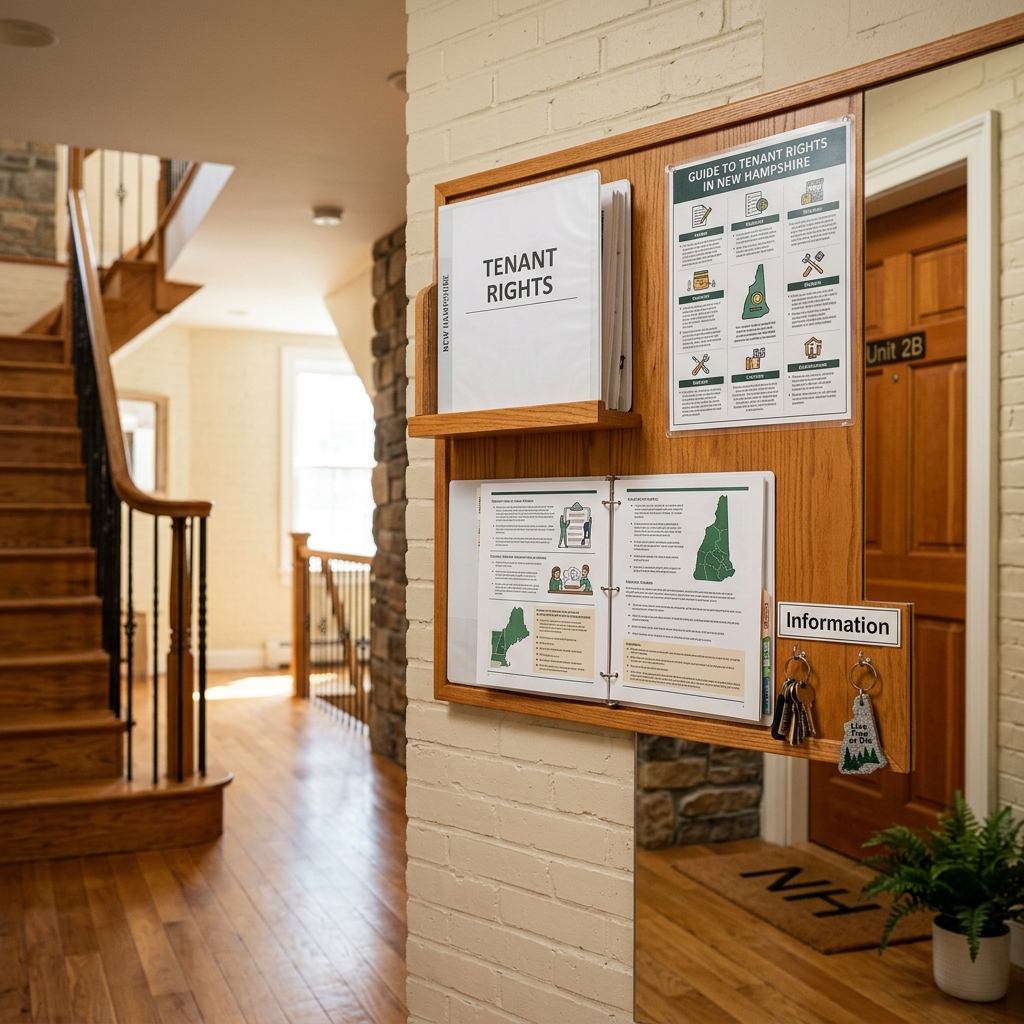
Tenants in New Hampshire have a broad set of legal protections that govern everything from the condition of their home to how and when they can be evicted. Understanding these rights before signing a lease, during the tenancy, and when moving out can help renters avoid disputes and assert their legal remedies when problems arise.
1. The Legal Framework for Renting in New Hampshire
New Hampshire landlord–tenant relationships are primarily regulated by state statutes, supplemented by local housing codes and federal fair housing laws. These rules apply whether a rental agreement is written or oral, although written leases offer clearer evidence of terms if disputes occur.
- State statutes regulate security deposits, eviction procedures, and minimum standards for habitability.
- Local codes often address building safety, sanitation, and occupancy limits.
- Federal law prohibits discrimination in rental housing based on protected characteristics.
In New Hampshire, tenants are entitled to a rental unit that is safe, structurally sound, and meets basic health standards, commonly referred to as the warranty of habitability.
2. Rental Agreements and Basic Tenant Rights
Tenants and landlords may enter into fixed-term leases (for example, one year) or month-to-month rental agreements. Regardless of the type of agreement, several basic rights apply.
2.1 Written vs. Verbal Agreements
New Hampshire law recognizes both written and verbal rental agreements, but a written contract is strongly recommended.
- Written agreements clearly set out the rent amount, due date, rules on pets, maintenance responsibilities, and other key terms.
- Verbal agreements are legally enforceable but harder to prove in court if there is a dispute about what was promised.
2.2 Right to Use and Occupy the Premises
Once a lease is in place, tenants have the right to use and occupy the rental unit for lawful residential purposes, as long as they comply with the lease terms and pay rent.
- Tenants are entitled to quiet enjoyment, meaning they should be free from unreasonable disturbances or interference by the landlord.
- Landlords cannot lock out tenants or force them to leave without following proper eviction procedures.
3. Security Deposits and Move-In Protections
Security deposit rules are a key part of tenant protections in New Hampshire. They regulate how much a landlord may collect, how funds must be held, and when deposits must be returned after move-out.
3.1 Security Deposit Limits and Handling
| Topic | New Hampshire Rule |
|---|---|
| Maximum deposit | Generally limited to one month’s rent or $100, whichever is greater, for most landlords. |
| Landlords with many units | Landlords controlling more than six units must comply with statutory limits and handling requirements. |
| Separate holding | Deposits are typically held in a separate account and may be subject to interest and itemized accounting. |
| Return deadline | Deposits must be returned within a legally specified timeframe after the tenant vacates, commonly within 30 days for most situations. |
Landlords may deduct only certain lawful charges from the deposit, such as unpaid rent, repair of damage beyond ordinary wear and tear, and other documented costs permitted by statute.
3.2 Move-In Documentation
To protect themselves, tenants should carefully document the condition of the unit at move-in.
- Complete a written checklist describing existing defects or damage.
- Take dated photographs of each room, including appliances and fixtures.
- Send a copy of the condition report to the landlord and keep one for personal records.
Detailed documentation can help prevent unfair deductions from the security deposit and serves as valuable evidence if a dispute reaches court.
4. Habitability, Repairs, and Rent Withholding
New Hampshire tenants have strong rights related to the physical condition of their rental homes. The property must be fit for human habitation and comply with safety and sanitation standards.
4.1 Landlord’s Duty to Maintain a Habitable Home
- Provide working heat, hot water, and electricity where agreed.
- Ensure the building structure is sound and free from significant leaks or hazards.
- Maintain plumbing and sanitary facilities in good working order.
- Address infestations and comply with health and housing codes.
Tenants are generally responsible for using the premises reasonably, keeping their unit clean, and reporting serious problems in a timely way.
4.2 Requesting Repairs
Tenants should request repairs in writing and keep copies of all communication.
- Describe the issue clearly and explain why it affects health or safety.
- Provide reasonable time for the landlord to respond and make repairs (often 14–30 days for non-emergency issues).
- For emergencies (such as loss of heat in winter), the landlord should act promptly.
4.3 Remedies When Landlords Fail to Repair
If a landlord does not address serious habitability issues after being properly notified, New Hampshire tenants may have several legal options.
- Rent withholding – Tenants can sometimes withhold rent if conditions are truly uninhabitable; often rent is paid into an escrow account rather than kept by the tenant directly.
- Rent reduction – A court may reduce rent if the unit’s value is significantly diminished by poor conditions.
- Repair and deduct – In some situations, tenants may be permitted to make necessary repairs and deduct reasonable costs from rent, if authorized by law or agreement.
- Terminating the lease – If conditions are severe and persistent, the tenant may seek to end the lease based on the landlord’s breach of the warranty of habitability.
Tenants should follow statutory procedures carefully, as improper withholding of rent can lead to eviction for non-payment.
5. Privacy, Entry, and Protection from Harassment
New Hampshire tenants are entitled to privacy and freedom from harassment by their landlords. While landlords may need to enter the unit for repairs, inspections, or emergencies, they must respect tenants’ rights.
5.1 Landlord Entry Rules
- Except in emergencies, landlords should obtain the tenant’s consent before entering the unit.
- Entry should be at reasonable times and for legitimate purposes, such as repairs, inspections, or showing the unit to prospective renters.
- Repeated, unjustified entries or entry without consent may constitute harassment or a violation of the tenant’s right to privacy.
5.2 Protection from Harassment
New Hampshire law protects tenants from landlord conduct intended to force them out or interfere with their lawful use of the property.
- Landlords cannot shut off essential services such as water or heat to drive a tenant out.
- Threats, intimidation, or abuse of access rights may be grounds for legal action.
- Tenants can seek court orders or damages if harassment causes harm or violates statutory rights.
6. Evictions, Just Cause, and Court Procedures
Eviction in New Hampshire is a formal legal process. Landlords must follow specific notice and filing requirements before a tenant can be lawfully removed from a rental unit.
6.1 Common Grounds for Eviction
- Non-payment of rent – Failing to pay rent when due is one of the most common eviction grounds.
- Violation of lease terms – Examples include unauthorized occupants, pets in violation of the lease, or illegal activity.
- Property damage – Causing significant or repeated damage beyond normal wear and tear.
- Disturbance of other tenants – Persistent nuisance behavior that interferes with others’ quiet enjoyment.
New Hampshire generally requires just cause for eviction in most situations, particularly for terminating tenancies that have become month-to-month.
6.2 Notice to Quit Requirements
Before filing an eviction case, the landlord must issue a written notice to quit that explains the reason for eviction and provides a deadline for the tenant to take corrective action or move out.
| Eviction Reason | Typical Notice Period |
|---|---|
| Non-payment of rent | Often a 7-day notice, giving the tenant a short period to pay or leave. |
| Most other lease violations | Commonly a 30-day notice, depending on circumstances and statute. |
| Month-to-month termination without fault | Generally a 30-day written notice from either party. |
6.3 Tenant Rights During Eviction
Tenants have significant procedural protections once an eviction case reaches court.
- The right to receive proper legal notice and copies of court filings.
- The right to appear in court, present evidence, and respond to the landlord’s claims.
- In non-payment cases, the right to cure by paying all arrears, certain costs, and statutory damages before the hearing in some circumstances.
The New Hampshire Judicial Branch offers an Eviction Diversion Program, providing free mediation services so landlords and tenants can resolve disputes before a case is fully litigated.
7. Anti-Retaliation and Fair Housing Protections
New Hampshire law prohibits landlords from retaliating against tenants who exercise their legal rights, and federal and state fair housing laws forbid discrimination in rental housing.
7.1 Protection Against Retaliation
Landlords may not take adverse actions against tenants simply because they asserted rights related to repairs, safety, or legal compliance.
- Retaliatory rent increases or service reductions are prohibited.
- Landlords cannot use eviction as punishment for lawful complaints about code violations or habitability issues.
- Joining a tenant organization or filing an official complaint with authorities cannot be the basis for termination of tenancy.
7.2 Fair Housing and Anti-Discrimination Rules
Under federal and New Hampshire fair housing laws, landlords may not discriminate against tenants or rental applicants based on protected characteristics such as race, color, national origin, religion, sex, familial status, disability, and other categories defined by state law.
- Discrimination in advertising, rental terms, or access to facilities is unlawful.
- Landlords must make reasonable accommodations for tenants with disabilities, such as allowing service animals or permitting certain unit modifications.
- Refusing to rent or renew a lease because of a disability or family status is prohibited.
8. Special Protections for Survivors of Domestic Violence
New Hampshire provides targeted protections for tenants who are victims of domestic violence. These rules aim to preserve housing stability for survivors while allowing removal of the abuser from the premises.
- Landlords may request proof of domestic violence status, such as court orders, before applying specific protections.
- Landlords generally cannot terminate the lease early solely because the tenant is a victim.
- Courts or landlords may bifurcate the lease, evicting only the abuser and permitting the victim to remain.
These provisions help ensure survivors are not effectively punished through loss of housing for violence committed against them.
9. When the Property Is Sold or Ownership Changes
Tenant rights do not disappear when a rental property is sold. If there is a valid lease, the new owner generally steps into the shoes of the prior landlord and must honor the existing agreement until it expires.
- Rent amount, due dates, and other lease terms continue unchanged unless lawfully modified.
- Tenants should be notified of the change in ownership and given updated information for paying rent and submitting repair requests.
- Security deposits must be transferred or appropriately accounted for; tenants remain entitled to a proper return at the end of the tenancy.
10. Practical Tips for Tenants in New Hampshire
Tenants can reduce legal risk and strengthen their ability to assert rights by following practical steps throughout their tenancy.
- Before signing: Read leases carefully, clarify ambiguous terms, and confirm policies on repairs, entry, and deposits in writing.
- During the tenancy: Pay rent on time, document issues, and communicate with the landlord in writing for serious matters.
- If problems arise: Use written repair requests, keep records of unsafe conditions, and seek legal advice or mediation if disputes escalate.
- At move-out: Clean thoroughly, take photos, and provide a forwarding address to facilitate timely return of the security deposit.
11. Frequently Asked Questions (FAQs)
Q1: Can my landlord raise the rent without notice in New Hampshire?
For most month-to-month tenancies, landlords must provide at least 30 days’ written notice before raising the rent or changing other significant rental terms. For fixed-term leases, rent can usually only be changed when the lease is renewed, unless the contract itself allows mid-term increases.
Q2: How long does my landlord have to return my security deposit?
New Hampshire law generally requires landlords to return security deposits within a set period after the tenant vacates, commonly within 30 days, with an itemized list of any lawful deductions. Tenants should provide a forwarding address and may challenge improper deductions in court.
Q3: Can I withhold rent if my apartment is not safe or sanitary?
Tenants may have the right to withhold rent if serious habitability problems are not corrected after proper notice to the landlord, often by paying withheld rent into escrow rather than keeping it personally. Because improper withholding can lead to eviction, tenants should seek legal advice before using this remedy.
Q4: Is my landlord allowed to enter my unit whenever they want?
No. Except in emergencies, landlords are expected to obtain the tenant’s permission and enter at reasonable times for legitimate purposes such as repairs or inspections. Unreasonable or repeated entries without consent may violate privacy rights and could be considered harassment.
Q5: What should I do if I receive an eviction notice?
Read the notice carefully to understand the stated reason and deadline. Tenants often have the opportunity to cure issues such as unpaid rent and should consider contacting legal services or exploring mediation through the New Hampshire Judicial Branch’s Eviction Diversion Program. Do not ignore court papers, as failing to appear can result in a default judgment and rapid eviction.
References
- New Hampshire Landlord Tenant Laws — American Apartment Owners Association. 2024-01-01. https://american-apartment-owners-association.org/landlord-tenant-laws/new-hampshire/
- New Hampshire tenant rights: A 2025/2026 guide — FirstService Residential. 2025-05-01. https://www.fsresidential.com/new-england/what-we-do/articles/nh-tenant-rights/
- New Hampshire Tenant-Landlord Rental Laws & Rights for 2026 — Hemlane. 2026-01-01. https://www.hemlane.com/resources/new-hampshire-tenant-landlord-law/
- Tenant Rights In New Hampshire – A Comprehensive Guide — Steadily Insurance. 2024-06-01. https://www.steadily.com/blog/tenant-rights-in-new-hampshire-a-comprehensive-guide
- Landlord/Tenant – District Division — New Hampshire Judicial Branch. 2023-09-15. https://www.courts.nh.gov/our-courts/circuit-court/district-division/landlordtenant
- Landlord and Tenant Law Library Guide — New Hampshire Law Library. 2022-03-01. https://courts-state-nh-us.libguides.com/c.php?g=892981&p=6421480
- Tenant Resources — City of Nashua, NH. 2023-01-10. https://www.nashuanh.gov/1642/Tenant-Resources
Similar Articles








Read full bio of medha deb


