
New Hampshire Identity Theft and Fraud Laws Explained
Understand how New Hampshire defines identity fraud, its penalties, and practical steps to protect yourself and respond as a victim.
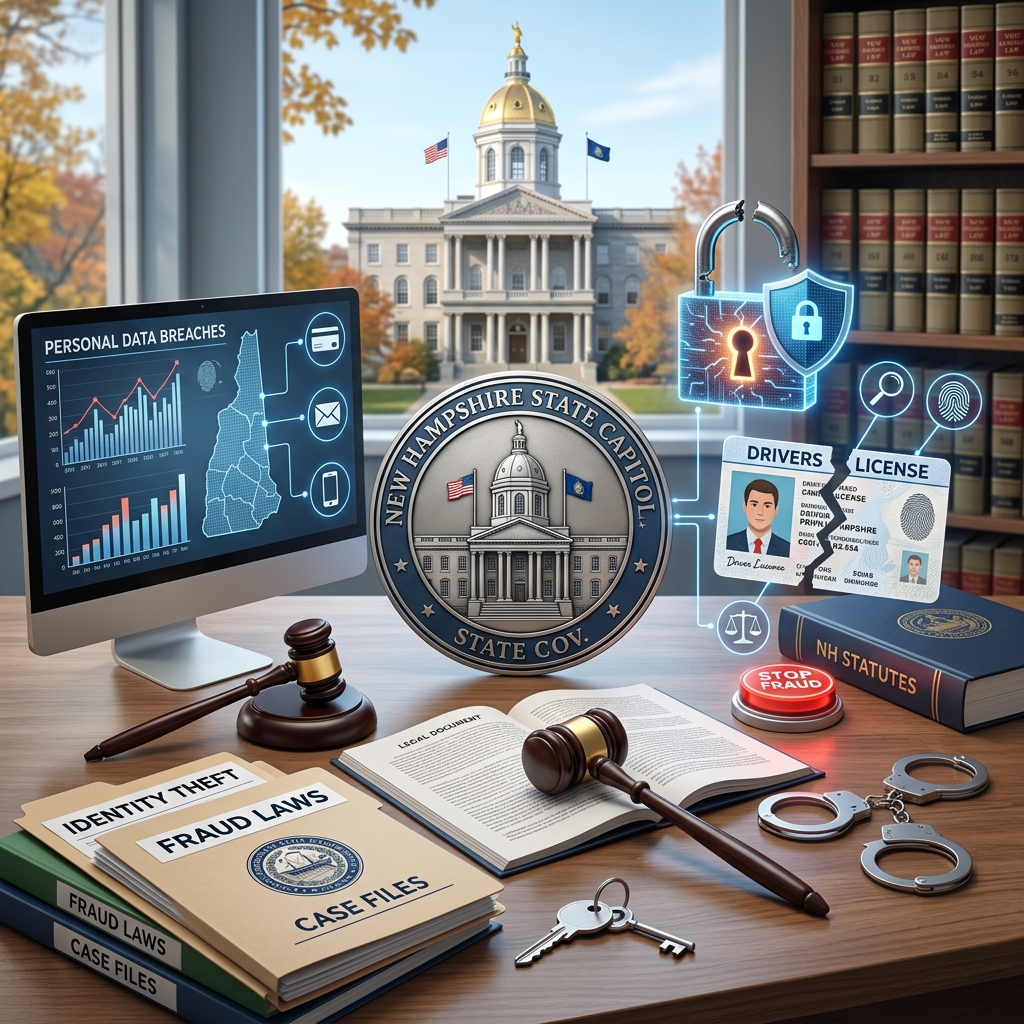
Identity theft has evolved from simple credit card misuse to complex online and phone-based fraud schemes. New Hampshire law responds to this growing threat with specific statutes that define identity fraud, impose serious criminal penalties, and require restitution to victims. At the same time, state agencies and local authorities provide guidance to help residents prevent identity theft and recover when it occurs.
What Counts as Identity Theft in New Hampshire?
New Hampshire uses the term identity fraud rather than identity theft, but the concepts are closely related. Under New Hampshire law, a person commits identity fraud when they misuse someone else's personal identifying information without authorization for a fraudulent purpose. This is broader than merely stealing a Social Security number; it includes any deliberate attempt to pose as another person or collect their data to do so.
Common elements of identity fraud in New Hampshire include:
- Posing as another person to obtain money, credit, goods, services, or other things of value.
- Collecting or recording someone's personal identifying information without their permission, with the intent to impersonate them.
- Gathering personal data to help another person pose as the victim.
- Impersonating a person to obtain confidential information about them that is not generally available to the public.
New Hampshire law also protects against fraud involving entities, such as businesses or government agencies, when criminals impersonate those organizations to extract personal or financial information from individuals.
Key Legal Concepts: Identity Fraud vs. Identity Theft
In everyday language, identity theft refers to the unlawful acquisition and use of someone's personal data. Identity fraud focuses on the use of that stolen identity to deceive, obtain benefits, or access confidential information.
| Concept | Typical Focus | New Hampshire Legal Approach |
|---|---|---|
| Identity theft | The initial acquisition or theft of personal data. | Addressed through consumer protection measures and criminal laws, often linked to financial or computer crimes. |
| Identity fraud | Using someone else's identity to defraud or gain a benefit. | Specifically defined in RSA 638.26 as a serious felony offense. |
In practice, both concepts often overlap: stolen data is later used to commit fraud. New Hampshire's emphasis on identity fraud allows prosecutors to focus on the deceptive conduct and resulting harm.
New Hampshire Statute on Identity Fraud (RSA 638.26)
The primary criminal law governing identity fraud in New Hampshire is RSA 638.26. This statute specifies when a person is guilty of identity fraud and sets out the consequences.
Core Elements of Identity Fraud
Under RSA 638.26, a person may be guilty of identity fraud if they:
- Intentionally pretend to be someone else to obtain money, credit, goods, services, or anything of value.
- Obtain or record another person's identifying information without permission, intending to impersonate them.
- Collect another person's identifying information without permission in order to help someone else impersonate that person.
- Pose as another person to access confidential information about that person that is not publicly available.
The law focuses on intent and unauthorized use. Simply possessing someone's information may not be enough to violate the statute unless it is linked to an intent to defraud or impersonate.
Personal Identifying Information
Although definitions can vary, personal identifying information typically includes items such as:
- Full name and date of birth
- Social Security number
- Driver's license or state ID number
- Bank account and credit card numbers
- Online account usernames and passwords
- Other unique identifiers used for financial or governmental purposes
Misuse of this information is what transforms simple data collection into identity fraud when done with a deceptive or criminal purpose.
Penalties and Restitution for Identity Fraud
Identity fraud is treated as a serious crime under New Hampshire law. RSA 638.26 classifies identity fraud as a Class A felony. Felony convictions in New Hampshire can lead to substantial prison terms and fines, and may also affect future employment, housing, and professional licensing.
In addition to criminal penalties, the statute requires courts to order restitution for the economic loss suffered by victims. That means an offender must compensate victims for measurable financial harm directly caused by the fraudulent conduct, such as unauthorized charges or funds withdrawn from accounts.
At the federal level, some identity-related offenses carry penalties of up to 30 years in prison, especially when tied to financial institutions or aggravated identity theft. While federal prosecution is separate from state law, it underscores the national seriousness of identity-related crimes.
Modern Scams and Impersonation Schemes Targeting New Hampshire Residents
Identity fraud no longer occurs only through physical theft of documents. New Hampshire officials and organizations report that criminals now frequently use electronic communication and spoofing techniques to deceive victims.
Common modern identity fraud schemes include:
- Phishing emails pretending to be from banks, utilities, or government agencies.
- Fake toll or traffic alerts directing victims to fraudulent payment portals.
- Caller ID spoofing where phone numbers appear to originate from legitimate businesses or state offices.
- Text message scams requesting verification codes or account credentials.
- Social media impersonation used to gather personal information or solicit money.
New Hampshire law has been updated to address impersonation not only of individuals but also of entities such as financial institutions and government agencies, reflecting how these scams typically operate.
Protection for Businesses, Banks, and Government Agencies
Recognizing that criminals often pose as organizations to trick individuals into disclosing sensitive data, New Hampshire has modernized its identity fraud statute to include entities as potential victims. This means fraudsters can be prosecuted when they impersonate banks, companies, nonprofits, or government bodies in order to obtain personal or financial information.
For example, a scammer who sends emails pretending to be a state agency or a local bank to extract account numbers or login credentials may fall within this expanded definition of identity fraud. This update helps law enforcement address contemporary fraud schemes that rely on institutional trust.
How to Prevent Identity Theft: Practical Steps
While legal protections are important, prevention remains critical. New Hampshire authorities and consumer protection agencies recommend several practical measures to reduce the risk of identity theft.
Everyday Safeguards
- Limit exposure of your Social Security number: Do not carry your Social Security card in your wallet and avoid printing the number on checks.
- Verify who asks for your information: Provide personal data only to known and trusted organizations, and consider asking whether alternative identifiers are acceptable.
- Secure physical documents: Shred financial statements, medical records, and other sensitive paperwork before discarding them.
- Monitor your credit reports: Check your credit at least once a year to spot unfamiliar accounts or inquiries.
- Be cautious online: Avoid posting detailed personal information on public websites, including genealogy or alumni pages.
Reducing Unwanted Credit Offers
Pre-approved credit offers can be exploited if intercepted. Consumers can reduce these mailings by opting out through credit bureaus, which helps limit opportunities for thieves to misuse those offers.
Bank and Account Monitoring
The New Hampshire Department of Justice encourages residents who suspect account compromise to cancel affected accounts and work with banks to identify fraudulent activity. Quick contact with financial institutions can minimize losses and prevent additional unauthorized transactions.
What to Do If You Are a Victim of Identity Theft
Victims who act swiftly are better able to limit damage and support potential criminal investigations. New Hampshire consumer protection authorities recommend a series of steps when identity theft is suspected or confirmed.
Immediate Actions
- Place a fraud alert with one of the major credit bureaus so that creditors must verify identity before opening new accounts.
- Obtain updated credit reports from all three bureaus to review for unauthorized activity.
- Close or freeze compromised accounts and open new ones with secure credentials.
- Contact your bank to dispute unauthorized transactions and, if needed, stop payment on checks.
Report the Crime
- File a police report with local law enforcement and obtain a copy for use with creditors and other institutions.
- Report to the Federal Trade Commission (FTC), which maintains a database of identity theft complaints used in investigations.
- Notify state consumer protection authorities, such as the New Hampshire Department of Justice, when appropriate.
Documenting the theft not only assists in clearing your record but also supports broader law enforcement efforts to combat identity-related crime.
Role of the New Hampshire Department of Justice
The New Hampshire Department of Justice provides guidance for consumers facing identity theft issues, focusing on practical steps and coordination with banks, law enforcement, and other agencies. It also enforces state consumer protection laws related to deceptive practices, including certain identity-related schemes.
Among its recommendations are:
- Contacting specialized hotlines when bad checks may have been passed in your name.
- Working closely with your financial institution to secure accounts and identify the extent of any fraud.
- Keeping detailed records of communications and actions taken during the recovery process.
Frequently Asked Questions About New Hampshire Identity Theft Laws
Is identity fraud always a felony in New Hampshire?
Yes. Under RSA 638.26, identity fraud is expressly classified as a Class A felony, reflecting the seriousness with which the state treats unauthorized impersonation and misuse of personal data.
Does the law apply if no money was actually stolen?
New Hampshire law focuses on the intent to defraud and unauthorized use of personal identifying information. A person may be guilty of identity fraud for attempting to obtain value or confidential information by impersonating another person, even if they are unsuccessful. However, the extent of actual loss can affect sentencing and restitution.
Are businesses and government agencies protected from impersonation?
Yes. New Hampshire has updated its identity fraud statute to include entities such as banks, corporations, nonprofits, and government agencies, allowing prosecution of scams where offenders pretend to represent these organizations to obtain personal or financial information.
What should I do if I receive a suspicious call or email?
Do not provide personal or financial information. Instead:
- Hang up or delete the message.
- Contact the organization directly using a verified phone number or website.
- Report the incident to appropriate authorities if it appears to be part of an identity fraud scheme.
How do federal laws interact with New Hampshire identity fraud laws?
Federal statutes address identity theft and related crimes involving financial institutions, interstate communications, and aggravated identity theft. Some federal offenses carry penalties up to decades in prison. New Hampshire law operates alongside these federal provisions; a case may be prosecuted under state law, federal law, or both, depending on the circumstances.
Key Takeaways for New Hampshire Residents
- Identity fraud in New Hampshire is a Class A felony and can lead to significant criminal penalties.
- The law covers impersonation of individuals and modern schemes involving impersonation of entities such as banks or government agencies.
- Victims are entitled to restitution for economic losses, in addition to the state's criminal sanctions against offenders.
- Preventive measures—such as securing Social Security numbers, shredding documents, and monitoring credit reports—are vital in limiting risk.
- Prompt reporting to law enforcement, banks, credit bureaus, and the FTC is essential for effective recovery and investigation.
References
- 638:26 Identity Fraud — WomensLaw.org (summarizing N.H. RSA 638:26). 2023-01-01. https://www.womenslaw.org/laws/nh/statutes/63826-identity-fraud
- NH Bankers Applaud New Law Cracking Down on Fraud and Impersonation Schemes — New Hampshire Bankers Association. 2022-06-01. https://members.nhbankers.com/news/Details/nh-bankers-applaud-new-law-cracking-down-on-fraud-and-impersonation-schemes-336016
- Identity Theft (RSA 359-I): Read the Law About… — New Hampshire Judicial Branch Law Library Guides. 2021-01-01. https://courts-state-nh-us.libguides.com/c.php?g=890633&p=6403659
- Identity Theft — Salem, New Hampshire Police Department. 2020-01-01. https://www.salemnh.gov/376/Identity-Theft
- Identity Theft — New Hampshire Department of Justice, Consumer Protection & Antitrust Bureau. 2020-01-01. https://www.doj.nh.gov/citizens/consumer-protection-antitrust-bureau/identity-theft
Similar Articles








Read full bio of Sneha Tete




