
Nevada Wills: Validity, Probate, and Filing Rules
A practical guide to making a valid Nevada will and understanding probate duties.
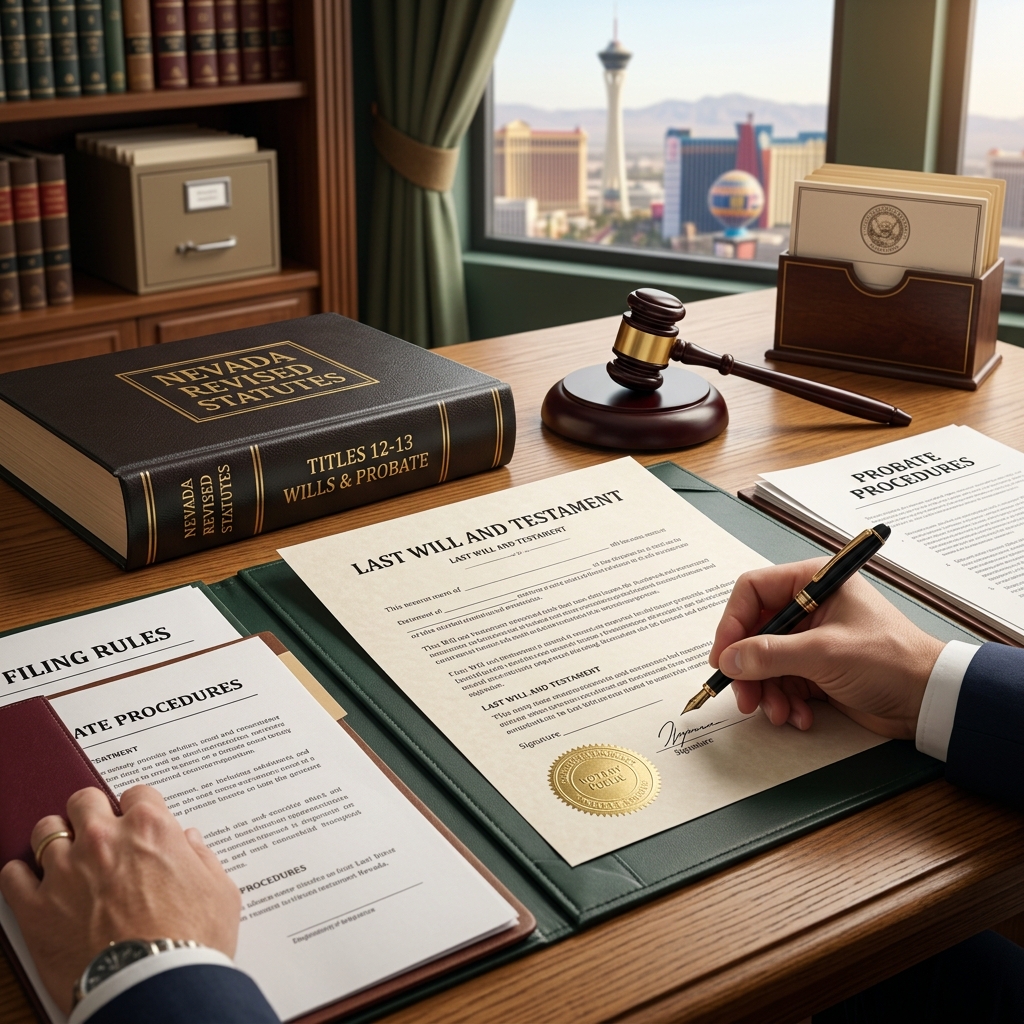
A will is one of the most important estate planning tools because it tells a court how a person wants property handled after death. In Nevada, a will is not required for every estate, but it can reduce uncertainty, help name a personal representative, and make it easier to identify who should receive probate assets.
Nevada law sets out specific rules for who may make a will, how it must be signed, what role witnesses play, and when the document must be delivered to court after death. Understanding these rules matters because a mistake in execution can create delays, added expense, or a challenge to the document’s validity.
Why a Will Matters in Nevada
A valid will gives the testator, the person making the will, a way to direct who receives property that passes through probate. It can also name an executor, identify a guardian for minor children, and provide instructions that are clearer than the default rules applied when there is no will.
Without a will, Nevada’s intestacy laws decide who inherits. That can be acceptable in simple family situations, but it may not reflect the person’s actual wishes. A will is especially useful when someone wants to leave property to a partner, a blended family member, a friend, or a charity, because intestacy generally follows fixed family-based rules.
Who Can Make a Nevada Will
Nevada law allows a person to make a will if they are at least 18 years old and of sound mind. In practical terms, sound mind means the person understands that the document is a will, knows the general nature of the property being given away, recognizes the people who would normally inherit, and understands the effect of signing the document.
The capacity requirement is meant to ensure that the will reflects the maker’s own decisions rather than confusion, coercion, or misunderstanding. If capacity is later disputed, a court may examine the circumstances at the time the will was signed.
Core Requirements for a Standard Will
Most Nevada wills must be in writing, signed by the testator, and witnessed by two competent witnesses who sign in the testator’s presence. If the testator cannot physically sign, another person may sign at the testator’s direction and in the testator’s presence.
These requirements are important because Nevada treats them as the basic formalities for a valid will. A document that does not meet them may fail in probate, even if it clearly states the writer’s intentions.
| Requirement | What Nevada generally expects | Why it matters |
|---|---|---|
| Writing | The will must be in written form. | Oral instructions are not enough for a valid will. |
| Signature | The testator signs, or another person signs at the testator’s direction and presence. | Shows final approval of the document. |
| Witnesses | Two competent witnesses must sign in the testator’s presence. | Supports authenticity and reduces fraud concerns. |
Witness Rules and Gift Concerns
Witnesses should be competent adults who can understand the role they are performing. Nevada law also discourages conflicts of interest by limiting gifts to subscribing witnesses in some circumstances. That issue matters because a witness who also receives a gift may create questions about the validity of the bequest or the fairness of the execution process.
For this reason, many people choose disinterested witnesses, meaning witnesses who are not beneficiaries under the will. While Nevada law allows many people to act as witnesses, using neutral witnesses is usually the safer approach.
Handwritten Wills in Nevada
Nevada recognizes holographic wills, which are handwritten wills that can be valid even without witnesses if the required parts are in the testator’s handwriting. The key idea is that the material provisions and the signature must be handwritten by the person making the will.
Although a holographic will can be useful in an emergency, it can also invite disputes if the handwriting, date, or intent is unclear. Courts may have to decide whether the writing truly shows testamentary intent and whether the document fully expresses the person’s final wishes.
A handwritten will should be drafted carefully, dated, and kept in a safe place. Even though Nevada permits this form, a properly prepared and witnessed will is often easier to prove and less vulnerable to challenge.
Self-Proving Wills and Why They Help
Nevada allows a will to include a self-proving declaration. This is an affidavit, usually signed before a notary, in which the testator and witnesses confirm the authenticity of the will. When a will is self-proved, probate can be simpler because witnesses may not need to appear in court to confirm what happened at signing.
A self-proving will does not change the substance of the estate plan. Instead, it helps the court accept the document more efficiently. That can save time, reduce administrative burden, and make it easier to start probate without tracking down witnesses years later.
What Must Happen After the Testator Dies
Nevada imposes a duty to deliver the original will to the district court clerk within 30 days after learning of the death. This rule applies even if the estate seems small or probate has not yet started.
The duty is significant because the will becomes part of the court record once filed. If a person who has possession of the will ignores this obligation without reasonable cause, Nevada law can expose that person to liability for losses caused by the delay.
That means family members, named executors, and anyone else holding the original will should treat the filing deadline seriously. Keeping the document in a drawer for months can create avoidable legal problems.
How Probate Interacts With a Will
A will does not automatically transfer property on its own. In Nevada, the document generally must be submitted to probate court so the court can confirm whether it is valid and decide how the estate should be administered. Probate is the court process used to settle the estate, pay debts, and distribute assets that are subject to probate.
If the court accepts the will, the estate is distributed according to its terms, subject to the claims of creditors and any rights that apply under law. If the will is invalid in whole or in part, then Nevada intestacy rules may control the affected property.
Not every asset passes through probate. Some property may transfer by contract or by beneficiary designation, but a will remains important for assets that do not transfer automatically.
What Happens When There Is No Will
When a person dies without a valid will, Nevada’s intestacy laws decide who inherits. In general, the law looks to close relatives first, and if no qualifying family members can be found, the estate may ultimately pass to the state after debts and administration costs are handled.
This default system can produce results that are different from what the decedent would have chosen. For that reason, even a simple will can be valuable for people who want control over basic inheritance decisions.
Practical Steps to Reduce Will Problems
- Use clear language that identifies beneficiaries and property as specifically as possible.
- Make sure the will is signed in the proper way and witnessed by two competent witnesses.
- Consider a self-proving affidavit to simplify future probate administration.
- Store the original will in a location that can be found quickly after death.
- If you create a handwritten will, keep the entire material content in your own handwriting and make the intent unmistakable.
- Review the will after major life changes such as marriage, divorce, birth, adoption, or a significant change in assets.
These steps do not replace legal advice, but they can reduce the chance that a court will later face uncertainty about the document’s meaning or validity.
Common Questions About Nevada Wills
Does a will avoid probate?
No. A will normally must still go through probate so the court can validate it and supervise administration of the estate.
Can a handwritten will work?
Yes, if it qualifies as a holographic will under Nevada law and the required parts are in the testator’s handwriting.
Do witnesses have to be family members?
No. Nevada requires competent witnesses, not family members specifically. In practice, neutral witnesses are usually preferred.
What if the will is not filed quickly?
Nevada law requires delivery of the original will within 30 days after death is known, and delay can create liability for damages.
Can someone challenge a will?
Yes. A will may be challenged on grounds such as lack of capacity, improper execution, fraud, or undue influence. Courts decide these disputes based on the facts and the statutory requirements.
When a Simple Will May Not Be Enough
A will is a useful foundation, but it is not always the whole estate plan. Some people also use beneficiary designations, joint ownership, trusts, or other tools to control how assets transfer. Nevada probate rules make it especially important to think about which assets will actually be governed by the will and which assets will pass outside it.
For larger or more complicated estates, a will can be combined with other planning documents to reduce uncertainty, provide continuity for family members, and make administration more efficient.
References
- Last Will and Testament in Nevada | Legal Requirements & Risks — Drizin Law. 2025. https://drizinlaw.com/last-will-and-testament/
- Basic Requirements for a Last Will and Testament in Nevada — LawInfo. 2024. https://www.lawinfo.com/resources/wills/nevada/
- Estate Planning — Nevada Legal Services. 2024. https://nevadalegalservices.org/estate-planning/
- NRS: Chapter 133 – Wills — Nevada Legislature. 2026. https://www.leg.state.nv.us/nrs/nrs-133.html
- Why Nevada Law Gives You Only 30 Days to Deliver a Will After Death — Williams Starbuck. 2025. https://www.williamsstarbuck.com/why-nevada-law-gives-you-only-30-days-to-deliver-a-will-after-death/
- Intro to Probate — Civil Law Self-Help Center. 2025. https://www.civillawselfhelpcenter.org/self-help/probate/intro-to-probate
Similar Articles








Read full bio of Sneha Tete


