
Nevada Traffic Laws: A Driver’s Practical Guide
Understand the core Nevada road rules that shape safe, lawful driving.
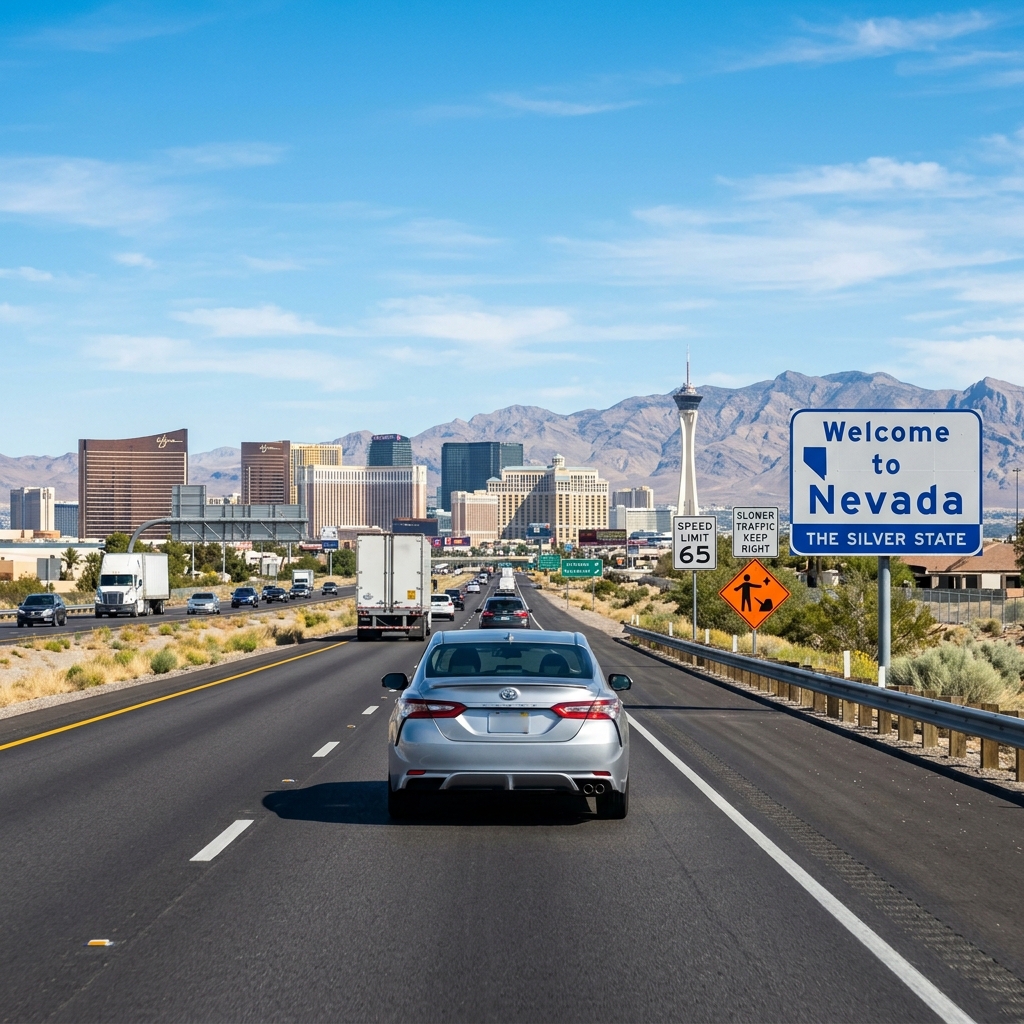
Nevada’s traffic rules are designed to do more than assign penalties after a ticket or collision. They create a structure for predictable, safe driving on highways, city streets, rural roads, and intersections across the state. The basic duties are straightforward: obey signals, yield when required, drive at a reasonable speed, avoid distraction, and act responsibly when a crash occurs.
This guide breaks down the most important Nevada road rules in plain language. It is meant to help drivers understand the everyday obligations that come with operating a vehicle in the state, whether they are commuting, traveling through desert highways, or navigating busy urban traffic.
The foundation of Nevada road rules
Nevada traffic law is built around the idea that every driver shares responsibility for keeping roadways orderly and safe. The rules cover general driving behavior, crashes and reporting, and the duties that come with interacting with other vehicles, pedestrians, bicyclists, and emergency responders.
In practice, that means a driver must do more than simply avoid obvious mistakes. A motorist is also expected to make safe decisions based on traffic conditions, roadway design, weather, visibility, and the behavior of others on the road.
- Follow traffic-control devices such as lights, signs, and lane markings.
- Drive at a speed that is safe for the conditions, not just one that is technically under the posted limit.
- Yield when the law places the right-of-way on another road user.
- Stay alert and avoid distractions that interfere with safe driving.
- Respond properly after a crash, including stopping, helping if possible, and reporting when required.
Speed limits and driving at a reasonable pace
Speed rules in Nevada are not limited to a single number on a sign. Posted limits set the maximum lawful speed in many situations, but drivers must still adjust to road conditions. Heavy traffic, poor visibility, construction, wet pavement, and school zones can all require slower driving.
That distinction matters because a driver can be cited for unsafe speed even when the vehicle is technically below the posted limit. The legal standard focuses on whether the speed is reasonable and prudent for the circumstances.
| Common setting | Typical Nevada speed range |
|---|---|
| Residential streets | About 25–30 mph, depending on posting |
| School zones | Often 15–25 mph when active |
| Urban freeways | Often lower than rural freeway limits |
| Rural highways | Can be higher where posted and safe |
Drivers should also remember that some vehicles, lane configurations, and roadside conditions make it appropriate to reduce speed below the posted maximum. Speed is always evaluated alongside safety.
Lane use, passing, and keeping traffic flowing
Nevada road rules encourage orderly lane discipline. Drivers are expected to stay in the proper lane, pass safely, and avoid weaving through traffic. A driver who is traveling more slowly than surrounding traffic is generally expected to move right when it is safe to do so, rather than block the flow of vehicles behind them.
Passing must be done carefully. A driver should not return to the original lane until the vehicle being passed is fully cleared and the movement can be completed without endangering anyone. Lane changes should be signaled and made only when there is adequate space.
- Use the left lane for passing where appropriate.
- Return to the right lane only after safely clearing the slower vehicle.
- Avoid passing in a way that cuts off another driver or forces braking.
- Do not drift across lane markings without a clear reason and adequate caution.
Following distance and tailgating
Tailgating is one of the most common causes of avoidable crashes. Nevada law requires drivers to keep a following distance that is reasonable and prudent. The proper distance depends on speed, traffic density, road surface, visibility, and the ability of the lead vehicle to stop suddenly.
There is no universal number that works in every setting, but the basic principle is simple: if the driver in front brakes hard, you should have enough room to react safely. At highway speeds, that margin must be larger than in slow-moving city traffic.
A practical rule is to increase space in poor weather, at night, near construction, and whenever road conditions reduce traction or visibility. Close following reduces reaction time and makes pileups more likely.
Right-of-way at intersections and crossings
Many Nevada traffic disputes happen at intersections. The law gives drivers and pedestrians specific rights-of-way rules so that everyone can predict who should move first. If a driver ignores those rules, the result can be a crash or a citation.
At a stop-controlled intersection, a vehicle that arrives first generally has the right to proceed first. If vehicles arrive at nearly the same time, the driver on the right often has priority. Left turns are especially important because the turning driver usually must yield to oncoming traffic that is close enough to be an immediate hazard.
Drivers also need to watch for pedestrians and cyclists. Crosswalks, bike lanes, and traffic-control signals create extra duties to slow, stop, or yield when required.
- Stop fully where required before entering an intersection.
- Yield to vehicles already in the intersection when the law requires it.
- Give pedestrians the space and priority the law provides in marked and unmarked crossings.
- Be especially careful when making left turns across oncoming traffic.
- Watch for bicycles traveling in designated lanes or alongside traffic.
Cell phones, texting, and distracted driving
Nevada treats handheld phone use while driving as a serious safety issue. The central concern is distraction: a driver who is typing, scrolling, or holding a phone is less able to see hazards, control the vehicle, and react to changing traffic conditions.
Hands-free technology is the safer and more lawful option for many drivers, but even hands-free use can become distracting if it draws the driver’s attention away from the road. The safest habit is to keep conversations brief and limit device use as much as possible while the vehicle is moving.
- Do not text while driving.
- Do not browse the internet or handle a handheld phone behind the wheel.
- Use hands-free tools only when necessary and only if you can still stay focused on driving.
- Pull over safely if a call or message requires real attention.
Impaired driving and alcohol-related rules
Nevada law prohibits driving when alcohol or drugs impair a person’s ability to operate a vehicle safely. This rule applies to alcohol, illegal drugs, and other substances that reduce judgment, coordination, or reaction time. The legal system treats impairment seriously because even small reductions in driving ability can lead to high-risk behavior and severe crashes.
Separate rules also address open containers and drinking in a motor vehicle. The main policy goal is to prevent conditions that encourage or accompany impaired driving. Drivers should understand that alcohol-related violations can lead to criminal charges, license consequences, and civil liability if a crash occurs.
Impaired driving cases often involve more than one issue at once. A driver may be stopped for weaving, speeding, or failure to yield, and the officer may then investigate whether alcohol or drugs played a role.
Emergency vehicles and stopped roadside incidents
Drivers in Nevada must respond carefully when approaching emergency vehicles, tow trucks, and other stopped roadside incidents. The purpose of these rules is to protect responders, workers, and stranded motorists from being struck by passing traffic.
When a driver sees flashing lights or a roadside emergency scene, the correct response is to slow down, stay alert, and move over when possible. If traffic, weather, or roadway conditions make a lane change unsafe, the driver must still proceed cautiously and be ready to stop.
- Reduce speed before reaching the stopped vehicle or incident scene.
- Move to an adjacent lane if it can be done safely.
- Do not swerve abruptly or make a sudden maneuver that creates a new hazard.
- Be prepared for people, cones, equipment, or disabled vehicles near the roadway.
What to do after a crash
Nevada drivers have legal duties after a collision. Those duties depend on the seriousness of the crash, but the basic expectation is that drivers stop, assess the situation, and avoid making the scene more dangerous.
If anyone is hurt, emergency services should be called immediately. If vehicles can be moved safely and only property damage is involved, it is often better to move them out of traffic to reduce the chance of another collision. Drivers should then exchange identifying and insurance information and document the scene if possible.
- Check for injuries and call for help when needed.
- Move vehicles out of active traffic if it can be done safely.
- Exchange names, contact details, license plate numbers, and insurance information.
- Photograph damage, skid marks, traffic signals, and the surrounding area.
- File required reports when the law or the facts of the crash call for it.
Special caution at construction zones and school areas
Construction zones and school areas are among the places where ordinary habits can quickly become dangerous. Workers, children, and pedestrians may be close to moving traffic, and the road layout may change without much warning. Drivers should reduce speed, follow posted directions, and avoid unnecessary lane changes.
In these zones, even a small distraction can create a serious risk. A lane shift, temporary sign, crossing guard, or child stepping unexpectedly into the roadway can leave very little time to react. Careful driving is not just courteous; it is essential.
Common violations that lead to citations
Some traffic offenses appear more often than others because they are easy to commit in daily driving. These violations usually involve choices that seem minor in the moment but create a real safety risk.
| Violation type | Why it matters |
|---|---|
| Speeding | Reduces reaction time and increases crash severity |
| Following too closely | Makes rear-end crashes more likely |
| Failure to yield | Creates intersection and merging collisions |
| Handheld phone use | Causes attention loss and delayed reactions |
| Improper lane changes | Leads to side-swipe and merge crashes |
Although the details vary by circumstance, these violations share a common theme: they interrupt the predictable flow of traffic and increase the chance that someone will be hurt.
Frequently asked questions
Can I be cited for driving too slowly in Nevada?
Yes. Driving below the limit can still be a violation if it unreasonably blocks traffic or creates a hazard.
Is hands-free phone use always safe?
Not always. It may be lawful, but it can still distract the driver if used carelessly or for complex tasks.
Do I have to move over for stopped emergency vehicles?
Yes, when possible. Nevada requires drivers to slow down and move away from roadside emergency or incident scenes if it can be done safely.
What should I do first after a minor crash?
Check for injuries, stop, and move vehicles out of traffic if that can be done safely. Then exchange information and document the scene.
Does the right-of-way mean I can go first no matter what?
No. Right-of-way rules still depend on safety, and drivers must yield when another road user is already entitled to proceed or when caution requires it.
Driving responsibly in Nevada
The best way to stay compliant with Nevada traffic law is to treat the rules as a daily safety checklist rather than as something relevant only after a ticket. A careful driver watches the road, respects other road users, keeps enough space, avoids distraction, and knows what to do when traffic conditions change unexpectedly.
Those habits matter on every road, from a neighborhood street to a high-speed desert highway. When drivers follow them consistently, traffic becomes more predictable, and the risk of injury drops for everyone on the road.
References
- 2022 Nevada Revised Statutes: Chapter 484 – Traffic Laws — Nevada Revised Statutes / Justia. 2022-01-01. https://law.justia.com/codes/nevada/2022/chapter-484/
- NRS: Chapter 484B – Rules of the Road — Nevada Legislature. 2026-07-09. https://www.leg.state.nv.us/nrs/nrs-484b.html
- Traffic Laws and Safety — Nevada Department of Motor Vehicles. 2026-07-09. https://dmv.nv.gov/dltrafficlaws.htm
- Traffic Laws — Nevada Office of Traffic Safety. 2026-07-09. https://ots.nv.gov/Traffic_Laws/Traffic_Laws/
Similar Articles








Read full bio of Sneha Tete


