Nevada’s tax system looks simple at first glance—there is no state personal income tax—but consumers and businesses still face several important tax obligations whenever they buy, use, or sell goods and certain services in the state. Understanding how sales tax, use tax, and key exemptions work can help you avoid penalties, plan purchases, and comply with state law.
This guide explains Nevada consumer tax laws in plain language, focusing on what everyday shoppers, online buyers, and small business owners need to know about state and local taxes on retail transactions.
Core Features of Nevada’s Consumer Tax System
Nevada relies heavily on taxes tied to consumption. When you buy taxable goods or certain services, you generally pay tax at the register, and the seller passes this tax on to the state and local governments.
- No state individual income tax: Nevada does not tax wages or personal income, making consumption taxes especially important for revenue.
- Sales tax on retail purchases: A statewide base rate of 6.85% applies to many retail sales of tangible personal property, with counties and cities allowed to add their own rates.
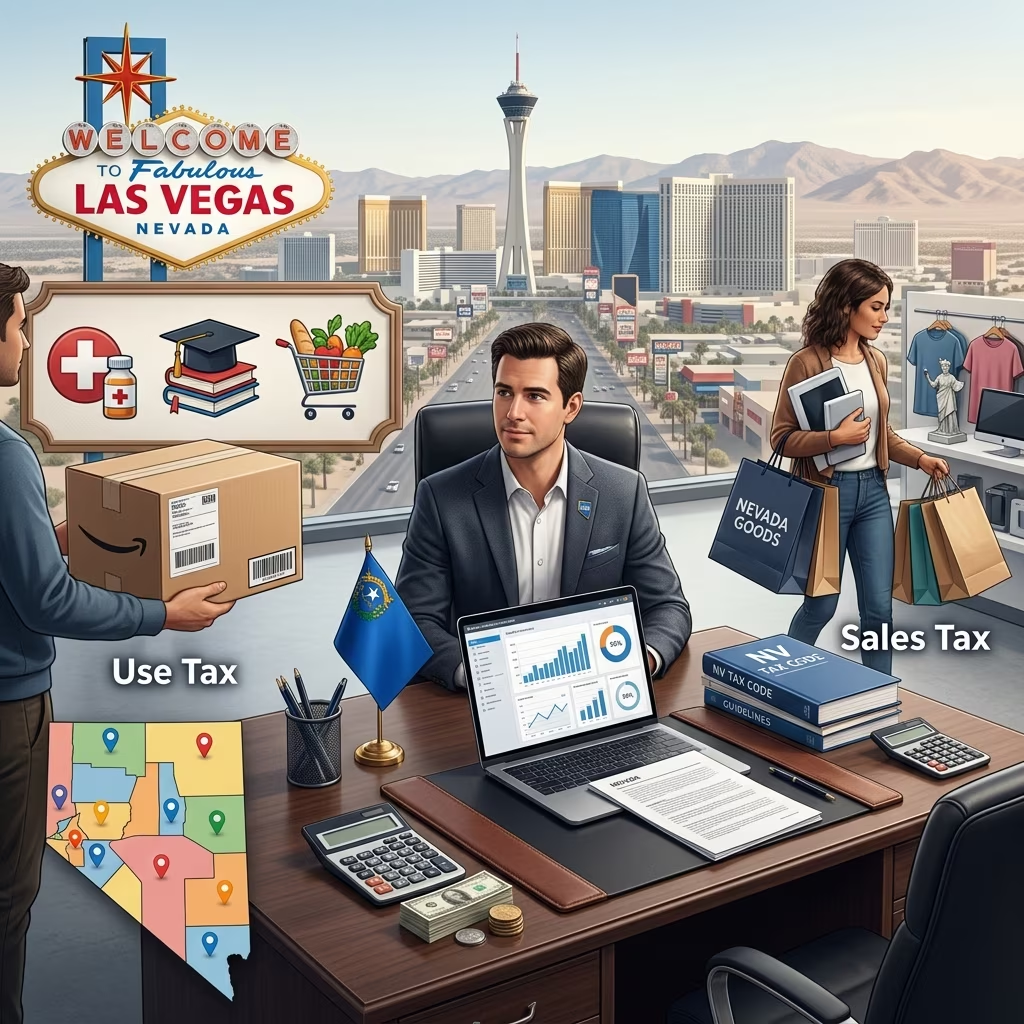
- Use tax on untaxed purchases: When goods are bought from out-of-state sellers without Nevada sales tax, consumers often owe a matching use tax on what they store, use, or consume in Nevada.
- Exemptions for essentials: Many basic necessities, such as groceries for home consumption and prescription medications, are exempt from tax.
Understanding Nevada Sales Tax
Sales tax is a consumption tax charged on many retail transactions involving tangible personal property (physical items you can touch, like clothing or electronics). The seller collects the tax from the buyer and remits it to the Nevada Department of Taxation.
Statewide Base Rate and Local Add-Ons
Nevada has a uniform statewide base rate of 6.85% that applies everywhere in the state. Local governments can add extra percentages, so the total rate you actually pay depends on where the sale is considered to occur.
| Location | State Base Rate | Local Add-On | Typical Combined Rate |
|---|---|---|---|
| Statewide (minimum) | 6.85% | 0% | 6.85% |
| Clark County (Las Vegas area) | 6.85% | ≈1.525% | ≈8.375% |
| Other counties and cities | 6.85% | Varies | Generally 6.85%–8.375% |
Because local rates differ, two identical items can carry different tax amounts depending on the seller’s location.
What Types of Purchases Are Typically Taxed?
Sales tax in Nevada usually applies to most retail sales of tangible personal property to a final consumer.
- General merchandise, such as clothing, furniture, and household goods
- Consumer electronics and appliances
- Leases or rentals of tangible personal property
- Prepared food sold by restaurants or similar businesses
Some services may also be taxable when they are closely linked to the sale of tangible personal property, but many services are not subject to sales tax. Always check state guidance if you operate a service-based business.
Nevada Use Tax: When Sales Tax Was Not Collected
Use tax is a companion tax to sales tax. It ensures that purchases made without Nevada sales tax are still taxed when the buyer brings or uses the goods in Nevada.
When Use Tax Applies
Under Nevada law, use tax generally applies when a consumer:
- Buys taxable property from an out-of-state seller that does not collect Nevada sales tax
- Brings the property into Nevada for storage, use, or consumption
- Would have paid sales tax if the purchase had taken place inside Nevada
Examples include online purchases from a seller who does not charge Nevada tax, catalog orders, or equipment acquired from an out-of-state dealer for use in a Nevada business.
Use Tax Rate and Responsibility
The use tax rate mirrors the combined sales tax rate that would have applied in your area, including any local surcharges. If the seller does not collect Nevada tax, the buyer is responsible for:
- Identifying taxable purchases that escaped Nevada sales tax
- Calculating the use tax due based on the local rate
- Paying the tax directly to the Nevada Department of Taxation
For individuals, this often means reporting use tax on designated forms or through state procedures. For businesses, unpaid use tax can trigger audits and assessments.
Key Nevada Sales and Use Tax Exemptions
Not every purchase is taxable. Nevada law provides several important exemptions, often aimed at essentials or specific economic activities.
Common Consumer Exemptions
- Food for home consumption: Groceries, produce, and pantry staples intended for preparation and consumption at home are typically exempt.
- Prescription medications: Drugs dispensed by prescription are generally not subject to sales or use tax.
- Certain medical devices: Some qualifying medical equipment designed for patient use may be exempt.
- Periodicals: Magazines and newspapers can qualify for exemption under specific rules.
Prepared Food vs. Groceries
A critical distinction is between groceries and prepared food:
- Food sold for home preparation/consumption: generally exempt.
- Prepared food ready to eat (restaurant meals, heated items, catered food): taxable at applicable sales tax rates.
For example, a bag of uncooked rice bought at a supermarket is exempt, but a hot meal served in a restaurant is taxable.
Business and Organizational Exemptions
In addition to consumer exemptions, Nevada provides relief in certain business or institutional contexts.
- Sales for resale: Wholesale or resale transactions where the buyer will resell the goods can be exempt when proper documentation is provided.
- Qualifying out-of-state sales: Certain sales shipped outside Nevada may escape Nevada tax under specific statutory conditions.
- Government, religious, or charitable organizations: Some purchases by recognized entities may be exempt if they meet legal criteria.
Exemptions are technical; sellers should obtain and retain appropriate exemption certificates to support tax-free sales.
How Nevada Treats Remote Sellers and Online Purchases
The growth of online shopping means many Nevada residents buy from sellers located elsewhere. To keep tax treatment consistent, Nevada imposes obligations on remote sellers who have sufficient connection—called nexus—with the state.
Nexus and Economic Thresholds
Nexus can arise through physical presence or economic activity. For sales occurring on and after October 1, 2019, a remote seller must register and collect Nevada sales tax if it meets either of the following economic thresholds:
- $100,000 or more in gross revenue from Nevada sales in the current or previous year; or
- 200 or more separate transactions delivered into Nevada during the current or previous year.
Once a seller crosses these thresholds, it must treat Nevada customers similarly to in-state customers: charge the appropriate tax, file returns, and remit payments.
Examples of Nexus-Creating Activities
- Owning or leasing inventory stored in Nevada (including fulfillment center inventory).
- Maintaining a physical location, such as a store or office, in the state.
- Using affiliates or marketing partners in Nevada to generate sales, under certain revenue thresholds.
If a seller does not have nexus and does not collect tax, Nevada consumers may owe use tax on their purchases.
Practical Responsibilities for Nevada Consumers
From a consumer’s perspective, there are two main tax scenarios:
- Tax collected at the register: You pay sales tax directly to the seller on taxable purchases within Nevada.
- Tax responsibility on untaxed purchases: You may owe use tax when you buy taxable goods without Nevada sales tax and then use those goods in the state.
Failing to pay required use tax can result in assessments if the state discovers untaxed purchases during an audit or other investigation, particularly for businesses.
Tips for Staying Compliant
- Keep receipts for large out-of-state purchases.
- Check whether the seller charged Nevada tax; if not, determine whether the item is taxable.
- Consult state guidance or a tax professional when in doubt, especially for vehicle, equipment, or business-related purchases.
Small Business Perspective: Collection and Filing Basics
For small and mid-sized businesses, Nevada’s consumer tax laws translate into a series of operational responsibilities: registration, collection, recordkeeping, and filing.
Registration and Permits
Businesses that make taxable retail sales in Nevada must generally register with the Nevada Department of Taxation and obtain authorization to collect sales tax before operating.
Collection and Remittance
Once registered, businesses must:
- Charge the correct combined rate based on the location where the sale is sourced.
- Separately track taxable and exempt sales.
- File tax returns and pay collected taxes by the required deadlines.
In some cases, Nevada allows a small collection allowance if returns and payments are made on time, recognizing the administrative burden of tax collection.
Frequently Asked Questions About Nevada Consumer Taxes
1. Do Nevada residents pay tax on online purchases?
Many online purchases are taxed. If the seller has nexus in Nevada, it should collect Nevada sales tax on taxable items. If no tax is collected and the item would be taxable in Nevada, the buyer may owe use tax on the purchase.
2. Are all groceries tax-free?
Most groceries intended for home preparation and consumption are exempt. However, prepared foods ready to eat—such as hot meals from restaurants or heated items sold by the seller—are generally taxable.
3. What is the standard sales tax rate in Nevada?
The statewide base sales tax rate is 6.85%. Local rates can increase the total combined rate, which typically ranges from 6.85% to around 8.375%, depending on the jurisdiction.
4. If I buy equipment from another state for my Nevada business, do I owe tax?
Yes, if the equipment is taxable and no Nevada sales tax was charged, you likely owe Nevada use tax on the value of the equipment when you store, use, or consume it in Nevada.
5. Why does Nevada rely so heavily on sales and use taxes?
Because Nevada does not impose an individual income tax, consumption-based taxes—including sales and use taxes—are major sources of state revenue.
References
- NRS Chapter 372 – Sales and Use Taxes — Nevada Legislature. 2023-01-01. https://www.leg.state.nv.us/nrs/nrs-372.html
- Sales Tax & Use Tax — Nevada Department of Taxation. 2024-01-15. https://tax.nv.gov/tax-types/sales-tax-use-tax/
- Nevada Sales Tax Guide for Businesses — Polston Tax. 2023-06-20. https://polstontax.com/blog/nevada-sales-tax-guide-for-businesses/
- Nevada Sales & Use Tax Guide — Avalara. 2024-02-10. https://www.avalara.com/us/en/taxrates/state-rates/nevada/nevada-sales-tax-guide.html
- Technical Bulletin: Nevada Department of Taxation Use Tax Guidance — NBAA. 2018-01-01. https://www.nbaa.org/wp-content/uploads/2018/01/Technical-Bulletin-Nevada.pdf
- 2026 Nevada Tax Rates & Rankings — Tax Foundation. 2026-01-10. https://taxfoundation.org/location/nevada/