
Neighbor Tree Disputes: Rights, Duties, and Practical Solutions
Learn how to handle overhanging branches, root damage, fallen trees, and boundary trees with practical steps and legal awareness.
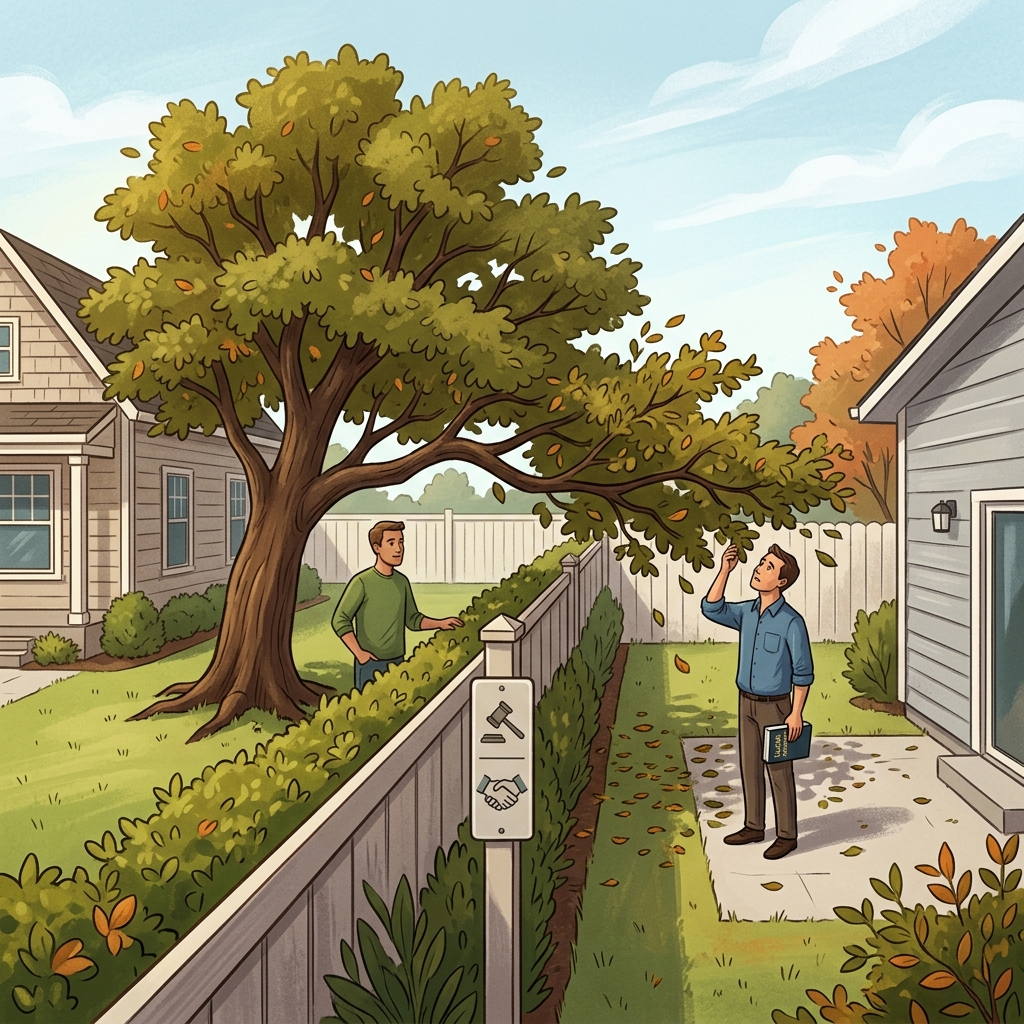
Trees add shade, beauty, and privacy to residential neighborhoods, but they can also become a major source of tension between neighbors. Disputes about overhanging branches, invasive roots, blocked views, and fallen trees are extremely common, and the rules that apply are not always intuitive. This guide explains typical problems, how the law usually treats them, and practical steps you can take to resolve conflicts without escalating into a lawsuit.
Understanding Who Owns the Tree
Almost every dispute over trees begins with a basic question: Who owns the tree? Ownership determines who controls major decisions like removal, serious pruning, or replacement.
- Tree trunk entirely on one property: The tree is generally owned by the person whose land contains the trunk.
- Tree trunk on the boundary line: Many states treat this as a boundary tree, jointly owned by the adjacent landowners.
- Public right-of-way or government land: Trees may be controlled by a municipality or state agency, and special permits can apply.
Because the trunk’s location is critical, it is often worth confirming the exact property line through a survey if there is any doubt. Misunderstanding ownership can lead to wrongful removal or unauthorized trimming, which may expose you to damages.
| Tree Location | Who Owns It? | Key Legal Implication |
|---|---|---|
| Trunk fully inside neighbor’s yard | Neighbor | You typically cannot remove or heavily prune without neighbor’s consent. |
| Trunk straddling property line | Both neighbors (boundary tree) | Major work often requires consent of all owners. |
| Within public right-of-way | Public body or subject to permits | Pruning or removal may require government approval. |
Overhanging Branches: Trimming Rights and Limits
One of the most frequent complaints involves branches crossing the property line and dropping leaves, fruit, or debris. In many U.S. jurisdictions, you have a clear right to trim branches that encroach over your boundary, but this right is limited.
Your Right to Self-Help
- You may usually cut branches or limbs that extend into your property back to the property line.
- This is often considered a form of self-help that does not require suing your neighbor, provided you stay on your side of the line.
However, this right does not allow you to damage or destroy the tree. Courts and statutes in several states limit trimming to what is reasonably necessary and prohibit actions that would ruin the tree’s structural integrity or overall health.
Important Restrictions
- No trespassing: You normally cannot go onto your neighbor’s property to trim without consent, unless there is imminent danger and local law explicitly allows emergency action.
- No destructive cutting: Excessive pruning that kills the tree or destabilizes it can make you liable for damages.
- Notice is often wise: Some states require you to warn the tree owner before taking action; even where not required, written notice can help avoid misunderstandings.
Using a qualified arborist helps ensure that trimming is both safe and legally defensible. Overly aggressive cuts performed by amateurs are a common source of later litigation.
Invasive Roots and Structural Damage
Roots can be more problematic than branches because they are hidden and may cause significant damage: cracked foundations, heaving sidewalks, or clogged sewer lines. Many courts treat invading tree roots like a physical trespass.
Several legal guides note that when roots cross onto another property and cause substantial harm, the affected neighbor may have the right to cut the roots at the property line and seek recovery of repair costs in some situations. In some states, cases involving bamboo and other invasive species have confirmed that root encroachment can be treated as a nuisance or trespass.
Evaluating Root Problems
- Document visible damage, such as lifted pavement or cracks in structures.
- Consider hiring a structural engineer or arborist to link the damage to the tree roots.
- Check local building and environmental rules before cutting roots, especially near public roads or protected species.
If damage is serious and negotiations fail, your options may include filing a nuisance or trespass claim asking the court to order root removal or award compensation for repairs.
Fallen Trees and Storm Damage: Who Pays?
Storms, heavy winds, or decay can cause a tree or large branches to fall onto a neighbor’s property. Homeowners often assume the tree owner must always pay for the damage, but liability usually depends on negligence and foreseeability, not just ownership.
General Principles of Liability
- If a healthy tree falls unexpectedly due to a storm, many states treat this as an “act of God” and each property owner looks to their own insurance.
- If the tree was obviously dead, diseased, or dangerously neglected, and the owner failed to address the risk, they may be liable for damage caused when it falls.
- Insurance companies often pay first and then decide whether to pursue subrogation claims against a negligent tree owner.
Official state law libraries and legal guides emphasize that the first priority after a tree falls is safety: secure the area, avoid downed power lines, and contact emergency services if needed. Once immediate risks are controlled, neighbors can coordinate cleanup and insurance claims.
Practical Steps After a Tree Falls
- Photograph the fallen tree and damage from multiple angles.
- Notify your homeowner’s insurer promptly and follow their instructions.
- Communicate calmly with your neighbor about removal and repairs.
- Consult a local lawyer if you believe the tree owner was negligent in maintenance.
Boundary Trees: Shared Ownership, Shared Responsibility
A tree whose trunk sits exactly on the line between two properties is often considered a boundary tree. In many jurisdictions, such a tree is jointly owned, and both neighbors share rights and responsibilities.
Key Rules for Boundary Trees
- Major decisions such as removal usually require the consent of all co-owners.
- Unilateral removal of a boundary tree may expose the removing neighbor to monetary damages.
- Maintenance costs may be shared by agreement or, in some cases, by court order if the tree poses a nuisance or safety risk.
Because boundary tree disputes often combine ownership, aesthetics, and safety issues, they can be emotionally charged. Early, transparent communication and a written agreement about maintenance and cost-sharing can prevent future conflict.
Views, Debris, and Everyday Annoyances
Not all tree complaints involve property damage. Many neighbors are frustrated by blocked views, constant leaf or fruit drop, or heavy shade affecting gardens and solar panels. Legally, these issues are often treated differently from structural harm.
- Blocked views: In most places, there is no general right to a view, so a claim may succeed only if a specific view ordinance or homeowners’ association rule applies.
- Leaves and small debris: Some state guides explicitly state that the cost of cleaning gutters or raking leaves from a neighbor’s tree is typically not recoverable in court.
- Minor shade issues: Courts are reluctant to order removal of healthy trees solely due to shade unless particular statutes or agreements exist.
Where the impact is primarily an annoyance, informal negotiation and practical accommodations—like selective pruning or planting alternative landscaping—are usually more realistic than litigation.
Communication First: Preventing Legal Escalation
Legal guides repeatedly emphasize that most tree disputes are best resolved by neighbors talking directly to each other rather than going straight to court. Lawsuits can be expensive, time-consuming, and damaging to long-term neighbor relationships.
Constructive Ways to Approach Your Neighbor
- Raise concerns early, before damage becomes severe.
- Use neutral, non-accusatory language and focus on the problem, not the person.
- Bring photos or a brief written explanation to clarify your concerns.
- Suggest practical options, such as sharing the cost of a professional arborist.
If direct conversations are difficult, involving a community mediator, homeowners’ association, or local dispute resolution program can help. Some state court systems and law libraries explain mediation programs that are specifically designed to handle neighbor conflicts.
When to Consider Legal Action
Despite best efforts, some disputes cannot be resolved informally. Legal action may be appropriate if safety risks, property damage, or clear legal rights are at stake and your neighbor refuses to act.
Common Legal Theories
- Nuisance: Used when a tree substantially interferes with the use and enjoyment of your property (for example, roots causing ongoing structural damage).
- Trespass: Applied when branches or roots physically invade your land and cause harm.
- Negligence: Relevant when the tree owner fails to maintain a dangerous tree, leading to foreseeable damage (such as a decayed tree falling on a house).
Remedies can include court orders to trim or remove the tree (injunctions), reimbursement of repair expenses, and, in severe cases, additional monetary damages. Small claims courts may be suitable when the amount in dispute is relatively modest.
Frequently Asked Questions About Neighbor Trees
Can I cut down my neighbor’s tree if it blocks my view?
Generally, no. If the tree trunk is entirely on your neighbor’s property, they own the tree and you cannot remove it without their permission. You may sometimes trim overhanging branches back to the property line, as long as you do not damage the tree.
What if a neighbor’s tree branches hang over my roof?
In many states, you may cut branches that extend onto your property back to the boundary line, but you must avoid going onto your neighbor’s land and avoid harming the tree. Consider notifying your neighbor beforehand and hiring a professional to minimize risk.
Am I responsible for leaves from my trees that fall into my neighbor’s yard?
Falling leaves are typically considered a natural condition, and many legal guides state that neighbors cannot recover the cost of cleaning leaves or gutters from the tree owner. Each homeowner is usually responsible for routine yard maintenance.
My neighbor’s tree roots are cracking my driveway. What can I do?
You may, in many jurisdictions, cut back roots that cross into your property, and if they cause serious damage, you may be able to pursue a nuisance or trespass claim seeking repairs. Documentation and expert opinions are important if the case goes to court.
If a storm blows my neighbor’s healthy tree onto my garage, can I make them pay?
Often, damage from a healthy tree falling in a storm is treated as an “act of God” and is handled through your own insurance. If the tree was obviously hazardous and your neighbor ignored the risk, negligence rules may allow you to seek compensation.
Checklist: Smart Steps in Any Tree Conflict
- Confirm the property line and who owns the tree.
- Document the issue with photos and notes.
- Review trustworthy legal guides or consult a lawyer for state-specific rules.
- Talk to your neighbor and propose practical solutions.
- Use qualified professionals (surveyors, arborists, engineers) when structural or safety issues arise.
- Consider mediation before resorting to court.
By combining basic legal knowledge with respectful communication, most neighbor tree disputes can be resolved without long-term hostility. Knowing your rights and limits helps you protect your property while preserving good relations with the people living next door.
References
- Trees — Texas State Law Library. 2023-05-01. https://guides.sll.texas.gov/neighbor-law/trees
- Tree Law in Pennsylvania — WeConservePA. 2020-06-01. https://library.weconservepa.org/guides/197-tree-law-in-pennsylvania
- What Can You Legally Do About Neighbor Disputes Over Trees? — Super Lawyers. 2022-08-15. https://www.superlawyers.com/resources/real-estate/real-estate-disputes/what-can-you-legally-do-about-neighbor-disputes-over-trees/
- Conflicts Involving Trees and Neighbors FAQ — FindLaw. 2021-03-10. https://www.findlaw.com/realestate/neighbors/conflicts-involving-trees-and-neighbors.html
- Problems with Neighbors FAQ — Maryland People’s Law Library. 2023-04-01. https://www.peoples-law.org/problems-neighbors-faq
- Have Tree Conflicts With Your Neighbor? — Tree Harmony Arborist. 2022-07-20. https://treeharmonyarborists.com/tree-conflicts-with-your-neighbor/
Similar Articles








Read full bio of Sneha Tete


