Disagreements between neighbors are common, but some disputes escalate into court orders, loss of gun rights, and complex constitutional litigation. This article examines a modern Ninth Circuit case involving California firearm restrictions tied to civil restraining orders, explaining why the plaintiffs lost and what homeowners and gun owners can learn from the outcome.
Using that case as inspiration, we explore how everyday conflicts can become federal appeals, how courts analyze Second Amendment and due process claims, and how timing and mootness can quietly determine whether a lawsuit even gets heard on the merits.
Background: From Neighborhood Tension to Courtroom Battle
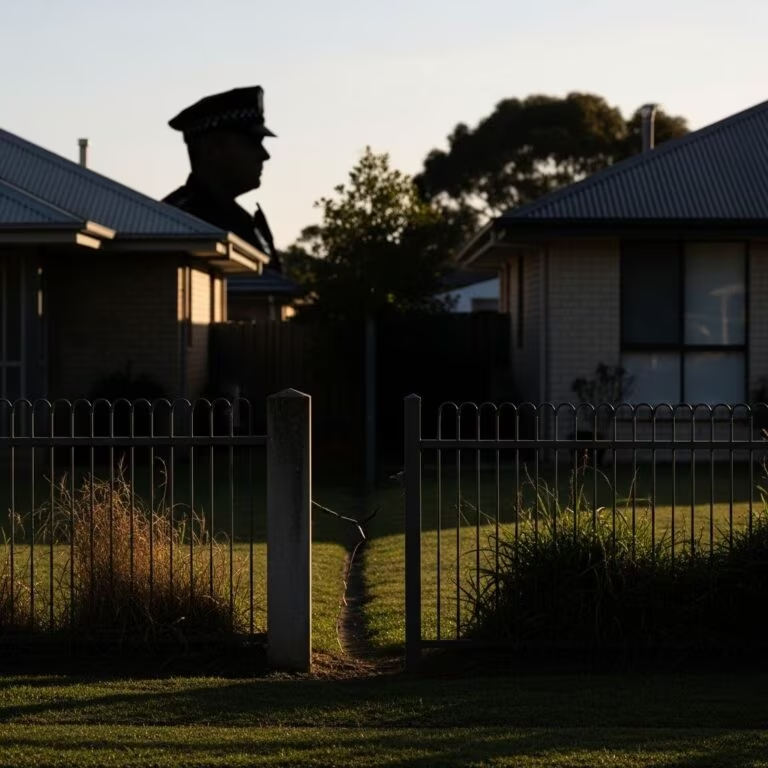
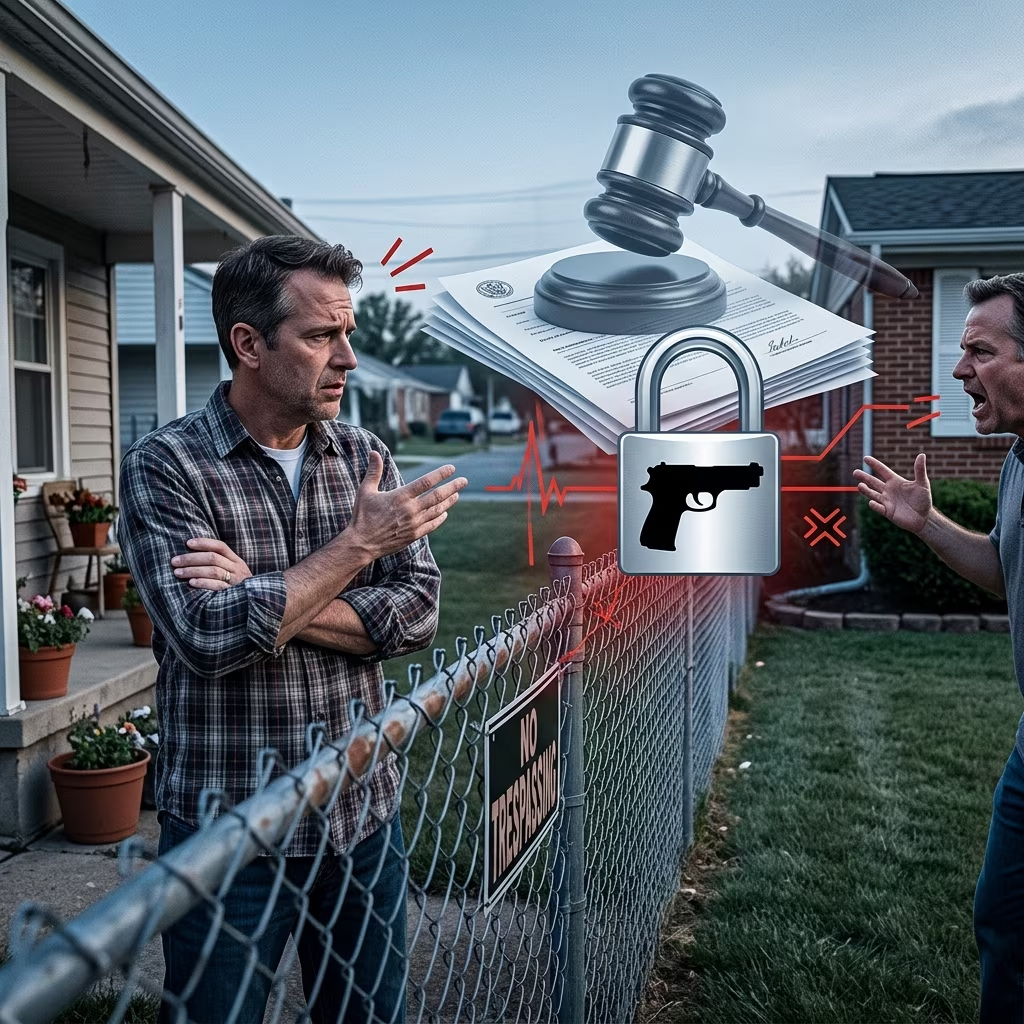
The case at the center of this discussion began with a dispute between neighbors in California. The conflict ultimately led a state court to issue restraining orders against the plaintiffs, which in turn triggered California statutes prohibiting them from possessing firearms and ammunition while the orders were in effect.
California, like many states, has enacted laws that automatically restrict access to firearms for individuals subject to certain civil protective or restraining orders. These provisions are designed to prevent potential violence and protect the safety of alleged victims during periods of heightened conflict.
In the case that reached the Ninth Circuit:
- The plaintiffs were neighbors involved in a long-running dispute.
- A California court issued a three-year civil restraining order against the plaintiffs.
- Under state law, that order made it unlawful for them to possess firearms or ammunition while it remained in effect.
- The plaintiffs argued that applying these laws to them violated the Second Amendment and the Due Process Clause of the U.S. Constitution.
They insisted they had no “bad intentions” and viewed themselves as unfairly punished by automatic firearm restrictions that followed from what they described as a private disagreement rather than criminal misconduct.
California Firearm Restrictions Linked to Restraining Orders
To understand the plaintiffs’ challenge, it is crucial to understand the general framework of firearm restrictions tied to civil protective orders. Federal law already prohibits certain individuals subject to qualifying restraining orders from possessing firearms. States, including California, often impose parallel or stricter rules.
Core Features of These Laws
- Automatic firearm prohibition: When a qualifying restraining order is issued, the subject is barred from possessing guns and ammunition for the duration of the order.
- Civil, not criminal process: These restrictions arise from civil proceedings, which usually have different evidentiary standards and procedures than criminal cases.
- Safety-driven rationale: Legislatures view the combination of interpersonal conflict and firearms as increasing risk of harm, especially in domestic or neighbor disputes.
- Temporary in nature: The restriction typically lasts only as long as the protective order remains in effect, unless other disqualifications apply.
Public health and criminal justice research has repeatedly documented links between interpersonal disputes, access to firearms, and serious harm, including homicide and suicide, which has supported legislative efforts to temporarily disarm individuals identified by courts as potential risks.
Neighbor Disputes vs. Domestic Cases
Many people associate restraining orders and firearm bans primarily with domestic violence. However, courts can issue protective orders in a variety of settings, including disputes between neighbors, business partners, or other non-family acquaintances.
In the Ninth Circuit case, the restraining order arose from neighbor conflict rather than domestic violence, but the firearm restriction still applied. This underscores how broad the reach of these statutes can be: once a qualifying order is entered, the nature of the relationship does not necessarily change the firearm consequences.
The Plaintiffs’ Constitutional Challenge
After the restraining order was issued, the plaintiffs filed suit in federal court challenging California’s firearm restrictions as applied to them. Their claims focused on two constitutional provisions:
- Second Amendment: They argued that prohibiting them from possessing firearms while subject to a civil restraining order violated their right to keep and bear arms.
- Due Process Clause: They also raised procedural and substantive due process arguments, asserting that the automatic firearm ban, triggered by a civil order, deprived them of liberty and property without adequate protections.
The plaintiffs contended that they were law-abiding citizens involved in a localized dispute, not violent offenders, and that the restraint was disproportionate and unconstitutional when applied to them.
Why They Focused on “No Bad Intentions”
A key rhetorical theme in the plaintiffs’ arguments was their claim that they harbored no malicious intent. They presented themselves as neighbors embroiled in an unfortunate disagreement, not individuals seeking to misuse firearms or menace others.
However, constitutional challenges to generally applicable laws rarely turn solely on subjective intent. Courts examine:
- How the statute operates as written.
- The governmental interests the legislature sought to protect.
- Whether the law fits within accepted historical and doctrinal limits on rights.
This framing—”we meant no harm”—did not ultimately carry legal weight in the Ninth Circuit’s analysis.
Mootness: How Timing Undercut the Case
Before reaching the substance of the Second Amendment and due process claims, the Ninth Circuit had to determine whether it still had a live controversy to decide. Federal courts may only adjudicate ongoing disputes where their decisions will have a concrete effect on the parties.
During the litigation, a critical development occurred:
- The three-year restraining order expired while the appeal was pending.
- A California court then denied the neighbor’s request to extend the order, meaning no new restraining order remained in place.
- As a result, the plaintiffs were once again legally entitled to possess firearms and ammunition under California law.
Once the restraining order expired and was not renewed, the direct legal restriction the plaintiffs were challenging—being barred from possessing firearms—no longer applied to them. This raised a classic question of mootness: if the disputed limitation has ended, is there still a case for the court to decide?
Why the Appeal Was Dismissed
The Ninth Circuit concluded that the expiration of the restraining order rendered the plaintiffs’ as-applied constitutional challenge moot—that is, no longer presenting a live controversy for federal adjudication.
In general:
- Federal courts cannot issue advisory opinions about laws in the abstract; they must address concrete disputes.
- When a challenged law no longer applies to the plaintiffs, courts often dismiss the case unless some ongoing collateral consequence keeps the dispute alive.
- The denial of an extension of the restraining order suggested the plaintiffs were not facing an imminent reimposition of the same restrictions.
Because the plaintiffs regained their ability to possess firearms and ammunition, the Ninth Circuit ultimately did not proceed to fully resolve their Second Amendment and due process arguments on the merits.
Key Legal Themes Illustrated by the Case
Even though the appeal was dismissed as moot, the dispute sheds light on several important legal themes relevant to neighbor conflicts, firearm regulation, and constitutional litigation.
1. The Interplay Between State Law and Constitutional Rights
States have substantial authority to regulate firearms, provided they do so within the framework of the Second Amendment as interpreted by the Supreme Court. California’s approach—tying firearm prohibitions to restraining orders—reflects a balance between individual rights and public safety concerns.
The Supreme Court has recognized that certain longstanding restrictions, including those aimed at preventing dangerous individuals from possessing firearms, can be consistent with the Second Amendment. While the plaintiffs argued that their case fell outside of any historical tradition allowing such restrictions, the mootness ruling prevented a full appellate exploration of that question.
2. The Role of Civil Protective Orders
Protective and restraining orders are civil tools that can have serious consequences similar to criminal sanctions. They may:
- Limit physical proximity or contact.
- Constrain speech or behavior toward the protected person.
- Trigger collateral consequences, such as firearm bans or impacts on employment.
Courts must ensure adequate procedural safeguards when imposing protective orders, particularly where significant rights are affected. However, legislatures also rely on these orders to prevent escalations that could result in harm.
3. Mootness as a Practical Barrier
This case demonstrates how the passage of time and changes in circumstances can undercut constitutional litigation. A law may remain in force, but the particular application that prompted a challenge can expire before courts rule on it.
For litigants:
- Delays in trial and appellate proceedings can diminish the chances of obtaining a substantive ruling.
- Challenges to temporary orders are especially vulnerable to mootness.
- In some contexts, plaintiffs might seek class actions or broader facial challenges to avoid mootness, but those involve different standards and strategic considerations.
Comparative View: Other Ninth Circuit Encounters with Property and Rights
The Ninth Circuit regularly hears cases where local conflicts, regulatory schemes, and constitutional rights intersect. While fact patterns differ, common legal threads appear across decisions.
| Case Theme | Type of Conflict | Key Constitutional Issue |
|---|---|---|
| Neighbor dispute and firearm ban | Private neighbors, civil restraining orders | Second Amendment, Due Process (mootness prevented merits decision) |
| Landlord relocation fees | Landlord vs. city ordinance on tenant relocation | Takings Clause, due process; relocation fee upheld as regulation of landlord-tenant relationship |
| Generational climate lawsuit | Youth plaintiffs vs. federal government over climate policy | Standing, public trust doctrine, separation of powers; case dismissed for lack of jurisdiction |
These examples illustrate that when individuals challenge laws or policies based on their personal circumstances, courts must carefully evaluate both the underlying rights and threshold questions like standing, ripeness, and mootness.
Practical Takeaways for Homeowners and Gun Owners
The Ninth Circuit case offers several practical lessons for people who own property, live near others in close quarters, or possess firearms in jurisdictions with robust protective order regimes.
1. Neighbor Disputes Can Have Far-Reaching Legal Effects
- What begins as a disagreement over noise, boundaries, or conduct can escalate into litigation and restraining orders.
- Civil protective orders may trigger automatic firearm prohibitions and other collateral consequences.
- Once court orders are in place, reversing their indirect effects can be legally complex and time-sensitive.
2. Intentions Matter Less Than Legal Findings
Even if a person believes they have “no bad intentions,” courts base decisions on evidence and statutory standards rather than subjective self-assessment. When a court issues a restraining order, it has already made a legal determination that certain conduct or risk warranted intervention.
Individuals should recognize that:
- Explaining good intentions may not undo the legal significance of a protective order.
- Challenging an order requires engaging with the evidentiary record and applicable law, often with legal counsel.
3. Timing and Strategy in Constitutional Challenges
- Those seeking to challenge firearm restrictions associated with restraining orders must consider how long the order will last and how quickly courts can realistically resolve their claims.
- Individual, as-applied challenges to temporary orders are vulnerable to mootness if the orders expire during litigation.
- In some circumstances, broader challenges or requests for declaratory relief about a statute’s overall validity may offer more durable paths to judicial review, though they also face higher hurdles.
Frequently Asked Questions (FAQs)
Do restraining orders always lead to a firearm ban?
No. The consequences depend on the specific type of restraining order and governing law. Federal law and many state statutes, including California’s, impose firearm bans on individuals subject to qualifying protective orders, particularly those involving threats or violence.
Can I argue that I had no bad intentions to avoid firearm restrictions?
Courts focus on evidence and statutory criteria, not self-reported intentions. Even if a person insists they meant no harm, a judge may conclude that imposing a protective order—and associated firearm restrictions—is necessary to safeguard others.
What does it mean when a case is dismissed as moot?
Mootness occurs when the underlying dispute no longer exists in a way that a court decision could meaningfully affect. In the Ninth Circuit case, once the restraining order expired and was not extended, the plaintiffs regained their rights to possess firearms, and the court had no ongoing controversy to decide.
Are there ways to challenge firearm laws without being subject to a restraining order?
Yes. Individuals or organizations may bring facial challenges to statutes, or seek declaratory and injunctive relief based on broader applications of the law. However, they must still meet constitutional requirements for standing, showing an actual or imminent injury traceable to the statute.
What should I do if a neighbor dispute is escalating?
It is usually advisable to seek early legal advice, consider mediation, and avoid conduct that could be viewed as threatening. If you own firearms, understanding how local laws treat protective orders and firearm possession can help you make careful decisions that minimize legal risk.
References
- United States Court of Appeals for the Ninth Circuit, Opinion No. 21-56292 — U.S. Court of Appeals for the Ninth Circuit. 2023-09-21. https://cdn.ca9.uscourts.gov/datastore/opinions/2023/09/21/21-56292.pdf
- The Ninth Circuit Court of Appeals Affirms the Constitutionality of Local Ordinance Requiring Landlords to Pay a Tenant Relocation Fee — Snell & Wilmer LLP. 2022-02-01. https://www.swlaw.com/publication/the-ninth-circuit-court-of-appeals-affirms-the-constitutionality-of-local-ordinance-requiring-landlords-to-pay-a-tenant-relocation-fee/
- Juliana v. United States, Opinion No. 18-36082 — U.S. Court of Appeals for the Ninth Circuit. 2020-01-17. https://cdn.ca9.uscourts.gov/datastore/opinions/2020/01/17/18-36082.pdf
- District of Columbia v. Heller, 554 U.S. 570 — Supreme Court of the United States. 2008-06-26. https://supreme.justia.com/cases/federal/us/554/570/
- National Academies of Sciences, Engineering, and Medicine: Firearms and Violence — National Academies Press. 2013-01-01. https://nap.nationalacademies.org/catalog/13507/firearms-and-violence-a-critical-review
- U.S. Department of Justice, Office on Violence Against Women: Firearms and Protective Orders — U.S. Department of Justice. 2022-05-01. https://www.justice.gov/ovw/page/file/1490396/download
- Centers for Disease Control and Prevention: Violence Prevention and Firearm-Related Injury — Centers for Disease Control and Prevention. 2023-06-15. https://www.cdc.gov/violenceprevention/firearms/index.html