
Do You Need Your Neighbor’s OK To Build a Fence?
Understand when you can build a fence on your own, when you must involve neighbors, and how property line, permits, and HOA rules affect your project.
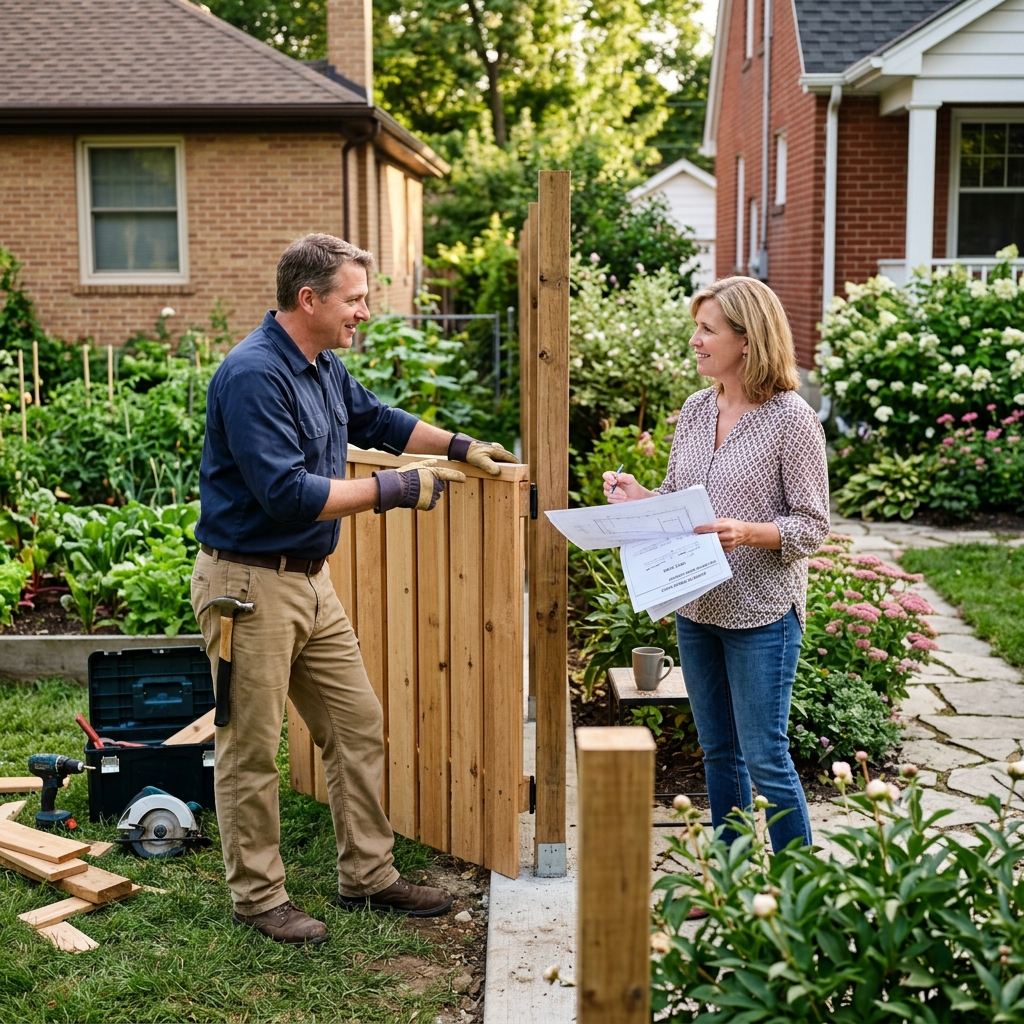
Putting up a fence sounds simple: you pick a style, hire a contractor, and enjoy more privacy. In reality, the moment your fence gets close to a property line or a neighbor’s yard, legal rules, permits, and shared responsibilities start to matter. Whether you need your neighbor’s permission depends on where the fence sits, local law, and any homeowner association (HOA) rules.
This guide explains when you can build a fence without asking, when consent is legally required, and practical steps to avoid expensive boundary disputes.
Fence Basics: Your Land vs. Shared Boundaries
From a legal standpoint, there is a crucial distinction between a fence that is entirely on your land and one that sits directly on the boundary between two properties.
- Fence fully on your property: In many places, you generally do not need your neighbor’s permission if the fence is inside your lot and complies with local building codes.
- Boundary or “partition” fence: When the fence is constructed on the property line, both owners are often treated as co-owners, and mutual consent may be required.
Because the legal consequences differ, the first step in any fence project is understanding exactly where your property begins and ends.
Finding and Confirming Your Property Line
Many conflicts arise simply because owners rely on old assumptions about where the lot line is. A clear boundary will tell you whether you are building solely on your own land or creating a shared structure.
Ways to confirm the boundary
- Review your deed and plat map: Your closing documents or county recorder’s office often include a plat or survey that shows lot dimensions and boundaries.
- Order a professional survey: A licensed land surveyor can physically mark the line, which is often the most reliable approach before you build near a boundary.
- Check with local government: Planning or zoning departments sometimes have reference surveys or GIS maps that help verify lines.
Spending money on a survey can feel unnecessary, but in many cases it is cheaper than resolving a lawsuit or being forced to move a fence after construction.
When Neighbor Permission Is Usually Required
In most U.S. jurisdictions, you have broad freedom to build a fence on your own land. Neighbor permission becomes important when you cross certain thresholds.
1. Fences on the property line
Many cities and counties treat a fence built directly on the property line as a shared boundary fence. That often means:
- Both neighbors are presumed to own the fence jointly.
- Both may share costs for construction, repair, and maintenance.
- The law may require notice or consent before you build, replace, or significantly alter the fence.
For example, California’s Good Neighbor Fence Law (Civil Code Section 841) presumes that adjoining owners equally share costs of a boundary fence and requires a 30-day written notice before building or repairing it, outlining the project and expenses. While rules differ by state, this illustrates why written communication and agreement are critical when using the exact property line.
2. Local rules that demand neighbor approval
Some municipalities or counties explicitly require neighbor consent or cooperation for certain fence projects, especially when the fence sits on the boundary or affects shared access.
| Situation | Typical Requirement |
|---|---|
| Fence directly on the lot line | Agreement of both owners or documented consent before construction. |
| Shared driveway or easement area | Consent may be needed to avoid blocking shared access; local code may restrict fences in easements. |
| Historic or special zoning districts | Additional approvals or design review, sometimes including neighbor notices. |
Because requirements vary widely, always confirm local regulations with your city or county before assuming you can build without involving your neighbor.
3. Homeowner association (HOA) communities
If you live in an HOA, you might face stricter fence rules than those imposed by the city.
- HOAs often regulate height, style, materials, and color of fences.
- Some boards require written approval before any fence is installed or replaced.
- In attached or townhouse communities, fences may be treated as limited common elements with shared responsibilities.
Failing to follow HOA procedures can lead to fines, forced removal of the fence, or denial of future architectural requests, even if your project otherwise complies with local building codes.
When You Can Usually Build Without Neighbor Permission
Even in communities with detailed regulations, there are many situations where neighbor consent is not legally required.
- Fence entirely inside your property lines, set back by a few inches or feet, and not encroaching on your neighbor’s land.
- Height within limits, such as the common six-foot maximum for backyard privacy fences in residential zones.
- Compliance with zoning and setback rules, meaning the fence is allowed in that location and does not block required sight lines at driveways or intersections.
- No HOA restrictions or all HOA approvals properly obtained.
Even if you are legally entitled to build without asking, maintaining a cooperative relationship with neighbors is often worth the effort.
Permits, Codes, and Height Limits
Whether or not you need permission from a neighbor, you may need permission from your local government. Fence projects can be governed by building codes, zoning ordinances, and permit requirements.
Key regulatory issues
- Permit thresholds: Many areas require a building permit once a fence exceeds a certain height (often above six feet) or is made of specific materials.
- Zoning setbacks: Some codes require fences to be built a minimum distance away from front sidewalks, streets, or neighboring structures.
- Corner lot visibility: Corner properties frequently face stricter rules so drivers can see around the intersection.
- Design rules: In historic districts or planned communities, fence style and materials may be regulated to maintain a consistent appearance.
Your local planning, zoning, or building department can confirm whether you need a fence permit, what height is allowed, and how close to the property line you may build.
Cost Sharing and Ownership of Boundary Fences
Money is often at the heart of fence disagreements. When a fence is considered a boundary or “good neighbor” fence, the law may presume shared responsibility.
Shared responsibility principles
- Equal ownership: Many jurisdictions presume that a fence centered on the line is jointly owned.
- Shared costs: Adjoining owners may be expected to share reasonable costs for construction, replacement, and maintenance unless one owner shows the fence does not benefit them.
- Notice requirements: Written notice before work begins helps ensure the other owner has a chance to object, negotiate details, or document that they do not agree to pay.
Formal agreements—signed and kept with property records when possible—can clarify who pays for what, who controls design choices, and how future repairs will be handled.
Preventing and Handling Fence Disputes
Disputes often arise when a fence is built without clear communication or when one owner feels their rights have been ignored. Prevention is usually easier and cheaper than litigation.
Steps to prevent problems
- Talk first: Before you build or replace a fence, explain your plan to your neighbor—location, height, materials, and timing.
- Verify the boundary: Use surveys or recorded plats to avoid encroaching on your neighbor’s land.
- Obtain necessary permits: Secure all local approvals so your project meets code and can be defended if challenged.
- Document agreements: If the fence is shared, use written agreements for cost sharing, maintenance, and future changes.
Common dispute scenarios
- Fence built over the line: If a fence is constructed on your side of the boundary without your consent, you can often contact local zoning or code enforcement to investigate and require compliance.
- Unauthorized changes to a shared fence: When one owner alters a boundary fence without the other’s consent, local laws or civil courts may treat it as a violation of shared property rights.
- Blocked views or sunlight: While many jurisdictions do not guarantee a “right to a view,” some HOAs and local codes regulate fences that dramatically affect neighbors’ enjoyment.
When direct discussion fails, you may need mediation, legal advice, or assistance from a local government office to reach a solution.
Good Neighbor Practices Beyond Legal Requirements
Even when the law allows you to build without asking, thoughtful design and communication can preserve—or improve—relationships with neighbors.
- Face the finished side outward: Many owners choose to face the more attractive side of the fence toward the neighbor or the street, which is often encouraged by local custom and HOAs.
- Consider pets and children: Make sure your fence safely contains animals and children without creating hazards for adjacent properties.
- Maintain the fence: Commit to ongoing maintenance, including repairing damage and preventing the fence from becoming a nuisance.
- Respect existing fences: If a fence is entirely on your neighbor’s property, do not paint, attach items, or modify it without permission.
Being a “good neighbor” is partly about courtesy and partly about anticipating how your project affects others, even when you are acting fully within your legal rights.
Frequently Asked Questions
Do I always need my neighbor’s permission to build a fence?
No. If the fence is built entirely on your property and complies with local laws and HOA rules, neighbor consent is usually not required. Permission becomes important when the fence sits on the property line, in a shared area, or in communities where specific rules demand neighbor involvement.
Can I build my fence directly on the property line?
In some areas you can, but a fence on the property line is often treated as a shared boundary fence. That typically means both owners have rights and responsibilities, and many jurisdictions require notice or consent before construction. Without agreement, the safer option is to build the fence slightly inside your own property.
What happens if my neighbor’s fence is over the line onto my property?
If you believe your neighbor’s fence encroaches onto your land, start by confirming the boundary with a survey. Then discuss the issue with your neighbor. If they refuse to cooperate, you can contact your local zoning or building department or seek legal advice; encroachment disputes are usually treated as civil matters and may require court involvement.
Do we have to share the cost of a boundary fence?
Many jurisdictions presume shared responsibility for reasonable costs of a boundary fence. For example, California’s Good Neighbor Fence Law assumes adjoining owners share the costs unless one proves the fence provides no benefit. However, rules differ by state and circumstance, so written agreements are the best way to clarify who will pay.
Can my HOA stop me from installing a fence?
Yes, if your HOA rules restrict fences or require approval for certain designs. HOA covenants and architectural guidelines can be more restrictive than city ordinances, and failing to follow them could result in fines or demands to remove the fence. Always review your HOA documents and obtain required approvals before building.
References
- Do I Need My Neighbor’s Permission to Put Up a Fence? — Martha Stewart / Gotlib Law Office. 2023-08-21. https://www.marthastewart.com/neighbor-permission-to-put-up-a-fence-11807793
- Frequently Asked Questions (Fence on Property Line) — Los Angeles County Public Works. 2024-01-10. https://pw.lacounty.gov/general/faq/?Action=getAnswers&FaqID=JSNNPzRRTTQgCg==
- Property Line & Fence Rules in California (Brief Guide) — Schorr Law. 2026-01-05. https://schorr-law.com/property-line-fence-rules-california/
- Fencing and Your Property Line: A Neighbor’s Guide — Redfin. 2023-06-15. https://www.redfin.com/blog/property-line-fence-rules/
- Pennsylvania Fence Requirements: What You Need to Know — Fence Authority. 2022-09-30. https://www.fenceauthority.com/blog/pa-fence-requirements-what-you-need-to-know/
- Can You Build a Fence on the Property Line? — Cool Cat Fence. 2023-03-01. https://coolcatfence.com/can-you-build-a-fence-on-the-property-line/
- Neighbors Built Fence and Shed on My Side of the Property Line — User report summarized by zoning officer advice. 2024-02-10. https://www.reddit.com/r/homeowners/comments/18n3yoz/neighbors_built_fence_and_shed_on_my_side_of_the/
Similar Articles








Read full bio of Sneha Tete


