
Nebraska Tenant Rights and Landlord Duties Explained
Understand key Nebraska tenant protections, landlord obligations, and practical steps to handle repairs, deposits, and evictions.
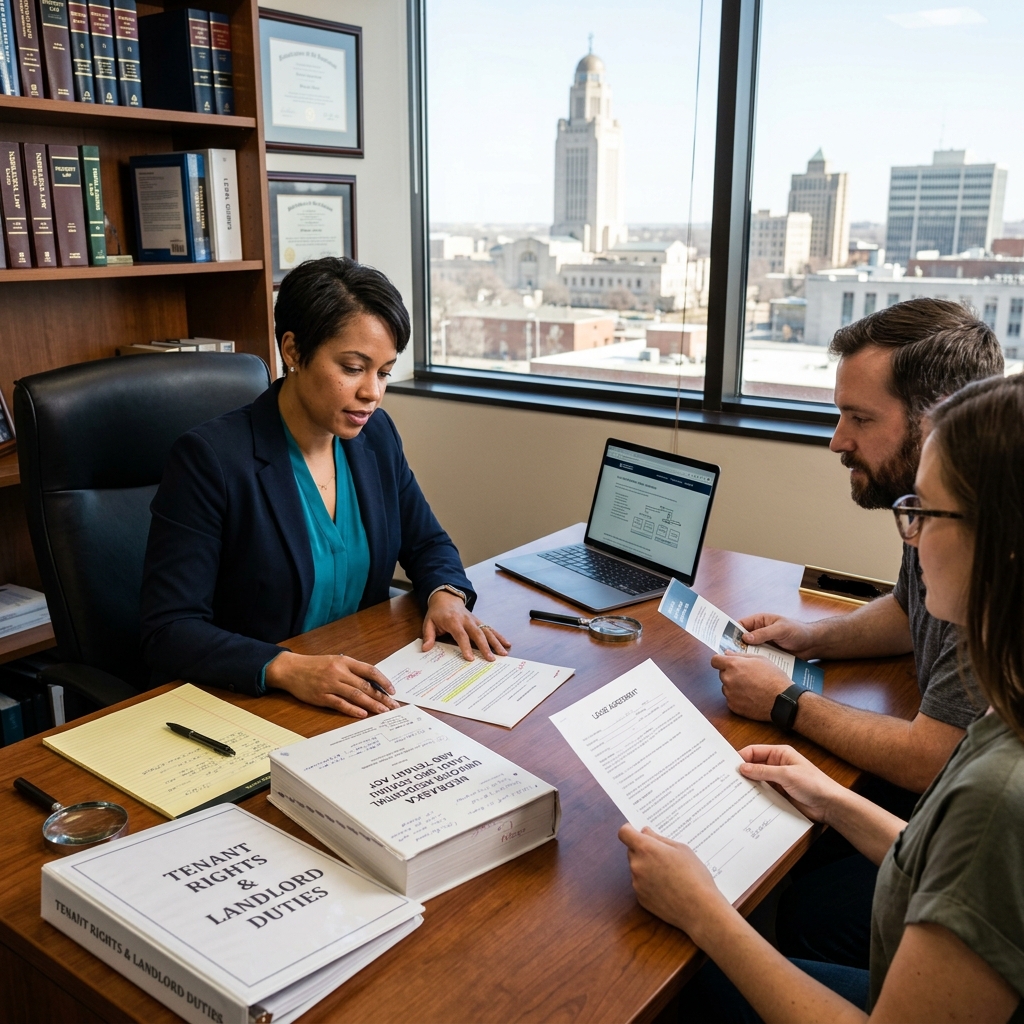
Nebraska tenants and landlords are governed by a detailed legal framework that sets out what each party must do and what each party can expect from the rental relationship. Understanding these rules before a dispute arises can make the difference between quickly solving a problem and ending up in court.
This guide breaks down major tenant protections and landlord responsibilities under Nebraska law in practical, everyday language. It highlights key concepts like habitability, repairs, privacy, rent, security deposits, and evictions, and suggests concrete steps tenants can take when something goes wrong.
Core Nebraska Laws Governing Rentals
Nebraska residential rentals are primarily regulated by the Uniform Residential Landlord and Tenant Act (URLTA), codified in Nebraska statutes. Additional related laws cover mobile homes and the disposition of abandoned property.
- Uniform Residential Landlord and Tenant Act – Governs most residential rental agreements, including rights and obligations of landlords and tenants.
- Mobile Home Landlord and Tenant Act – Provides rules tailored to mobile home parks in Nebraska.
- Disposition of Personal Property Landlord and Tenant Act – Addresses how landlords must handle tenant belongings left behind after move-out.
These laws apply whether or not the lease is written and even if the lease does not mention specific rights; many protections are automatic as soon as rent is accepted.
Basic Rights Nebraska Tenants Can Rely On
Several core rights apply to nearly all residential tenants in Nebraska. While the details depend on the situation, tenants can generally expect the following:
- Right to take possession at the start of the lease – The landlord must deliver access to the unit when the lease begins.
- Right to safe, habitable housing – The property must meet basic health and safety standards.
- Safe structure, no dangerous conditions
- Working plumbing, electrical, heating, and ventilation systems that the landlord provides
- Running water, hot water in reasonable amounts, and reasonable heat
- Clean and safe common areas maintained by the landlord
- Right to privacy and peaceful enjoyment – The landlord cannot enter at unreasonable times and generally must give advance notice except in emergencies.
- Freedom from discrimination – Landlords may not discriminate or retaliate against tenants for protected reasons or for asserting legal rights.
- Protection against unlawful rent increases – Rent increases cannot be discriminatory or retaliatory.
If a landlord fails to respect these rights, tenants can demand compliance and, in some cases, seek damages or other remedies.
Landlord Responsibilities Under Nebraska Law
Landlords have clear statutory duties toward their tenants. Many are non‑waivable, meaning they cannot be signed away in a lease.
Delivering Possession and Maintaining Habitability
- Delivering possession – At the beginning of the lease, the landlord must provide the tenant access to the rental unit.
- Keeping the unit habitable – Landlords must:
- Keep the property in a safe condition
- Maintain building systems like electrical, plumbing, heating, and ventilation
- Maintain appliances they supply
- Provide running water, hot water, and heat in reasonable amounts
- Maintaining common areas – Hallways, stairways, laundry rooms, and other shared spaces must be kept reasonably clean and safe.
Respecting Tenant Privacy
- Landlords must provide reasonable notice, often around 24 hours, before entering, except during emergencies such as fire or severe leaks.
- Entry must occur at reasonable times—for example, not in the middle of the night without the tenant’s consent.
- Repeated or unnecessary entry requests can be treated as a violation of the tenant’s right to privacy and peaceful enjoyment.
Security Deposit Handling
Nebraska law limits how landlords may manage and return security deposits and requires written documentation.
- Itemization – After the tenancy ends and the property is returned, the landlord must send the tenant any remaining balance and a written itemized list of deductions for damages or unpaid amounts.
- Deadline – This notice and any refund must be delivered or mailed within 14 days after termination of the tenancy and return of possession.
- Permissible deductions – Allowed deductions typically include unpaid rent, reasonable cleaning costs, and repairs beyond normal wear and tear.
Tenant Duties and Everyday Responsibilities
Nebraska tenants also have obligations that mirror some landlord duties. Failing to meet these obligations can lead to lease violations or eviction.
- Pay rent on time – Rent is generally due on the first day of the period covered by the agreement; for week‑to‑week agreements it may be due the first day of the week.
- Use the property reasonably – Tenants must avoid damaging the property and follow the lease’s rules about use.
- Keep the unit clean and safe – Daily upkeep such as trash removal and basic cleanliness is typically the tenant’s responsibility.
- Report issues – Tenants should promptly inform the landlord when essential services fail or when conditions become unsafe or uninhabitable.
Repairs, Essential Services, and Habitability Problems
Many disputes arise when something breaks or when essential services like heat or water fail. Nebraska law provides structured options for tenants, especially when the landlord does not act.
What Counts as an Essential Service?
Nebraska statute places special emphasis on certain services that are considered essential to livable housing, such as:
- Running water
- Reasonable amounts of hot water
- Reasonable heat
- Other essential utilities specifically covered by law
Steps Tenants Should Take for Repairs
When something critical goes wrong, tenants should proceed systematically:
- Document the problem – Take photos, videos, and notes describing the issue, including dates.
- Notify the landlord in writing – Send a dated letter, email, or other written notice explaining the problem and requesting repair within a reasonable time.
- Allow time for response – Nebraska guidance often emphasizes giving landlords a specific period, commonly around 14 days, to make non‑emergency repairs.
- Follow up – If there is no response, send a second written notice confirming that the first notice was received and that the problem continues.
Legal Options If Landlords Do Not Fix Essential Services
When a landlord fails to provide essential services, Nebraska law allows tenants to use several remedies, subject to statutory conditions.
| Tenant Remedy | When It May Apply | Key Requirements |
|---|---|---|
| Withholding rent | Essential services like heat or water are not provided. | Tenant must give written notice of the violation and follow statutory procedures. |
| Seeking substitute housing | Unit is not usable due to landlord’s failure to provide essential services. | Tenant may move to temporary housing and be excused from paying rent during the period of non‑compliance; damages may be limited to the amount of periodic rent. |
| Termination of the lease | Landlord willfully interrupts essential services or conditions are severely uninhabitable. | Tenant may terminate, seek return of deposits, and sue for up to three months’ rent plus costs and attorney’s fees. |
| Damages for reduced rental value | Property remains occupied but is less valuable due to the landlord’s non‑compliance. | Tenant may sue for the difference between fair rental value with and without the violation. |
Rent, Rent Increases, and Protections Against Retaliation
Nebraska does not impose traditional rent control, but it restricts certain types of rent increases and landlord conduct.
- No discriminatory rent increases – Landlords cannot raise rent based on race, color, religion, sex, familial status, national origin, disability, or other protected characteristics.
- No retaliatory rent increases – Landlords may not increase rent, reduce services, or attempt eviction in retaliation for tenants exercising lawful rights, such as filing legitimate code complaints.
Eviction Rules and Notice Requirements in Nebraska
Evictions in Nebraska must follow specific legal procedures. A landlord cannot lawfully evict a tenant simply by changing locks or shutting off utilities.
Common Grounds for Eviction
- Nonpayment of rent
- Lease violations (such as unauthorized occupants, significant property damage, or illegal activity)
- Repeated violations within a defined period for which proper notice was already given.
Typical Notice Periods
| Situation | Example of Required Notice | Notes |
|---|---|---|
| Nonpayment of rent | Short written notice to pay or quit; many sources describe a three‑day notice requirement for termination due to nonpayment. | If rent is not paid within the notice period, the landlord may file an eviction case. |
| Lease violations other than nonpayment | Written notice to comply or vacate, often around 30 days for certain violations. | Tenants generally have a limited time to cure the violation. |
| Repeated lease violation (within six months) | Landlord may use an unconditional termination notice if the same violation occurs again after proper initial notice. | Statute allows termination without a further opportunity to cure in specified circumstances. |
Exact timelines and wording requirements are set in statute and can vary; tenants facing eviction should consult an attorney or legal aid organization promptly.
Special Protections Against Landlord Retaliation
Nebraska law specifically prohibits landlords from retaliating against tenants who assert legitimate legal rights.
- Landlords may not retaliate by:
- Increasing rent
- Decreasing services (such as parking or amenities)
- Bringing or threatening eviction actions
- Protected tenant actions can include:
- Filing complaints with government agencies about housing code violations
- Joining or organizing tenant associations
- Lawfully using remedies provided by the landlord‑tenant statutes
When retaliation occurs, tenants may use it as a defense in eviction proceedings and may sometimes seek damages, depending on the circumstances.
Practical Tips for Nebraska Tenants
Beyond the statutory text, tenants can take practical steps to protect themselves and assert their rights effectively.
- Read the lease carefully – Understand payment dates, maintenance responsibilities, and rules about guests and subletting before signing.
- Keep copies of all documents – Save the lease, addenda, notices, receipts, and any written communications with the landlord.
- Communicate in writing – Confirm verbal conversations with written follow‑up emails or letters, particularly when requesting repairs or raising concerns.
- Use local housing resources – City and county housing code offices or legal aid organizations often provide brochures or guidance about complaint procedures and inspections.[10]
- Act quickly when problems arise – Filing complaints or seeking legal help early can prevent small issues from escalating.
Frequently Asked Questions (FAQs)
What can I do if my landlord never gave me access to the unit at the start of my lease?
Nebraska tenants have a right to take possession of the unit at the beginning of the lease term. If the landlord fails to deliver possession, tenants may have options such as terminating the lease, demanding performance, or suing for damages up to several months’ rent plus attorney’s fees when the failure is willful and in bad faith. It is important to send written notice and seek legal advice as soon as the problem occurs.
Can I withhold rent if my landlord does not provide heat or hot water?
Nebraska law allows tenants to withhold rent in some situations where the landlord fails to provide essential services like heat or water, but strict procedural requirements apply. Tenants must generally give written notice of the violation and should consider consulting an attorney or legal aid organization before withholding rent, because improper withholding may be treated as nonpayment and lead to eviction.
How quickly must my landlord return my security deposit?
After the tenancy ends and the tenant has moved out, Nebraska landlords must send any remaining deposit along with a written itemization of deductions within 14 days after termination of the tenancy and return of possession. If the landlord fails to do this, tenants may have grounds to claim the full amount or seek legal remedies.
Is my landlord allowed to enter my home without notice?
Outside of emergencies, Nebraska landlords are expected to give reasonable notice (commonly around 24 hours) and obtain consent before entering a tenant’s unit. Entry at unreasonable times or repeated entry requests without good reason may violate the tenant’s rights and can sometimes be challenged in court or through complaints to local authorities.
What should I do if I think my landlord is retaliating against me?
If a landlord raises rent, reduces services, or threatens eviction soon after you file a legitimate complaint or join a tenant organization, retaliation may be involved. Document dates and events carefully, keep all written communications, and consult legal aid or a private attorney. Retaliation can often be raised as a defense in eviction proceedings and may support claims for damages.
References
- Neb. Rev. Stat. § 76-1416 (Security Deposits) — Nebraska Legislature. 2024-01-01. https://nebraskalegislature.gov/laws/statutes.php?statute=76-1416
- Nebraska Landlord Tenant Law Overview — American Apartment Owners Association. 2023-08-15. https://american-apartment-owners-association.org/landlord-tenant-laws/nebraska/
- Nebraska Tenant-Landlord Rental Laws & Rights — Hemlane. 2026-03-01. https://www.hemlane.com/resources/nebraska-tenant-landlord-law/
- Know Your Renting Rights: How the Law Protects Nebraska Tenants — Nebraska Public Media. 2021-09-20. https://nebraskapublicmedia.org/es/news/news-articles/know-your-renting-rights-how-the-law-protects-nebraska-tenants/
- Tenants’ Rights Guide — University of Nebraska College of Law. 2022-05-10. https://law.unl.edu/tenants-rights/
- Essential Services: Tenants’ Rights — Community Action Partnership of Lancaster and Saunders Counties. 2020-06-01. https://www.communityactionatwork.org/tenant-support/for-tenants/rights/maintenance/essential-services.html
- Landlord-Tenant Brochure — City of Lincoln Building & Safety Department. 2019-04-01. https://www.lincoln.ne.gov/files/sharedassets/public/building-amp-safety/licensed-professional-information/landlord-tenant-brochure.pdf
Similar Articles








Read full bio of Sneha Tete


