
Nebraska Assistance Animals: Service Dogs And Housing Rights
Comprehensive overview of Nebraska's regulations for service dogs, emotional support animals, public access, housing rights, and trainer protections.
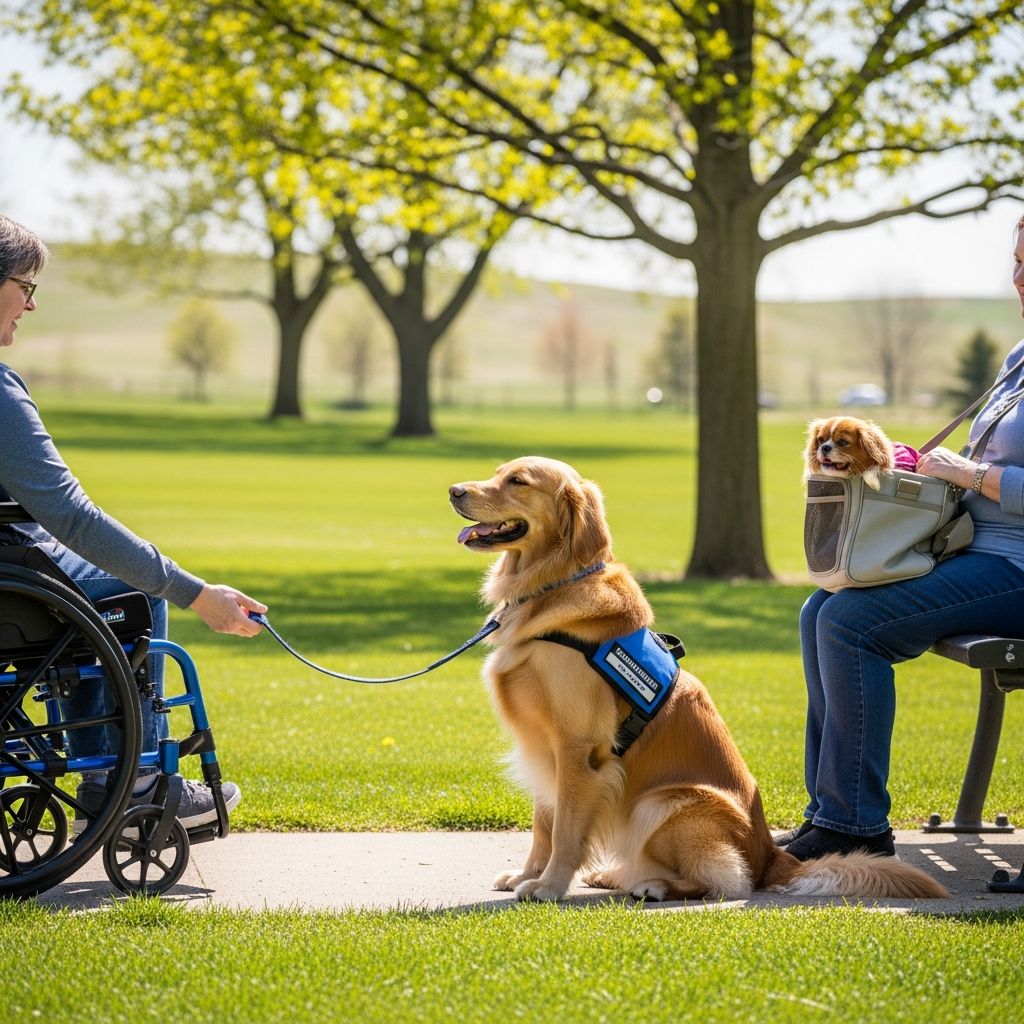
Individuals with disabilities in Nebraska benefit from a blend of state statutes and federal regulations that safeguard their right to be accompanied by trained service animals in everyday settings. These protections prioritize access while imposing clear standards on animal behavior and handler accountability. This guide breaks down eligibility, venues covered, housing provisions, distinctions between animal types, and practical advice for compliance.
Defining Service Animals Under Nebraska and Federal Standards
Nebraska statutes align closely with federal definitions but include specific limitations. State law recognizes service animals primarily as dogs trained to aid those with physical impairments, such as guide dogs for vision loss, signal dogs for hearing challenges, or mobility support dogs. This mirrors the Americans with Disabilities Act (ADA) definition from 2008, emphasizing task-oriented training for physical disabilities (Neb. Rev. Stat. § 49-801(19)).
Federal ADA rules broaden this to encompass dogs—and occasionally miniature horses—trained for physical, sensory, psychiatric, intellectual, or other mental disabilities. Examples include animals that retrieve items, alert to seizures, provide balance support, or interrupt harmful behaviors like self-harm in psychiatric cases. Nebraska public venues must adhere to both, ensuring broader mental disability coverage via ADA.
Emotional support animals (ESAs) differ fundamentally: they offer comfort without specific task training and lack public access rights under ADA or state law. However, ESAs gain protections in housing contexts, as detailed later.
| Animal Type | State Law Coverage | Federal ADA Coverage | Key Tasks/Role |
|---|---|---|---|
| Service Dog (Physical) | Full public/housing access | Full access | Guide, signal, mobility aid |
| Psychiatric Service Dog | Public: ADA only; Housing: Limited | Full public access | Interrupt anxiety, medication reminders |
| Miniature Horse | Not specified | Case-by-case public access | Trained tasks if feasible |
| ESA | No public access | No public access | Emotional comfort in housing |
Public Access Protections: Where Service Animals Are Welcome
Nebraska’s civil rights framework mandates that service animals accompany handlers into all public accommodations without barriers (Neb. Rev. Stat. § 20-127). Covered locations span retail stores, dining establishments, lodging facilities, performance venues, medical offices, educational institutions, and transportation hubs open to the general populace.
Businesses cannot impose extra fees, deposits, or surcharges for service animals, though handlers remain liable for damages caused. Exclusion is permitted only if the animal presents a direct safety risk—such as uncontrolled aggression, lack of housebreaking, or failure to respond to handler commands. Staff may inquire solely about the animal’s task-training and disability-related function, never demanding proof, certification, or vests.
- No certification required: Nebraska does not mandate registration or official papers; local pet licensing may apply separately.
- Control mandatory: Animals must remain leashed, harnessed, or under voice control unless it hinders tasks.
- Interference prohibited: Distracting or petting without permission violates handler rights.
Housing Rights for Assistance Animals in Nebraska
State housing laws protect service dogs for physical disabilities, barring landlords from denying access, charging pet fees, or evicting based on the animal’s presence (Neb. Rev. Stat. § 20-131.02). Coverage excludes mental disability service animals at the state level.
The federal Fair Housing Act (FHA) fills this gap, prohibiting discrimination against assistance animals—including service dogs and ESAs—for any disability type. Assistance animals qualify if they perform tasks, provide services, or mitigate disability symptoms for equal housing enjoyment. FHA covers nearly all rentals, sales, and leases, overriding no-pet clauses as a reasonable accommodation.
Landlords may request documentation only when the need is non-obvious, such as a letter from a healthcare provider confirming the disability and animal necessity. No breed/size bans or extra deposits apply, but property damage liability does.
Pro Tip: For ESAs, a simple provider letter suffices; service dogs may not need it if tasks are visible.
Special Provisions for Service Dogs in Training
Nebraska explicitly grants bona fide trainers public access rights equivalent to handlers, without extra charges. Trainers bear responsibility for damages and must maintain control (Neb. Rev. Stat. referenced in university policy). This supports programs at institutions like the University of Nebraska-Lincoln, where dogs in training access campus alongside fully trained ones.
Under ADA, dogs in training lack automatic rights, but state law bridges this for Nebraska. Trainers should identify the dog’s status clearly and ensure good behavior.
Handler Responsibilities and Common Pitfalls
Success relies on adherence: Keep animals groomed, housebroken, and task-focused. Respond promptly to exclusion justified by safety threats. Misrepresentation—claiming pets as service animals—carries penalties under ADA and state rules.
- Vaccination/Licensing: Comply with local ordinances.
- Behavior Management: Address disruptions immediately.
- Documentation Prep: Have housing letters ready, but don’t volunteer for public access.
Violations by businesses invite complaints to the Nebraska Equal Opportunity Commission or federal agencies.
Distinguishing Assistance Categories: A Practical Breakdown
Understanding nuances prevents conflicts:
- Service Animals: Task-trained for disabilities; public/housing access.
- Therapy Animals: Comfort others in controlled settings like hospitals; no private rights.
- Pets: No legal protections beyond ordinances.
Nebraska resources from Disability Rights Nebraska offer further guidance on documentation and advocacy.
Frequently Asked Questions About Nebraska Assistance Animals
Can my emotional support cat live in Nebraska rental housing?
Yes, under FHA as a reasonable accommodation with provider documentation, regardless of no-pet policies.
Do service dogs need special vests or IDs in stores?
No; identification isn’t required, though many use gear for clarity.
What if my service dog damages hotel property?
You pay for repairs, like any guest.
Are miniature horses allowed in Nebraska restaurants?
Possibly under ADA if trained and controllable; venues assess case-by-case.
Can trainers bring dogs in training to public pools?
Yes, per state law, if covered as a public accommodation.
How do I report a business denying access?
Contact Nebraska Equal Opportunity Commission or file ADA complaint.
Staying Compliant: Resources and Updates
Laws evolve; check Nebraska Department of Health and Human Services or federal HUD for changes. Advocacy groups provide templates for letters and complaint forms. For campus-specific rules, universities like UNL outline handler protocols.
In 2026, emphasis remains on balancing access with public safety, ensuring service animals enhance independence without undue burdens.
References
- Nebraska Laws on Service Dogs and Emotional Support Animals — Nolo. 2023. https://www.nolo.com/legal-encyclopedia/nebraska-laws-on-service-dogs-and-emotional-support-animals.html
- Policies Regarding Animals on Campus — University of Nebraska-Lincoln SSD. Accessed 2026. https://ssd.unl.edu/policies-regarding-animals-campus/
- Service Dogs in Training Laws by State — Service Dog Training School. 2023. https://www.servicedogtrainingschool.org/blog/service-dogs-in-training-laws-by-state
- Service Animal Resources — Disability Rights Nebraska. Accessed 2026. https://www.disabilityrightsnebraska.org/resources/service-animals.html
- Do I need to register my service or emotional support animal? — Nebraska Access. Accessed 2026. https://nebraskaccess.nebraska.gov/websites/serviceanimals.asp
Similar Articles








Read full bio of Sneha Tete


