
Navigating Tariffs and Exemptions for Small Businesses
A practical guide for small business owners to understand tariffs, manage rising import costs, and explore exemption opportunities.
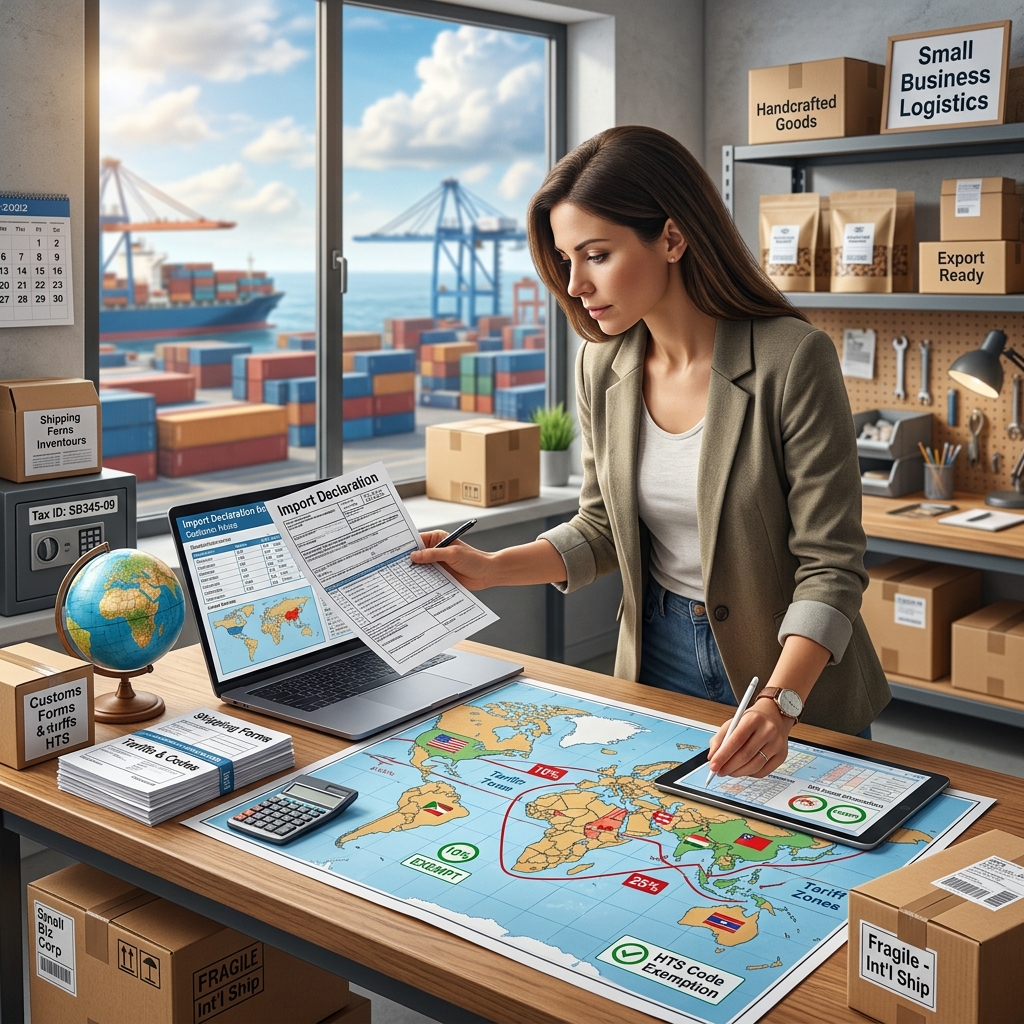
Tariffs have become a central concern for many small businesses that depend on imported goods. Although they are often discussed in political or economic terms, tariffs are, at their core, taxes on imports that can directly reshape a small business’s costs, pricing, and competitiveness. Understanding how tariff laws work, who is responsible for paying them, and what exemption or relief options might exist is essential for any owner or manager engaged in cross-border trade.
This article provides a comprehensive, practical overview of tariff rules and the exemption process from a small business perspective. It explains the basics of tariffs, outlines how they are assessed and collected, explores the ways they affect cash flow and pricing, and describes common strategies—including exemption requests and policy-based relief—for managing these costs while staying compliant with trade and tax laws.
1. Tariffs in Plain Language: What They Really Are
In simple terms, a tariff is a tax charged by a government on imported goods. When a business buys a product from a foreign supplier and brings it into the country, the government may impose a tariff on that transaction. The goal can vary: tariffs may be used to protect domestic industries, raise revenue, or apply pressure in trade negotiations.
Key characteristics of tariffs include:
- Applied to imports: Tariffs are generally imposed on goods crossing a border into a country, not on purely domestic transactions.
- Paid by the importer: Contrary to popular belief, the foreign seller does not pay the tariff. The business or individual importing the goods is responsible for the tax.
- Collected at entry: In the United States, tariffs are typically calculated and collected by U.S. Customs and Border Protection when goods enter the country, with the proceeds going to the U.S. Treasury.
- Calculated as a rate or specific charge: Many tariffs are assessed as a percentage of the value of the goods (ad valorem), though some may be based on quantity or weight.
For small businesses, this means that every imported shipment can carry an additional cost that must be either absorbed or passed along in some way, making tariff literacy vital for sound financial planning.
2. Who Actually Pays: Importers and the Tariff Burden
Public debate often frames tariffs as a cost borne by foreign exporters, but for small businesses that import goods, tariffs are an immediate and direct expense. The Importer of Record—the entity legally responsible for clearing goods through customs—is the party that pays the tariff to the government.
For many small businesses, this role falls into one of two categories:
- Direct importers: Manufacturers, retailers, and wholesalers that purchase goods directly from overseas suppliers and file customs entries in their own name. These businesses are officially recognized as the Importer of Record and pay tariffs at the border.
- Downstream buyers: Restaurants, local retailers, contractors, and service providers that buy imported goods from domestic distributors. In these cases, the distributor or logistics company is usually the Importer of Record. The downstream business does not pay tariffs directly, but experiences higher prices when suppliers pass those costs along.
The distinction matters when it comes to tariff relief and exemption opportunities. Many government refund or exclusion programs apply only to the Importer of Record, limiting direct access to relief for downstream businesses even if they bear the economic consequences of higher prices.
3. How Tariffs Affect Small Business Operations
Tariffs raise the cost of imported inputs, and this additional expense can ripple through nearly every aspect of a small business’s operations. Research has shown that tariff-related costs for U.S. small businesses can reach tens of billions of dollars annually, underscoring how widespread the impact can be.
Common operational effects include:
- Higher landed costs: The total cost of getting a product to the business—purchase price, shipping, insurance, customs fees, and tariffs—goes up.
- Margin pressure: Businesses must either accept lower profit margins or raise prices to maintain profitability.
- Cash flow strain: Tariffs are typically due at the time of import. For small businesses, this can create cash flow challenges, especially when tariffs are high or when many shipments arrive in a short period.
- Administrative burden: Compliance with customs rules, recordkeeping, and potential exemption applications adds time and complexity to operations.
- Strategic reconsideration: Some businesses respond by changing product lines, altering sourcing strategies, or exploring domestic alternatives.
Because these effects can accumulate quickly, tariff management becomes a core component of risk mitigation and long-term planning for small enterprises engaged in importing.
3.1 Cost Transmission: From Tariff to Consumer Price
When tariffs increase costs at the border, businesses must decide how much of that increase they can pass on to customers. Depending on competitive conditions and customer sensitivity to price changes, small businesses may:
- Increase prices across the board to maintain margins.
- Raise prices selectively on tariff-heavy products, keeping other items stable.
- Absorb part of the cost to remain competitive, sacrificing short-term profitability.
- Reposition their brand or offerings to emphasize quality or unique features that justify higher prices.
If many businesses pass on the costs, consumers ultimately face higher prices at checkout. Over time, this can dampen demand, which in turn pressures small businesses to find new ways to manage their cost structure.
4. Key Legal Concepts in Tariff Administration
Understanding the legal framework around tariffs helps small businesses avoid compliance pitfalls and identify legitimate relief opportunities. Several concepts are particularly important:
| Concept | Meaning for Small Businesses |
|---|---|
| Importer of Record | The legal entity responsible for filing customs documentation and paying tariffs. Often determines eligibility for refunds or exemptions. |
| Tariff classification | The process of assigning goods to specific codes in the tariff schedule. Misclassification can lead to incorrect duties or penalties. |
| Valuation | Determining the customs value of goods, which serves as the basis for ad valorem duty calculations. |
| Country of origin | Identifying where goods were produced or substantially transformed, which can change the applicable tariff rate. |
| Special programs & preferences | Certain trade agreements or preference programs can reduce or eliminate tariffs for qualifying goods. |
Accurate classification, valuation, and origin determination not only ensure compliance but also prevent overpayment of tariffs that could otherwise be contested or minimized through available legal channels.
5. The Tariff Exemption and Relief Landscape
While tariffs are generally mandatory, governments may create mechanisms that soften their impact or allow certain goods or businesses to seek relief. These mechanisms can take several forms, each with different legal and practical implications for small enterprises.
5.1 Product-Based Exclusions and Refunds
In some trade regimes, specific products or categories of goods can be exempted from tariffs, either permanently or temporarily. Businesses—or industry associations—may petition for exclusions when tariffs are found to significantly harm domestic producers or consumers.
Features of product-based relief can include:
- Exclusion lists: Government agencies publish lists of products that qualify for reduced or zero tariffs.
- Refund mechanisms: Importers who paid tariffs before an exclusion was granted may be eligible to request refunds upon demonstrating eligibility and providing documentation of past payments.
- Time-limited relief: Some exclusions apply only for a defined period, requiring businesses to monitor policy developments closely.
These programs generally favor the Importer of Record. Downstream small businesses often cannot claim refunds directly, though they might seek compensation or renegotiated terms from their suppliers.
5.2 Threshold and De Minimis Rules
Another form of relief historically used in trade policy is the de minimis rule, which exempts low-value imports from tariffs and certain customs fees. Under such rules, shipments below a specified value enter the country without duty, which can significantly benefit small businesses that rely on frequent, small shipments.
Policy changes that tighten or remove these thresholds can substantially increase costs. Research has estimated that ending de minimis relief for low-value shipments can add billions of dollars in tariffs and administrative fees for small businesses, along with notable regulatory burdens. The loss of such relief forces businesses to reconsider their import strategies, packaging, and order sizes.
5.3 Legislative and Policy-Based Exemptions
In response to concerns about the burden of tariffs on small enterprises, lawmakers sometimes introduce legislation that would broaden exemptions or provide targeted relief. These proposals might seek to:
- Exclude small businesses from certain tariffs entirely.
- Streamline refund processes or direct agencies to assist small companies in navigating relief programs.[10]
- Adjust thresholds or redefine categories of goods to reduce unintended harm.
While such measures depend on the political process and may not always become law, they demonstrate how advocacy and public policy can shape the tariff environment over time.[10] Small businesses benefit from following these developments, as enacted reforms can quickly change their cost structure.
6. Practical Steps for Small Businesses Facing Tariffs
Regardless of whether formal exemptions are available, small businesses can take specific steps to manage tariff exposure and protect their financial health. These strategies combine legal awareness, operational adjustments, and active supplier management.
6.1 Determine Your Trade Position
Begin by understanding how tariffs interact with your business model:
- Confirm your role: Identify whether your company is the Importer of Record or a downstream purchaser.
- List tariff-affected goods: Identify products in your catalog that are imported and subject to tariffs.
- Assess cost impact: Calculate how much tariffs add to the landed cost of each product and to your overall expenses.
This assessment provides a baseline for deciding whether to pursue exemptions, modify pricing, or explore alternative suppliers.
6.2 Explore Exemption and Refund Options
If you are the Importer of Record, you may have more direct options to seek relief:
- Work with customs brokers or trade counsel to review whether any of your products qualify for existing exclusions or reduced rates.
- Collect documentation of duties paid, invoices, and customs entries to support potential refund claims.
- Monitor government announcements and public registers for new exclusion opportunities or rule changes.[10]
Downstream businesses should coordinate closely with suppliers, reviewing contract provisions and documentation that reference tariffs as a reason for price increases and exploring whether cost-sharing or partial refunds are feasible.
6.3 Adjust Supply Chains and Pricing
Small businesses can also respond to tariffs by reshaping their operations. Common approaches include:
- Diversifying suppliers: Source from countries or regions with lower tariffs or favorable trade agreements.
- Shifting to domestic production: In some cases, working with local manufacturers may reduce exposure to import duties, even if base costs are higher.
- Strategic pricing changes: Gradually increase prices or adjust only certain product lines to minimize customer resistance.
- Cost management: Cut non-essential expenses, renegotiate leases or vendor contracts, and streamline processes to offset tariff costs.
- Collaborative purchasing: Partner with other small businesses to buy in bulk, potentially lowering overall per-unit costs.
These options require careful analysis, but they can reduce the long-term impact of tariffs and make businesses more resilient to future policy shifts.
7. Risk Management and Compliance Best Practices
Tariff exposure is not only a financial issue; it also raises compliance and legal risk. Small businesses can mitigate these risks by embedding sound trade practices into their operations.
- Maintain accurate records: Keep organized documentation of imports, duties paid, supplier contracts, and communications about tariffs.
- Review contracts regularly: Examine supplier agreements for clauses related to price changes, tariff pass-through, and dispute resolution.
- Train staff: Ensure that finance and logistics teams understand basic tariff concepts and the importance of correct classification and documentation.
- Consult professionals when needed: For complex situations or significant duty amounts, work with customs brokers or trade attorneys to avoid costly errors.
- Stay informed: Follow reliable government and industry sources to track changes in tariff schedules, thresholds, and relief programs.
Integrating these practices into day-to-day operations helps small businesses respond quickly and lawfully when tariff policies change.
8. Frequently Asked Questions (FAQs)
8.1 Are tariffs the same as sales tax?
No. Tariffs are taxes on imported goods at the border, paid by the importer, whereas sales taxes are charged on transactions with consumers within the country. They operate under different laws and administrative systems.
8.2 Can small businesses avoid tariffs entirely?
Not always. If a business imports goods subject to tariffs, it typically must pay them. However, companies can sometimes reduce exposure by using trade preference programs, sourcing from countries with lower duties, or pursuing product-specific exclusions.
8.3 If my supplier raises prices due to tariffs, can I get a government refund?
Generally, no. Refund and exclusion programs usually apply to the Importer of Record—the entity that paid duties directly to customs. Downstream businesses may renegotiate with suppliers or seek contractual remedies but typically do not receive government refunds themselves.
8.4 How do policy changes affect small business tariffs?
Policy changes can raise or lower tariff rates, adjust thresholds, or create new exemption programs. These changes can alter costs quickly, so small businesses benefit from monitoring credible sources and engaging in industry advocacy when appropriate.[10]
8.5 Is it worth hiring a customs broker or trade attorney?
For businesses that import regularly or pay significant tariff amounts, professional guidance can be valuable. Brokers and attorneys help ensure compliance, identify relief opportunities, and reduce the risk of penalties or overpayment.
References
- Tariffs 101: How They Work for U.S. Small Businesses — AMPAC. 2024-03-15. https://ampac.com/how-tariffs-work-us-small-businesses/
- What Are Tariffs and How Do They Impact Small Businesses — Bankrate. 2024-07-01. https://www.bankrate.com/loans/small-business/what-are-tariffs-and-how-do-they-impact-small-businesses/
- The Impact of Tariffs on Small Businesses — American Action Forum. 2024-08-29. https://www.americanactionforum.org/research/the-impact-of-tariffs-on-small-businesses/
- Will Your Small Business Get a Tariff Refund? Here Is the Honest Answer — Fiffik Law Group. 2025-05-10. https://www.fiffiklaw.com/post/will-your-small-business-get-a-tariff-refund-here-is-the-honest-answer
- The Impact of Tariffs on American Businesses — U.S. Chamber of Commerce. 2018-09-05. https://www.uschamber.com/tariffs
- U.S. Reps Kelly Morrison, Chris Pappas Introduce Legislation to Exempt Small Businesses from Tariffs — U.S. House of Representatives. 2025-04-03. http://morrison.house.gov/media/press-releases/us-reps-kelly-morrison-chris-pappas-introduce-legislation-exempt-small
- Small Businesses Have Been Footing the Bill for Illegal Tariffs — Rep. Grace Meng. 2025-06-20. https://www.facebook.com/repgracemeng/videos/small-businesses-have-been-footing-the-bill-for-illegal-tariffs-since-day-one-an/1393610989470426/
Similar Articles








Read full bio of Sneha Tete




