
Navigating Rising Mortgage Delinquencies: Practical Options for Homeowners
As missed mortgage payments increase across the U.S., understanding your legal and financial options can help you protect your home and credit.
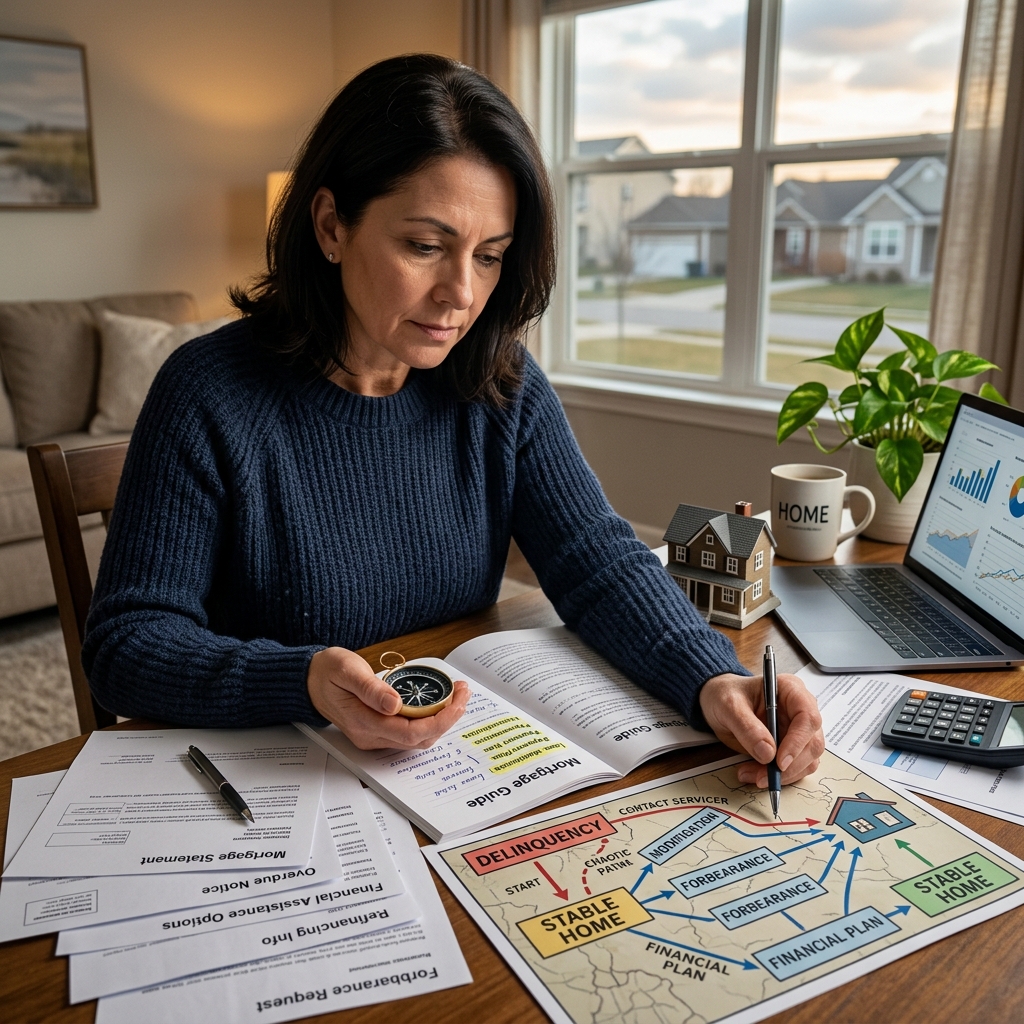
Mortgage delinquencies in the United States are rising again after several years of unusually low levels, driven by higher borrowing costs, growing household debt, and pockets of economic strain. For homeowners who are already behind or worried they might miss a payment, understanding how delinquency works and what options exist is critical to protecting both your home and your long-term financial health.
This article explains current delinquency trends, clarifies what happens when you miss payments, and outlines practical strategies—legal, financial, and negotiation-based—to manage mortgage trouble before it turns into foreclosure.
1. The New Landscape of Mortgage Delinquencies
During the COVID-19 pandemic, sweeping forbearance programs and low interest rates pushed mortgage delinquency rates to historic lows. As those protections wound down and borrowing costs rose, missed payments began to climb again across the country.
Recent data show:
- Short-term delinquencies (30–89 days past due) have increased from post-pandemic lows, signaling growing early stress among borrowers.
- Serious delinquencies (90+ days past due or in foreclosure) have reached their highest levels since around 2022, though they remain far below Great Recession peaks.
- In Q2 2025, about 3.68% of mortgage balances were more than 30 days delinquent, exceeding pre-pandemic levels.
- Delinquencies are rising fastest in lower-income areas and regions with weakening labor markets and housing conditions.
While national averages remain moderate, the trend is clear: more homeowners are struggling to keep up, and missed payments are becoming more common, especially where unemployment or housing softness is increasing.
2. Understanding Mortgage Delinquency: Key Terms and Stages
Before deciding what to do, it helps to understand the terminology lenders and servicers use. Delinquency is measured by how many days your payment is late:
| Stage | Days Late | Typical Consequences |
|---|---|---|
| Grace period | 0–15 days (varies by loan) | No credit reporting; possible late fee after grace period. |
| Early delinquency | 30–59 days | Payment reported late; collection calls and letters start. |
| Moderate delinquency | 60–89 days | Escalating collection efforts; growing risk to credit score. |
| Serious delinquency | 90+ days | Possible start of foreclosure process, depending on state law and loan type. |
Each mortgage contract includes a default and acceleration clause, which allows the lender to demand full repayment and eventually foreclose if you remain seriously delinquent. The exact timeline depends on your state’s foreclosure procedures and your loan type (e.g., conventional, FHA, VA).[10]
2.1 Delinquency vs. Default
Being delinquent means you are late on payments. Being in default generally refers to a more serious breach of the loan terms, often after prolonged delinquency or non-compliance with other obligations.
- Delinquency is usually measured in days late and reported to credit bureaus once you hit 30 days past due.
- Default can trigger legal remedies, including foreclosure, but usually occurs after multiple missed payments and formal notices.
Most homeowners have a window of time between the first missed payment and default, during which proactive communication and loss mitigation options are still available.
3. Why More Homeowners Are Falling Behind
Delinquencies rarely arise from a single cause. Instead, they reflect broader economic conditions and household-level pressures. Recent research points to several key drivers:
- Higher overall consumer debt: Mortgages now account for over 70% of U.S. household debt, totaling more than $12.9 trillion, and other forms of debt (credit cards, auto, student loans) have also seen increased delinquency rates.
- Rising interest rates: Borrowers who purchased or refinanced after the era of ultra-low rates may face significantly higher monthly payments, making budgets more fragile.
- Localized economic stress: Areas with rising unemployment or weakening housing markets are seeing the sharpest increases in late mortgage payments.
- Geographic disparities: Southern and some East Coast states, including Mississippi, Louisiana, and West Virginia, currently show among the highest delinquency rates, while several West Coast states have the lowest.
Importantly, many current borrowers have relatively strong credit profiles compared with borrowers before the Great Recession, which has helped keep delinquency rates below crisis levels. Still, for households on the edge, a job loss, medical event, or unexpected expense can quickly lead to missed mortgage payments.
4. Immediate Steps If You’re Behind on Your Mortgage
If you have already missed a payment—or know you will soon—the first 30–60 days are critical. Acting early can dramatically expand your options and limit long-term damage.
4.1 Contact Your Servicer Quickly
Your mortgage servicer is the company that collects payments and manages your account. Federal rules generally require servicers to reach out to borrowers experiencing hardship and to evaluate them for available loss mitigation options, especially on many federally related loans.
When you call:
- Explain the reason for your hardship (job loss, medical expenses, divorce, etc.).
- Provide an honest picture of your current income, expenses, and savings.
- Ask explicitly about loss mitigation programs such as repayment plans, deferrals, forbearance, and modifications.
- Request that all offers and decisions be sent to you in writing.
Document every interaction—including dates, names, and what was discussed—so you can later show you attempted to resolve the issue in good faith.
4.2 Review Your Budget and Other Debts
Financial advisers consistently recommend a clear, realistic budget as a foundation for any delinquency strategy. Your goal is to understand:
- Which expenses are essential (housing, food, utilities, transportation).
- Where you can cut back temporarily (subscriptions, discretionary spending).
- Whether restructuring other debts (credit cards, auto loans) is possible.
While budgeting won’t increase your income, it can reveal whether you can afford a repayment plan, how much relief you need, and whether home retention is realistic.
4.3 Check Your Credit Reports
Late mortgage payments can significantly dent your credit score. Reviewing your credit reports helps you:
- Confirm that late payments are being reported accurately.
- Identify any errors or outdated negative information you can dispute.
- Track how delinquency is affecting your overall credit profile.
Although you can dispute inaccuracies yourself, some borrowers seek professional help to navigate complex disputes, especially if multiple errors exist. Be cautious and research any credit repair service thoroughly.
5. Core Options to Avoid Foreclosure
Most homeowners facing delinquency want to know one thing: Can I keep my home? The answer depends on your income, the severity of the delinquency, and your lender’s programs. These are among the most common tools used to stabilize troubled mortgages.
5.1 Repayment Plans and Temporary Arrangements
Repayment plans allow you to catch up gradually while staying in the home. Examples include:
- Short-term repayment plan: You agree to pay your regular mortgage plus an extra amount each month until the arrears are cleared.
- Temporary payment reduction: Your servicer may reduce payments for a limited time if you can show that your hardship is temporary.
- Payment deferral: In some programs, missed payments are moved to the end of the loan rather than being immediately due.
These arrangements generally require proof that your income has stabilized enough to support the higher or resumed payments.
5.2 Forbearance
Forbearance is a formal agreement to temporarily pause or reduce payments. During forbearance, the lender agrees not to pursue foreclosure, but interest may continue to accrue.
Key points:
- Forbearance is typically limited to a specific period and may require regular check-ins.
- At the end, you must choose a resolution, such as a lump-sum payment, repayment plan, modification, or deferral.
- Forbearance can be especially useful for short-term crises, such as medical events or brief unemployment.
5.3 Loan Modification
Loan modification permanently changes the terms of your loan to make payments more affordable. This might involve:
- Reducing the interest rate.
- Extending the loan term to lower monthly payments.
- Capitalizing past-due amounts into the new principal balance.
Servicers generally evaluate your income, expenses, and hardship documentation to decide whether to offer a modification. For many borrowers with long-term or recurring financial challenges, modification is one of the most effective ways to avoid foreclosure and keep the home.
5.4 Refinancing (When It’s Still an Option)
Refinancing replaces your current mortgage with a new one, ideally at a better rate or more manageable payment structure. This remains viable for some borrowers, particularly those whose credit is still relatively intact and who may benefit from different loan features.
Common refinancing approaches include:
- Rate-and-term refinance: Changes the interest rate, loan term, or both.
- Cash-out refinance: Allows you to tap into home equity, though this increases your principal and may not be advisable if you’re already struggling.
- Switching loan types: Moving from an adjustable-rate mortgage to a fixed-rate loan for predictability.
Because mortgage rates and credit standards can shift quickly, it is essential to weigh refinancing costs, fees, and total interest against the benefits.
5.5 Selling or Renting the Property
Not every delinquent homeowner can or should keep their current home. In some cases, selling the property or converting it to a rental can be a realistic way to avoid foreclosure and protect equity.
- Selling the home: If you have significant equity, selling before foreclosure can allow you to pay off the loan, cover transaction costs, and possibly retain some funds.
- Renting the home: In strong rental markets, some owners can rent the property for more than the monthly mortgage payment, using the income to stabilize their loan and buy time.
These paths involve lifestyle changes and may not be emotionally easy, but they can be financially prudent if keeping up with payments is no longer sustainable.
6. Legal Protections and Foreclosure Timelines
Foreclosure does not happen overnight. State laws set procedures for notice, opportunity to cure, and sale of the property. Many loans also fall under federal servicing rules that require efforts to work with borrowers before proceeding.
6.1 Typical Foreclosure Process
While details vary by state and loan type, a simplified timeline often looks like this:
- After multiple missed payments (often 90+ days), the servicer issues a notice of default.
- Borrowers may receive a period to reinstate the loan by paying arrears and fees.
- If unresolved, the lender may schedule a foreclosure sale, subject to court oversight or nonjudicial procedures depending on the state.
- After the sale, any remaining proceeds go toward paying off liens, and the borrower may lose ownership.
During this process, many states and loan programs provide opportunities for mediation, modification review, or other loss mitigation, especially if you respond promptly to notices.
6.2 When To Seek Legal Advice
Consider consulting a housing or consumer law attorney if:
- You receive a notice of default or foreclosure sale date.
- You believe your servicer has mishandled payments or failed to offer required loss mitigation options.
- There are disputes over ownership, prior modifications, or complex legal issues.
Legal advice is especially important if you suspect errors, unfair practices, or if you are considering more advanced strategies, such as challenging the foreclosure or exploring bankruptcy.
7. Long-Term Financial Recovery After Delinquency
Even if you succeed in keeping your home, delinquency leaves a mark on your finances. Planning for recovery can help you rebuild stability and guard against future shocks.
7.1 Rebuilding Credit
Steps to gradually restore your credit profile include:
- Ensuring all new payments—mortgage and other debts—are made on time.
- Reducing revolving credit balances to improve utilization ratios.
- Continuing to monitor your credit reports for accuracy.
Although serious delinquencies can stay on your credit report for years, their impact lessens over time if you maintain a solid payment history going forward.
7.2 Building Resilience Into Your Budget
Households that have experienced delinquency often benefit from building stronger financial buffers:
- Setting aside a modest emergency fund, even if it starts small.
- Diversifying income streams where possible.
- Reviewing insurance coverage (health, disability, property) to reduce the risk of catastrophic out-of-pocket costs.
Given that delinquency rates can rise rapidly in economic downturns, these steps help cushion future shocks.
8. Frequently Asked Questions (FAQs)
8.1 How many missed payments lead to foreclosure?
There is no single national rule. Many lenders begin serious collection efforts after 60 days late and may initiate foreclosure after 90+ days of delinquency, but the timing depends on state law, loan terms, and whether you are actively working on loss mitigation.
8.2 Does one late mortgage payment hurt my credit score?
Most servicers only report late payments to credit bureaus after you are at least 30 days past due. A single reported late mortgage payment can cause a noticeable score drop, especially if you previously had a strong credit history.
8.3 Can I get a loan modification if I’m already in foreclosure?
In many cases, yes. Borrowers can still be evaluated for modification or other loss mitigation even after foreclosure proceedings begin, particularly for certain federally related loans. However, your options narrow as the sale date approaches, so prompt action is crucial.
8.4 Is refinancing possible if I’ve recently been delinquent?
Refinancing typically requires meeting credit, income, and equity standards. Recent delinquencies can make approval more difficult or increase borrowing costs, but some borrowers may still qualify depending on the lender’s policies and the severity of the delinquency.
8.5 Are delinquency rates as bad as during the 2008 crisis?
No. Current serious delinquency levels remain far below those seen during the Great Recession, when over 8% of borrowers were seriously behind. However, the recent increase from historically low levels still signals growing stress among certain groups of homeowners.
References
- Serious mortgage delinquencies are on the rise as homeowner stress spreads — Yahoo Finance / ICE Mortgage Technology data. 2024-03-08. https://finance.yahoo.com/news/serious-mortgage-delinquencies-are-on-the-rise-as-homeowner-stress-spreads-201257857.html
- Cities With the Most Mortgage Delinquencies — Construction Coverage (using Federal Reserve Bank of New York, CFPB, and Equifax data). 2025-09-04. https://constructioncoverage.com/research/cities-with-the-most-mortgage-delinquencies
- Where Are Mortgage Delinquencies Rising the Most? — Liberty Street Economics, Federal Reserve Bank of New York. 2026-02-15. https://libertystreeteconomics.newyorkfed.org/2026/02/where-are-mortgage-delinquencies-rising-the-most/
- Rising mortgage, student loan delinquencies: How to protect your finances — CNBC Select. 2025-11-20. https://www.cnbc.com/select/rising-mortgage-student-loan-delinquencies-how-to-protect-your-finances/
- Mortgages 30–89 days delinquent — Consumer Financial Protection Bureau. 2024-06-01 (data series, updated regularly). https://www.consumerfinance.gov/data-research/mortgage-performance-trends/mortgages-30-89-days-delinquent/
- Mortgage Delinquencies Increase in the First Quarter of 2026 — Mortgage Bankers Association. 2026-05-14. https://www.mba.org/news-and-research/newsroom/news/2026/05/14/mortgage-delinquencies-increase-in-the-first-quarter-of-2026
- Delinquency Rate on Single-Family Residential Mortgages, Booked in Domestic Offices, All Commercial Banks (DRSFRMACBS) — Board of Governors of the Federal Reserve System (US), FRED. Q1 2026 data. https://fred.stlouisfed.org/series/DRSFRMACBS
Similar Articles








Read full bio of Sneha Tete




