
Navigating Pretrial Hearings and Motions in Criminal Cases
Understand how pretrial hearings and motions shape criminal cases long before a jury is ever seated.
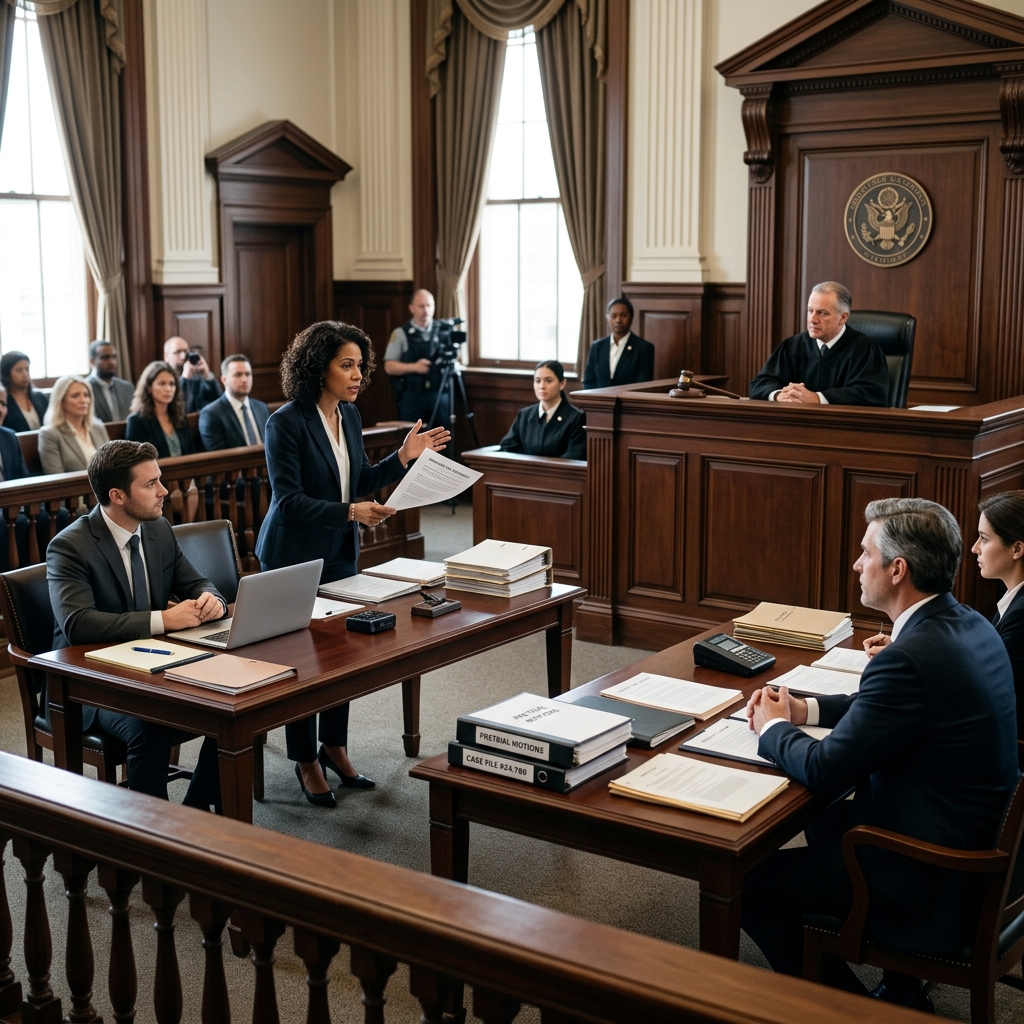
In a criminal case, much of the real battle is fought long before a jury hears a single word of testimony. Pretrial hearings and motionsallow judges to resolve critical legal issues in advance, shape what evidence the jury will see, and even determine whether the case willreach trial at all.
This guide explains what pretrial hearings are, how pretrial motions work, which motions are most common, and why these proceduresmatter for defendants, victims, and attorneys alike.
What Happens Between Arraignment and Trial?
After the initial appearance or arraignment—where charges are formally read, rights are explained, and bail may be set—the case enters apretrial phase. During this period, prosecutors and defense attorneys exchange information (known as discovery), negotiatepossible plea agreements, and file motions asking the court to decide specific issues before trial.
- Discovery: Sharing police reports, witness statements, recordings, lab results, and other evidence.
- Status or pretrial conferences: Court dates where lawyers report on the case, discuss settlement, and raise procedural issues.
- Preliminary hearings (in many felony cases): Hearings where a judge decides whether there is sufficient evidence or probable cause for the case to continue.
- Pretrial motions: Formal requests that the judge resolve legal questions, exclude evidence, or even dismiss charges before trial begins.
The goal of this stage is not to decide guilt or innocence but to ensure that any eventual trial is lawful, efficient, and focused onproperly admitted evidence.
Understanding Pretrial Hearings
A pretrial hearing is a court session held before trial where the judge addresses one or more pretrial issues.In many jurisdictions, these hearings deal with motions, evidentiary disputes, scheduling, and case management.
Typical pretrial hearings include:
- Preliminary hearing: The prosecution must show enough evidence to establish probable cause that a crime was committed and that the defendant committed it. If probable cause is lacking, charges can be dismissed and the defendant released.
- Motion hearings: Hearings focused on specific motions, such as suppression of evidence or change of venue, often involving witness testimony and legal arguments.
- Settlement or pretrial conferences: Meetings—sometimes in open court, sometimes in chambers—where judges and lawyers discuss plea offers, trial readiness, and outstanding motions.
These hearings are generally held before a judge, not a jury, and the rulings made can dramatically alter the scope or even theexistence of a later trial.
What Is a Pretrial Motion?
A pretrial motion is a formal request asking the judge to take action or decide a legal issue before the trial begins.Motions can be submitted in writing or made orally in court, but significant or complex requests are typically filed in written form,with supporting legal arguments and citations.
According to federal rules, parties may raise by pretrial motion any defense, objection, or request that a court can resolve withouta full trial on the merits. Many motions are required to be brought before trial if the basis is known, particularly those involvingprocedural defects, venue, constitutional violations, or defects in the charging instrument.
| Feature | Description |
|---|---|
| Who files | Prosecutor, defense attorney, or occasionally the defendant personally. |
| Timing | Before trial; often subject to strict deadlines set by rules or the judge. |
| Decision-maker | Only the judge decides motions, not the jury. |
| Purpose | Resolve legal issues, protect rights, clarify charges, and control what evidence reaches the jury. |
Common Types of Pretrial Motions
While the exact terminology and availability of motions vary by jurisdiction, several types are widely used across criminal courts.
Motion to Dismiss
A motion to dismiss asks the judge to throw out a charge or the entire case.Reasons may include insufficient evidence, conduct that does not legally amount to a crime, procedural defects, or constitutionalviolations.
- Challenge to the legal sufficiency of the complaint or indictment.
- Claims that the facts, even if true, do not constitute a criminal offense.
- Arguments that prosecution is barred by the statute of limitations or double jeopardy.
If granted, the case or specific charges may be dismissed without a trial, though prosecutors sometimes can refile corrected chargesunder certain circumstances.
Motion to Suppress Evidence
A motion to suppress seeks to exclude specific evidence or statements from use at trial, often on constitutional grounds.For example, evidence obtained through an unlawful search or a confession taken in violation of Miranda rights may be subject tosuppression.
- Fourth Amendment violations (unreasonable searches and seizures).
- Fifth and Sixth Amendment issues (coerced confessions, denial of counsel).
- Improperly collected or preserved physical evidence.
Suppression hearings can involve testimony from police officers and other witnesses, and a successful motion may drastically weaken theprosecution’s case or lead to dismissal when the remaining evidence is insufficient.
Motion for Change of Venue
A motion for change of venue requests that the trial be moved to a different court location.This is often sought when pretrial publicity, community bias, or local circumstances make it difficult to obtain an impartial jury.
- Heavy local media coverage of the case.
- Community hostility toward the defendant.
- Concerns about safety or logistics in the original venue.
If granted, the case is transferred to another court with a jury pool thought to be more neutral, helping preserve the defendant’sright to a fair trial.
Discovery-Related Motions
Discovery motions seek to ensure that both sides receive required information before trial, allowing them to prepare effectively.
- Motion to compel discovery: Asks the court to order the other side to provide evidence or information it is obligated to disclose.
- Motion for bill of particulars: Requests more detailed information about the charges to clarify what the prosecution is alleging.
- Motion to preserve evidence: Seeks court orders preventing destruction or loss of key evidence, such as surveillance footage.
These motions help avoid trial by surprise and can reveal weaknesses in the opposing side’s case.
Other Protective and Procedural Motions
Attorneys also file motions addressing a wide range of procedural and fairness concerns.Examples include:
- Motion to recuse the judge: Challenges the judge’s impartiality due to conflict of interest or prior involvement.
- Motion in limine: Asks the court to rule in advance on whether certain evidence or arguments will be allowed, reducing prejudicial surprises at trial.
- Speedy trial motions: Assert the defendant’s right to be tried within a reasonable time and may seek dismissal for excessive delay.
Timing and Deadlines for Pretrial Motions
Courts often impose strict deadlines for pretrial motions. Under federal rules, judges may set a schedule at or shortly afterarraignment, and certain motions must be filed before trial when the grounds are reasonably known.
Many states likewise require that motions be filed within a specific number of days after arraignment or the filing of charges.For example, Georgia law generally requires all pretrial motions to be filed within ten days of arraignment unless the court allowsadditional time.
- Missing motion deadlines can result in waiver of specific defenses or objections.
- Early filing allows courts to schedule hearings and resolve disputes before trial begins.
- Defense counsel must carefully track court rules and local practices to preserve issues for appeal.
Strategic Importance of Pretrial Motions
Beyond their procedural function, pretrial motions are central to trial strategy.Experienced attorneys use them to shape the evidentiary record, protect constitutional rights, and negotiate from a position ofstrength.
- Narrowing the case: Dismissing weak charges or excluding unreliable evidence can dramatically change the risk calculation for both sides.
- Leveraging plea negotiations: A strong suppression ruling or dismissal motion can encourage more favorable plea offers.
- Preserving appellate issues: Properly raised and litigated motions create a record for potential appeals if the defendant is convicted.
- Clarifying trial focus: Rulings on motions help attorneys tailor their opening statements, witness lists, and cross-examination plans.
Because judges decide motions without a jury, written briefs and oral arguments at motion hearings are often where the most technicallegal analysis occurs in a criminal case.
Role of Defense Counsel and Prosecutors
Both defense attorneys and prosecutors use pretrial motions, but their goals differ.
- Defense counsel: Typically seeks to limit the case—excluding evidence, reducing charges, obtaining more information, or dismissing the case entirely.
- Prosecutors: Often file motions to admit evidence, clarify legal issues, protect victims and witnesses, and streamline trial logistics.
In many jurisdictions, the judge encourages both sides to address these issues early to avoid delays and last-minute disputes oncetrial begins.
Frequently Asked Questions (FAQs)
Do pretrial hearings determine guilt or innocence?
No. Pretrial hearings focus on legal and procedural issues, such as probable cause, admissibility of evidence, and case management.They are not designed to decide whether the defendant is guilty.
Can a case be dismissed at a pretrial hearing?
Yes. If the court finds no probable cause at a preliminary hearing, or grants a motion to dismiss on legal or constitutional grounds,charges can be dismissed before trial.
Who decides pretrial motions—the judge or the jury?
Pretrial motions are decided solely by the judge. The jury does not participate in motion hearings or rulings.
What happens if an attorney misses a deadline for filing motions?
Missing deadlines can result in waiver of certain defenses or objections, meaning the court may refuse to consider the motion later.Rules in federal and state courts emphasize timely filing of motions once the basis is known.
Why are discovery motions important?
Discovery motions help ensure both sides have access to necessary evidence, prevent surprise at trial, and allow defense counsel toidentify constitutional violations or weaknesses in the prosecution’s case.
References
- Rule 12. Pleadings and Pretrial Motions — Legal Information Institute, Cornell Law School. 2024-01-01. https://www.law.cornell.edu/rules/frcrmp/rule_12
- Pre-Trial Motions — United States Department of Justice. 2020-06-15. https://www.justice.gov/usao/justice-101/pretrial-motions
- How Courts Work: Pretrial Appearances — American Bar Association. 2019-03-10. https://www.americanbar.org/groups/public_education/resources/law_related_education_network/how_courts_work/pretrial_appearances/
- Pretrial Activities in a Criminal Case — California Courts Self-Help Guide. 2023-05-01. https://selfhelp.courts.ca.gov/criminal-court/overview/pretrial
- Common Pretrial Motions in Georgia Criminal Courts — Arora Law Firm. 2022-09-20. https://thearoralawfirm.com/pretrial-motions-in-georgia-criminal-cases/
- Attorney’s Guide to Pre-Trial Motions — U.S. Legal Support. 2021-11-08. https://www.uslegalsupport.com/blog/attorneys-guide-to-pre-trial-motions/
- What are Motions in Criminal Cases — Sharp Criminal Attorney. 2018-04-12. https://sharpcriminalattorney.com/blog/criminal-law/motions-in-criminal-cases/
Similar Articles








Read full bio of medha deb




