Nursing homes are entrusted with caring for people who often cannot protect themselves. When that trust is broken through neglect, families may need to turn to the legal system to seek accountability and compensation. This guide explains how nursing home neglect is defined, what steps to take when you suspect it, and how the civil lawsuit process usually works.
Understanding What Legally Counts as Nursing Home Neglect
In legal terms, nursing home neglect is generally viewed as a failure to meet reasonable standards of care for a resident’s basic physical, medical, and emotional needs, resulting in harm or serious risk of harm.
Common Categories of Neglect
Although statutes vary by state, allegations of neglect usually fall into several broad categories:
- Physical neglect – Failure to provide essentials such as food, hydration, hygiene, mobility assistance, and protection from hazards.
- Medical neglect – Not following care plans, missing medications, not treating infections or bedsores, or ignoring changes in condition.
- Emotional and social neglect – Leaving residents isolated, ignoring emotional distress, or failing to respond to calls for help.
- Supervisory neglect – Inadequate staffing or monitoring that allows falls, wandering, elopement, or assaults by other residents.
To become a viable legal claim, these failures must be connected to specific injuries or losses, such as physical harm, worsening of health, pain and suffering, or financial costs.
Warning Signs Families Should Watch For
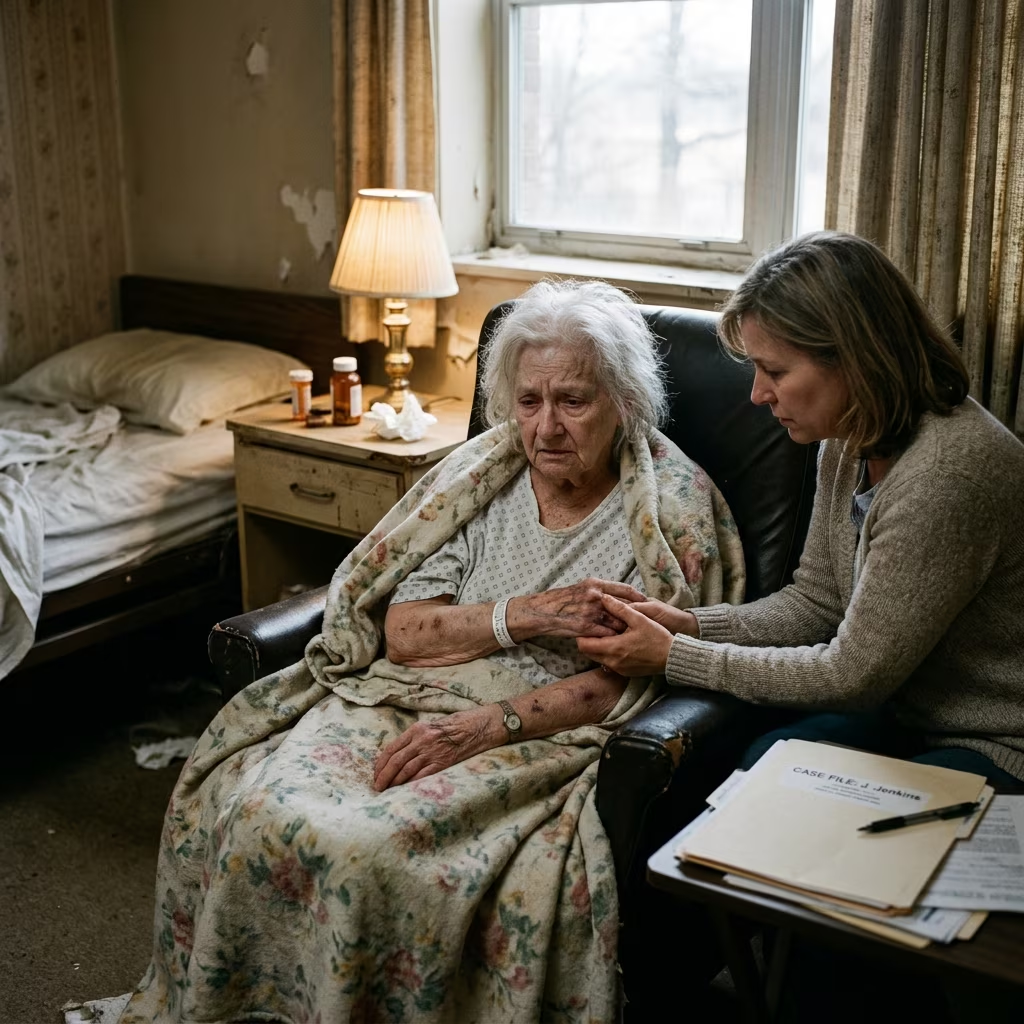
Family members are often the first to notice potential neglect. While a single symptom does not automatically prove negligence, patterns and unexplained injuries warrant closer attention.
- Frequent falls or unexplained bruises
- Bedsores (pressure ulcers), especially in residents who are not regularly repositioned
- Rapid weight loss, dehydration, or malnutrition
- Poor hygiene, dirty clothing, or strong odors
- Unattended medical needs, missed appointments, or unmanaged pain
- Sudden behavior changes, withdrawal, fearfulness, or agitation
- Staff unable to answer basic questions about care plans or recent incidents
If you observe several of these signs over time, it is important to treat the situation as a potential legal matter and begin documenting concerns thoroughly.
Immediate Steps When You Suspect Neglect
Once you suspect neglect, your priorities are to protect the resident, report the situation, and create a record that can support legal action later. Many states provide protections through Adult Protective Services and long-term care oversight agencies.
1. Protect the Resident From Further Harm
In an emergency, call local law enforcement or emergency medical services. For non-emergent but serious concerns, consider:
- Requesting an immediate medical evaluation by an outside physician or hospital.
- Asking the facility’s leadership to implement urgent safety measures (e.g., fall precautions, wound care, increased supervision) and documenting their responses.
- Transferring the resident to another facility or home setting if their safety cannot be assured.
Any decision to move a resident should balance medical stability, emotional impact, and the potential evidentiary value of remaining in place while investigations occur.
2. Report Neglect to Oversight Agencies
Most jurisdictions require or strongly encourage reporting suspected abuse or neglect to government or quasi-government entities. Typical reporting options include:
- The state agency that licenses and inspects nursing homes, often part of a health department or aging services division.
- Adult Protective Services (APS), which investigates abuse and neglect affecting vulnerable adults.
- The Long-Term Care Ombudsman Program, which advocates for residents and investigates complaints in long-term care facilities.
- Local police, in cases involving serious injury, criminal assault, or financial exploitation.
These reports can trigger inspections, corrective actions, and official findings that become valuable evidence in a later civil lawsuit.
3. Start Systematic Documentation
A strong civil case depends heavily on clear, contemporaneous documentation. Courts and insurers rely on detailed records to understand what happened and when.
- Maintain a log – Write down dates, times, what you observed, who was present, and how staff responded.
- Photograph or video physical conditions – Document injuries, bedsores, unsanitary rooms, or broken equipment.
- Save communications – Keep emails, text messages, letters, and voicemail records involving the facility or agencies.
- Request and preserve medical records – Include hospital records, care plans, medication lists, and incident reports.
- Collect witness information – Note names and contact details of staff, other residents, and visitors who may have seen relevant events.
Over time, this documentation paints a timeline of neglect and its impact, which attorneys can use to build legal arguments and support damages claims.
When and Why to Consult a Nursing Home Neglect Attorney
Most families are not expected to navigate complex health regulations, evidence rules, and civil procedure on their own. Attorneys who focus on nursing home claims can evaluate whether the facts meet legal standards and explain available options.
Key Reasons to Seek Legal Advice Early
- Understanding legal duties – Facilities must meet state and federal care standards; lawyers can compare your situation to these requirements.
- Identifying all potential defendants – Liability may extend beyond the local facility to corporate owners and management companies.
- Preserving evidence – Attorneys can send formal preservation letters to prevent records from being altered or destroyed.
- Complying with deadlines – Every state has statutes of limitations that strictly limit how long you have to file a lawsuit.
- Evaluating damages – Legal counsel can help quantify medical costs, pain and suffering, loss of enjoyment of life, and, in some cases, wrongful death.
Initial consultations are often free, and many lawyers work on a contingency fee basis in these cases, meaning they are paid only if they recover money for you.
Building a Legal Case: Evidence and Liability
A civil neglect lawsuit seeks to prove that the facility or its staff failed to use reasonable care, that this failure caused harm, and that the resident or family suffered losses as a result.
Types of Evidence Commonly Used
Courts and insurance companies examine a range of materials to assess whether negligence occurred and what damages should be awarded.
- Medical records and billing statements detailing diagnoses, treatments, hospitalizations, and costs.
- Facility documents such as care plans, staffing schedules, incident reports, and internal investigations.
- Regulatory findings from health departments, APS, or ombudsman investigations.
- Photographs and videos of injuries, facility conditions, or surveillance footage, where available.
- Witness testimony from staff, residents, family, and experts (e.g., geriatric specialists, wound care nurses).
- Financial documentation capturing added care costs, lost income for family caregivers, and funeral expenses in death cases.
Who May Be Held Legally Responsible
Responsibility for neglect often involves multiple parties. Depending on the facts, potential defendants can include:
- The licensed nursing home facility
- Individual nurses, aides, or other staff members
- Supervisors and administrators who set policies or ignored complaints
- Corporate parents or management companies that control staffing and budgeting
- In government-operated facilities, public entities subject to special claims procedures
Legal theories may be based on direct negligence, vicarious liability for employee conduct, violations of elder abuse statutes, or breaches of contractual obligations.
The Civil Lawsuit Process in Nursing Home Neglect Cases
While each state has its own procedural rules, many nursing home neglect lawsuits follow a similar sequence once you and your attorney decide to file.
| Stage | What Happens | What It Means for Families |
|---|---|---|
| Pre-suit investigation | Attorney reviews records, interviews witnesses, and consults experts. | Case strength and potential value are assessed before filing. |
| Complaint filed | Formal legal document is submitted to the court naming defendants and claims. | The lawsuit officially begins; filing fees may apply. |
| Service of process | Defendants are formally served with the complaint and summons. | Defendants are notified and must respond within set deadlines. |
| Discovery | Both sides exchange documents, take depositions, and gather evidence. | New information about facility conduct and policies often emerges. |
| Negotiations | Parties explore settlement through direct talks or mediation. | Many cases resolve here without trial. |
| Trial | Judge or jury hears evidence and issues a verdict if settlement fails. | Outcome can include damages awards or defense verdicts. |
Time Limits: Statutes of Limitations
Every state sets deadlines—called statutes of limitations—for filing civil claims, including nursing home neglect lawsuits.
- These deadlines often range from 1 to 3 years from the date of injury or discovery of the problem, depending on the jurisdiction and claim type.
- Claims involving medical malpractice or government-operated facilities may have shorter timelines and special notice requirements.
- Missing the deadline can permanently bar your right to sue, regardless of the merits of the case.
Because these rules are complex and highly state-specific, prompt legal advice is essential to avoid losing important rights by delay.
Possible Outcomes and Types of Compensation
Civil lawsuits in nursing home neglect cases aim both to compensate the resident or family and, in some cases, to deter similar conduct in the future.
Damages Commonly Sought
- Medical expenses for past and future treatment related to injuries.
- Rehabilitation and long-term care costs needed because of worsened condition.
- Pain and suffering and loss of enjoyment of life attributable to neglect.
- Emotional distress for the resident, and in some cases for close family members.
- Wrongful death damages where neglect leads to death, including funeral expenses and loss of companionship.
- Punitive or enhanced damages in jurisdictions that allow them for reckless or intentional misconduct.
The amount of compensation depends on many factors, including the severity of harm, strength of evidence, applicable state laws, and whether the case settles or goes to trial.
Settlement vs. Trial
Many nursing home neglect cases end in settlement before trial. Settlement can offer predictability, faster resolution, and reduced emotional strain. Trial, however, may be necessary when:
- The facility disputes liability or the extent of injuries.
- Offers do not reflect the full value of the claim.
- Families seek a public record of wrongdoing.
Attorneys help weigh these considerations and negotiate terms that may include confidentiality provisions, structured payments, or other conditions.
Practical Tips for Families Considering Legal Action
Legal proceedings can be lengthy and emotionally demanding. Practical planning can help families remain organized and focus on both accountability and ongoing care.
- Centralize documentation – Keep a dedicated folder, physical or digital, for all records, notes, and letters.
- Designate a point person – Choose one family member to coordinate with attorneys and agencies.
- Balance care and litigation – Ensure the resident’s immediate needs remain the priority, even as legal steps proceed.
- Ask about costs – Discuss fee structures, case expenses, and potential financial risk with your attorney.
- Prepare for a marathon, not a sprint – Many cases take months or years to resolve; setting expectations early can reduce stress.
Frequently Asked Questions (FAQs)
What is the difference between abuse and neglect in a nursing home?
Abuse usually involves intentional harm, such as hitting or verbal harassment, while neglect involves failing to provide necessary care, supervision, or services, leading to injury or risk of harm.
Do I need proof before reporting suspected neglect?
You do not need complete proof to report concerns. Oversight agencies and ombudsman programs are designed to investigate potential problems. However, documenting what you see—dates, observations, and staff responses—strengthens both the report and any later legal claim.
Can I sue a nursing home even if the resident has passed away?
In many jurisdictions, surviving family members can pursue claims related to the resident’s pain and suffering before death, as well as wrongful death claims for their own losses. Whether these are available depends on state law and the type of claim.
How long does a nursing home neglect lawsuit take?
Timelines vary widely. Some cases settle within a year; others, especially those that go to trial, may take several years. Investigation, discovery, court scheduling, and appeals all affect duration.
Will filing a lawsuit improve conditions at the facility?
A lawsuit’s primary function is to provide compensation and accountability in a specific case. However, legal actions, along with regulatory investigations and public scrutiny, can motivate facilities and corporate owners to improve staffing, training, and safety policies over time.
References
- Physical Neglect in Nursing Homes & Legal Concerns — Justia. 2024-03-01. https://www.justia.com/injury/nursing-home-abuse-negligence/physical-neglect/
- Legal Steps to Take in Nursing Home Neglect Cases — Your Insurance Attorney. 2023-07-10. https://yourinsuranceattorney.com/legal-steps-nursing-home-neglect/
- Holding Nursing Homes Accountable: The Process of Filing a Lawsuit — Morris James LLP. 2022-11-15. https://www.morrisjames.com/p/102jhyb/holding-nursing-homes-accountable-the-process-of-filing-a-lawsuit/
- How Do I File a Nursing Home Lawsuit? — FindLaw. 2023-02-20. https://www.findlaw.com/injury/torts-and-personal-injuries/how-do-i-file-a-nursing-home-lawsuit.html
- California Nursing Home Lawsuit | How to Take Legal Action — Nursing Home Abuse Center. 2023-09-05. https://www.nursinghomeabusecenter.com/legal/lawsuit/california/
- California Nursing Home Abuse Claims — Victorville Injury Lawyer. 2022-08-12. https://www.victimslawyer.com/practice-areas/personal-injury/elder-abuse-and-neglect/california-nursing-home-abuse-claims/
- What Evidence Do You Need to Sue a Nursing Home? — Pintas & Mullins Law Firm. 2023-04-18. https://www.pintas.com/faq/what-evidence-do-you-need-to-sue-a-nursing-home/
- What Is Considered Nursing Home Negligence? — Ben Crump Law. 2023-01-09. https://bencrump.com/faqs/what-is-considered-nursing-home-negligence/
- Nursing Home Neglect Lawsuit — Sokolove Law. 2023-06-22. https://www.sokolovelaw.com/nursing-home-abuse/neglect/