
Navigating New York’s Court System and Courthouses
A practical guide to understanding New York’s court structure, courthouse locations, and how to find the right court for your case.
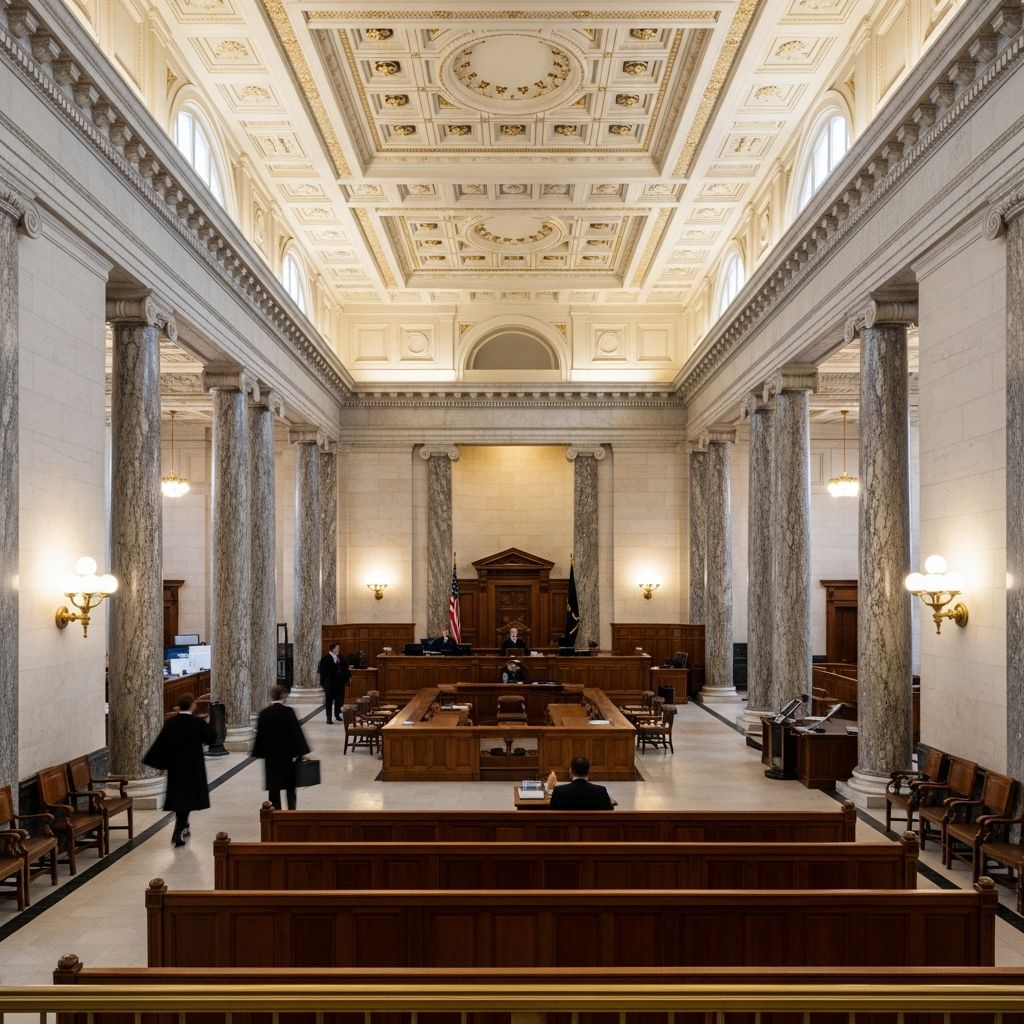
Understanding New York’s Court System
New York’s judicial system is one of the most complex in the United States, not because it is disorganized, but because it reflects the state’s size, population, and long legal history. Unlike many states where the Supreme Court is the highest appellate body, in New York the Supreme Court is actually a trial court with broad authority. This can be confusing for residents and visitors alike, especially when trying to figure out which courthouse to go to for a particular legal issue.
The New York State Unified Court System is divided into three main levels: trial courts, intermediate appellate courts, and the court of last resort. Each level has distinct responsibilities, and within the trial courts there are several different types of courts, each with its own jurisdiction and geographic reach.
The Three-Tiered Structure of New York Courts
At the top of the system is the Court of Appeals, located in Albany. This is New York’s highest court and the final stop for most appeals. It hears cases on questions of law and constitutional interpretation, and its decisions are binding on all lower courts in the state.
Below the Court of Appeals are the intermediate appellate courts. The most important of these is the Appellate Division of the Supreme Court, which is divided into four judicial departments covering different regions of the state. These departments hear appeals from trial courts and help ensure consistency in how laws are applied across counties and cities.
The trial court level is where most cases begin and end. This includes the Supreme Court, County Courts, Family Courts, Surrogate’s Courts, and various local courts such as city, town, and village courts. Each of these courts has specific subject-matter jurisdiction and, in many cases, geographic limits based on county or municipal boundaries.
Key Trial Courts in New York
The trial court system in New York is made up of several different courts, each designed to handle a particular type of case. Understanding the role of each court is essential for knowing where to file a case or respond to a legal action.
Supreme Court
The Supreme Court is the main trial court of general jurisdiction in New York. Despite its name, it is not the highest court in the state; that role belongs to the Court of Appeals. The Supreme Court has authority over a wide range of civil and criminal matters, including:
- Major civil lawsuits involving large sums of money
- Equity cases such as injunctions and declaratory judgments
- Matrimonial actions like divorce, legal separation, and annulment
- Felony criminal cases in New York City
- Commercial disputes in counties that have a Commercial Division
Outside New York City, the Supreme Court primarily handles civil cases, while felony criminal cases are usually heard in County Court. The Supreme Court is present in all 62 counties of the state, and each county has at least one Supreme Court location, often within the main county courthouse.
County Courts
County Courts exist in each of New York’s 62 counties, but their role differs between New York City and the rest of the state. In the five boroughs of New York City, there is no separate County Court; instead, the Supreme Court, Criminal Court, and Civil Court handle the functions that would otherwise fall to a County Court.
Outside the city, County Courts are the primary trial courts for felony criminal cases. They also handle certain civil matters, including civil cases up to a specific monetary limit, and some appeals from local courts. In many counties, County Courts are located in the same courthouse complex as the Supreme Court and other county-level courts.
Family Court
Family Court is a specialized court that deals with matters involving children, families, and domestic relationships. Its jurisdiction includes:
- Child custody and visitation disputes
- Child support and spousal support
- Domestic violence and family offense proceedings
- Juvenile delinquency and status offense cases
- Child protective proceedings (abuse and neglect)
- Termination of parental rights and adoption
Family Court is located in each of the 57 counties outside New York City and in each of the five boroughs within the city. In many places, Family Court shares a building with the Supreme Court and County Court, but it operates as a separate court with its own judges and procedures.
Surrogate’s Court
Surrogate’s Court is responsible for probate and estate matters. It has exclusive jurisdiction over:
- Probating wills
- Administering estates of deceased persons
- Guardianship of minors and incapacitated adults (in some cases shared with Supreme Court)
- Adoption proceedings (in some cases shared with Family Court)
Each county in New York has a Surrogate’s Court, and in most cases it is located in the main county courthouse. In New York City, each borough has its own Surrogate’s Court, reflecting the city’s five-county structure.
Local and Municipal Courts
Beneath the superior trial courts are a variety of local courts with more limited jurisdiction. These include:
- City Courts in cities outside New York City
- Town and Village Justice Courts in most towns and villages
- District Courts in parts of Nassau and Suffolk Counties on Long Island
- New York City Civil Court and New York City Criminal Court
These courts handle lower-level civil disputes (such as small claims and landlord-tenant matters) and minor criminal offenses (misdemeanors and violations). They are often the first point of contact for many residents dealing with legal issues, and they are usually located in municipal buildings or dedicated local courthouses.
How Courthouses Are Organized Across the State
New York has courthouses in every county and in many cities, towns, and villages. The location and layout of these buildings reflect both the legal structure of the courts and the practical needs of the communities they serve.
County Courthouses
In most counties, the main courthouse is located in the county seat and houses several courts under one roof. A typical county courthouse may contain:
- Supreme Court
- County Court
- Surrogate’s Court
- Family Court
- County Clerk’s office
- Probation Department
- Jury Assembly Room
These buildings are usually historic or architecturally significant and are often located in the center of the county seat. They are designed to accommodate public access, security screening, courtrooms, judges’ chambers, and support offices.
New York City Courthouses
New York City operates under a slightly different structure because it is both a city and a collection of five counties (each borough is a county). As a result, the city has a dense network of courthouses spread across the five boroughs.
In each borough, there are separate courthouses or courthouse complexes for:
- Supreme Court
- Criminal Court
- Civil Court
- Family Court
- Surrogate’s Court
For example, in Manhattan, the main courthouses are clustered around Foley Square, including the New York County Supreme Court, the New York County Criminal Court, and the New York County Family Court. In Brooklyn, Queens, the Bronx, and Staten Island, similar complexes house the major courts for each borough.
Local and Municipal Courthouses
Outside the main county seats and New York City, many towns and villages have their own small courthouses or courtrooms within town halls or municipal buildings. These local courts typically handle:
- Small claims and civil cases below a certain dollar amount
- Landlord-tenant disputes
- Traffic tickets and other violations
- Misdemeanors and petty offenses
These facilities are usually much smaller than county courthouses and may have only one or two courtrooms. They are designed for efficiency and quick resolution of routine matters.
Finding the Right Courthouse for Your Case
One of the most common challenges people face is figuring out which courthouse to go to for a particular legal issue. The answer depends on several factors, including the type of case, the amount of money involved, and the location of the parties or the incident.
Matching Your Case to the Correct Court
Here are some general guidelines to help determine which court has jurisdiction:
| Type of Case | Typical Court | Notes |
|---|---|---|
| Divorce, separation, annulment | Supreme Court | Must be filed in the county where at least one spouse resides. |
| Felony criminal case (outside NYC) | County Court | Filed in the county where the crime occurred. |
| Felony criminal case (in NYC) | Supreme Court | Filed in the borough where the crime occurred. |
| Child custody, support, abuse/neglect | Family Court | Usually in the county where the child resides. |
| Probate, wills, estates | Surrogate’s Court | Filed in the county where the deceased person lived. |
| Small claims, landlord-tenant, traffic | Local courts (City, Town, Village, District) | Filed in the municipality where the incident or property is located. |
Using Online Resources to Locate Courthouses
The New York State Unified Court System maintains a comprehensive website that allows users to:
- Search for courthouses by county, borough, or zip code
- Find contact information, addresses, and hours of operation
- Access court calendars, forms, and procedural rules
- Look up case information and court decisions
Many counties also have their own court websites that provide additional local information, such as local rules, jury service details, and courthouse maps.
What to Expect When Visiting a New York Courthouse
Whether you are going to court as a party, a witness, or a juror, it helps to know what to expect. Courthouses are secure public buildings with specific rules and procedures.
Security and Access
All New York courthouses have security screening similar to airport checkpoints. Visitors must pass through metal detectors and have bags and personal items scanned. Prohibited items include weapons, large knives, and certain electronic devices. It is a good idea to arrive early, especially on busy days, to allow time for security screening.
Courtroom Etiquette
Inside the courtroom, there are basic rules of conduct:
- Dress appropriately (avoid overly casual or revealing clothing)
- Turn off or silence cell phones
- Stand when the judge enters or leaves the courtroom
- Address the judge as “Your Honor” and speak only when spoken to
- Follow the instructions of court officers and staff
Judges expect respect and order, and disruptions can result in being asked to leave the courtroom or even being held in contempt.
Getting Help at the Courthouse
Many courthouses have self-help centers or information desks where staff can assist with:
- Finding the correct courtroom
- Understanding court forms and procedures
- Locating legal aid or pro bono services
- Answering general questions about court operations
These services are especially helpful for people who are representing themselves (pro se litigants) and do not have a lawyer.
Frequently Asked Questions
Q: Is the New York Supreme Court the highest court in the state?
A: No. The New York Supreme Court is a trial court with broad jurisdiction. The highest court in New York is the Court of Appeals, located in Albany.
Q: Where do I file for divorce in New York?
A: Divorce cases must be filed in the Supreme Court of the county where at least one spouse resides. In New York City, this means the Supreme Court in the appropriate borough (Manhattan, Brooklyn, Queens, Bronx, or Staten Island).
Q: How do I find the courthouse for a traffic ticket?
A: Traffic tickets are usually handled in the local court where the violation occurred. This could be a City Court, Town or Village Justice Court, or District Court, depending on the location. Check the ticket for the court name and address, or use the court system’s online directory.
Q: Can I represent myself in New York courts?
A: Yes, you have the right to represent yourself in most New York courts. However, court procedures can be complex, and it is often helpful to consult with a lawyer, especially for serious criminal or civil matters.
Q: Are court records public in New York?
A: Most court records are public, but there are exceptions for certain types of cases, such as family court matters, juvenile delinquency, and some adoption and guardianship proceedings. Access to records may also be restricted by court order or statute.
Conclusion
New York’s court system and courthouse network are designed to serve a large and diverse population across a wide geographic area. While the structure may seem complicated at first, understanding the basic levels of courts and how they are organized can make it much easier to navigate the system. Whether you are dealing with a family matter, a criminal charge, a civil lawsuit, or a small claims dispute, knowing which court has jurisdiction and where to go can save time, reduce stress, and help ensure that your case is handled properly.
By using the resources provided by the New York State Unified Court System and seeking help when needed, individuals can confidently interact with the courts and protect their legal rights.
References
- Structure of the Courts — The Fund For Modern Courts. Accessed 2023. https://moderncourts.org/programs-advocacy/judicial-article-of-nys-constitution/structure-of-the-courts/
- Judiciary of New York — Wikipedia. Accessed 2023. https://en.wikipedia.org/wiki/Judiciary_of_New_York
- Court Structure — New York State Unified Court System. Accessed 2023. https://www.nycourts.gov/courts/structure.shtml
Similar Articles








Read full bio of Sneha Tete


