
Navigating New York’s Tangled Rent Rules
A practical, plain‑English guide to New York rent control, rent stabilization, and how tenants and landlords can stay on the right side of complex regulations.
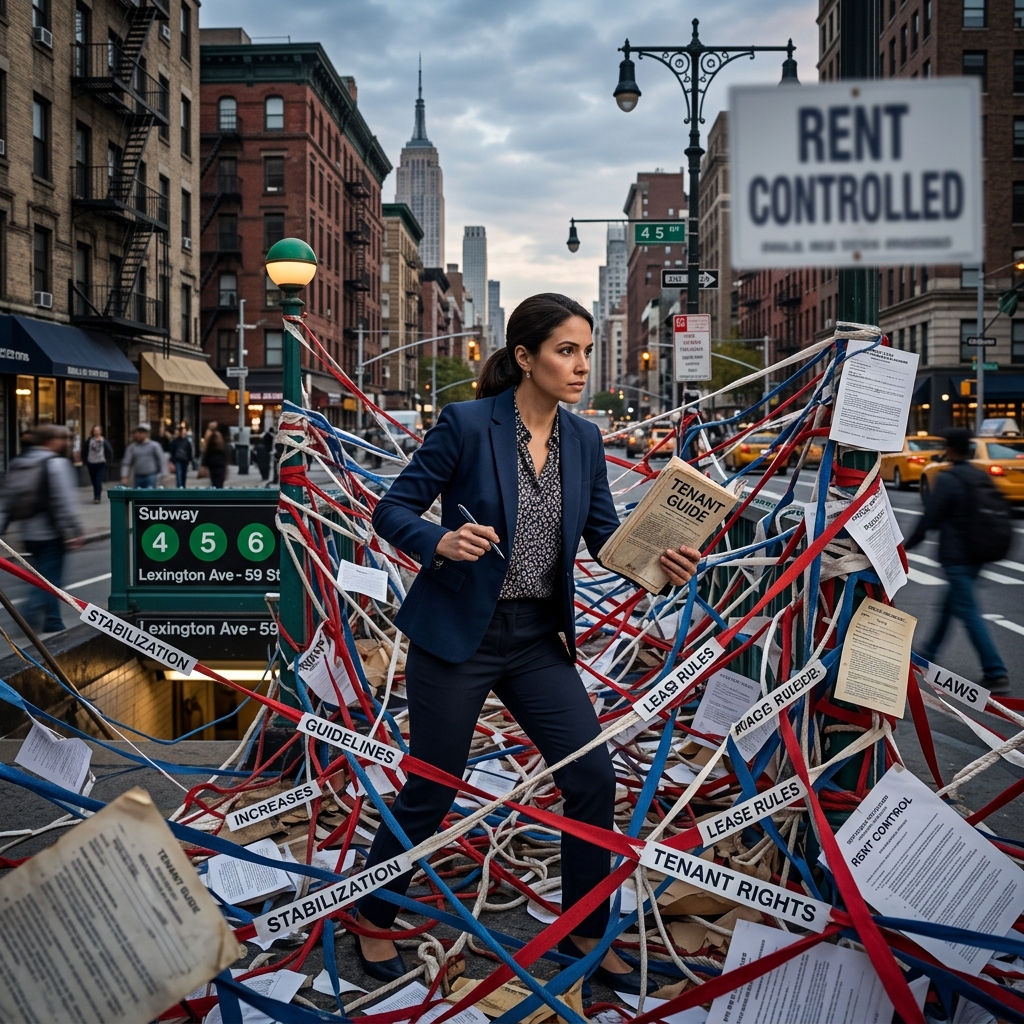
New York’s rent regulations are famously intricate, but they play a crucial role in keeping hundreds of thousands of homes affordable. For tenants and landlords, misunderstanding these rules can lead to expensive disputes, unlawful rent increases, or missed opportunities for protection. This guide breaks down the core systems—rent control and rent stabilization—explains recent reforms, and offers practical steps for handling common problems.
Why New York Has Rent Regulation
Rent regulation in New York grew out of decades of housing shortages, rapid urbanization, and concerns about tenants being priced out of their homes. Today, rent rules primarily serve two purposes:
- Prevent extreme rent hikes that could make long-term housing unaffordable.
- Provide eviction protections so tenants are not arbitrarily removed from regulated apartments.
Two main programs coexist:
- Rent control – an older, highly restricted system affecting a small number of units.
- Rent stabilization – a broader program regulating about one million apartments in New York City.
Rent Control: A Shrinking but Powerful Protection
Rent control is the older and more stringent form of rent regulation. It mostly covers longtime tenants in buildings constructed before the mid-20th century.
Who Qualifies for Rent Control?
In New York City, rent control generally applies when:
- The building was built before February 1, 1947.
- The tenant (or a qualifying successor) has been in continuous occupancy since before July 1, 1971.
Because of these strict conditions, the number of rent-controlled apartments has dropped sharply over time. When a rent-controlled tenant leaves, the apartment usually shifts out of the rent control system and may become rent stabilized instead.
Maximum Base Rent and Rent Increases
Rent control in New York City operates under the Maximum Base Rent (MBR) system.
- Each apartment is assigned a maximum base rent, which is intended to reflect operating costs and a fair return to the owner.
- The MBR is adjusted every two years, based on changes to costs like taxes, maintenance, and utilities.
- Landlords who certify that they provide essential services and have corrected violations can increase rent annually up to a capped percentage (or the average of recent guideline increases), until reaching the MBR.
Tenants have the right to challenge proposed increases if:
- The building has significant housing code violations.
- The owner’s documented expenses do not justify the increase.
Vacancy and Decontrol
Rent-controlled apartments do not remain controlled forever. In New York City, vacancy almost always triggers “vacancy decontrol”:
- When a rent-controlled tenant moves out, the unit leaves rent control.
- If the building has six or more units and was built before January 1, 1974, the apartment generally becomes rent stabilized for the next tenant.
- The landlord must register the newly stabilized unit with the state’s housing agency.
Rent Stabilization: The Main System Affecting Most Tenants
Rent stabilization is the primary form of rent regulation in New York City, covering roughly one million apartments. It balances limited rent increases with stronger rights to renew leases and protections against eviction.
Buildings and Apartments That Are Commonly Stabilized
In New York City, apartments are typically rent stabilized if:
- The building has six or more units.
- It was built roughly between 1947 and 1973.
- The unit has not exited regulation through specific legal pathways.
There are also stabilized units in newer or subsidized buildings as a result of tax benefit agreements or regulatory contracts, but those follow particular rules tied to those programs.
Annual Rent Adjustments and the Rent Guidelines Board
For stabilized apartments, annual rent increases are not negotiated freely. Instead, they are set by the New York City Rent Guidelines Board (RGB), an independent panel that establishes allowable adjustments for one-year and two-year renewal leases.
- The RGB meets yearly, reviews data on operating costs, vacancy rates, and economic conditions, and then votes on maximum percentage increases.
- Historically, RGB increases have usually fallen in a modest band—often between about 1% and 5% for many years, though the exact figures vary.
- In some years, the RGB has even approved rent freezes, temporarily halting increases on certain stabilized leases.
Key Rights of Rent-Stabilized Tenants
Tenants in rent-stabilized apartments have several important protections:
- Right to renewal – Tenants generally have the right to renew their lease for one- or two-year terms, subject to RGB-adjusted rents.
- Limits on rent increases – Landlords may not raise rent beyond the RGB-approved percentage at renewal.
- Protection against arbitrary eviction – Landlords usually need a legally recognized ground (such as nonpayment of rent, breach of lease, or certain owner-occupancy claims) to evict a stabilized tenant.
These protections do not prevent all disputes, but they give tenants a framework for contesting illegal rent hikes or improper attempts to push them out.
Major 2019 Reforms and Continuing Updates
New York’s rent laws underwent sweeping changes in 2019 under the state’s Housing Stability and Tenant Protection Act (HSTPA). The state’s Office of Rent Administration (ORA) regularly publishes updates reflecting these reforms and later adjustments.
Important Shifts Under the 2019 Law
Among the many changes, several stand out because they deeply affect both tenants and landlords:
- Restrictions on vacancy-based increases – Prior mechanisms that allowed large rent jumps when a tenant moved out were significantly curtailed.
- Tighter rules on deregulation – Pathways for apartments to leave rent stabilization based on reaching a high rent threshold were largely closed.
- Enhanced protections against evictions and harassment – The law expanded penalties and clarified procedures around unlawful evictions.
- Changes to preferential rent rules – Landlords who charged below the legal regulated rent faced new limitations on raising rent to the higher legal amount upon renewal.
Since 2019, ORA has continued to issue guidance, forms, and fact sheets to explain how these reforms interact with older rules. Staying current is essential, because minor legal changes can significantly affect allowed rent increases or registration requirements.
How to Confirm Whether an Apartment Is Regulated
Many disputes begin with a simple question: Is this apartment rent controlled, rent stabilized, or unregulated? Determining the status can be confusing, especially in older buildings or properties that went through conversions and renovations.
Checking for Rent Stabilization
The City and State provide tools to help tenants find out if their home is rent stabilized.
- Review the lease. Regulated leases often contain language referencing rent stabilization.
- Request a rent history from the New York State Division of Housing and Community Renewal (HCR). You can request it online, by email, or by phone, and it will be mailed directly to your address.
- Once you receive the rent history, you can call the City’s tenant helpline (via 311) for help interpreting the document and confirming if you are stabilized.
If your apartment is not rent stabilized, you will typically not receive a rent history in the mail.
Recognizing Rent-Controlled Units
Rent-controlled units are rarer, but they have some telltale signs:
- Long-time occupancy dating back to the early 1970s or earlier.
- Location in a pre-1947 building.
- Rent amounts that have increased slowly under the Maximum Base Rent system.
Formal confirmation usually requires contact with HCR or review of past registration records by the landlord.
Tenant Protections and Common Problems
Rent regulation is designed not only to cap increases but also to protect tenants from unfair practices. Still, problems arise frequently, especially when rules change or buildings have complicated histories.
Illegal Rent Overcharges
Overcharges occur when a landlord collects rent above the permitted amount under rent control or rent stabilization rules. Warning signs include:
- Sharp rent hikes inconsistent with RGB guidelines for stabilized units.
- Rent increases on a rent-controlled unit that exceed allowed caps under the MBR system.
- Increases tied to renovations that do not match permitted formulas or documentation.
Tenants who suspect overcharges can often file complaints with HCR’s Office of Rent Administration and, in some cases, pursue refunds or rent reductions.
Harassment and Pressure to Vacate
Because regulated units can be less profitable than market-rate apartments, some landlords have historically tried to pressure tenants to leave. Harassment can include:
- Repeated baseless eviction notices.
- Failure to make essential repairs or deliberately neglecting services.
- Threats or misleading statements about legal rights.
Recent legislative changes and enforcement efforts have strengthened penalties against such behavior, and tenants can often seek help from city agencies or legal services organizations.
Landlord Obligations Under Rent Regulation
Rent regulation imposes obligations on landlords as well as granting rights to tenants.
Registration and Record-Keeping
Owners of regulated buildings must generally:
- Register rent-stabilized units with HCR, using designated forms and deadlines.
- Maintain accurate records of rent history and services provided.
- Provide tenants with copies of registration documents in certain circumstances, such as initial stabilization after vacancy.
Compliance With Rent Levels and Services
In addition to registration, landlords must:
- Limit rent increases to legal amounts set by the RGB for stabilized units or by the MBR system for controlled units.
- Provide essential services—heat, hot water, electricity (where required), and safe building conditions—as a basic duty.
- Respect lease renewal rights for stabilized tenants, absent lawful grounds for termination.
Noncompliance can lead to rent reductions, fines, or orders requiring restoration of services.
Rent Control vs. Rent Stabilization: Key Differences
| Feature | Rent Control | Rent Stabilization |
|---|---|---|
| Typical building era | Built before Feb. 1, 1947 | Generally built 1947–1973 (plus some others by agreement) |
| Occupancy requirement | Continuous occupancy since before July 1, 1971 | No minimum occupancy period requirement |
| Rent-setting method | Maximum Base Rent (MBR) system with capped annual increases | Annual percentage increases set by the Rent Guidelines Board |
| Number of units covered | Relatively few and declining over time | Approximately one million apartments in NYC |
| Vacancy effect | Vacancy decontrols the unit; often becomes stabilized if eligible | Vacancy does not automatically deregulate under post-2019 rules |
Practical Tips for Tenants
Tenants can make rent rules work in their favor by taking a few practical steps.
- Keep every lease and renewal offer. These documents show rent history and may reveal unlawful increases.
- Order your rent history from HCR if you suspect your apartment might be stabilized.
- Compare proposed increases with the RGB’s published guidelines for your lease term.
- Document communications and repairs. Emails, letters, and photographs can be crucial if a dispute arises.
- Seek advice early. Tenant advocacy groups and legal aid organizations often help interpret rent histories and identify overcharges.
Practical Tips for Landlords
Owners of regulated apartments can reduce legal risk and improve relationships with tenants by:
- Staying updated on rent law changes via official state guidance and ORA publications.
- Ensuring timely registration of stabilized units and accurately tracking rent increases.
- Verifying lawful increase calculations before issuing renewal leases.
- Responding promptly to repair requests to avoid violations that could block MBR or RGB increases.
- Consulting legal counsel for complex issues, such as conversions, succession rights, or deregulation questions.
FAQs About New York Rent Regulations
Is my apartment automatically rent stabilized if the building is old?
No. Age alone does not guarantee stabilization. Building size, history of registration, and whether the apartment has ever exited regulation all matter. Requesting a rent history from HCR is often the best way to check.
Can my landlord refuse to renew my lease if I am rent stabilized?
In most cases, rent-stabilized tenants have a right to renew for one- or two-year terms. Exceptions exist for legally recognized grounds like certain owner-occupancy situations or serious lease violations.
How are rent increases decided for stabilized apartments?
They are set annually by the New York City Rent Guidelines Board, which reviews economic data and votes on maximum percentage increases for new one- and two-year renewal leases.
What happens when a rent-controlled tenant moves out?
In New York City, vacancy usually ends rent control for that unit. If the building qualifies, the apartment often becomes rent stabilized for the next tenant, and the owner must register the unit with HCR.
Who can help me interpret my rent history?
After you receive your rent history, the City recommends contacting the Tenant Support Unit via 311 for assistance understanding whether your apartment is rent stabilized and whether you may be overcharged.
References
- Rent Control FAQs — New York City Rent Guidelines Board. 2023-05-01. https://rentguidelinesboard.cityofnewyork.us/resources/faqs/rent-control/
- New York Rent Control Laws in 2026 — Hemlane. 2024-03-15. https://www.hemlane.com/resources/new-york-rent-control-laws/
- NYC Rent Guidelines Board — NYC Rent Guidelines Board. 2024-06-01. https://rentguidelinesboard.cityofnewyork.us/
- Office of Rent Administration (ORA) — New York State Homes and Community Renewal. 2024-02-10. https://hcr.ny.gov/office-rent-administration-ora
- Rent Stabilization — NYC Mayor’s Public Engagement Unit. 2023-11-20. https://www.nyc.gov/site/mayorspeu/programs/rent-stabilization.page
- NYC Rent Freeze Approved by Rent Guidelines Board — NBC New York. 2024-06-28. https://www.nbcnewyork.com/new-york-city/nyc-rent-freeze-stabilized-apartments/6518338/
Similar Articles








Read full bio of medha deb


