
Navigating Miami Asylum Applications: A Practical Legal Guide
Understand eligibility, filing steps, interview preparation, and rights for seeking asylum in Miami through the U.S. immigration system.
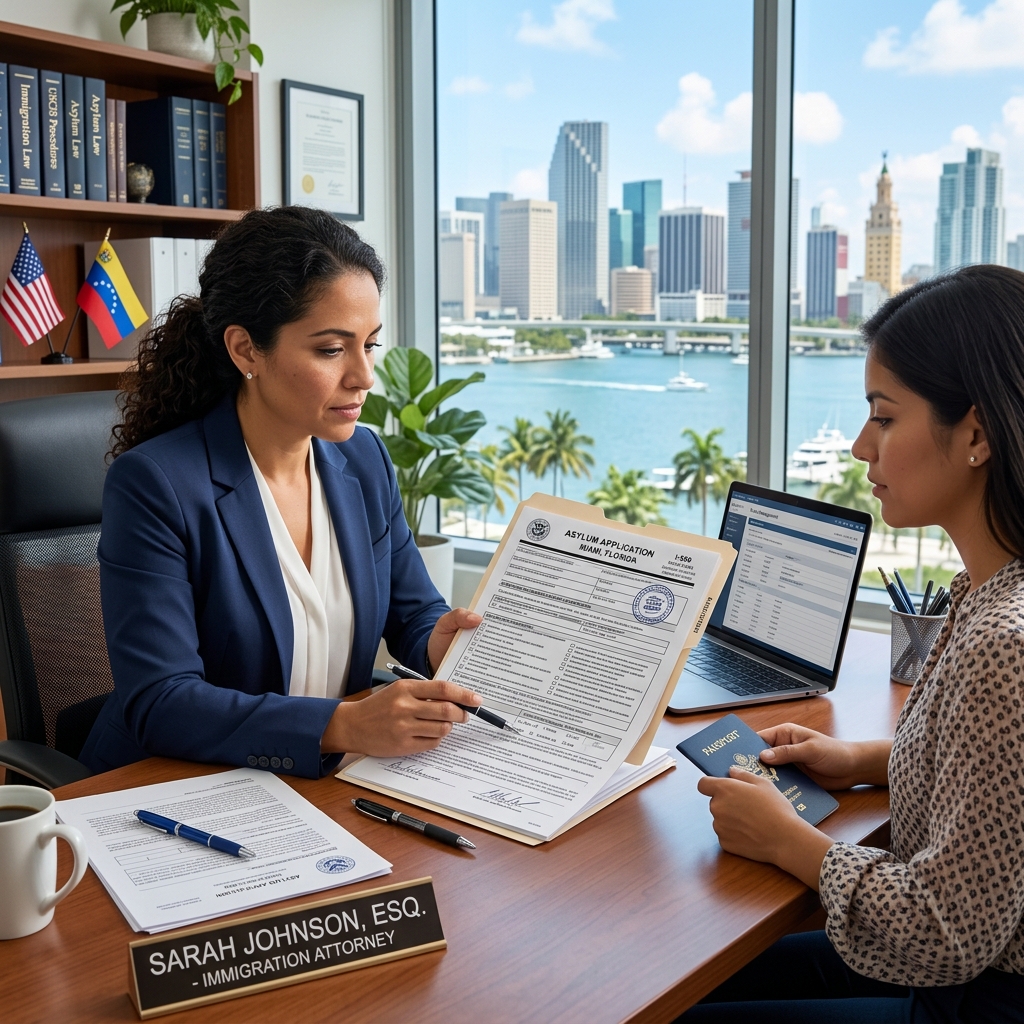
Miami is a major gateway for people seeking protection from persecution in their home countries. Understanding how the U.S. asylum system works locally, and how to properly prepare an application, is essential to protecting your rights and increasing your chances of success.
This guide explains the legal framework for asylum, the specific steps for filing an application connected to Miami, how the Miami Asylum Office functions, and what applicants should expect from interviews, evidence requests, timelines, and possible outcomes.
1. What Asylum Is and Why Miami Matters
Asylum is a form of protection under U.S. law that allows people already in the country, or at a port of entry, to remain because returning to their home country would put them at serious risk of persecution.
Miami plays a key role in this system, particularly for applicants from Latin America and the Caribbean, because the city hosts a dedicated USCIS Asylum Office that conducts interviews for affirmative asylum cases filed in the region. While the legal rules are federal and apply nationwide, many practical steps—like where you attend your interview—depend on your location.
Key characteristics of asylum in the U.S.
- Humanitarian protection: It is designed to protect people from serious harm, not to reward economic migration.
- Legal status: Granted asylum allows a person to stay in the U.S., work, and later apply for permanent residence.
- Individual assessment: Every case is assessed individually, based on facts and evidence.
2. Legal Eligibility for Asylum
To qualify for asylum, a person must meet the legal definition of a refugee under U.S. law: someone who is unable or unwilling to return to their country because of a well-founded fear of persecution based on specific protected grounds.
Protected grounds for persecution
- Race
- Religion
- Nationality
- Political opinion
- Membership in a particular social group
The fear of persecution must be connected to at least one of these grounds. General violence, poverty, or crime, without a link to these categories, is usually not sufficient.
The one-year filing deadline
In most cases, asylum applicants must file their application within one year of their last arrival in the United States. Missing this deadline can lead to automatic ineligibility, unless the applicant can show:
- Changed circumstances that affect eligibility, such as new political conditions or personal events; or
- Extraordinary circumstances, such as serious illness or legal obstacles, that explain the delay.
These exceptions are narrow and must be well documented.
3. Affirmative vs. Defensive Asylum Processes in Miami
There are two main ways to seek asylum: affirmative and defensive. Miami applicants may go through either process depending on whether they are already in removal proceedings.
| Feature | Affirmative Asylum | Defensive Asylum |
|---|---|---|
| Who handles the case? | USCIS Asylum Office (e.g., Miami) | Immigration Judge in immigration court |
| When is it used? | Applicant is not in removal proceedings | Applicant is in removal (deportation) proceedings |
| Main purpose | Proactively request protection | Defend against deportation |
| Key form | Form I-589 filed with USCIS | Form I-589 submitted to immigration court |
In Miami, affirmative cases are scheduled for interview at the local asylum office, while defensive cases are heard by immigration judges at regional immigration courts.
4. The Role of the Miami Asylum Office
The Miami Asylum Office is a regional USCIS facility that receives affirmative asylum cases, conducts interviews, and issues decisions or referrals to immigration court if it does not grant asylum.
What happens at the Miami Asylum Office?
- Review of Form I-589 and supporting documents.
- Scheduling and conducting biometrics (fingerprints and photographs) through USCIS.
- Holding detailed interviews in which an asylum officer questions the applicant about their history and fears.
- Issuing written decisions or referring cases to immigration court if asylum is not granted.
Applicants must bring identification, their original documents, and any updated evidence to the interview. It is also important to keep USCIS informed of address changes to avoid missing critical notices.
5. Starting the Application: Form I-589
The foundation of any asylum case—affirmative or defensive—is Form I-589, Application for Asylum and for Withholding of Removal.
Core elements of Form I-589
- Biographical information about the applicant and family members.
- Details of past harm or threats in the home country.
- Explanation of why the applicant fears persecution if returned.
- Information on travel history and prior immigration applications.
For affirmative asylum, the form is filed with USCIS without a filing fee. For defensive cases in immigration court, recent rules require a modest filing fee, typically paid online to the court system before submission.
Practical tips when completing the form
- Answer all questions fully and honestly.
- Use additional sheets or declarations if more space is needed.
- Ensure consistency between your form, written statement, and oral testimony.
- Sign and date the application where required.
6. Building a Strong Asylum File: Evidence and Affidavits
While personal testimony is crucial, the strength of an asylum case often depends on how well the applicant documents their claims. Good evidence helps corroborate what happened and supports the fear of future persecution.
Common types of supporting evidence
- Personal affidavit: A detailed written statement from the applicant explaining events, threats, and reasons for fear.
- Identity documents: Passports, national ID cards, birth and marriage certificates.
- Official records: Police reports, court documents, arrest warrants.
- Medical and psychological records: Reports documenting injuries or trauma.
- Witness statements: Declarations from people who observed or know about the persecution.
- Country condition reports: News articles, human rights reports, and expert analysis about conditions in the home country.
Evidence should be organized clearly, labeled, and, if not in English, accompanied by accurate translations.
7. From Filing to Interview: Step-by-Step Process
After an asylum applicant files Form I-589, USCIS and, where applicable, the Miami Asylum Office, follow a series of steps to move the case forward.
Typical steps in an affirmative asylum case
- Receipt notice: USCIS issues a notice confirming it received the application.
- Biometrics appointment: The applicant is scheduled for fingerprints and photographs, used for background and security checks.
- Interview scheduling: USCIS assigns a date and time for the asylum interview at the Miami Asylum Office.
- Asylum interview: The applicant appears at the office, answers questions under oath, and submits any updated evidence.
- Decision or referral: USCIS may approve asylum, deny but refer the case to immigration court, or continue the case for further review.
The timeline can vary significantly. Some cases are resolved within several months, while others take years due to backlogs and complex investigations.
8. Preparing for the Asylum Interview in Miami
The asylum interview is often the most critical event in an affirmative case. It is the applicant’s opportunity to explain their story directly to an asylum officer and clarify any doubts raised by the written application.
How to prepare effectively
- Review your application: Read Form I-589 and your affidavit carefully so your testimony matches your written statements.
- Practice describing key events: Focus on who harmed you, why, when, and how this connects to a protected ground.
- Organize documents: Bring originals and copies of all evidence, clearly sorted and labeled.
- Use interpreters properly: If you do not speak English fluently, ensure a qualified interpreter is available as required under USCIS procedures.
- Arrive early: Arrive at the Miami Asylum Office in advance of the appointment to allow time for security screening.
What the officer may ask
- Your life history and background in your home country.
- Details of specific incidents of harm or threats.
- Whether you sought protection from authorities in your country.
- Why you believe you were targeted and how it relates to a protected ground.
- Your travel route and previous stays in other countries.
Honesty and consistency are crucial. Inaccurate or contradictory statements can seriously harm credibility.
9. Work Authorization and Longer-Term Options
While the asylum case is pending, applicants do not automatically receive permission to work. However, U.S. regulations allow most asylum applicants to request work authorization after a waiting period.
Employment Authorization Document (EAD)
- Applicants can typically file for an EAD after a minimum number of days following the filing of their initial asylum application (historically 150 days, subject to regulatory changes).
- A granted EAD allows lawful employment while the case is pending.
- Delays caused by the applicant, such as rescheduling interviews, can affect eligibility dates.
Permanent residence and family benefits
- After one year of being granted asylum, a person may apply for lawful permanent resident status (a green card).
- Refugees are required to apply for permanent residence after one year; asylees are not required but have the right to do so.
- Qualifying family members may be able to derive or receive asylum and later adjust status.
10. Common Challenges and Practical Tips for Miami Applicants
Applicants in Miami face legal and practical obstacles, including language barriers, complex evidence rules, and long processing times. Being proactive and informed helps mitigate these challenges.
Frequent difficulties
- Meeting the one-year deadline: Some people wait too long due to fear or lack of information, limiting their options.
- Insufficient evidence: Lack of documentation or unorganized files can weaken a case.
- Misunderstanding protected grounds: Applicants may focus only on general dangers rather than persecution tied to race, religion, nationality, political opinion, or social group.
- Address changes: Failing to update USCIS can result in missed notices and interview dates.
Practical strategies
- Seek qualified legal assistance, especially for complex cases.
- Gather evidence early, before documents become difficult to obtain.
- Keep copies of all filings, receipts, and correspondence with USCIS or the court.
- Use reliable interpreters and translators.
- Stay informed about policy changes that may affect processing or eligibility.
11. Frequently Asked Questions (FAQs)
Can I apply for asylum in Miami regardless of how I entered the U.S.?
Yes. Under U.S. law, people can seek asylum regardless of how they arrived or their current immigration status, as long as they meet the legal definition of a refugee and comply with the one-year filing rule or its exceptions.
Is there a filing fee for Form I-589?
For affirmative asylum applications filed with USCIS, there is no filing fee for Form I-589. For cases in immigration court, current rules require a fee that is usually paid online before submission.
How long does the asylum process take in Miami?
Timelines vary widely. Some affirmative cases may be resolved within several months, but systemic backlogs mean that many applicants wait years from filing to final decision. Defensive cases in immigration court can also take years, with multiple hearings and appeals.
What happens if USCIS does not approve my case at the Miami Asylum Office?
If USCIS does not grant asylum in an affirmative case and the applicant has no lawful status, the case is generally referred to immigration court, where the person can pursue defensive asylum before a judge.
Do I need a lawyer to apply for asylum?
The law does not require applicants to have an attorney, but legal representation is strongly recommended. Immigration law is complex, and experienced counsel can help clarify eligibility, prepare evidence, and present a coherent case.
12. Final Considerations for Miami Asylum Seekers
Applying for asylum in Miami requires careful attention to legal requirements, deadlines, and detailed documentation. The Miami Asylum Office plays a central role in affirmative cases, but many applicants also interact with immigration courts through defensive proceedings.
By understanding the distinction between affirmative and defensive asylum, the importance of Form I-589, the need for strong evidence, and the structure of interviews and decisions, applicants can better protect their rights and present a compelling case for protection under U.S. law.
References
- Miami Asylum Office: A Complete Guide for Asylum Seekers — Chidolue Law Firm. 2023-05-10. https://www.chidoluelaw.com/miami-asylum-office-a-complete-guide-for-asylum-seekers/
- Asylum & Protection — Impact Immigration. 2023-02-15. https://impact-immigration.com/immigration-services/refugee-and-asylum/
- FAQs: Asylum Application and Evidence — Asylum Seeker Advocacy Project (ASAP). 2024-01-08. https://asaptogether.org/en/faqs-asylum-application/
- Asylum Application Process — National Capital Legal Services. 2022-11-20. https://ncls-inc.com/services/immigration-law/asylum/asylum-application/
- Asylum Process — Refugee Council USA. 2023-06-01. https://rcusa.org/resources/asylum-process/
- Asylum in the United States — American Immigration Council. 2024-03-18. https://www.americanimmigrationcouncil.org/fact-sheet/asylum-united-states/
Similar Articles








Read full bio of Sneha Tete


