
Navigating Divorce When One Spouse Serves in the Military
A practical legal and financial guide to understanding the unique rules, protections, and benefits involved in military divorce.
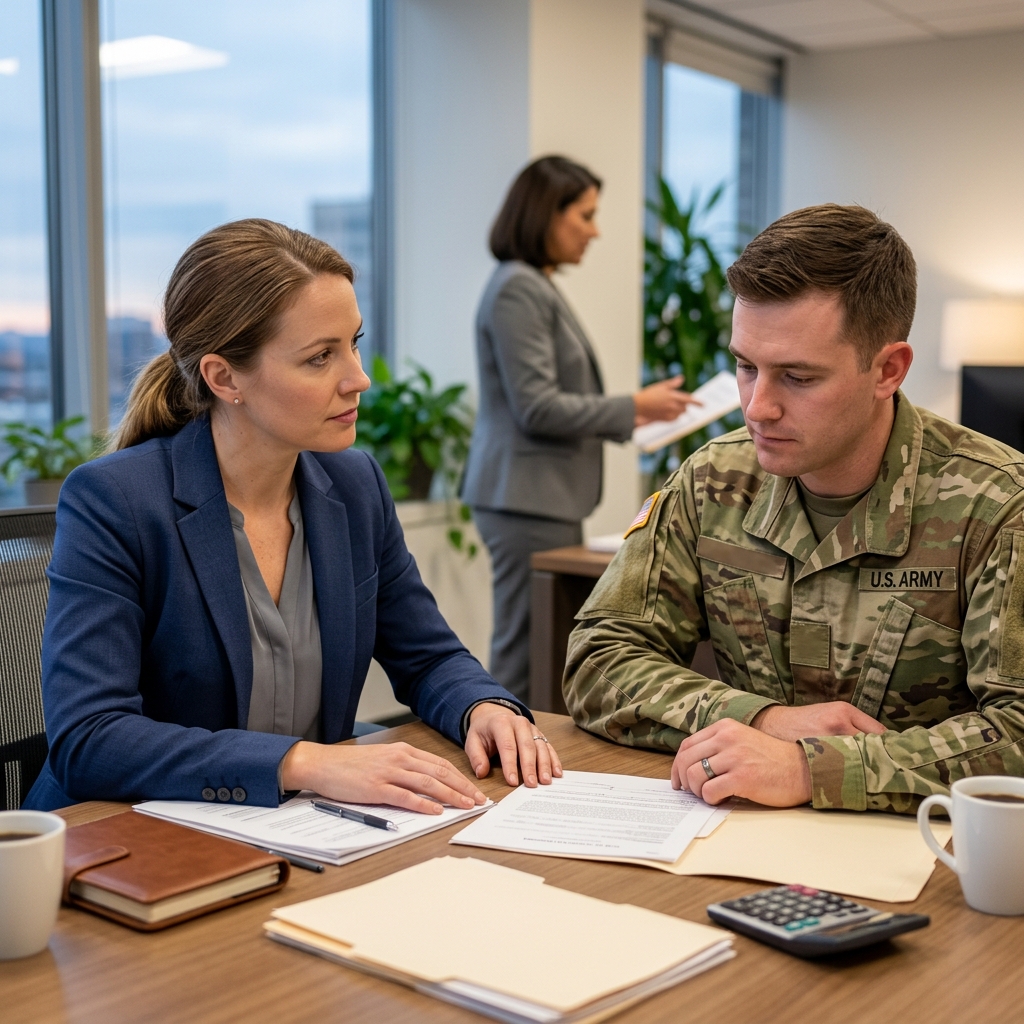
Divorce is rarely simple, but when one or both spouses serve in the armed forces, the process involves a layer of rules and protections that do not appear in most civilian cases. Military families must consider federal laws, service-specific regulations, and unique benefit systems in addition to ordinary state divorce statutes. Understanding these differences early can help you protect your rights, preserve important benefits, and reduce stress at an already difficult time.
This guide explains how military status affects key aspects of divorce, including where you can file, how proceedings may be delayed or paused, what happens to military pensions and health coverage, and how custody and support are handled when deployment and relocation are part of family life.
How Military Divorce Differs From Civilian Divorce
On the surface, military divorce looks similar to any other divorce: you file a petition, divide property, address support, and create parenting plans. Behind the scenes, however, several additional legal frameworks apply specifically to service members and their spouses.
- Federal laws such as the Servicemembers Civil Relief Act (SCRA) and the Uniformed Services Former Spouses’ Protection Act (USFSPA) impact timing and property division.
- Military benefit systems such as pensions, Survivor Benefit Plan (SBP), and TRICARE are governed by detailed eligibility rules that determine what a former spouse can keep and for how long.
- Frequent relocations and deployments affect where a case can be filed and how courts handle custody and parenting time.
These differences mean that even routine decisions—such as choosing which state to file in or when to finalize the divorce—can have a major impact on long-term financial and family outcomes for military households.
Choosing the Right Place to File: Jurisdiction in Military Divorce
In most divorces, couples file in the state where they currently live. For military families, residence, station, and legal domicile may all be different, which can create several options for jurisdiction.
Generally, a divorce involving a service member may be filed in:
- The state where the service member is legally domiciled or claims as their home of record.
- The state where the service member is currently stationed, if the state allows jurisdiction based on presence.
- The state where the nonmilitary spouse resides, if that spouse has established residency under state law.
Each state treats property division, support, and custody differently. Some states are more favorable to dividing pensions, others follow different approaches to spousal support. Because of this, the decision about where to file is often strategic. Couples—and especially nonmilitary spouses—may want to consult a lawyer before filing, to compare potential outcomes among available states.
It is also important to confirm that the chosen state has authority to divide the service member’s retired pay. Under USFSPA, the state that divides the pension generally must have proper jurisdiction over the service member, which can be based on residence, consent, or other factors.
Protections for Active-Duty Members: The Servicemembers Civil Relief Act
Active-duty service often makes it difficult for a member to appear in court or respond promptly to legal filings. To address this, Congress enacted the Servicemembers Civil Relief Act (SCRA), which applies to many civil proceedings, including divorce and related family-law matters.
SCRA allows an eligible service member to request a delay—known as a “stay”—of court proceedings when military duties materially affect their ability to participate.
- Courts typically grant an initial stay of at least 90 days upon proper request and documentation of duty obligations.
- Further extensions may be granted if duties continue to interfere, although SCRA does not allow a member to postpone the case indefinitely.
- The protection covers not only the divorce itself, but also claims related to custody, child support, alimony, and division of military property.
These protections balance the need for fair participation with the reality of deployments and intensive training schedules. For nonmilitary spouses, SCRA can mean slower progress in the case, but it can also provide time and space for both sides to prepare thoroughly. Courts must ensure that orders affecting a service member’s rights are issued in compliance with SCRA, and certain orders dividing retired pay require explicit confirmation that SCRA was followed.
Understanding Military Pensions and the USFSPA
Military retired pay is often one of the most valuable assets in a military marriage. Federal law does not automatically grant a former spouse part of this pension; instead, it authorizes state courts to treat retired pay as marital property and divide it in accordance with state law.
The key statute is the Uniformed Services Former Spouses’ Protection Act (USFSPA). Under USFSPA:
- State courts may classify military retired pay as marital or community property and award a portion to the former spouse.
- The division itself depends on state law; some states use formula-based approaches, others favor fixed percentages or present-value calculations.
- USFSPA also permits the Defense Finance and Accounting Service (DFAS) to make direct payments to the former spouse in certain circumstances.
One commonly misunderstood concept is the so‑called “10-10 rule.” This rule does not control whether a pension can be divided, but instead regulates when DFAS will send payments directly to the former spouse.
The 10-10 Rule for Direct Pension Payments
DFAS will make direct payments of retired pay to a former spouse only if:
- The marriage lasted at least 10 years, and
- During those years, the service member completed at least 10 years of creditable service.
When the 10-10 requirement is satisfied and the divorce decree properly awards a share of retired pay, DFAS can pay the former spouse directly, up to certain limits. If the requirement is not met, a court may still award a portion of the pension, but the service member would have to send payments themselves instead of DFAS.
Survivor Benefit Plan (SBP) Coverage
The military Survivor Benefit Plan allows retired members to provide a continuing income for a beneficiary after the member’s death. In many military divorces, SBP coverage is part of the overall settlement. A former spouse can be named as a beneficiary, but specific steps must be taken:
- A court order or written agreement must require or permit SBP coverage for the former spouse.
- The former spouse generally must send a written request and a certified copy of the court order to DFAS within one year of the order.
- Failure to meet this deadline can result in losing SBP coverage, even if the decree promised it.
Because SBP payments continue after the retiree’s death, they are often an important part of long-term financial planning for a former spouse, especially when other assets are limited.
Health Care, Commissary, and Other Benefits After Divorce
Divorce not only changes family structure; it also affects access to military installations, health care, and other benefits. These effects depend heavily on how long the couple was married and how long the service member served.
The 20-20-20 Rule for Former Spouse Benefits
Under military regulations, some unremarried former spouses may retain certain benefits—such as medical care through TRICARE and use of commissary and exchange facilities—if they satisfy the 20-20-20 rule.
| Requirement | Description |
|---|---|
| 20 years of marriage | The parties were married for at least 20 years from the date of marriage to the date of divorce or annulment. |
| 20 years of service | The service member completed at least 20 years of creditable service for retirement. |
| 20 years of overlap | There are at least 20 years in which the marriage and creditable service overlapped. |
If all three conditions are met and the former spouse has not remarried, they may qualify for ongoing benefits as an unremarried former spouse. Some families try to delay finalizing a divorce until the overlap requirement is satisfied, because crossing the threshold can significantly change post-divorce benefits.
Other Installation-Related Considerations
Beyond health care and commissary access, divorce affects several installation-based benefits:
- Housing: Family members typically lose installation housing within a short period after separation or divorce, often within about 30 days of moving out.
- Moving expenses: In some circumstances, the military may pay the cost for the nonmilitary spouse and family to return home from an overseas duty station. Additional moves inside the United States may need to be negotiated as part of the divorce settlement.
- ID cards: Spouses usually retain their military identification cards and related benefits until the divorce is final, even if they do not meet the 20-20-20 rule.
Because these benefits can greatly affect financial and healthcare stability, nonmilitary spouses should discuss them with both a legal assistance attorney and a civilian lawyer before agreeing to final settlement terms.
Child Support and Spousal Support in Military Families
Support obligations in military divorces combine state law with service-specific policies. Courts ultimately decide child support and alimony under state guidelines, but the military has its own rules that require service members to support dependents in the absence of court orders.
Each branch issues policies directing members to provide adequate support to spouses and children when they are separated but before a formal order exists. These policies are designed as temporary measures and usually rely on the member’s commander to enforce them. Commanders have limited authority, and their involvement does not replace the need for a court order.
Ultimately, long-term support is set by a judge. Once a court order is in place, payments may be collected through wage garnishment or direct payment from DFAS in some circumstances, particularly when retired pay is involved.
Factors courts consider in military support cases include:
- Base pay, allowances, and any special pays or bonuses.
- Housing allowances and other in-kind benefits that affect the member’s ability to pay.
- Child care costs and the impact of deployments on the custodial parent.
Custody, Deployment, and Parenting Time
When one parent serves in the military, custody arrangements must take account of deployments, training, and possible relocation. Courts still focus on the child’s best interests, but military obligations can shape how parenting plans are structured.
Common tools used in military custody cases include:
- Temporary orders that adjust custody or visitation during deployment periods.
- Mediation to develop flexible parenting plans that anticipate future moves and duty changes.
- Post-decree modifications when a new assignment or deployment significantly affects the child’s routine.
Court-approved plans may address how parents will keep in touch with children during deployment, for example through scheduled video calls, emails, letters, or use of co-parenting apps. Maintaining predictable routines and clear communication can help children adapt to periods when the military parent is away.
Working With Legal Assistance and Civilian Counsel
Military families have access to legal assistance offices at many installations. These offices provide important guidance on rights, benefits, and the interaction between military regulations and civilian law. However, legal assistance lawyers typically cannot represent you in state court or draft all of the documents needed for a contested divorce.
Most families benefit from a two-track approach:
- Consult the installation legal assistance office to understand eligibility for benefits, USFSPA requirements, SCRA protections, and service-specific support rules.
- Hire a civilian family-law attorney in the state where you plan to file, to advocate in court and negotiate the details of property division, support, and custody.
Because military divorce involves overlapping systems, coordinating advice from both military and civilian legal professionals is often essential. Doing so helps ensure that court orders are drafted in ways that DFAS and other agencies can implement, and that promised benefits such as SBP coverage and direct pension payments are actually realized.
Practical Steps to Prepare for a Military Divorce
Preparation can make a significant difference in both the emotional and financial impact of divorce. Service members and spouses can take several practical steps to protect themselves.
- Gather documentation: Collect military orders, pay records, retirement statements, housing documents, and benefit summaries. These will be needed to calculate support and divide assets.
- Clarify domicile and residence: Know where each spouse is legally domiciled and where they have established residence; this affects jurisdiction and tax consequences.
- Map out benefit eligibility: Determine whether the marriage may qualify for the 10-10 rule or the 20-20-20 rule, and how close you are to any thresholds.
- Consider timing: In some cases, delaying or accelerating the divorce may make a difference in benefit eligibility. Discuss timing with a lawyer before making decisions.
- Plan for children: Think ahead about deployment schedules, possible relocations, and your preferred custody arrangements.
Frequently Asked Questions About Military Divorce
Does SCRA stop my spouse from ever getting divorced?
No. The Servicemembers Civil Relief Act allows active-duty members to request temporary delays when their duties interfere with participating in the case, but it does not prevent divorce entirely. Courts can grant extensions beyond the initial 90 days as needed, yet they will eventually move forward once participation becomes feasible.
Can a state court divide a military pension if we were married less than 10 years?
Yes. The length of the marriage does not determine whether a pension can be divided; that question is governed by state marital property law and USFSPA. The “10-10 rule” only affects whether DFAS can send payments directly to the former spouse. If the rule is not met, the service member may still have to pay the awarded share, but not through DFAS.
Will I lose all military benefits as soon as I file for divorce?
Typically, spouses maintain ID cards and certain benefits until the divorce decree is final. Long-term benefits, such as ongoing TRICARE coverage and commissary access, depend on whether the marriage and service satisfy rules like the 20-20-20 requirement and whether the former spouse remains unmarried.
How is child support calculated when one parent is in the military?
States apply their usual child-support guidelines, but military income includes base pay, special pays, and allowances. Courts may consider these components and use official pay records to calculate accurate support amounts. Service-specific policies provide temporary guidance in the absence of a court order, but the final support obligation is set by the court.
Where should I start if I am considering divorce from a service member?
Begin by speaking with an installation legal assistance office to understand your rights and available benefits, then consult a civilian family-law attorney in the state where you may file. Together, they can help you evaluate jurisdiction options, analyze retirement and benefit issues, and plan a strategy that protects both you and your children.
References
- Divorce In Military Families – How It’s Different & What You Need To Know — Stateside Legal. 2023-08-15. https://www.statesidelegal.org/divorce-military-families-how-it-s-different-what-you-need-know
- Rights and Benefits of Divorced Spouses in the Military — Military OneSource (U.S. Department of Defense). 2022-06-01. https://www.militaryonesource.mil/relationships/separation-divorce/rights-and-benefits-of-divorced-spouses-in-the-military/
- Separation + Divorce — National Military Family Association. 2022-11-10. https://www.militaryfamily.org/info-resources/separation-divorce/
- Divorce and Family Law Challenges for Military Veterans — Florio Perrucci Steinhardt Cappelli Tipton & Taylor LLC. 2023-05-20. https://www.floriolaw.com/family-law/divorce-and-family-law-challenges-for-military-veterans/
- Deployments and Military Divorce: Managing Custody and Communication — Law Office of Arnold & Stafford. 2026-01-12. https://www.lawattorneyct.com/legal-blog/2026/january/deployments-and-military-divorce-managing-custod/
Similar Articles








Read full bio of Sneha Tete


