
Criminal Trials In Canada: 9 Clear Steps For What To Expect Now
A practical, plain-language guide to understanding each stage of the criminal trial process in Canada, from first appearance to appeal.
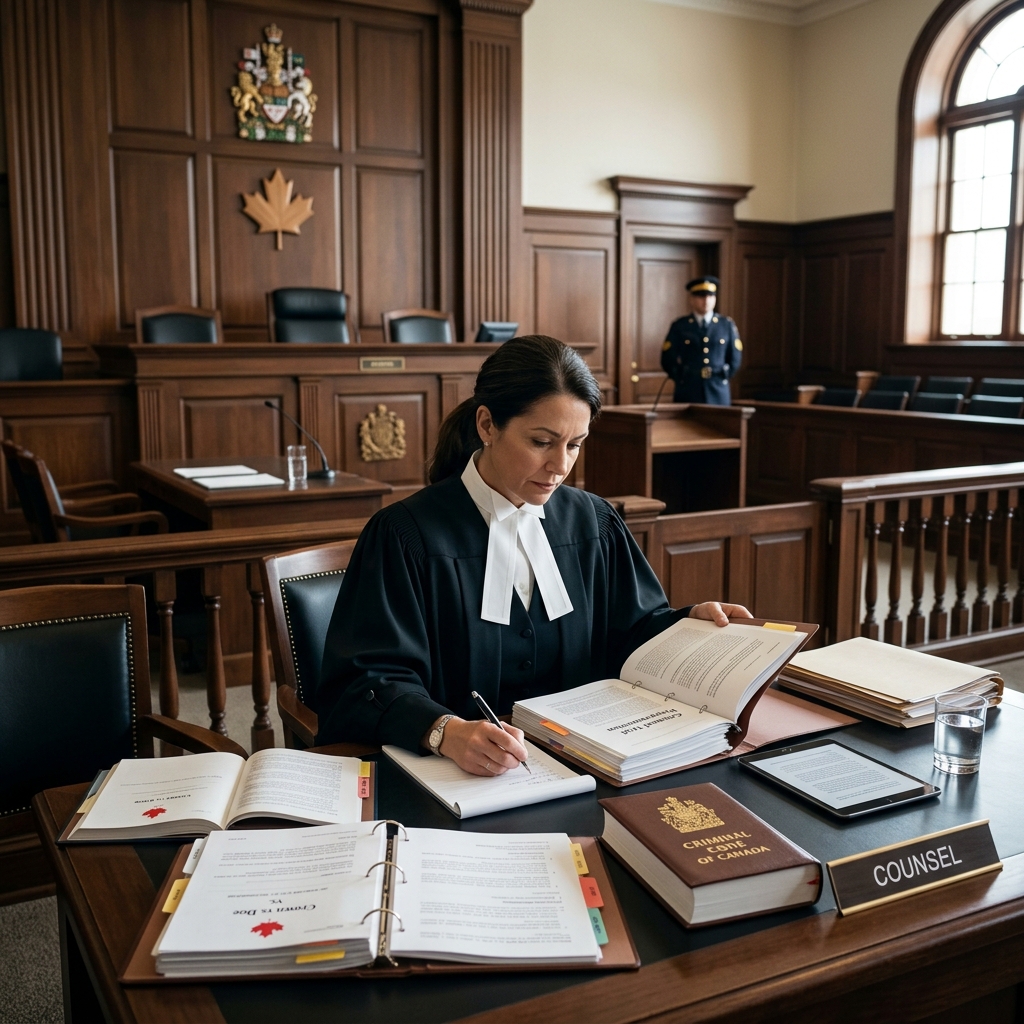
Facing a criminal charge, or supporting someone who is, can be overwhelming. This guide explains, in practical terms, how criminal trials in Canada typically unfold, what each stage means, and what rights and responsibilities are involved at every step of the process.
1. Big Picture: What a Criminal Trial Is (and Is Not)
A criminal trial is a formal court process used to decide whether an accused person has committed a specific offence under Canadian law. It is not a general inquiry into someone’s character or past behaviour; it focuses on the evidence related to the particular charge.
- Purpose: To determine, based on evidence and legal rules, if the accused is guilty or not guilty of the alleged offence.
- Standard of proof: The Crown prosecutor must prove guilt beyond a reasonable doubt; the accused does not have to prove innocence.
- Decision-maker: A judge alone, or a judge and jury together, depending on the charge and election options.
Because the stakes are high, Canadian law guarantees certain fundamental protections, including the presumption of innocence and the right to a fair and public hearing before an independent and impartial court.
2. From Charge to Trial: Early Steps in the Process
A criminal matter moves through several steps before a full trial takes place. Although details vary by province and by the seriousness of the charge, most cases involve the following early stages.
2.1 Laying the Charge and Arrest
Criminal proceedings usually begin when police or other authorized officials lay charges alleging that a specific offence has been committed.
- Arrest: Police may arrest with or without a warrant, depending on the situation and the applicable law.
- Information and booking: After arrest, basic information is recorded, and the accused is informed of the reason for arrest and the right to speak to a lawyer.
2.2 Release and Bail Decisions
After an arrest, the central question is whether the accused will remain in custody or be released while the case moves forward.
- Police release: For many offences, police may release the accused with a promise to attend court at a later date.
- Bail hearing: If not released, a bail hearing is held before a judge or justice of the peace who decides whether release is appropriate and what conditions should apply.
- Conditions: These may include reporting to a bail supervisor, staying away from certain people or places, or obeying a curfew.
2.3 First Appearance in Court
The first appearance is usually a brief court session where the case is formally started and basic information is confirmed.
- The charges are read or summarized.
- The court checks whether the accused has or will hire a lawyer, or needs legal aid or duty counsel assistance.
- The matter is often adjourned (postponed) to allow for disclosure review and legal advice.
2.4 Disclosure of Evidence
Disclosure is the process through which the Crown provides the defence with the information and evidence collected during the investigation.
- Police reports and witness statements.
- Photographs, videos, audio recordings, and expert reports.
- Any other materials the Crown plans to rely on at trial.
Access to disclosure is essential for preparing a defence and for deciding whether to go to trial or consider other options such as a plea.
3. Key Participants and Their Roles
Understanding who does what in the courtroom helps make the process less intimidating.
| Role | Main Responsibilities |
|---|---|
| Judge | Presides over the trial, rules on legal issues, instructs the jury (if any), and decides the verdict in judge-alone trials. |
| Jury | In jury trials, listens to the evidence and decides whether the accused is guilty or not guilty, following the judge’s directions on the law. |
| Crown prosecutor | Represents the state, presents evidence first, and must prove guilt beyond a reasonable doubt. |
| Defence lawyer | Represents the accused, challenges Crown evidence, may present defence evidence, and protects the accused’s rights. |
| Accused person | Person facing the charge; can make decisions about plea, elect jury or judge alone (for some offences), and choose whether to testify. |
| Witnesses | Provide testimony about facts relevant to the case; may be called by the Crown or defence. |
4. Pleas, Pre-Trials, and Preliminary Hearings
Before a full trial begins, the court needs to know whether the accused is contesting the charges and whether a trial is necessary.
4.1 Entering a Plea
At an appearance where the charges are formally put to the accused, the court will ask for a plea.
- Not guilty: The accused denies the charge or insists the Crown prove the case. This usually leads to a trial.
- Guilty: The accused admits the essential elements of the offence. The case moves directly toward sentencing.
Plea decisions are critical and should be made with full understanding of the evidence, potential penalties, and possible consequences for immigration, employment, and other areas of life.
4.2 Crown and Judicial Pre-Trial Meetings
Many courts use pre-trial conferences to streamline the process and encourage fair, efficient resolution of cases.
- Meetings with the Crown: Defence and Crown discuss the case, disclose additional information, and may explore plea negotiations.
- Judicial pre-trial: A judge may meet with the lawyers (without deciding the case) to address scheduling, witness issues, and whether the case is ready to proceed.
4.3 Preliminary Hearings for Serious Charges
For more serious offences, there may be a preliminary hearing in a lower court before any trial in a higher court.
- The Crown presents enough evidence to show there is a case worth sending to trial.
- The defence can cross-examine witnesses and test the strength of the evidence.
- If the evidence is not strong enough, the charges may be dismissed at this stage.
5. Inside the Trial: Step-by-Step
Once a case reaches trial, the court follows a fairly structured sequence so that both sides can present their positions in an orderly, fair way.
5.1 Opening Statements
Trials often begin with opening statements, especially in jury trials.
- Crown opening: Explains the story the Crown expects the evidence to tell, without arguing the case in detail.
- Defence opening: May follow, outlining the defence perspective and highlighting areas where the Crown’s evidence will be challenged.
5.2 Presentation of Crown Evidence
The Crown always presents evidence first because it carries the burden of proving the charge.
- The Crown calls witnesses, such as police, experts, or civilians.
- Documents, recordings, and physical exhibits may be introduced and identified.
- Each witness answers questions from the Crown, then faces cross-examination by the defence.
Cross-examination is a crucial part of the process, allowing the defence to challenge credibility, reliability, and accuracy of the evidence.
5.3 Defence Evidence (If Any)
After the Crown closes its case, the defence may present its own evidence, though it is not required to do so.
- The accused may choose to testify but cannot be forced to do so.
- The defence can call witnesses and present documents or other exhibits.
- The Crown may cross-examine defence witnesses.
If the defence believes the Crown has not proven the case even on its own evidence, it may call no evidence and argue for an acquittal.
5.4 Closing Arguments
Once all evidence is in, both sides have an opportunity to summarize and argue their positions.
- Crown closing: Reviews the evidence, explains how it meets the legal requirements of the offence, and argues for a finding of guilt.
- Defence closing: Identifies weaknesses, inconsistencies, and gaps in the Crown’s case, and argues that guilt has not been proven beyond a reasonable doubt.
5.5 Jury Deliberation (Where Applicable)
In jury trials, after closing arguments and the judge’s instructions on the law, the jury goes into private deliberations.
- Jurors review the evidence and discuss what it proves.
- A unanimous verdict is required in criminal jury trials in Canada.
- Deliberations remain confidential and can take hours or days depending on the complexity of the case.
5.6 Verdict: Guilty, Not Guilty, or Other Outcomes
The verdict is the formal decision on the charge.
- Guilty: The judge or jury finds that the Crown has proven the elements of the offence beyond a reasonable doubt.
- Not guilty: The Crown has not met the burden of proof, and the accused is acquitted.
- Not criminally responsible (NCR): In some cases involving mental disorder, a special non-criminally responsible verdict may be available.
- No verdict / mistrial: Rarely, a jury cannot reach a unanimous decision or other serious problems arise, and the court may declare a mistrial and order a new trial.
6. Sentencing: What Happens After a Guilty Finding
If the accused pleads guilty or is found guilty after trial, the court must decide on a sentence that complies with Canadian law and fits the circumstances.
6.1 Sentencing Principles
Sentencing aims to balance multiple goals, including denunciation (expressing society’s disapproval of the conduct), deterrence, rehabilitation, protection of the public, and promoting a sense of responsibility in the offender.
6.2 Factors Considered
- Nature and seriousness of the offence.
- Offender’s criminal record and background.
- Aggravating factors (for example, targeting vulnerable victims).
- Mitigating factors (for example, early guilty plea, genuine remorse).
- Applicable mandatory minimums or sentencing ranges in legislation.
6.3 Types of Sentences
Available sentencing options include a range of possible outcomes.
- Imprisonment (jail or prison).
- Probation orders with conditions.
- Fines or surcharges.
- Conditional sentences or community-based penalties, where the law allows.
7. Appeals and Post-Trial Options
Criminal trials do not always end with sentencing. Both the accused and the Crown may have limited rights to appeal a verdict or sentence to a higher court.
- An appeal can challenge legal errors, unreasonable verdicts, or improper sentences.
- If successful, an appeal court may order a new trial, change the verdict, or adjust the sentence.
- Strict deadlines and technical rules apply, so legal advice is essential.
8. Practical Tips for Anyone Facing a Trial
While legal representation is crucial, there are practical steps that can help you navigate the process more effectively.
- Stay organized: Keep all court documents, disclosure materials, and notes together. Use a simple folder or binder.
- Write down key points: If you are testifying, prepare bullet points of what you plan to say; avoid memorized speeches.
- Attend all court dates: Missing court can lead to additional charges and arrest warrants.
- Use legal aid or duty counsel: If you cannot afford a lawyer, ask about publicly funded legal assistance.
- Ask questions: Court processes are complex; it is appropriate to ask your lawyer or duty counsel to explain terms and steps.
9. Frequently Asked Questions (FAQs)
9.1 Do I have to prove my innocence at trial?
No. In Canadian criminal law, you are presumed innocent. The Crown must prove your guilt beyond a reasonable doubt; you do not have to prove that you did not commit the offence.
9.2 Can I be forced to testify at my own trial?
If you are the accused, you cannot be compelled to testify. The decision to testify is strategic and should be made with legal advice based on the specifics of your case.
9.3 What happens if the jury cannot agree on a verdict?
If a criminal jury cannot reach a unanimous decision, the court may declare a mistrial. The case can then be scheduled for a new trial, with a different jury.
9.4 What if I cannot afford a lawyer?
Legal aid organizations and court-based duty counsel services exist across Canada to assist accused persons who meet financial and other eligibility criteria. You should ask about these options at your first court appearance.
9.5 Can I appeal if I think the judge made a mistake?
Yes, in many cases you can appeal to a higher court if you believe there was a legal error or the verdict or sentence is unreasonable. Appeals must follow strict procedures and timelines, so prompt legal advice is important.
References
- How Criminal Trials Work — Éducaloi. 2023-05-01. https://educaloi.qc.ca/en/capsules/how-criminal-trials-work/
- Understanding the Different Stages of a Criminal Case in Canada — Jeff Reisman Law. 2022-09-15. https://www.jeffreismanlaw.ca/understanding-the-different-stages-of-a-criminal-case-in-canada/
- Step-by-Step Guide to a Typical Criminal Case — Ontario Court of Justice. 2021-03-10. https://www.ontariocourts.ca/ocj/criminal-court/going-to-court/stepbystep/
- Criminal Charge Process — Legal Aid Ontario. 2020-11-20. https://www.legalaid.on.ca/faq/criminal-charge-process/
- Court and Trial: Information for Victims of Crime — Department of Justice Canada. 2017-06-30. https://www.justice.gc.ca/eng/cj-jp/victims-victimes/court-tribunaux/index.html
- Trial Process — Criminal Law Notebook. 2018-04-01. https://criminalnotebook.ca/index.php/Trial_Process
Similar Articles








Read full bio of medha deb




