
Navigating Crime Victim Support and Federal Resources
Understand key rights, services, and programs that help crime victims access safety, information, compensation, and justice across the federal system.
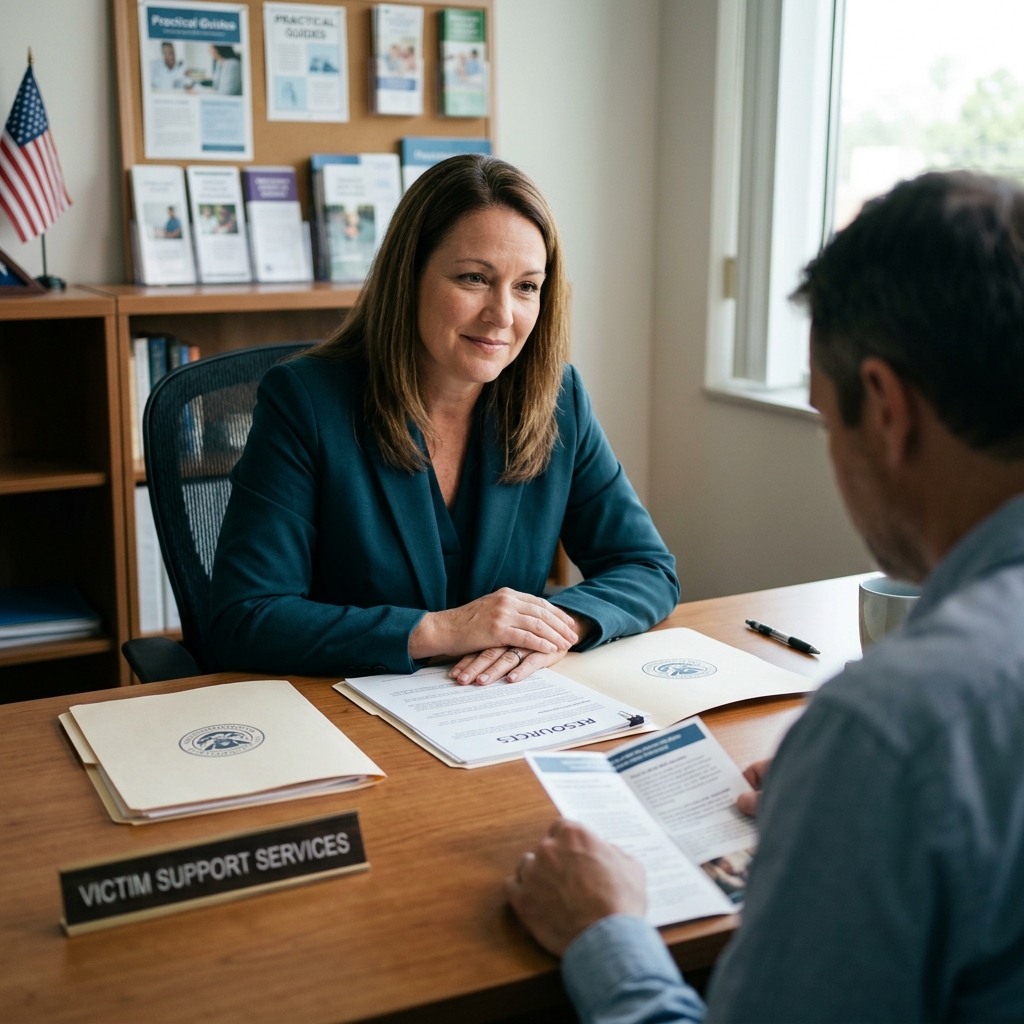
Experiencing a crime can be disorienting, frightening, and profoundly disruptive. In the United States, crime victims are not expected to face the aftermath alone. A network of laws, programs, and professionals exists to help victims stay safe, obtain information, access services, and participate in the justice process.
This article explains the core rights of crime victims in the federal system, outlines the types of services available, and shows how to connect with trusted federal and state resources. It is designed as a practical, plain‑language guide to help victims, families, and advocates understand what support is available and how to use it.
Understanding Who Is Considered a Crime Victim
Federal law defines a crime victim as a person who has been directly and proximately harmed—physically, emotionally, or financially—by the commission of a federal offense or an offense in the District of Columbia. That harm can take many forms, including: physical injury, psychological trauma, economic loss, or disruption of daily life.
- Direct victims: Individuals personally harmed by the criminal act, such as someone injured in an assault or defrauded in a financial crime.
- Indirect victims: In some circumstances, close family members or representatives of a victim who is a minor, deceased, or incapacitated may exercise rights on the victim’s behalf.
- Victims of emerging crime types: People affected by cybercrime, identity theft, terrorism, and ransomware may also be eligible for specific federal victim assistance programs.
Recognizing that you are a victim under the law is important because it triggers access to rights and services described below.
Core Legal Rights of Federal Crime Victims
Two major federal laws shape victim rights and services: the Victims’ Rights and Restitution Act (VRRA) and the Crime Victims’ Rights Act (CVRA). Together, they establish what victims are entitled to during federal investigations and court proceedings.
Key Rights Under the Victims’ Rights and Restitution Act
The VRRA focuses on information, access to services, and respectful treatment by federal agencies. Under this law, crime victims are entitled, among other things:
- Notification of victimization: To be informed that they are believed to be victims of a federal crime.
- Information on medical and social services: To learn where they can obtain health care, emotional support, and social services related to the crime.
- Guidance on counseling and support programs: To be told about public and private programs that offer counseling, treatment, and other supportive services.
- Reasonable protection: To receive reasonable protection from a suspected offender and individuals acting in concert with that person, when warranted.
- Updates on the investigation: To be informed of the status of the investigation when appropriate and when it does not interfere with investigative needs.
- Care for personal property: To have any personal property held for evidence maintained in good condition and returned when no longer required.
Key Rights Under the Crime Victims’ Rights Act
The CVRA strengthens victims’ role in the criminal justice process by giving enforceable rights in federal court proceedings. These include, among others:
- Right to be reasonably protected from the accused: Courts and agencies should consider victim safety when making decisions, such as conditions of release.
- Right to timely notice: Victims have the right to reasonable, accurate, and timely notice of public court proceedings, parole hearings, and any release or escape of the accused.
- Right to attend proceedings: Victims may attend public court proceedings involving the crime, unless the judge determines that testimony would be materially affected.
- Right to be heard: Victims have the right to be reasonably heard at key stages, such as release hearings, plea hearings, and sentencing.
- Right to confer with prosecutors: Victims can confer with the government attorney handling the case, subject to the attorney’s professional responsibilities.
- Right to restitution: Victims are entitled to prompt restitution as provided by law when the defendant is convicted.
- Right to fairness and respect: Victims should be treated with fairness and dignity throughout the process.
If victims believe a Department of Justice employee has failed to provide these rights, they may contact the Office of the Victims’ Rights Ombuds for review and possible remedy.
Types of Services Available to Crime Victims
Beyond legal rights, victims often need practical and emotional support. Federal agencies and state partners provide a wide range of services, many of which are free. These services are delivered through victim‑witness programs in U.S. Attorneys’ Offices and specialized victim assistance units in agencies like the FBI, ATF, DEA, and others.
Common Forms of Victim Assistance
- Crisis intervention and emotional support: Trained victim specialists provide information, emotional support, and safety planning, especially in the immediate aftermath of a crime.
- Safety and protection measures: Agencies may coordinate with law enforcement and prosecutors to help victims pursue protective orders or adjust safety plans.
- Information about the case: Victims receive updates on major case developments, upcoming hearings, and the status of an investigation when appropriate.
- Referrals to local services: Victim‑witness programs often connect victims with community-based organizations for housing support, medical care, child advocacy, and legal assistance.
- Support during court proceedings: Victim advocates can explain courtroom procedures, accompany victims to hearings, and help them prepare victim impact statements.
- Assistance with restitution and compensation: Victims may receive help documenting losses for restitution and applying to state crime victim compensation programs.[10]
Specialized Programs for Different Types of Crime
Some crimes require specialized expertise and tailored services. Federal agencies administer focused programs for specific victim populations.
- Child exploitation and obscenity crimes: Specialized sections within the Department of Justice support child victims of online exploitation, trafficking, and related offenses.
- Victims of terrorism and mass violence abroad: A dedicated task force coordinates support, including information and potential financial assistance, for U.S. victims of terrorism overseas.
- Elder abuse and financial exploitation: The Elder Justice Initiative and related efforts provide resources to older adults and their families when exploitation or abuse is suspected.
- Cybercrime and ransomware: Federal guidance helps victims respond to ransomware incidents and cyberattacks, including reporting and mitigation steps.
- Identity theft: Victims of identity theft can access specialized information, step‑by‑step recovery tools, and referrals through federal victim assistance programs.[10]
Finding Trusted Help: Hotlines and Directories
When a crime occurs, victims often need immediate guidance. Federal agencies maintain national hotlines and online directories that make it easier to locate help quickly.[10]
National Helplines
National toll‑free and online hotlines coordinated by the Office for Victims of Crime (OVC) connect victims with trained advocates, local resources, and crisis counseling.[10] These hotlines cover a broad range of crime categories, including domestic violence, sexual assault, trafficking, and general victimization.
- Provide confidential listening and crisis support.
- Offer referrals to nearby shelters, counseling centers, and legal services.
- Explain basic victim rights and how to report crimes to law enforcement.
Online Directories of Victim Services
OVC maintains an online directory of crime victim services that allows users to search by location, type of crime, and type of assistance needed.[10] This tool can be helpful if victims:
- Have relocated after the crime and need help in a new state.
- Are looking for specialized services (for example, child advocacy or elder abuse programs).
- Prefer to contact community‑based organizations rather than national hotlines.
Victim Notification Systems: Staying Informed About a Case
Being kept informed about the status of a case or an offender is central to many victims’ sense of safety and participation. Federal and state systems help victims receive timely updates about key events, such as hearings, custody status, and release dates.
Federal Victim Notification System (VNS)
The Department of Justice Victim Notification System (VNS) is an automated service that provides registered victims with information about federal criminal cases and related events. Victims receive a Victim Identification Number (VIN) and Personal Identification Number (PIN) to access the system.
| VNS Feature | What It Provides |
|---|---|
| Case Event Notifications | Information about significant case events, such as indictments, plea hearings, trial dates, and sentencing. |
| Custody Status Updates | Updates about an offender’s incarceration status, transfers, release, or escape, when applicable. |
| Multiple Access Options | Victims can obtain information online, through the automated call center, or by written notice. |
| Opt‑Out Capability | Victims may choose to stop receiving notifications by using the call center, website, or agency contact listed on notice letters. |
VNS is available 24 hours a day through its internet portal and call center, making it easier for victims to check case status at any time.
Other Hearing and Case Information Services
Additional DOJ divisions provide hearing notifications and case information tailored to their caseloads. Examples include:
- Antitrust Division victim‑witness coordinators: Information on public hearings in antitrust cases.
- Criminal Division victim notification programs: Updates on hearings for complex multi‑district criminal matters.
- Environment and Natural Resources Division: Victim assistance related to environmental crimes that affect communities.
- Bureau of Prisons victim/witness notification: Information about an inmate’s custody status and parole-related matters.
Financial Help: Crime Victim Compensation and Restitution
Crime often causes substantial financial strain—medical bills, lost wages, relocation costs, counseling expenses, and property loss. Two main mechanisms can help: state crime victim compensation programs and court‑ordered restitution.
State Crime Victim Compensation Programs
Every state operates a crime victim compensation program that can reimburse certain crime-related expenses for eligible victims.[10] These programs typically cover:
- Medical and mental health treatment.
- Funeral and burial costs.
- Lost wages or support due to injury or death.
- Relocation or emergency housing in some circumstances.
Compensation programs usually require victims to report the crime promptly and cooperate with law enforcement, though requirements vary by state.[10] The Office for Victims of Crime provides contact information and application guidance for each state’s program.[10]
Court‑Ordered Restitution
In many federal cases, judges may order convicted offenders to pay restitution to victims for certain financial losses. Restitution is separate from compensation and is tied to the defendant’s conviction. Victim‑witness staff and prosecutors can help victims document losses and understand how restitution orders are enforced.
Addressing Concerns and Filing Complaints
Even with strong laws in place, victims may sometimes feel that their rights were not respected or that they did not receive adequate information. The Department of Justice and partner agencies maintain formal processes for complaints and review.
Office of the Victims’ Rights Ombuds
The DOJ Office of the Victims’ Rights Ombuds investigates complaints that Department of Justice employees failed to provide rights under the CVRA or related statutes. Victims may contact the office to:
- Describe the specific rights they believe were violated.
- Request internal review of how their case was handled.
- Seek information about potential corrective steps.
Agency‑Specific Complaint Procedures
Several agencies have their own procedures for victim‑related complaints. For example, the Bureau of Prisons maintains complaint processes related to victims’ rights within its notification and custody systems. Victims can usually find contact details and instructions through official DOJ websites or via victim‑witness personnel.
Working With State and Local Victim Services
Federal resources are only one part of the support network. State attorneys general offices and state departments of justice frequently operate crime victim service divisions that offer local assistance.
- State victim service units: Many states maintain victim-centered, trauma-informed services that coordinate with local organizations and emergency response systems.
- Local referrals: States may provide information lines (such as 211) that connect callers to housing, food, mental health care, and other essential services.
- Legal assistance: Statewide resources often include referrals for civil legal aid or private attorneys who handle protective orders, family law, and victim-related civil matters.
Because each state’s laws and programs differ, victims are encouraged to contact both federal and state offices for a full picture of available support.
Practical Steps for Victims Seeking Help
It can be overwhelming to decide where to start after a crime. The following steps provide a practical roadmap:
- Ensure immediate safety: If at risk, contact local law enforcement or emergency services. Ask about connecting with a local victim advocate.
- Document what happened: Keep notes about the crime, any medical treatment, financial losses, and communications with authorities.
- Reach out to national hotlines: Use national victim hotlines or OVC-supported resources for confidential guidance and referrals.[10]
- Contact the relevant federal agency: If the crime involves federal jurisdiction (such as terrorism, major fraud, or interstate offenses), seek information from agencies like the FBI or a U.S. Attorney’s Office.
- Ask about victim notification: In federal cases, inquire about enrolling in the Victim Notification System to receive case updates.
- Explore compensation options: Visit or contact your state’s crime victim compensation program to determine eligibility and start an application.[10]
- Seek ongoing support: Consider counseling, support groups, or advocacy organizations to help manage the emotional and practical impact over time.
Frequently Asked Questions (FAQs)
1. Do all victims of crime have the same rights?
Rights differ depending on whether the case is in federal, state, or local court, and whether specific laws apply. The CVRA and VRRA govern rights in federal cases, while states have their own victim rights statutes.[10] However, many core principles—such as the right to be informed, heard, and treated with respect—are widely shared.
2. How do I know if my case is federal or state?
Jurisdiction depends on the nature of the crime, where it occurred, and which laws were violated. Local law enforcement or prosecutors can explain whether they are working with federal agencies and whether a case will be prosecuted in federal court. If the FBI or another federal agency contacts you as a victim, your case may fall under federal jurisdiction.
3. Is victim compensation the same as restitution?
No. Compensation is typically provided through state programs funded by fines and federal grants to help cover certain crime-related expenses.[10] Restitution is ordered by a court and requires the offender to repay documented losses when convicted. Victims may be eligible for both, depending on the case.
4. What if I do not want to receive case updates?
Many notification systems, including the federal VNS, allow victims to opt out of future notices. Victims can usually do this online, through an automated call center, or by contacting the agency representative listed on their notification letters.
5. Can I get help even if I never reported the crime to law enforcement?
Some services, such as counseling, hotlines, and community advocacy, are available regardless of whether a crime was formally reported.[10] However, eligibility for certain rights—such as court participation or compensation—may depend on reporting and cooperation with authorities. Advocates can help victims weigh safety, privacy, and legal considerations when deciding whether to report.
References
- Rights of Federal Crime Victims — Federal Bureau of Investigation. 2022-05-05. https://www.fbi.gov/how-we-can-help-you/victim-services/rights-of-federal-crime-victims
- Find Help and Information for Crime Victims — U.S. Department of Justice. 2023-08-10. https://www.justice.gov/action-center/find-help-and-information-crime-victims
- Victim Notification System — U.S. Department of Justice. 2021-11-30. https://www.notify.usdoj.gov/
- Help for Victims — Office for Victims of Crime, Office of Justice Programs. 2024-02-15. https://ovc.ojp.gov/help-for-victims/overview
- Victims’ Services Unit — California Department of Justice. 2023-04-20. https://oag.ca.gov/victimservices
- Crime Victim and Survivor Services — Oregon Department of Justice. 2023-09-12. https://www.doj.state.or.us/crime-victims/
- Crime Victim Services — Wisconsin Department of Justice. 2022-10-01. https://www.wisdoj.gov/Pages/CrimeVictimServices/crime-victim-services.aspx
Similar Articles








Read full bio of Sneha Tete




