
Navigating Contractor Disputes: A Homeowner’s Legal Guide
Learn how to respond, document, negotiate, and pursue legal remedies when a construction contractor fails to meet expectations or obligations.
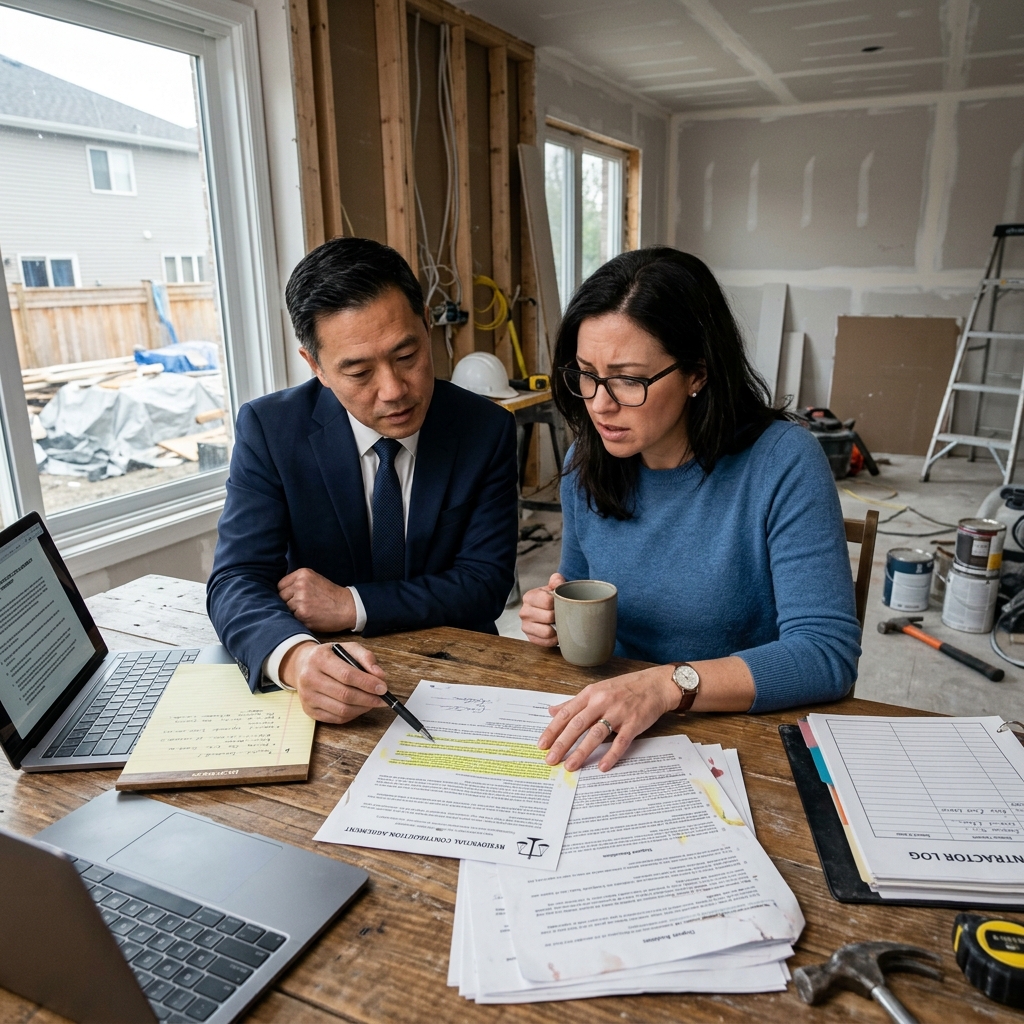
Disputes with home improvement or construction contractors are common and stressful. When work is defective, delayed, or not completed at all, homeowners often feel trapped between unfinished projects and mounting costs. This guide explains practical steps you can take—from reviewing your contract and gathering evidence to using negotiation, alternative dispute resolution, and ultimately court action—to protect your rights and pursue compensation where appropriate.
Recognizing When a Contractor Dispute Exists
A contractor dispute arises when there is a significant disagreement about performance, payment, or obligations under a construction or remodeling agreement. Understanding what qualifies as a legal dispute is the first step before deciding how to respond.
- Defective work – structural issues, code violations, water intrusion, or other construction defects that reduce the value or safety of your property.
- Incomplete or abandoned work – the contractor stops showing up, leaves the job unfinished, or refuses to correct obvious problems.
- Cost overruns and billing conflicts – charges greatly exceed the agreed budget, or you are billed for work or materials not included in the contract.
- Schedule delays – the project takes far longer than promised, causing additional living expenses or loss of use of your property.
- Non-compliance with permits or building codes – failures that can lead to enforcement actions or require you to pay for remediation.
Minor inconveniences or aesthetic disagreements may be frustrating but do not always justify legal action. Focus on issues that affect safety, functionality, property value, or financial loss.
Start With Direct Communication and Self-Help Steps
Before involving lawyers or courts, most experts recommend that homeowners attempt to resolve issues directly with the contractor. Many conflicts can be addressed through clear communication and careful documentation.
Communicate Concerns in Writing
Verbal conversations are helpful but difficult to prove later. Written communication creates a record of what was discussed and when.
- Send an email or letter describing the specific problems, referencing dates, areas of the home, and any prior conversations.
- Request a plan for correction and a realistic timeline for completion.
- Maintain a professional tone; avoid threats or emotional language that may escalate conflict.
Pause Payments If Contract Allows
Most construction contracts link payments to milestones or completed work. If you are facing serious defects or incomplete work, it may be appropriate to withhold payment in accordance with contractual terms.
- Review whether payments are tied to specific phases or inspections.
- Document why you are pausing payment and what work remains unfinished.
- Do not violate clear payment obligations; improper non-payment can create legal risk for you.
Review the Construction Contract Carefully
Your contract is the foundation of your rights and obligations. It typically explains scope of work, timetable, pricing, warranties, and how disputes must be resolved. Many legal options depend on what is written in this document.
| Contract Element | What to Look For | Why It Matters |
|---|---|---|
| Scope of work | Detailed description of tasks, materials, and standards of completion. | Helps determine whether work is incomplete or below agreed quality. |
| Project schedule | Start and end dates, key milestones, and provisions for delays. | Supports claims related to unreasonable delays or missed deadlines. |
| Payment terms | Deposit amount, progress payments, retainage, and final payment conditions. | Clarifies when you may lawfully refuse payment if work is defective or incomplete. |
| Warranty and correction clauses | Duration and scope of warranties for labor and materials. | Determines whether the contractor must fix defects discovered later. |
| Dispute resolution clause | Requirements for mediation, arbitration, or other ADR before suing. | Often controls whether you must use ADR and in what sequence. |
| Governing law and venue | State law applied and court location for any legal action. | Impacts procedures, deadlines, and potential remedies. |
If you do not have a written contract, you still may have legal rights based on invoices, emails, text messages, and your state’s consumer protection or construction laws. However, the absence of a formal agreement makes disputes more fact-intensive and often harder to prove.
Document Problems and Preserve Evidence
Evidence is essential if you later pursue arbitration or litigation. Thorough documentation can significantly strengthen your position and help experts or courts understand the scope of the problem.
- Photographs and videos – capture defect locations, water damage, cracks, misaligned installations, and safety hazards.
- Project records – keep copies of contracts, change orders, invoices, permits, inspection reports, and plans.
- Communication history – save emails, texts, letters, and notes from meetings or phone calls.
- Independent assessments – consider hiring an engineer or inspector to evaluate suspected structural or code issues.
Organize your materials chronologically. If you later work with a construction litigation attorney, this will reduce time and cost, and make it easier to analyze the case.
Notice Requirements and Pre-Litigation Obligations
In many U.S. states, homeowners must give contractors written notice and an opportunity to correct defects before filing certain types of lawsuits, especially construction defect claims.
- Check state statutes on construction defects or home improvement disputes; these laws often spell out how notice must be given and what information it should contain.
- Notice typically involves sending a letter describing the problems within a defined time frame, sometimes by certified mail.
- The contractor may have a statutory period to inspect the property and propose repairs or settlement.
Failing to follow mandatory notice procedures can delay your case or even result in dismissal until you comply. Legal advice is useful to ensure you meet these requirements in your jurisdiction.
Alternative Dispute Resolution: Mediation, Arbitration, and More
Alternative dispute resolution (ADR) methods are commonly used in construction conflicts. Many construction contracts require parties to attempt mediation or arbitration before going to court.
Mediation: Facilitated Negotiation
Mediation involves a neutral mediator who helps you and the contractor explore settlement options. The mediator does not impose a decision; any outcome is voluntary.
- Sessions are private and less formal than court or arbitration.
- Costs are generally lower than full litigation, and resolutions can be reached quickly.
- Mediation is often a contractually required step before arbitration or a lawsuit.
Because mediation is non-binding, you retain the ability to pursue other remedies if you cannot agree on a settlement.
Arbitration: Private, Binding Decision
Arbitration is a more formal ADR process in which a neutral arbitrator or panel hears evidence and issues a binding decision. Arbitration is particularly common in construction contracts and is often administered under rules set by organizations such as the American Arbitration Association.
- Arbitrators are frequently selected for their experience in construction or engineering.
- Proceedings are typically faster and more streamlined than court litigation.
- The decision is generally final and enforceable, with limited grounds for appeal.
Arbitration clauses must usually appear in the contract to be enforceable; courts do not imply a right to arbitrate if it is not clearly stated.
Other ADR Methods
Depending on the contract and jurisdiction, additional ADR techniques may be used to handle construction disputes.
- Expert determination – a subject-matter expert provides an opinion on a technical or valuation issue, such as structural integrity or repair cost.
- Adjudication – a neutral adjudicator issues a decision that may later be enforced or reviewed by a court.
- Dispute review boards – a panel established in the contract that monitors the project and issues recommendations when controversies arise.
ADR can reduce cost and time and may preserve working relationships. However, when major financial losses or extensive defects are involved, you may still need court action if ADR does not produce a fair resolution.
When and How to Use Small Claims Court
For relatively modest financial disputes—for example, refund of a deposit, payment for minor repair costs, or small compensation for incomplete work—small claims court can be a practical option.
- Small claims courts usually handle disputes under a specific dollar threshold, which varies by state.
- Procedures are simplified, and parties often represent themselves without attorneys.
- You still must present evidence: contracts, photos, receipts, and communications.
Small claims court is generally unsuitable for complex structural defects or cases involving extensive expert testimony. Those matters are better addressed through arbitration or full civil litigation.
Pursuing a Lawsuit in Civil Court
If negotiation and ADR fail, or if the stakes are high, you may consider filing a civil lawsuit against the contractor. Civil litigation is more formal than small claims or ADR, and typically requires representation by a construction litigation attorney.
- Complaints may include claims for breach of contract, negligence, construction defects, and violation of consumer protection statutes.
- The court can award damages, order specific performance, or issue other remedies as allowed by law.
- Litigation can be lengthy and expensive but may be necessary for large or complex disputes.
Before filing suit, your attorney will analyze the contract, evidence, notice requirements, and any applicable statutes of limitation (deadlines for bringing claims). Missing these deadlines can bar recovery, so timely legal consultation is critical.
Working With a Construction Litigation Attorney
Construction law is highly technical. When defects are serious, legal issues are complex, or the contractor is unresponsive, professional legal guidance can significantly improve your chances of a favorable outcome.
- Attorneys interpret contract language, including dispute resolution requirements and warranty provisions.
- They can advise on whether to pursue mediation, arbitration, small claims, or full litigation.
- Experienced counsel can help coordinate expert evaluations, manage evidence, and present your case effectively.
You may wish to consult a lawyer early, even before formal proceedings begin, to ensure that communications, notices, and documentation align with legal standards in your jurisdiction.
Practical Tips to Reduce the Risk of Contractor Disputes
Although no project is risk-free, careful preparation can significantly decrease the likelihood and severity of disputes.
- Make substantial planning decisions before work begins, including your budget, design, and timeline.
- Vet contractors thoroughly: check licenses, insurance, references, and prior projects.
- Insist on a detailed written contract, including scope, schedule, payment plan, and dispute resolution clauses.
- Clarify ambiguous terms and negotiate problematic clauses before signing.
- Keep ongoing records and photos throughout the project, not just when things go wrong.
Proactive planning and clear agreements can prevent many misunderstandings from becoming full-scale legal disputes.
Frequently Asked Questions (FAQs)
1. Do I always have to try mediation or arbitration before suing a contractor?
Not always. You must follow the dispute resolution process in your contract and, in some states, statutory requirements for construction defect notices. If the contract mandates mediation or arbitration as a first step, courts may insist that you attempt those methods before filing a lawsuit.
2. What if my contractor refuses to respond to my complaints?
Document your attempts to contact the contractor and consider sending a formal written notice. If there are statutory notice requirements, follow those procedures. Lack of response may support claims in arbitration or court, especially when combined with evidence of defects or incomplete work.
3. Can I stop paying if the work is clearly defective?
Possibly, but you should base any decision on the contract’s payment and default provisions and on advice from counsel. Improper withholding of payment can expose you to claims for breach of contract or liens on your property.
4. How much evidence do I need for small claims court?
Bring as much clear, organized documentation as possible: contracts or written agreements, photos of defects, receipts, and copies of communications. While procedures are simplified, judges still rely on evidence to decide whether the contractor failed to meet obligations.
5. Are construction defect claims subject to special deadlines?
Yes. Many states have specific statutes of limitation and statutes of repose governing when construction defect claims must be filed. These deadlines vary significantly and can be complex, so early legal advice is important.
References
- What To Do if You Have a Contractor Dispute — Super Lawyers. 2024-05-01. https://www.superlawyers.com/resources/construction-litigation/what-to-do-if-you-have-a-contractor-dispute/
- Dispute Resolution – Construction Contracting — Virginia Tech, Myers-Lawson School of Construction. 2017-01-01. https://pressbooks.lib.vt.edu/constructioncontracting/chapter/dispute-resolution/
- Resolving Owner-Contractor Disputes: Mediation, Arbitration, and Litigation — American Institute of Architects (AIA). 2021-06-15. https://learn.aiacontracts.com/articles/how-are-disputes-between-owners-and-contractors-resolved/
- Six Tips for Successfully Resolving Construction Disputes — Construction Executive. 2020-09-09. https://constructionexec.com/article/six-tips-for-successfully-resolving-construction-disputes/
- Construction Dispute Resolution — American Arbitration Association. 2023-04-01. https://www.adr.org/industries/construction/
Similar Articles








Read full bio of medha deb




