How to Navigate a California MCLE Audit with Confidence
Practical guidance to understand, prepare for, and successfully respond to a California State Bar MCLE audit.
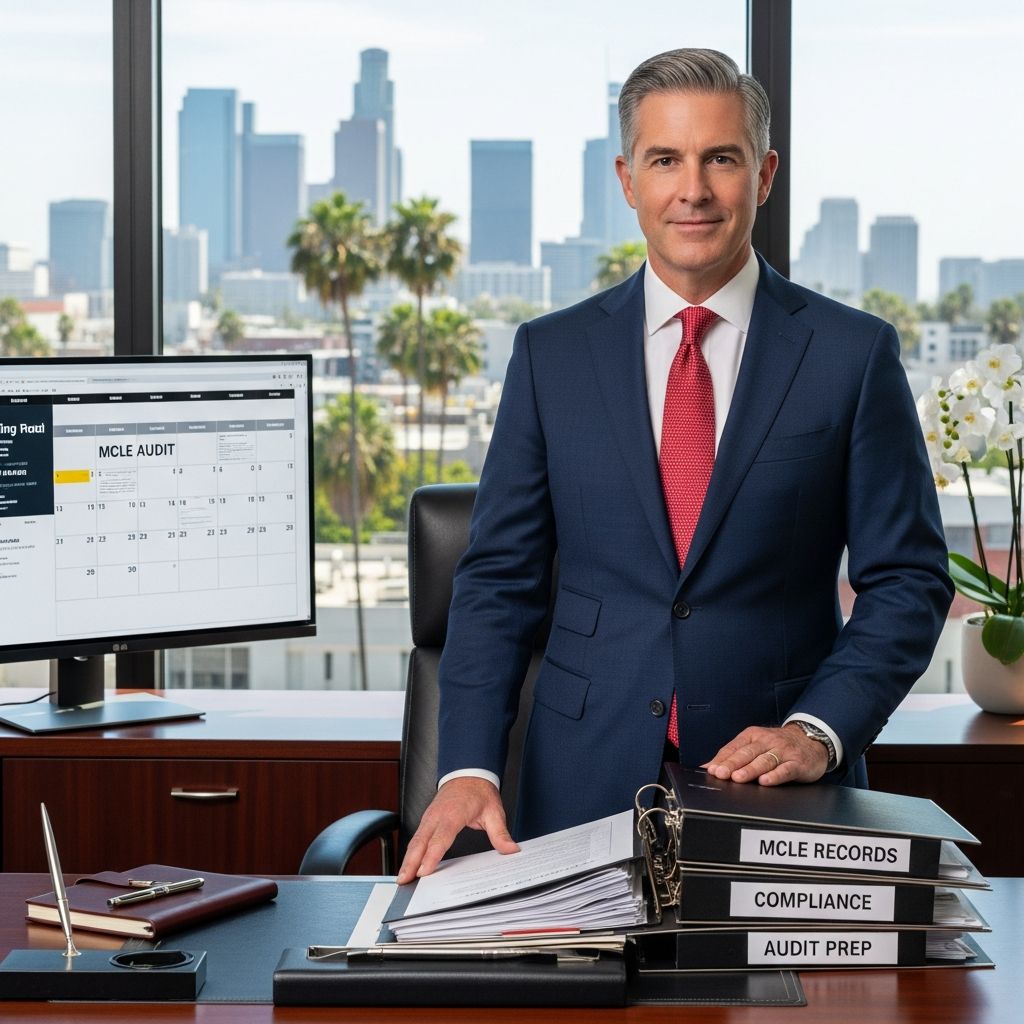
Minimum Continuing Legal Education (MCLE) is a core part of maintaining an active license to practice law in California. The State Bar of California not only sets MCLE requirements but also regularly audits attorneys to verify that the hours they report are accurate and properly documented. For lawyers who are selected, an MCLE audit can feel stressful, but with the right preparation it becomes a manageable administrative task rather than a crisis.
This guide explains how California MCLE works, what the audit process looks like, common pitfalls that lead to problems, and practical steps you can take now to ensure that an audit—should it happen—goes smoothly.
1. MCLE in California: The Compliance Big Picture
The State Bar of California requires virtually all active licensees to complete a specific number of MCLE hours every three years and to report compliance at the end of each cycle.
| Requirement Area | Key Details (General Rule) |
|---|---|
| Total hours | 25 hours of MCLE every three-year compliance period for most active California licensees. |
| Compliance groups | Attorneys are assigned to one of three compliance groups (based on last name) and must report by the applicable deadline for their group. |
| Reporting | Attorneys self-report compliance to the State Bar at the end of the three-year period. |
| Audit | The State Bar conducts audits every year to verify MCLE compliance among attorneys who reported. |
| Consequences | Failure to complete hours or maintain records can lead to penalties, administrative inactive status, or discipline. |
These baseline rules make it clear why an audit matters: when you certify that you are compliant, you are making a formal representation to your regulator. If the State Bar later questions that certification through an audit, you must be able to prove that your representation was accurate.
2. Why the State Bar Conducts MCLE Audits
MCLE audits serve several regulatory and public-protection functions. According to the State Bar of California, the Bar conducts an audit of the group that has filed MCLE compliance reports every year, and attorneys must have records available to show that they completed their 25 hours.
Audits are intended to:
- Verify truthful reporting – The Bar compares reported hours with underlying certificates and other records to confirm that attorneys actually completed the education they claimed.
- Enforce minimum education standards – MCLE is designed to ensure ongoing competence and up-to-date knowledge. Audits help the Bar identify attorneys who are not fulfilling those obligations.
- Deter noncompliance – The possibility of being audited encourages accurate reporting and proper recordkeeping across the profession.
In recent years, the Bar has periodically announced large audit cycles to more strictly enforce MCLE rules. While selection can be random, attorneys who report late or have other compliance issues may also attract closer scrutiny.
3. Core MCLE Requirements California Lawyers Must Understand
If you want to survive an audit, the starting point is understanding what you are required to do during the compliance period. The specifics of credit categories can change, so always consult the Bar’s current MCLE requirements page for the most up-to-date breakdown of subject-matter hours.
Key structural features of California MCLE include:
- 25 total hours per three-year period for most active licensees, subject to limited exceptions and prorating for periods of inactivity or exempt status.
- Mandatory subject areas such as legal ethics and other designated topics, which must be satisfied within the 25 hours.
- Self-study vs. participatory – Only a portion of the total may be self-study; the remainder must be participatory credits where you interact with the provider or complete verified tasks.
- Compliance group deadlines – Each attorney’s reporting schedule is determined by their compliance group, and deadlines are firm.
Because these details can evolve through rule changes, build a habit of checking the State Bar’s official MCLE pages at the start of each new cycle and before you report.
4. How the MCLE Audit Process Typically Works
A California MCLE audit usually follows a predictable sequence. The State Bar’s MCLE audit FAQs outline what happens if your report is selected for review.
4.1 Selection and Notice
Each year after attorneys file their compliance reports, the Bar selects a portion of that group for audit. If you are chosen:
- You receive an MCLE Audit Notice explaining that your report is being audited and specifying a deadline to respond.
- Your online State Bar profile typically displays an audit message and provides access to an online summary log where you must list your activities.
4.2 What You Must Submit
During an audit, you are responsible for demonstrating that you completed all reported hours and that the credits are valid MCLE activities.
Depending on your situation, the Bar may require:
- Certificates of attendance or completion from MCLE providers for participatory courses.
- Documentation for self-study activities (for example, records of materials read, tests completed, or platforms used), logged accurately in the Bar’s online summary form.
- Evidence of exempt or inactive status if you reported that you were exempt for part or all of the period.
The Bar’s official guidance stresses that you must have records showing completion of the required 25 hours; false declarations of compliance can lead to discipline.
4.3 Review and Outcome
After you submit your materials:
- The MCLE Audit Team reviews your documentation and the online log.
- If your records are adequate, the audit closes and your status remains active.
- If hours are missing or documentation is incomplete, the Bar may require additional information, assess penalties, or adjust your status.
5. Recordkeeping: The Foundation of Audit Readiness
Strong recordkeeping is the single most effective way to make an audit painless. The State Bar emphasizes that attorneys must track their own hours and keep MCLE records for at least one year from the time they reported compliance.
5.1 What Records You Should Keep
At minimum, you should maintain:
- Certificates from providers showing your name, the program title, provider, date, and credit hours earned.
- A personal MCLE log listing each activity, date, provider, credit type (ethics, competence, etc.), and number of hours. The State Bar offers a downloadable personal log for this purpose.
- Self-study documentation, such as reading lists, access confirmations, or test results linked to specific claimed hours.
- Proof of any exempt or inactive periods (e.g., official correspondence confirming status changes).
5.2 How Long to Keep Your Files
California requires attorneys to keep MCLE records for at least one year after they report compliance. Many practitioners, however, opt to keep records through at least one additional audit cycle to add a margin of safety, especially if there were late completions or complex status changes.
6. Consequences of Noncompliance or Poor Documentation
The potential consequences of an MCLE audit problem fall into two broad categories: administrative penalties and disciplinary exposure.
- Administrative penalties and status changes – Attorneys who cannot demonstrate that they completed the required hours may be assessed penalties and can be placed on administrative inactive status if they still have not met the requirement by a specified late date.
- Ineligibility to practice – An attorney on administrative inactive status is not eligible to practice law in California until they resolve deficiencies and pay any applicable fees.
- Discipline for false declarations – The State Bar warns that false declarations of MCLE compliance can lead to professional discipline, which can include public reproval, suspension, or more serious sanctions depending on the circumstances.
Although late completion can sometimes cure missing hours from a compliance period, you may still face penalties and status disruptions while the issue is addressed.
7. Practical Strategies to Prepare for an MCLE Audit
Good habits are the best insurance policy against an unpleasant audit experience. The following strategies are tailored to the way California’s MCLE system is structured and enforced.
7.1 Build MCLE into Your Annual Routine
- Spread your hours across the three-year period instead of cramming at the end. This improves learning and reduces the risk of missing the deadline if a personal or work crisis arises close to the reporting date.
- Review your MCLE progress annually using the State Bar’s personal MCLE log or a similar tool to check that you are on track with both total hours and subject-matter requirements.
- Use multiple providers so that a technical issue with one provider’s platform does not jeopardize your ability to finish required hours on time.
7.2 Treat Documentation as Part of the Course
- Download and save certificates immediately after each course, ideally in both cloud and local storage.
- Label files systematically (e.g., “2024-05-12_Ethics_ProviderName_1.0hrs.pdf”) so you can quickly match certificates with your log.
- Record self-study activities in real time instead of trying to reconstruct them at the end of the cycle, which often leads to gaps and errors.
7.3 Align Your Log with Bar Expectations
- Use terminology consistent with State Bar categories (ethics, competence, elimination of bias, etc.) when labeling your log entries.
- Cross-check hours and categories against the current MCLE requirements before each reporting deadline to make sure you have satisfied all mandatory subcategories.
- Retain proof of exemptions or prorated requirements if you were inactive or qualified for an exception during the period.
8. Responding Effectively If You Are Audited
If you receive an MCLE audit notice, treat it as a high-priority regulatory matter. Careful, timely, and organized responses help avoid unnecessary penalties or status issues.
8.1 Immediate Steps After Receiving an Audit Notice
- Read the entire notice carefully to understand what is being requested and by when.
- Confirm the response deadline and put multiple reminders on your calendar to ensure you do not miss it.
- Access your State Bar profile to view any online instructions, the MCLE summary log, and other audit-specific tools.
8.2 Gathering and Organizing Documentation
- Collect all certificates and related documentation for the relevant compliance period.
- Fill in or update your MCLE summary log carefully, ensuring that each entry matches up with a corresponding piece of evidence.
- Group materials logically (by year, provider, or subject area) and, if submitting electronically, use clear file names and, where permitted, a short index document.
8.3 Handling Missing or Problematic Records
If you discover gaps in your records:
- Contact providers promptly to request duplicate certificates or formal confirmation of your attendance, as permitted by the Bar’s audit guidance.
- Clarify any self-study credits by compiling a summary of materials used, dates, and time spent, then entering them accurately in the online log.
- Be transparent if you find that an error was made in your original report; correcting the record proactively is generally better than hoping the issue is overlooked.
9. Frequently Asked Questions About California MCLE Audits
Q1: How long do I need to keep my MCLE records?
According to the State Bar of California, attorneys must keep MCLE records for at least one year from the time they report compliance. Because audits occur after the reporting deadline and false declarations can lead to discipline, many lawyers choose to retain records longer as a precaution.
Q2: Are all attorneys subject to possible MCLE audit?
Yes. The State Bar states that it conducts an audit of the group that has filed MCLE compliance reports every year, which means any active licensee who reports compliance may be selected. Some attorneys may also be audited based on specific compliance issues or risk factors.
Q3: What happens if I cannot prove that I completed all required hours?
If you cannot demonstrate that you completed the required 25 hours, you may be subject to penalties and, if deficiencies remain unresolved by the Bar’s deadlines, you may be placed on administrative inactive status and become ineligible to practice until you cure the problem and pay applicable fees.
Q4: Do self-study activities count if I do not have a certificate?
Self-study hours can count toward your total as long as they qualify under the State Bar’s rules and you properly log them, but they generally will not have traditional certificates. Instead, you must document the nature of the activity, date, provider or source, and the amount of time spent, and accurately report them in the Bar’s online summary log.
Q5: Can I be disciplined for mistakes in my MCLE report?
The Bar specifically warns that false declarations of compliance can lead to discipline. Honest clerical mistakes that are promptly corrected may be treated differently from intentional misrepresentations, but you should take care to ensure your report is accurate and to rectify any discovered errors as soon as possible.
References
- MCLE Requirements — State Bar of California. 2024-10-01. https://www.calbar.ca.gov/Attorneys/MCLE-CLE/Requirements
- Minimum Continuing Legal Education — State Bar of California. 2024-10-01. https://www.calbar.ca.gov/attorneys/mcle-cle/minimum-continuing-legal-education
- Keeping Your MCLE Records — State Bar of California. 2023-06-15. https://www.calbar.ca.gov/Attorneys/MCLE-CLE/Requirements/MCLE-Recordkeeping
- Frequently Asked Questions: MCLE Audit — State Bar of California. 2023-08-10. https://www.calbar.ca.gov/Attorneys/MCLE-CLE/Compliance/Audit-FAQ
- The Essential Guide to Meeting California MCLE Requirements — CEB. 2024-02-20. https://www.ceb.com/california-mcle-requirements-continuing-education-of-the-bar
Similar Articles







Read full bio of Sneha Tete