
Navient Lawsuits and What They Mean for Student Borrowers
How federal and state enforcement actions against Navient reshaped student loan servicing and borrower protections across the United States.
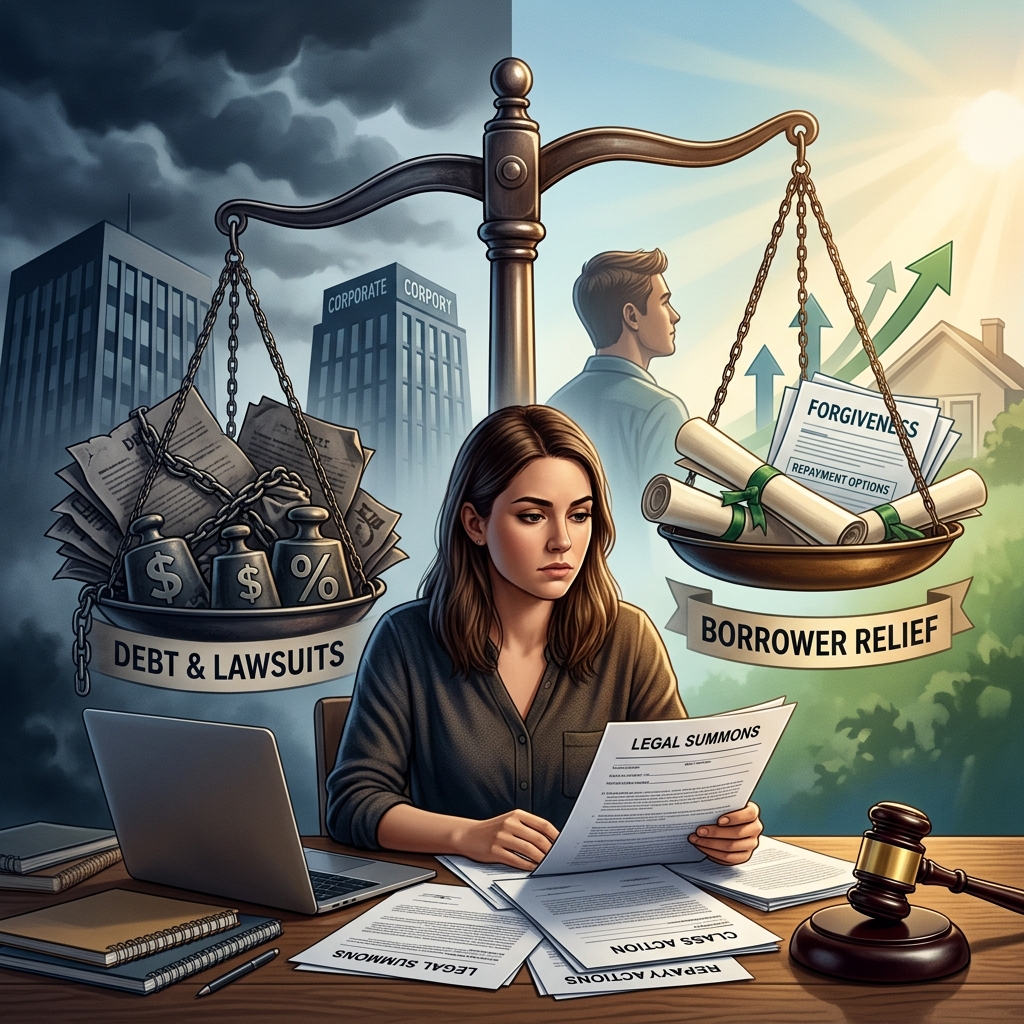
Over the past decade, Navient, one of the largest student loan servicers in the United States, has been at the center of multiple federal and state investigations, lawsuits, and settlements. These cases exposed widespread servicing failures and deceptive practices that affected millions of borrowers and ultimately forced Navient out of most federal student loan servicing.
This article explains what regulators accused Navient of doing, the key settlements and enforcement actions, how those actions change the student loan landscape, and what you can do if you think you were harmed by these practices.
Background: Who Navient Is and Why It Matters
Navient grew out of the former Sallie Mae and became one of the primary companies that manage the day-to-day operations of student loans, including billing, customer service, and repayment options. For many years, the company serviced federal Direct Loans, Federal Family Education Loan Program (FFELP) loans, and private student loans.
Because servicers act as the main point of contact for borrowers, their practices have a direct impact on whether borrowers access affordable repayment options, obtain loan forgiveness when eligible, and avoid unnecessary default or damage to their credit records.
- Federal loans are backed by the U.S. Department of Education and offer programs like income-driven repayment and Public Service Loan Forgiveness.
- Private loans are offered by banks and other private lenders and generally lack the robust protections built into federal loan programs.
- Servicers like Navient sit between borrowers and lenders, executing repayment terms and advising borrowers on their options.
Core Allegations Against Navient
Multiple enforcement agencies and state attorneys general alleged that Navient engaged in a pattern of behavior that violated consumer protection laws and harmed borrowers. The central themes across these actions include:
Steering Borrowers Into Costly Forbearance
The Consumer Financial Protection Bureau (CFPB) and several states alleged that Navient systematically pushed struggling borrowers into forbearance rather than helping them enroll in income-driven repayment (IDR) plans. Forbearance allows borrowers to temporarily pause payments, but interest generally continues to accrue and is often capitalized, increasing the total amount owed over time.
- Borrowers were allegedly offered forbearance as a quick solution during short customer service calls.
- Servicers often did not explain that IDR plans could provide much lower monthly payments and long-term forgiveness.
- This practice increased balances, delayed progress toward forgiveness, and left borrowers in longer-term financial distress.
Misrepresenting Repayment Support and Options
State investigations, including the Minnesota Attorney General, found that Navient misrepresented that it would help borrowers find the best repayment options while instead steering them to less favorable choices. These allegations focused on:
- Promises of personalized counseling that were not fulfilled in practice.
- Failure to adequately inform borrowers of IDR options and eligibility criteria.
- Inadequate training and oversight of customer service staff handling complex repayment decisions.
Errors in Credit Reporting and Handling of Discharged Loans
The CFPB also alleged that Navient’s affiliate, Pioneer Credit Recovery, provided incorrect information to credit reporting companies about some loans that had been discharged, such as through bankruptcy or other relief mechanisms. Inaccurate reporting can harm borrowers’ credit scores, affecting their ability to obtain housing, employment, or new credit.
Predatory Private Loan Practices
Several state attorneys general accused Navient of originating and servicing private student loans that were unlikely to be repaid, often tied to schools with poor graduation or employment outcomes, and then using aggressive collection tactics. A multi-state settlement later cancelled large amounts of these private loans due to the alleged unfair and deceptive practices.
Major Federal and State Actions Against Navient
These allegations led to a series of high-profile enforcement actions and settlements. While each case has its own details, together they significantly changed Navient’s role in the student loan market.
CFPB v. Navient: Federal Lawsuit and Settlement
The CFPB filed a lawsuit against Navient Corporation, Navient Solutions, LLC, and Pioneer Credit Recovery, Inc., alleging unlawful servicing practices, including steering borrowers into forbearance instead of IDR and incorrect credit reporting. The case eventually produced a settlement that provides monetary relief to harmed consumers and imposes conduct requirements on the company.
As part of this enforcement effort, affected borrowers are receiving checks reflecting compensation tied to the servicing failures and deceptive practices identified in the case. The CFPB maintains a case page with contact information for borrowers who have questions about the payments or eligibility.
CFPB Order Banning Navient From Most Federal Servicing
In a later proposed order, the CFPB moved to permanently ban Navient from servicing federal Direct Loans and sharply limit its involvement with FFELP loans. If fully entered and implemented, this order:
- Prohibits Navient from servicing federal Direct Loans, effectively removing it from that part of the market.
- Restricts Navient’s ability to acquire or directly service most FFELP loans, with narrow exceptions.
- Requires Navient, in any remaining role as a master servicer for FFELP loans, to meet specific obligations to protect borrower rights, including facilitating access to affordable repayment options.
- Mandates $100 million in redress for consumers and a $20 million civil penalty, totaling $120 million.
This federal action, combined with Navient’s own business decisions, has effectively pushed the company out of most federal student loan servicing.
Multi-State Settlement and Cancellation of Private Loans
A coalition of 39 state attorneys general, led by Massachusetts, reached a settlement with Navient that provides approximately $1.85 billion in relief to borrowers. This settlement focuses on alleged predatory private loan origination and unfair servicing practices:
- Cancellation of billions of dollars in certain private student loans considered predatory or unlikely to be repaid.
- Restitution and relief for borrowers who were steered into long-term forbearance on federal loans rather than being helped into IDR plans.
- Enhanced requirements for how Navient communicates with borrowers and handles future servicing of any remaining loans.
States like Minnesota have issued detailed guidance explaining who qualifies for cancellation or restitution and how borrowers will be notified.
How Navient’s Exit Changes Federal Loan Servicing
Navient’s removal from federal loan servicing has led to a redistribution of accounts to other servicers. According to multiple sources, including consumer advocacy organizations tracking these changes, this reshuffling has practical implications for borrowers.
| Loan Type Previously Serviced by Navient | New Servicer | Key Implications for Borrower |
|---|---|---|
| Federal Direct Loans | Aidvantage (Maximus) | Borrowers must manage repayment and forgiveness via Aidvantage and the U.S. Department of Education. |
| Commercially held FFELP loans | MOHELA or other servicers | Servicing changes may affect billing and customer support, but not underlying loan rights. |
| Private and defaulted loans still owned by Navient | Navient | Navient continues to manage some private and defaulted portfolios subject to settlement terms. |
While servicing transfers do not change statutory rights—such as eligibility for IDR or Public Service Loan Forgiveness—borrowers must adapt to new portals, new customer service contacts, and potentially different communication styles.
What Relief Looks Like for Borrowers
Relief from the various Navient cases comes in several forms, depending on the type of loan and the specific settlement.
Monetary Redress and Refunds
- CFPB Case Payments: Borrowers identified as harmed in the CFPB lawsuit are receiving checks tied to the settlement.
- Federal Servicing Redress: The CFPB’s enforcement order requires Navient to provide $100 million in redress to affected consumers plus a $20 million penalty paid into the CFPB’s victims relief fund.
- State Settlements: States like Minnesota provide restitution for borrowers affected by forbearance steering, often distributed without requiring borrower action.
Loan Cancellation for Certain Private Loans
Under the multi-state settlement, Navient agreed to cancel certain private student loans that were deemed predatory. Borrowers eligible for this relief typically attended schools with poor outcomes or were issued loans that were unlikely to be repaid under reasonable circumstances.
- Navient is required to notify borrowers whose loans are cancelled.
- Payments made on cancelled loans after specific cutoff dates may be refunded.
- Borrowers generally do not need to apply for this relief; it is administered automatically based on settlement criteria.
Improved Access to Affordable Repayment Options
While some settlements focus on monetary relief, others aim to change servicing behavior. For remaining federal and FFELP loans, Navient and any successor servicers must ensure that borrowers are informed about and can access affordable repayment options such as IDR plans.
The U.S. Department of Education also maintains programs like Borrower Defense to Repayment, which allow federal loan borrowers to seek forgiveness if their school misled them or violated state law. These programs exist independently of Navient but are particularly relevant for borrowers who attended institutions implicated in predatory practices.
Practical Steps If You Were Serviced by Navient
If Navient has ever serviced your loans, there are several practical steps you can take to protect your rights and maximize any available relief.
1. Identify Your Current Servicer
- Check your federal loans on the official government student aid portal to confirm your current servicer.
- For private loans, review recent statements or contact your lender to verify whether Navient still services your account.
2. Review Your Payment History and Repayment Decisions
- Look for periods when you were placed in forbearance instead of being offered IDR plans.
- Note any instances where you asked for help and were not informed of more affordable options.
- Check whether interest capitalization significantly increased your loan balance after forbearance.
3. Watch for Notices About Settlement Relief
- Monitor mail and email for official communications from Navient, your state attorney general, or the CFPB about eligibility for restitution or cancellation.
- Keep copies of any settlement notices or checks you receive.
4. Explore Federal Forgiveness and Protection Programs
- Consider applying for income-driven repayment if you have high payments relative to your income.
- If your school misled you, review the Borrower Defense application process maintained by the U.S. Department of Education.
- Public sector workers may qualify for Public Service Loan Forgiveness, administered by the Department of Education.
5. Seek Help If You Need It
- State attorney general offices often offer assistance with reviewing loan histories and understanding options.
- Consumer protection agencies like the CFPB provide contact information for questions about specific settlements.
- Nonprofit legal aid organizations can help borrowers facing complex disputes or collection issues.
Frequently Asked Questions (FAQs)
Did the Navient settlements cancel all of my student loans?
No. Most enforcement actions against Navient did not cancel all loans serviced by the company. Private loan cancellation applies only to specific categories of predatory loans identified in state settlements. Federal loans serviced by Navient were generally transferred to other servicers rather than forgiven.
Why did my federal student loan servicer change from Navient?
Navient has been effectively removed from federal Direct Loan servicing and limited in its role in FFELP loans under CFPB actions and related business decisions. As a result, federal loans were transferred to other servicers such as Aidvantage or MOHELA. Your loan rights remain, but you now interact with a different company for billing and support.
Do I need to apply to receive compensation from the CFPB v. Navient case?
Eligible borrowers identified in the CFPB’s case are receiving checks automatically based on settlement criteria. If you have questions about your eligibility or a payment you received, the CFPB provides contact information for the case, including a phone number, email address, and mailing address.
How can I tell if my private loan was cancelled under the multi-state settlement?
Borrowers whose loans qualify for cancellation are notified directly by Navient. If your loan is covered, the company will inform you of the cancellation and refund any payments made after specified dates. You do not typically need to apply; eligibility is based on the type of loan and institution attended.
Did Navient’s ban from federal servicing change my eligibility for federal forgiveness programs?
No. Eligibility for programs like IDR, Public Service Loan Forgiveness, and Borrower Defense depends on federal law and U.S. Department of Education rules, not on which servicer handles your account. Navient’s exit changes who you communicate with, but not your underlying legal rights.
What should I do if I suspect my loans were mishandled?
If you believe you were steered into forbearance, denied access to affordable repayment, or harmed by inaccurate credit reporting, you can:
- Gather documentation of calls, letters, and statements.
- File a complaint with the CFPB or your state attorney general’s office.
- Consult a nonprofit legal services organization for personalized advice.
References
- CFPB bans Navient from federal student loan servicing and orders the company to pay $120 million for wide-ranging student lending failures — Consumer Financial Protection Bureau. 2024-XX-XX. https://www.consumerfinance.gov/archive/newsroom/cfpb-bans-navient-from-federal-student-loan-servicing-and-orders-the-company-to-pay-120-million-for-wide-ranging-student-lending-failures/
- Navient — Protect Borrowers. 2024-XX-XX. https://protectborrowers.org/what-we-do/federal-student-loans/federal-loan-servicing-abuse/navient/
- CFPB v. Navient — Consumer Financial Protection Bureau. 2026-02-13. https://www.consumerfinance.gov/enforcement/payments-harmed-consumers/payments-by-case/navient/
- Navient Settlement — Minnesota Attorney General’s Office. 2022-01-XX. https://www.ag.state.mn.us/Office/Cases/Navient/
- Navient Lawsuits and Settlements: What Borrowers Need to Know — Tate Law. 2025-XX-XX. https://www.tateesq.com/learn/navient-lawsuit-settlements
- Statement On Navient Settlement Cancelling $1.85 Billion in Predatory Student Debt — Project on Predatory Student Lending. 2022-01-13. https://www.ppsl.org/news/news/press-releases/statement-on-navient-settlement-cancelling-1-85-billion-in-predatory-student-debt-press-release
Similar Articles








Read full bio of medha deb




