
Navarette v. California and the Future of Anonymous 911 Tips
How a single 911 call reshaped the rules for traffic stops, reasonable suspicion, and Fourth Amendment protections on America’s roads.
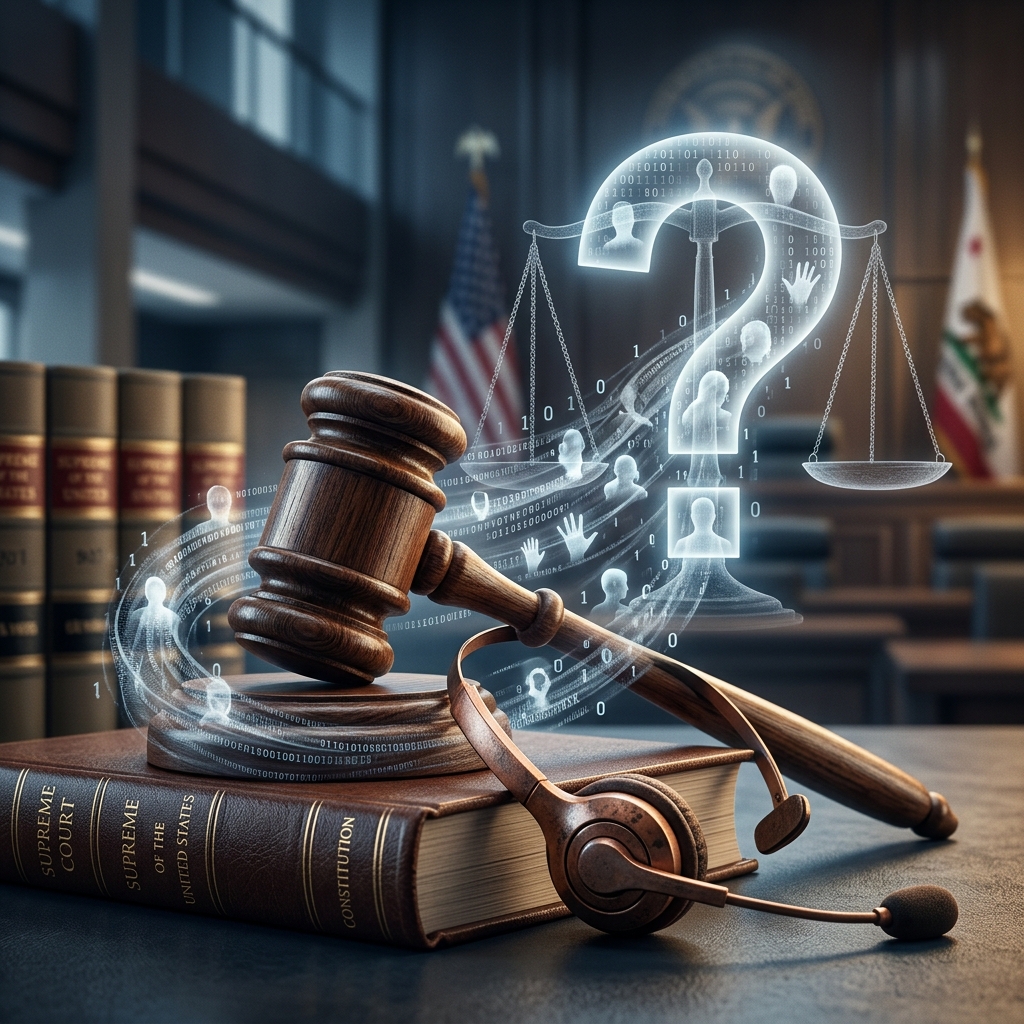
The U.S. Supreme Court’s decision in Navarette v. California, 572 U.S. 393 (2014), reshaped how courts and police evaluate anonymous 911 calls in the context of traffic stops and the Fourth Amendment’s protection against unreasonable seizures. The ruling held that a single 911 report of dangerous driving could provide reasonable suspicion for a stop, even when officers do not personally observe erratic behavior. This article explains the case, the Court’s reasoning, and what the decision means for drivers, police, and civil liberties.
Background: Fourth Amendment Rules for Traffic Stops
The Fourth Amendment protects individuals from “unreasonable searches and seizures,” including brief detentions such as traffic stops. For decades, the Supreme Court has allowed police to stop a person based on reasonable suspicion of criminal activity, a lower standard than probable cause but more than a mere hunch.
Key points about traffic stops under the Fourth Amendment:
- A traffic stop is a seizure of the person, even if it is brief and investigatory.
- Police may conduct such a stop if they have a “particularized and objective basis” to suspect involvement in criminal activity, known as a Terry stop.
- Reasonable suspicion can arise from the officer’s own observations or from information provided by third parties, such as informants or callers.
The challenge in Navarette v. California was to determine when information from an anonymous caller—someone whose identity may not be known to officers—can be trusted enough to justify stopping a vehicle.
The Facts: A 911 Call and a Marijuana Discovery
The case began in 2008, when a 911 caller reported that a pickup truck had run her off the road on a rural California highway. She gave the truck’s description, license plate number, and location. Police soon spotted a vehicle matching that description and followed it for several minutes.
Important factual details:
- Officers did not observe any obvious signs of drunk or reckless driving while following the truck.
- Despite the lack of observed traffic violations, they conducted a traffic stop based solely on the 911 report.
- During the stop, officers discovered approximately 30 pounds of marijuana in the truck.
The occupants—Jose and Lorenzo Navarette—moved to suppress the evidence, arguing that the traffic stop violated the Fourth Amendment because it was based on an unreliable, anonymous tip without independent police corroboration.
The Legal Question Before the Supreme Court
The Supreme Court agreed to review two closely related questions about anonymous tips and traffic stops.
| Question | Core Issue |
|---|---|
| Must officers corroborate dangerous driving? | Whether a traffic stop based on an anonymous tip is constitutional if police see no erratic or unlawful driving. |
| Is a single report of being run off the road enough? | Whether a one-time anonymous report of reckless driving can itself create reasonable suspicion without more evidence. |
The Navarettes argued that the Fourth Amendment requires officers to observe corroborating signs of illegal or dangerous driving before stopping a vehicle based on an anonymous tip. California responded that such a requirement would undermine roadway safety, especially when drunk driving poses an immediate threat.
The Majority’s Reasoning: Reliability of the 911 Tip
In a 5–4 opinion, the Supreme Court held that the traffic stop complied with the Fourth Amendment because the 911 call was sufficiently reliable and created reasonable suspicion of drunk driving. Justice Thomas wrote that, under the totality of the circumstances, the tip justified a brief investigatory stop.
Why the Tip Was Considered Reliable
The Court focused on several factors that, taken together, made the 911 caller’s report trustworthy enough to act upon.
- Detailed description of the truck: The caller provided the truck’s make, license plate number, and approximate location, permitting officers to identify a specific vehicle.
- Contemporaneous reporting: The caller appeared to report the incident shortly after it occurred, suggesting first-hand, real-time observation rather than rumor or speculation.
- Use of the 911 system: Modern 911 systems can record calls and often capture phone numbers or locations, making false reporting riskier and therefore improving reliability.
- Nature of the allegation: Being “run off the road” suggests significant impairment—such as lane-positioning problems or poor judgment—consistent with drunk driving indicators recognized by law enforcement.
The Court concluded that these features distinguished the call from a bare, uncorroborated anonymous tip and gave officers a reasonable basis to believe the driver might be intoxicated.
From Reliability to Reasonable Suspicion
Having found the tip reliable, the Court asked whether the information described criminal activity or an ongoing threat. It reasoned that the report of being forced off the road supported suspicion of ongoing drunk driving, not merely a past incident.
Under the reasonable suspicion standard:
- Police need not see repeated bad driving; one serious, reported incident can suffice.
- Stopping a suspected drunk driver protects the public against imminent harm, a strong governmental interest.
- Officers are not required to shadow a vehicle until they personally observe dangerous behavior, especially where waiting might increase risk.
Based on these considerations, the Court held that the stop did not violate the Fourth Amendment, and the marijuana evidence was admissible.
The Dissent: Concerns About Civil Liberties
Four Justices dissented, warning that the decision lowers the threshold for stopping drivers based on anonymous accusations. While the specific dissenting opinions are not detailed here, commentary on the case notes that the ruling appears to relax the requirement that officers corroborate tip-based allegations of criminal conduct.
Major civil liberties concerns include:
- Potential for abuse: Anonymous callers might exaggerate or fabricate dangerous driving claims, leading to stops without solid evidence.
- Reduced need for corroboration: Prior cases often required officers to verify key aspects of an anonymous tip, especially predictive behavior; Navarette permits a stop with modest verification focused on vehicle identity rather than illegality.
- Broader impact beyond drunk driving: Critics fear the reasoning could be extended to other alleged offenses, where the public safety risk is less immediate but the intrusion is still significant.
Legal scholars have described the ruling as walking a “wobbly line” between the demands of public safety and the traditional protections of the Fourth Amendment.
How Navarette Fits Into Earlier Anonymous Tip Cases
To understand the significance of Navarette, it helps to situate it within the Supreme Court’s broader treatment of anonymous tips and investigatory stops.
Earlier decisions generally cautioned that an anonymous tip, by itself, “seldom demonstrates” a reliable basis of knowledge or veracity. The Court often required corroboration of details—especially predictive behavior—to ensure that tips reflected actual observation rather than guesswork or malice.
In contrast, Navarette indicates that:
- Using a traceable system like 911 increases the inherent reliability of anonymous reports.
- Corroborating innocent details (vehicle description and location) can be sufficient when combined with a report of serious, dangerous conduct.
- Where the alleged crime is drunk driving, the heightened public safety interest can justify action on less corroboration than might be required for other offenses.
This shift has practical consequences: officers now have clearer authority to make stops based on credible 911 reports of reckless driving, even without personally witnessing traffic violations.
Practical Implications for Police and Drivers
For Law Enforcement
Training materials and legal guidance for officers now emphasize that certain anonymous 911 tips can independently create reasonable suspicion, provided they include specific, timely, and verifiable information.
Key practical takeaways for officers include:
- Document key details from the 911 call, such as vehicle description, license plate, location, and the nature of the alleged dangerous behavior.
- Recognize that reports of being run off the road or similar serious incidents may indicate ongoing impaired driving.
- Understand that following the vehicle without observing bad driving does not necessarily defeat reasonable suspicion if the tip itself meets reliability criteria.
- Still exercise judgment; not every vague or unsupported anonymous claim will justify a stop.
For Drivers and Civil Liberties
For individuals on the road, Navarette means that traffic stops may sometimes originate from reports by other drivers rather than direct officer observation. While this can improve safety by removing drunk drivers more quickly, it also expands the situations in which innocent drivers might be stopped based on mistaken allegations.
Drivers concerned about their rights should note:
- A stop based on a credible 911 tip must still be reasonable in scope and duration, consistent with Fourth Amendment limits.
- Evidence obtained during a stop can be challenged in court if the underlying tip lacked sufficient reliability or detail.
- Courts will examine the totality of the circumstances, including how specific and timely the tip was, and whether officers acted in good faith based on the information they had.
Frequently Asked Questions (FAQ)
Does Navarette allow police to stop any driver based on an anonymous tip?
No. The decision does not grant unlimited authority to act on anonymous tips. The Court emphasized that the tip must be reliable, specific, and related to an ongoing threat, such as drunk driving. Vague or unsupported accusations would not satisfy the reasonable suspicion standard.
Must officers always corroborate an anonymous tip before stopping a vehicle?
Not always. In Navarette, the Court held that corroboration of vehicle identity and location, combined with the nature of the reported conduct, was sufficient to justify the stop, even though officers did not observe erratic driving themselves. However, in many other contexts, courts still expect some corroboration of alleged criminal activity.
Does the ruling apply only to drunk driving cases?
The case arose from suspected drunk driving, and the Court heavily relied on the strong public safety interest in preventing impaired driving. While the reasoning may influence other types of anonymous-tip cases, lower courts often treat drunk driving as a special category because of the potential for immediate harm.
What if an anonymous caller lies about my driving?
If a tip turns out to be false or malicious, the constitutionality of any resulting stop depends on whether the tip, viewed at the time, appeared sufficiently reliable under the factors discussed in Navarette. A driver can still challenge the stop in court, arguing that the information did not reach the threshold of reasonable suspicion.
Can evidence be suppressed if the stop is later found unconstitutional?
Yes. If a court concludes that a traffic stop violated the Fourth Amendment—for example, because the tip lacked reliability or specificity—evidence obtained as a result of that stop may be suppressed under the exclusionary rule. In Navarette, however, the Court found the stop constitutional, so the marijuana evidence was admitted.
Key Lessons from Navarette v. California
Navarette v. California stands as a pivotal decision in the law of traffic stops and anonymous tips. It clarifies that a carefully evaluated, specific 911 report of dangerous driving can supply reasonable suspicion without requiring officers to wait for additional corroboration on the road.
In practical terms, the case teaches that:
- Reliability is not a binary concept; courts assess a tip’s trustworthiness through multiple overlapping factors.
- Public safety concerns, especially with drunk driving, can justify more responsive stopping authority when tips are credible.
- Fourth Amendment protections remain in force, but operate within a framework that balances individual rights against urgent community risks.
For lawyers, police officers, civil liberties advocates, and everyday drivers, understanding Navarette is essential to navigating the evolving landscape of roadside encounters and constitutional protections.
References
- Navarette v. California, 572 U.S. 393 (2014) — Supreme Court of the United States (via Justia). 2014-04-22. https://supreme.justia.com/cases/federal/us/572/393/
- Navarette v. California, Supreme Court Bulletin — Legal Information Institute, Cornell Law School. 2014. https://www.law.cornell.edu/supct/cert/12-9490
- Navarette v. California Case Brief — Blue to Gold Law Enforcement Training. 2023. https://bluetogold.com/legal-research/navarette-v-california/
- Fourth Amendment Case Analysis: Navarette v. California — Miss DUI Arizona. 2020. https://www.missduiarizona.com/tucson-dui-law/fourth-amendment-friday-fundamentals-case-3-navarette-v-california
- Navarette v. California: The Supreme Court Walks a Wobbly Line — Liberty University Law Review. 2015. https://digitalcommons.liberty.edu/cgi/viewcontent.cgi?article=1188&context=lu_law_review
- Terry Stop and Frisks: Doctrine and Practice — Constitution Annotated, U.S. Congress. 2022. https://constitution.congress.gov/browse/essay/amdt4-6-5-1/ALDE_00000797/
Similar Articles








Read full bio of medha deb




