
Natural Disasters and Insurance: A Practical Legal Guide
Learn how homeowners and renters can prepare, evaluate, and use insurance coverage effectively when natural disasters strike and legal issues arise.
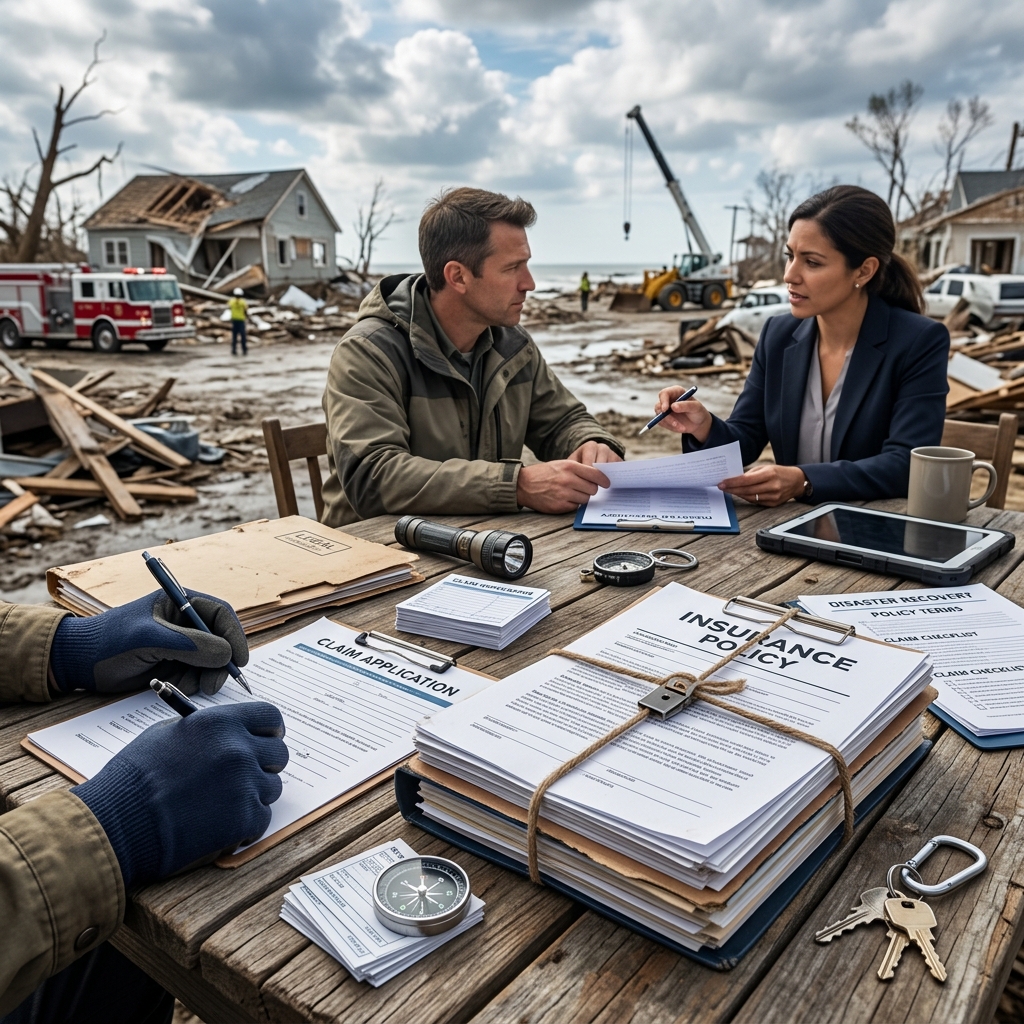
When a hurricane, wildfire, flood, or earthquake tears through a community, the headlines focus on the physical destruction. Yet the long, difficult recovery often hinges on something less visible: insurance coverage. The way your homeowners, renters, or flood insurance responds can determine whether you rebuild quickly, struggle for years, or face financial ruin.
This guide explains how natural disasters interact with insurance policies, what coverage typically exists, where gaps commonly occur, and how to protect your legal and financial interests before and after a catastrophic event. It is inspired by legal perspectives on disaster-related insurance challenges but presents practical information in plain language.
1. Why Insurance Matters So Much After Disasters
Insurance is designed to transfer risk from policyholders to insurers. After a major disaster, households with meaningful coverage are generally better able to repair their homes, replace belongings, and return to normal life. Those without adequate coverage may rely on savings, loans, or limited government aid, and often recover far more slowly.
Because climate change is increasing the frequency and severity of certain events—such as extreme rainfall, wildfires, and coastal storms—the stakes attached to insurance decisions are rising. Understanding your coverage before disaster strikes is now an essential part of basic financial planning.
- Financial stability: Insurance payouts can prevent foreclosure, bankruptcy, or forced relocation.
- Recovery speed: Adequate coverage allows faster repairs and replacement of essential items.
- Legal protection: Clearly defined coverage and claims procedures reduce disputes with insurers and contractors.
- Community resilience: Widespread coverage can accelerate neighborhood and regional recovery.
2. The Basics: HO Policies, Renters Coverage, and Special Disaster Insurance
Most households begin with a standard homeowners or renters policy. These policies typically cover your dwelling (for owners), personal property, and certain liability risks. They also often include additional living expenses if you must temporarily move out during repairs.
However, the specific disasters covered—and excluded—vary by policy and location. A useful starting point is to separate natural hazards into two categories: those usually covered by standard policies, and those that typically require separate, specialized coverage.
| Type of Event | Standard Homeowners/Renters Coverage | Typical Requirement |
|---|---|---|
| Fire & wildfires | Generally covered | No separate policy required in most areas |
| Windstorm & hail | Usually covered, but may have special deductibles or exclusions in high-risk regions | Sometimes separate wind/hurricane coverage needed |
| Lightning | Typically covered, including fire or electrical damage | No separate policy required |
| Snow, ice, extreme cold | Often covered if homeowner takes reasonable precautions | Maintenance obligations may affect coverage |
| Volcanic eruption | Fire, ash, and lava flow often covered | Ground movement may be excluded |
| Floods | Usually excluded from standard policies | Separate flood insurance, often via NFIP |
| Earthquakes & ground movement | Typically excluded (earthquakes, landslides, mudslides, sinkholes) | Separate earthquake or earth-movement coverage |
2.1 Homeowners Insurance
A standard homeowners policy generally covers damage from many weather-related events—such as wind, hail, fire, and lightning—but explicitly excludes certain perils, especially floods and earthquakes. These exclusions are not a technicality; they often drive the largest uninsured losses after major disasters.
Key components typically include:
- Dwelling coverage: Repairs or rebuilding the structure of your home, up to a stated limit.
- Personal property coverage: Furniture, clothing, electronics, and other belongings.
- Liability coverage: Claims arising from injuries or property damage to others on your property.
- Additional living expenses: Costs of temporary housing, food, and transportation if your home is uninhabitable.
2.2 Renters Insurance
Renters do not insure the building itself but can protect their belongings and personal liability through renters insurance. Like homeowners coverage, renters policies often exclude floods and earth movement, meaning additional policies may be necessary in high-risk areas.
2.3 Specialized Disaster Policies
Because standard policies exclude some high-impact hazards, separate coverage is usually required for them.
- Flood insurance: In the United States, most flood coverage is provided through the National Flood Insurance Program (NFIP) administered by FEMA, with policies sold through insurers and agents. Private flood insurance is also available in some markets.
- Earthquake insurance: Often purchased as a separate policy or endorsement, especially in seismically active regions.
- Wind or hurricane coverage: In some coastal areas, wind damage may be excluded from standard homeowners policies, requiring a separate wind policy.
Understanding which coverage you already have—and which you still need—is the foundation of disaster preparedness.
3. Common Coverage Gaps and How to Address Them
Many policyholders discover gaps only after filing claims. These gaps typically stem from exclusions, low coverage limits, or high deductibles that were not fully understood.
3.1 Exclusions for Floods and Ground Movement
Flooding is one of the most pervasive coverage gaps. Standard homeowners and renters policies do not cover flood damage, whether from storm surge, river overflow, or intense rainfall causing surface water. Without separate flood insurance, homeowners are responsible for almost all repair costs.
Similarly, damage caused by movement of the earth—including earthquakes, landslides, mudslides, and sinkholes—is usually excluded and must be insured separately.
3.2 Underinsurance and Outdated Limits
Even when a disaster is covered, policy limits may be too low to rebuild a home at current prices. Construction, materials, and labor costs often rise faster than policyholders update their coverage. When limits lag behind reality, homeowners bear significant out-of-pocket costs.
- Rebuilding costs can exceed original purchase prices, especially in high-demand areas.
- Major renovations may require higher dwelling limits to stay fully insured.
- Local building codes and mitigation requirements can add substantial expense.
3.3 Deductibles and Special Disaster Deductibles
Many policies use percentage-based deductibles for windstorms or hurricanes—for example, 2% of your dwelling limit—rather than a flat dollar amount. In practice, this can mean a very large out-of-pocket payment before insurance starts to pay.
3.4 Practical Steps to Reduce Coverage Gaps
- Review your policy annually: Confirm which hazards are covered, which are excluded, and how deductibles work.
- Update dwelling limits: Ask your insurer or broker to estimate current rebuilding costs and adjust coverage accordingly.
- Pursue specialized coverage: Add flood, earthquake, or wind policies if you live in high-risk areas.
- Document maintenance: Keep records of inspections, repairs, and upgrades; neglect can lead to denied claims.
4. Legal and Practical Steps Before Disaster Strikes
Preparing legally for a disaster is not about predicting exactly what will happen. It is about having clear documentation, suitable coverage, and an action plan that protects your rights and speeds up claims.
4.1 Policy Review Checklist
Consider using a simple checklist when you review your insurance documents:
- Identify all policies: homeowners, renters, auto, flood, earthquake, wind.
- List coverage limits for dwelling, personal property, and liability.
- Note each deductible, especially special wind or hurricane deductibles.
- Highlight exclusions (flood, earth movement, sewer backup, mold, etc.).
- Confirm whether additional living expenses are covered and for how long.
4.2 Using Brokers and Agents Effectively
Insurance agents and brokers can help you navigate complex options, compare policies, and identify gaps. Some brokers also assist with claims, supporting your efforts to secure full payment.
- Ask for written explanations of coverage and exclusions.
- Discuss local risks—such as flooding, wildfire, or coastal storms—and how your policies respond.
- Evaluate whether additional policies from other companies might be needed.
4.3 Risk Mitigation and Potential Premium Benefits
Improving your property’s resilience can reduce both damage and premium costs. Some insurers recognize measures such as fire-resistant landscaping, wind-resistant roofs, sump pumps, and backup power systems.
- Fire mitigation: Create defensible space around the home, use non-combustible materials, and maintain vegetation.
- Wind mitigation: Install impact-resistant windows, reinforce roofs, and secure outdoor structures.
- Flood mitigation: Elevate mechanical systems, use flood vents, and improve drainage.
5. After the Disaster: Safety, Documentation, and Claims
Once a disaster occurs, immediate priorities are safety, avoiding further damage, and preserving your ability to make a strong claim.
5.1 Safety First
Authorities and emergency services should guide when it is safe to return home. In many events—such as floods, wildfires, and severe storms—hidden hazards (unstable structures, contaminated water, downed power lines) may persist after the main danger appears to be over.
- Follow evacuation orders and do not return until officials declare the area safe.
- Use protective gear when entering damaged buildings.
- Watch for gas leaks, electrical hazards, and structural instability.
5.2 Documenting Damage
Documentation is crucial in insurance disputes. Clear, detailed records help substantiate the extent and cause of damage.
- Photograph and video all affected areas before cleanup.
- Save receipts for emergency repairs, lodging, food, and temporary transportation.
- Compile a list of damaged or destroyed items with approximate value and purchase date.
5.3 Filing and Managing Claims
Prompt communication with your insurers is usually required. Many policies obligate policyholders to notify the company of a loss within a reasonable time and to take steps to prevent further damage.
- Contact each relevant insurer (home, flood, auto) and ask about specific claim procedures.
- Provide documentation and keep copies of all communications.
- Cooperate with inspections but ask for written reports and explanations of coverage decisions.
If the damage involves both covered and excluded perils (for example, wind damage combined with flooding), claims can become complex. It may be necessary to distinguish which portion of damage resulted from a covered peril. In some cases, legal advice can be valuable to interpret policy language and contest unfair denials.
5.4 Avoiding Post-Disaster Scams
After disasters, contractor and repair scams often emerge. Unscrupulous actors may demand large upfront payments, perform poor-quality work, or disappear entirely.
- Verify licenses and references for contractors.
- Be cautious about signing assignments of benefits or broad powers allowing contractors to negotiate directly with insurers.
- Coordinate closely with your insurer to ensure proposed repairs are covered.
6. The Role of Government and Public-Private Programs
In many countries, and particularly in the United States, government programs play a significant role in disaster insurance markets. They help address coverage gaps where private insurers are reluctant to provide affordable policies.
6.1 Flood Insurance Through NFIP
The National Flood Insurance Program (NFIP), managed by FEMA, offers flood coverage to property owners, renters, and businesses in communities that adopt specific floodplain management standards. Homeowners and renters can purchase NFIP policies through local agents or directly linked insurers.
NFIP coverage is especially important because most private homeowners policies exclude floods, leaving households vulnerable without this separate policy.
6.2 Risk Sharing and Catastrophic Risk
At a broader policy level, analysts have explored public–private risk-sharing models where governments act as reinsurers for catastrophic losses, allowing private insurers to bear initial losses and share larger, less frequent losses. Such arrangements aim to keep premiums affordable while ensuring enough capital is available to pay claims after large-scale events.
For individual policyholders, awareness of these structures can explain why certain coverage is required (such as mandatory flood insurance in high-risk zones) and why premiums vary with risk.
7. Frequently Asked Questions (FAQs)
Does homeowners insurance cover all natural disasters?
No. Standard homeowners policies usually cover events like fire, lightning, wind, hail, and certain winter storms but exclude floods and earth movement such as earthquakes and landslides.
Do I need flood insurance if I am not in a high-risk zone?
Flood insurance is strongly recommended if you live near waterways, coasts, or in areas that have experienced heavy rainfall events, even if your zone is not officially labeled high risk. Many flood claims occur outside the highest-risk areas.
Can I add natural disaster coverage to my existing policy?
Often you can. Insurers may offer endorsements or separate policies for earthquakes, floods, or windstorms. You may also be able to buy specialized disaster coverage from another company.
What should I do if my claim is denied?
Request a written explanation citing the specific policy provisions used to deny coverage. Review your policy carefully and consider consulting a lawyer or experienced consumer advocate if you believe the denial contradicts your contract or applicable law. Detailed documentation of the damage and communications with your insurer can be critical.
Are renters protected against natural disasters?
Renters insurance can cover personal belongings damaged by certain disasters—such as fire or wind—but generally excludes floods and ground movement unless separate coverage is purchased. The building itself is the landlord’s responsibility, governed by their own insurance.
8. Key Takeaways for Policyholders
Natural disasters are unpredictable, but the way your insurance responds does not have to be. A few core actions can dramatically improve your resilience:
- Know your exclusions: Be clear on whether floods, earthquakes, and wind are covered or excluded.
- Fill the gaps: Purchase separate flood, earthquake, or wind coverage where needed.
- Update limits: Make sure dwelling coverage reflects current rebuilding costs and property improvements.
- Maintain documentation: Keep policy records, maintenance logs, and an inventory of belongings.
- Prepare a claims strategy: Understand how to document damage, file claims, and seek help if disputes arise.
By approaching insurance as a critical part of disaster planning, homeowners and renters can protect both their property and their legal rights, reducing uncertainty when catastrophe strikes.
References
- Climate Change, Disaster Risk, and Homeowner’s Insurance — Congressional Budget Office. 2020-11-09. https://www.cbo.gov/publication/60674
- Does Home Insurance Cover Natural Disasters? — Farmers Insurance. 2023-05-01 (approx.). https://www.farmers.com/learn/insurance-questions/does-home-insurance-cover-natural-disasters/
- How Natural Disasters Affect Homeowners Insurance — Wawanesa Insurance. 2022-08-15 (approx.). https://www.wawanesa.com/us/blog/how-natural-disasters-affect-homeowners-insurance
- Insurance for Disasters — Los Angeles Department of Recreation and Parks / LADRRC. 2021-06-10 (approx.). https://www.ladrc.org/insurance-for-disasters/
- Which Disasters Are Covered by Homeowners Insurance? — Insurance Information Institute. 2023-02-01 (approx.). https://www.iii.org/article/which-disasters-are-covered-by-homeowners-insurance
- Flood Insurance — Federal Emergency Management Agency (FEMA). 2024-01-10 (approx.). https://www.fema.gov/flood-insurance
- Natural Disasters: Insurance Tips — National Association of Insurance Commissioners (NAIC). 2023-09-20 (approx.). https://content.naic.org/consumer/natural-disasters
Similar Articles








Read full bio of medha deb




