
Natural Disaster Insurance: How to Decide If It’s Worth the Cost
Understand what your homeowners policy excludes, how disaster coverage works, and when paying extra for specialized insurance makes financial sense.
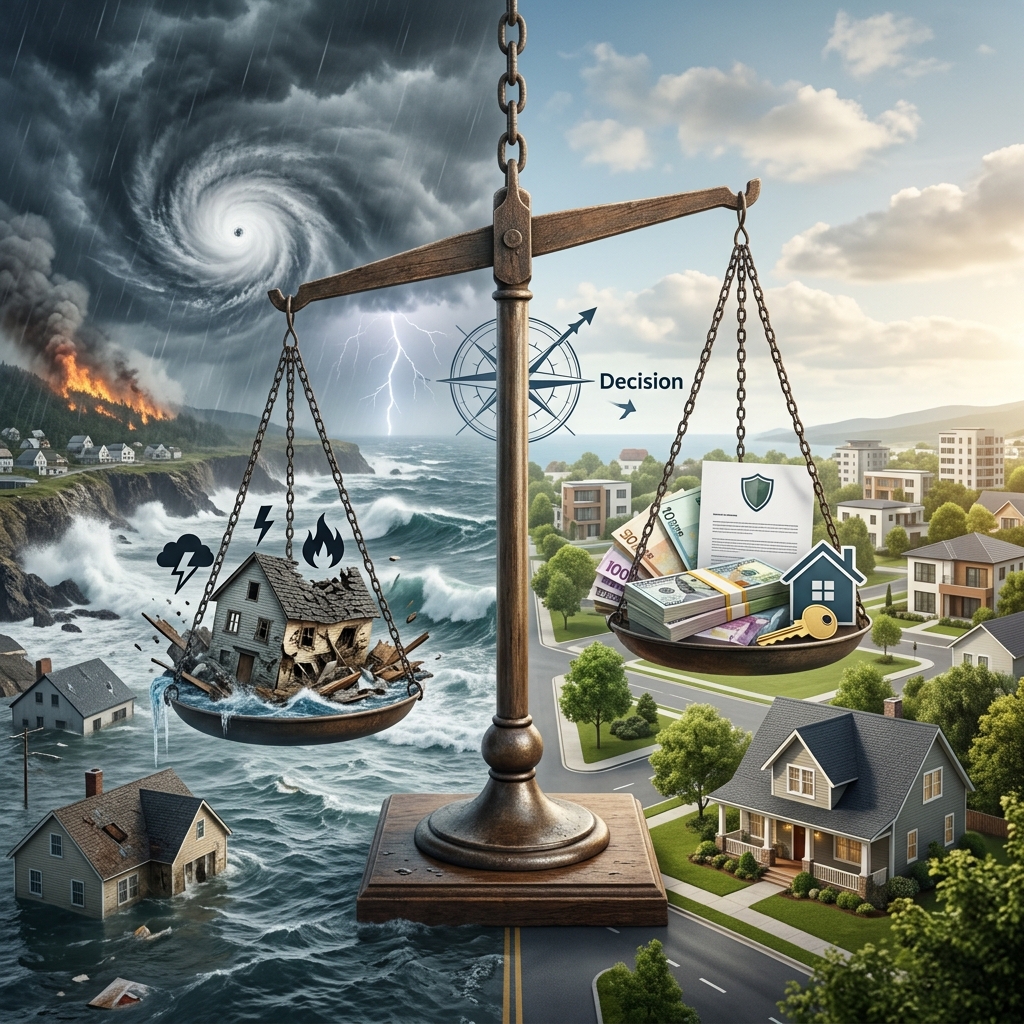
For many property owners, the biggest financial risk they face is not day‑to‑day wear and tear, but a sudden natural disaster that can damage or destroy their home. Standard homeowners insurance does not automatically cover every type of catastrophe, which is why natural disaster insurance has become an essential topic for anyone who owns or plans to buy real estate.
This guide explains where ordinary homeowners policies fall short, the main kinds of disaster coverage available, real‑world cost considerations, and a clear framework to help you decide whether paying extra for specialized insurance is worth it for your situation.
Why Your Standard Homeowners Policy Is Not Enough
Homeowners insurance is designed to protect against many common hazards, but it does not operate as a blanket guarantee for all possible disasters. Policies typically specify what is covered and list certain excluded perils—events that are not covered, regardless of how serious the damage is.
What Homeowners Insurance Usually Covers
Most standard policies include coverage for sudden, accidental events that commonly affect residential property. These often include:
- Fire and explosions
- Lightning strikes
- Hail and many windstorms, including some tornado and hurricane‑related wind damage
- Extreme cold, such as burst pipes or roof damage from snow and ice buildup
- Certain volcanic events, including ash or shock waves
These events are often covered under a broad “all‑risk” or “open perils” approach, subject to exclusions in the policy language. If your claim falls within the covered categories and you meet your deductible, the insurer may pay to repair or rebuild the home and replace damaged belongings within the policy limits.
Major Gaps: Commonly Excluded Disasters
Some of the most financially devastating hazards are routinely excluded from standard homeowners coverage. Typical exclusions include:
- Flooding from outside sources (rivers, heavy rain, storm surge, tsunamis)
Note: Water damage from burst pipes inside the home may be covered separately. - Earthquakes and other earth movement
- Landslides, mudslides, and mudflows
- Sinkholes in many states
- Man‑made catastrophes like war or nuclear accidents
If you live in an area where any of these risks are significant, relying solely on a standard homeowners policy can mean facing large repair or rebuilding costs out of pocket after a disaster.
| Event Type | Usually Covered? | Notes |
|---|---|---|
| Fire, lightning, explosion | Yes | Core part of most policies. |
| Windstorms, hail | Often | Coverage may vary by region and policy; some hurricane wind excluded. |
| External flooding | No | Requires separate flood insurance. |
| Earthquake, landslide | No | Usually only covered through specialized policies. |
| Sinkholes | Often no | Separate coverage may be offered in high‑risk states. |
What Natural Disaster Insurance Actually Is
Natural disaster insurance, sometimes called catastrophe insurance, is a group of specialized policies or endorsements designed to fill the gaps left by standard homeowners coverage. Rather than one universal policy, it usually consists of separate products tailored to specific risks.
Key Types of Disaster‑Specific Coverage
Depending on where you live, you may encounter several distinct types of natural disaster insurance:
- Flood insurance
Protects against damage from rising water, storm surge, and many other water‑related disasters. In the United States, residential flood policies are commonly offered through the National Flood Insurance Program (NFIP) and participating private insurers. - Earthquake insurance
Provides coverage for structural damage and loss caused by ground shaking and related events. Often sold as a separate policy or endorsement in seismically active regions. - Windstorm or hurricane insurance
Covers damage from severe wind associated with tropical cyclones, tornadoes, and major storms. Some states, such as Florida, treat windstorm insurance as an add‑on distinct from standard homeowners coverage. - Sinkhole insurance
Designed for areas where ground collapse is a known risk. In some high‑risk states, insurers offer specific sinkhole coverage at an additional cost.
In practice, these policies often work alongside your main homeowners policy. You may need to carry a base policy for common hazards and then purchase one or more catastrophe add‑ons for disasters your insurer excludes.
How Much Does Natural Disaster Insurance Cost?
Cost is a central part of deciding whether disaster insurance is worth it. Premiums vary based on location, building characteristics, policy limits, deductibles, and local risk level.
Impact of Living in High‑Risk Areas
Insurance tends to be more expensive where the likelihood and severity of disasters are greater. One analysis of home insurance premiums found that residents in high natural‑disaster‑risk areas pay on average $849 more per year than the statewide average for standard homeowners coverage alone. In some states the difference runs into several thousand dollars annually.
On top of higher base premiums, property owners in high‑risk zones may need to purchase multiple catastrophe policies, each with its own cost structure. Flood insurance through NFIP, for instance, is typically priced based on factors like flood zone, building height, and foundation type.
Illustrative Cost Ranges
Exact pricing depends on your individual situation, but available data and state‑level information provide general ranges.
- Flood insurance: Nationally, NFIP flood insurance costs vary widely; one major factor is property elevation and flood zone designation. In many areas, annual premiums are commonly in the mid‑hundreds of dollars, though very high‑risk properties may pay more.
- Windstorm insurance: In hurricane‑prone regions, windstorm policies can carry higher premiums and deductibles than standard homeowners coverage, reflecting the severity of storms.
- Sinkhole insurance: Where offered, sinkhole add‑ons may range from low to several thousand dollars per year depending on coverage amount and proximity to known risk areas.
When you stack these costs together—homeowners premium plus flood, earthquake, windstorm, or other add‑ons—it becomes clear why many owners ask whether the extra coverage is truly worth the expense.
Comparing Insurance Costs to Potential Disaster Losses
To evaluate the value of natural disaster insurance, it helps to compare what you pay in premiums with what you stand to lose in a severe event. Natural disasters can cause damages far exceeding typical emergency reserves or savings accounts.
Magnitude of Typical Flood Losses
Flooding is one of the most financially damaging hazards. Even minor events can result in significant claims. NFIP data show that flood damage across the United States regularly totals in the billions of dollars in a single year. In 2024 alone, FEMA reported roughly $3.8 billion in insured flood damage.
Because repairing floors, walls, electrical systems, and built‑in fixtures can be costly, even a few inches of water in a home often leads to repair bills far higher than an annual insurance premium. Without flood coverage, homeowners must pay those amounts themselves or rely on limited disaster aid.
Long‑Term Financial Impact
A serious disaster can affect more than just the building:
- Loss of use of the home can force you to pay for temporary housing.
- Furniture, electronics, and personal belongings may need replacement.
- Business interruptions (for home offices or rental units) can reduce income.
If you carry appropriate disaster insurance, many of these costs may be covered up to policy limits, including additional living expenses in some policies. For most households, the ability to transfer a large potential loss—such as $100,000 or more in damage—to an insurer in exchange for a predictable annual premium is the core reason catastrophe coverage can be financially sensible.
Assessing Your Personal Risk: A Step‑By‑Step Approach
The decision to purchase natural disaster insurance should be based on a careful review of your property, local hazards, and financial capacity. A structured process can help you move beyond guesswork.
1. Review Your Existing Policy
Start by thoroughly reading your current homeowners or renters policy. Pay attention to:
- Covered perils: Which events are explicitly covered?
- Excluded perils: Are flood, earthquake, landslide, or other hazards excluded?
- Coverage limits: Do the dwelling and contents limits match current rebuilding and replacement costs?
- Deductible structure: Is your deductible a flat dollar amount or a percentage of the insured value, particularly for windstorm or hurricane damage?
2. Analyze Local Hazard Data
Next, use official resources to understand objective risk levels:
- Check flood maps and zone designations provided by FEMA and NFIP to gauge the likelihood and severity of flooding at your property.
- Consult state or local emergency management information for earthquake, wildfire, hurricane, or landslide risk profiles.
- Review historical records of past disasters in your area, such as prior floods or severe storms.
These data help distinguish between low‑probability events and recurring hazards that are more likely to affect you during the life of your home.
3. Estimate Potential Damage Scenarios
Consider what different disasters would mean for your property and finances:
- How much would it cost to repair or rebuild the structure after a major event?
- What is the approximate value of your contents—furniture, electronics, appliances, clothing?
- Could you afford these costs without insurance, and how would that affect long‑term goals like retirement or education funding?
Property owners often underestimate the combined cost of structural repairs and contents replacement, especially when multiple rooms or the entire building is affected.
4. Evaluate Premiums vs. Risk Tolerance
Finally, weigh the cost of premiums against your risk tolerance and ability to self‑insure:
- If annual premiums are modest relative to potential losses, disaster insurance may be a practical hedge.
- If premiums are high but risk is extreme (for example, a home on a floodplain), coverage may still be essential to protect your investment.
- If both premiums and risk are low, you might decide to rely on savings and general homeowners coverage instead.
Individuals who prefer certainty—such as those who routinely buy extended warranties or travel insurance—may find catastrophe coverage particularly valuable, even when risk is moderate.
Practical Steps Before and After a Disaster
Insurance is only part of disaster readiness. Knowing what to do before and after an event can improve safety and streamline claims.
Before a Disaster: Preparation and Documentation
Proactive steps include:
- Create a home inventory that lists major belongings, with photos and approximate values. This can support insurance claims and help you identify gaps in coverage.
- Secure important documents (insurance policies, identification, property records) in waterproof and fire‑resistant storage.
- Improve property resilience with measures like flood barriers, wind‑resistant roofing, or fire‑resistant landscaping. Some insurers offer premium discounts for risk‑mitigation upgrades.
- Understand your policies’ waiting periods: Some disaster coverages have limitations if purchased immediately before a storm or flood.
During and Immediately After a Disaster
Your first priority should be safety, followed by essential documentation:
- Follow evacuation orders and move to safe shelter with family and pets.
- Seek emergency medical care for any injuries.
- Once safe, document damage with photographs and notes before extensive cleanup begins.
- Contact your insurer promptly to report the loss and begin the claims process.
- Keep records of temporary living expenses, such as hotel costs or rental payments, in case your policy covers additional living expenses.
In federally declared disasters, it may also be possible to apply for assistance from FEMA or other programs, but such aid is typically limited and should not be viewed as a replacement for comprehensive insurance.
Is Natural Disaster Insurance Worth the Cost? A Decision Framework
There is no single answer that fits every property or budget. However, you can use a simple framework to reach a reasoned decision.
Core Questions to Ask Yourself
- Is my home located in a known hazard zone?
If official maps or historical data show high flood, earthquake, or wind risk, specialized coverage is more likely to be worthwhile. - Could I rebuild without insurance?
Consider whether your savings, investments, and income could reasonably cover major reconstruction and replacement costs. - Do I have a mortgage or other lender requirements?
Federally backed mortgages often require flood insurance in high‑risk zones, making coverage non‑optional. - How sensitive is my long‑term financial plan to a large loss?
If a disaster would derail retirement or other key goals, transferring that risk to an insurer may be prudent.
When Extra Coverage Is Most Likely Worthwhile
Natural disaster insurance is generally most valuable when:
- Your property is in a high‑risk area identified by reliable hazard mapping.
- You lack sufficient reserves to rebuild or relocate after a total or near‑total loss.
- Your home represents a large portion of your net worth or future financial security.
- Local building costs are high, making reconstruction particularly expensive.
In contrast, if risk is low, premiums are high, and you have substantial capacity to self‑insure, you might reasonably choose to carry only standard homeowners coverage and invest the savings elsewhere.
Frequently Asked Questions (FAQs)
Does my homeowners policy cover all natural disasters?
No. Standard homeowners policies usually cover events like fire, lightning, certain windstorms, and winter weather, but they often exclude floods, earthquakes, landslides, and similar hazards. You need separate coverage for those.
Is flood insurance only for coastal properties?
Flooding can occur far from the coast due to heavy rain, river overflow, or urban drainage issues. Federal data show that damaging floods and large losses occur nationwide, not just in coastal states. Many inland homeowners benefit from flood coverage.
How do I find out if I’m in a flood zone?
You can review official flood maps and zone information through FEMA and NFIP tools, which indicate whether your property is in a high‑, moderate‑, or low‑risk area. Local officials or insurance agents can help interpret these maps.
Can I buy earthquake or flood insurance at the last minute?
Some policies have waiting periods or may temporarily stop issuing new coverage when a storm or other event is imminent. It is advisable to secure disaster insurance well before severe weather or seismic activity is forecast.
Does government disaster aid replace the need for insurance?
Government disaster assistance is typically limited and may come in the form of loans that must be repaid. It is not designed to make every victim whole. Insurance provides a more reliable mechanism to cover major rebuilding and replacement costs.
References
- Is Natural Disaster Insurance Worth the Cost? — Rocket Lawyer. 2024-05-01. https://www.rocketlawyer.com/real-estate/home-ownership/manage-real-estate/legal-guide/is-natural-disaster-insurance-worth-the-cost
- Which Disasters Are Covered by Homeowners Insurance? — Insurance Information Institute. 2023-08-15. https://www.iii.org/article/which-disasters-are-covered-by-homeowners-insurance
- The Cost of Flooding — National Flood Insurance Program (FEMA). 2024-04-10. https://www.floodsmart.gov/know-your-risk/cost-of-flooding
- Cost of Flood Insurance for Single-Family Homes under Risk Rating 2.0 — FEMA. 2023-06-20. https://www.fema.gov/flood-insurance/work-with-nfip/risk-rating/single-family-home
- The Cost of Natural Disasters — Self Financial. 2022-11-30. https://www.self.inc/info/natural-disaster-costs/
- Insurance for Disasters — Los Angeles Department of Recreation and Parks (adapted disaster guidance). 2023-03-01. https://www.ladrc.org/insurance-for-disasters/
- What Type of Insurance Covers Natural Disasters in Florida? — FloridaInsurance.org. 2023-09-05. https://floridainsurance.org/disaster
Similar Articles








Read full bio of medha deb


