
The Enduring Legacy of National Security on American Privacy
Examining the decades-long conflict between expanding government surveillance powers and constitutional rights.
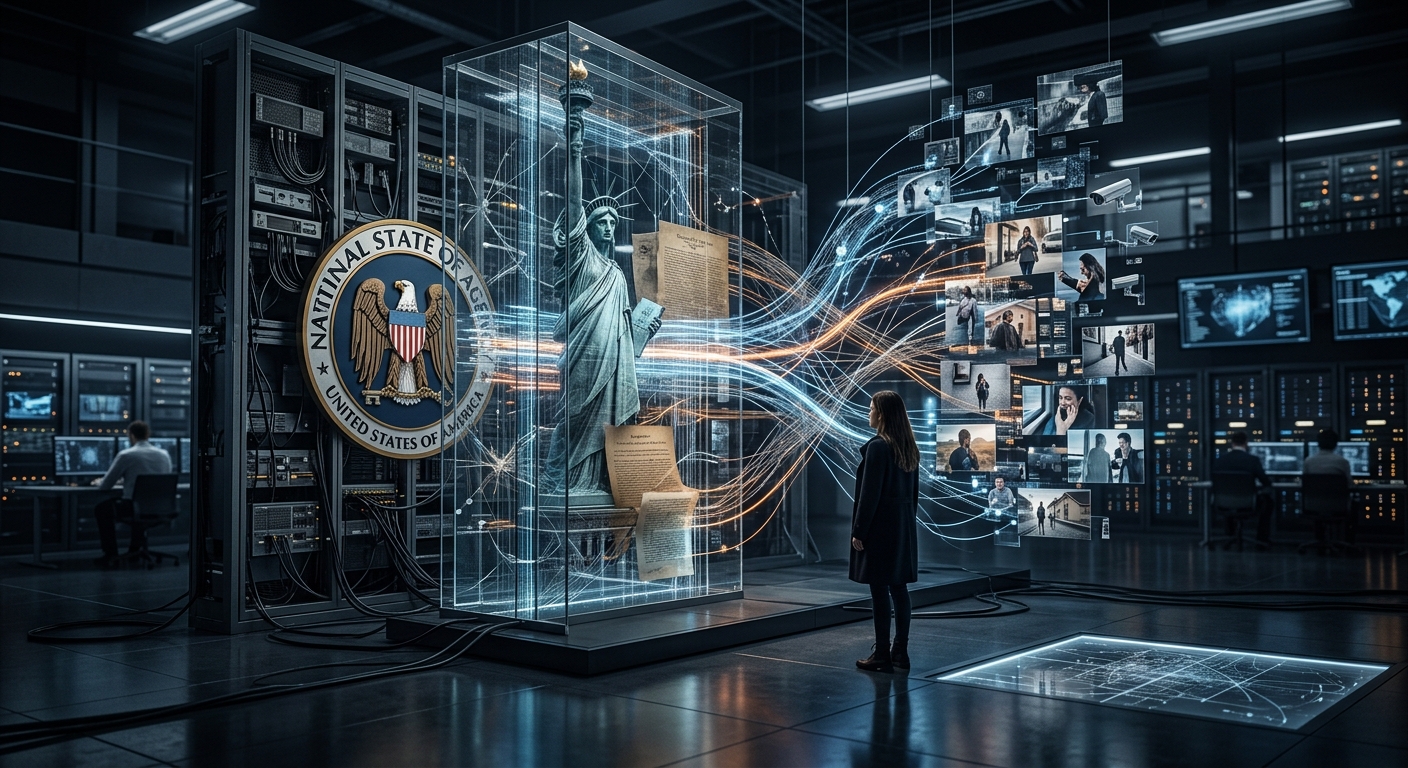
The events of September 11, 2001, irrevocably altered the trajectory of American legislative history and civil liberties. In the frantic weeks that followed the attacks, lawmakers rushed to provide intelligence and law enforcement agencies with sweeping new powers. The resulting legislation, primarily the USA PATRIOT Act, represented a monumental paradigm shift . Its passage marked the beginning of an era characterized by a delicate, often strained balancing act between national security imperatives and the fundamental privacy rights guaranteed by the U.S. Constitution. What was initially presented as a temporary, emergency measure to combat terrorism quickly morphed into a permanent fixture of the modern intelligence apparatus.
Decades later, the anniversary of these legislative milestones serves as a stark reminder of the steady expansion of government surveillance capabilities. Critics often view these expanded powers not as protective measures, but as unwarranted gifts to the intelligence community at the expense of ordinary citizens. This article explores the evolution of these surveillance frameworks, the legal mechanisms that enabled mass data collection, and the ongoing struggle to reclaim civil liberties in an increasingly digital world.
The Genesis of the Modern Surveillance Apparatus
To understand the contemporary landscape of digital privacy, one must examine the foundation laid by the Uniting and Strengthening America by Providing Appropriate Tools Required to Intercept and Obstruct Terrorism (USA PATRIOT) Act. Passed with immense bipartisan support in October 2001, the Act was designed to tear down the legal “wall” between foreign intelligence gathering and domestic law enforcement . Prior to this legislation, stringent judicial oversight governed the intersection of these two domains to prevent historical abuses of executive power. The new framework lowered the legal threshold required to monitor communications, track financial transactions, and conduct physical searches.
Proponents of the law argued that antiquated statutes were insufficient to combat borderless, technologically sophisticated terrorist networks. They contended that investigators needed the same tools to fight terrorism that were already available for investigating organized crime. However, civil liberties advocates immediately identified deep structural flaws. By expanding the definition of domestic terrorism and authorizing “roving wiretaps” that follow a person rather than a specific phone line, the Act significantly diluted the Fourth Amendment’s requirement for particularity and probable cause. The government was no longer required to demonstrate that a specific device was being used in a crime; instead, a broad authorization could encompass any device a suspect might use, inevitably sweeping up the communications of innocent individuals. Over time, these foundational changes emboldened agencies to interpret their mandates with increasing latitude, paving the way for unprecedented data collection programs.
Unpacking Section 215: The “Business Records” Provision
Perhaps no component of the post-9/11 surveillance architecture has drawn more scrutiny than Section 215 of the Patriot Act . Originally framed as an expansion of the government’s ability to obtain “tangible things”—such as library checkout logs, medical records, and financial documents—in the course of a national security investigation, Section 215 was secretly weaponized to facilitate mass surveillance. The statutory language required only that the records sought be “relevant” to an authorized investigation. In secret proceedings before the Foreign Intelligence Surveillance Court (FISC), the executive branch successfully argued that to find the relevant records, it first needed to collect all the records.
This legal interpretation authorized the National Security Agency (NSA) to compel telecommunications providers to hand over the domestic telephone metadata of millions of Americans on a daily, ongoing basis . Metadata, while not containing the audio content of a phone call, reveals a comprehensive map of an individual’s private life. It documents who a person called, when the call was placed, the duration of the conversation, and the frequency of contact. A comprehensive 2014 review by the Privacy and Civil Liberties Oversight Board (PCLOB) concluded that this bulk collection program operated at the extreme edge of legality . The board noted that the sheer volume of data collected routinely violated the privacy expectations of ordinary citizens without demonstrating a commensurate necessity for thwarting imminent terrorist threats. The revelation that the government could seize sensitive records without a traditional warrant, probable cause, or public oversight highlighted a severe disconnect between the text of the law as understood by the public and its execution in the shadows.
The FISA Amendments Act and the Complications of Section 702
While Section 215 dealt primarily with domestic records, the foreign intelligence landscape underwent a similar transformation through the FISA Amendments Act of 2008, specifically under Section 702 . The Foreign Intelligence Surveillance Act (FISA) was originally established in 1978 to curb the kind of unchecked domestic spying exposed during the Watergate era. It mandated that the government obtain a warrant from the FISC before conducting electronic surveillance within the United States. However, the 2008 amendments allowed the government to target the communications of non-U.S. persons located abroad without individualized warrants, even if those targets were communicating with Americans inside the United States.
This legal mechanism birthed massive surveillance operations that integrated the NSA deeply into the infrastructure of major U.S. technology and telecommunications companies. The primary controversy surrounding Section 702 is the phenomenon known as “incidental collection.” When the government intercepts the emails, text messages, or internet communications of a foreign target, it invariably sweeps up the communications of any American citizen interacting with that target . Because the initial targeting is directed overseas, the government argues that no Fourth Amendment warrant is required. Yet, domestic law enforcement and intelligence agencies routinely query these massive databases using the identifiers (such as email addresses or phone numbers) of American citizens—a practice critics have dubbed “backdoor searches.” This loophole effectively allows federal agencies to bypass the traditional warrant requirement when searching for domestic criminal evidence, fundamentally eroding the constitutional safeguards meant to protect Americans from warrantless surveillance.
The Conflict Between Secrecy and Civil Liberties
The most insidious aspect of this expanding surveillance architecture has been the impenetrable veil of secrecy surrounding it. For over a decade, the American public remained largely unaware of the true scope of the government’s surveillance capabilities. When civil rights organizations attempted to challenge these practices in federal court, they were repeatedly met with the “state secrets privilege.” This legal doctrine allows the government to request the dismissal of a lawsuit on the grounds that proceeding would reveal information damaging to national security. Furthermore, courts often dismissed cases by claiming the plaintiffs lacked “standing”—meaning they could not definitively prove their communications had been intercepted, an impossible hurdle given the highly classified nature of the programs.
It was not until unauthorized disclosures by whistleblowers brought these classified programs to light that a genuine public debate could occur. These disclosures shattered the government’s monopoly on information and exposed a disturbing reality: executive agencies were interpreting laws in ways that Congress had not explicitly authorized and the public could not have anticipated. The knowledge of dragnet surveillance also produced a measurable chilling effect on the First Amendment rights of free speech and association. Journalists, lawyers, and activists reported altering their communication habits, avoiding sensitive topics, or refraining from contacting certain sources due to the reasonable fear that the government was monitoring their digital interactions. The lack of transparency not only insulated potentially unconstitutional programs from judicial review but also fundamentally undermined the democratic principle of informed consent.
Reauthorization, Reform, and the USA FREEDOM Act
The massive public outcry following the exposure of bulk metadata collection forced a legislative reckoning. In 2015, Congress passed the USA FREEDOM Act, representing the first significant legislative curtailment of surveillance powers since the post-9/11 era began . The Act explicitly prohibited the bulk, indiscriminate collection of records under Section 215 of the Patriot Act, effectively ending the NSA’s domestic telephone metadata program. Instead, the law required the government to use specific selection terms when requesting data from telecommunications companies and mandated greater transparency regarding the orders issued by the FISA Court.
To illustrate the shift in the legal framework, the structural differences before and after the 2015 reforms highlight the evolving limits on intelligence gathering:
| Surveillance Feature | Under Original USA PATRIOT Act (Section 215) | Under the USA FREEDOM Act (2015) |
|---|---|---|
| Data Collection Scope | Bulk, indiscriminate collection of domestic metadata. | Targeted collection requiring a “specific selection term.” |
| Data Retention | Data held in centralized government databases (NSA). | Data remains with telecommunications providers until requested. |
| FISC Transparency | Completely secret proceedings and classified legal interpretations. | Declassification of significant FISC opinions; introduction of privacy advocates. |
This restructuring shifted the burden of storage back to the private sector and introduced an adversarial voice into the historically one-sided FISA court. Yet, civil rights advocates argue this is merely a temporary patch on a deeply flawed system. The USA FREEDOM Act did not address the sweeping powers granted by Section 702 of the FISA Amendments Act, leaving the issue of incidental collection and warrantless backdoor searches intact . Furthermore, rapid advancements in commercial data brokerage have opened new avenues for government surveillance that sidestep traditional legal frameworks entirely. Rather than compelling data through statutory authority, agencies increasingly purchase vast quantities of personal information directly from private data brokers.
Frequently Asked Questions
What was the main purpose of the USA PATRIOT Act?
Enacted shortly after the September 11 attacks, the USA PATRIOT Act was designed to enhance the investigative capabilities of law enforcement and intelligence agencies. Its primary goal was to prevent future terrorist attacks by removing barriers to information sharing between agencies and expanding the legal tools available for electronic surveillance, financial tracking, and physical searches.
How did Section 215 differ from traditional warrants?
Traditional search warrants require law enforcement to demonstrate “probable cause” to a judge, showing that a specific crime has been or is about to be committed. Section 215 drastically lowered this standard, allowing the FBI to obtain a secret order from the FISA court for any “tangible things” simply by asserting that the records were “relevant” to an ongoing national security investigation. This broad interpretation justified the bulk collection of millions of citizens’ phone records.
Is bulk metadata collection still active today?
The specific NSA program collecting domestic telephone metadata in bulk under Section 215 was terminated by the USA FREEDOM Act in 2015. However, the government continues extensive foreign intelligence surveillance under FISA Section 702, which incidentally captures Americans’ communications. Furthermore, agencies now frequently purchase commercial data from private brokers, raising fresh privacy concerns outside the scope of old laws.
Conclusion
The anniversary of national security laws like the Patriot Act offers a crucial moment to reflect on the consequences of emergency powers. History shows that authorities granted during crises are rarely relinquished voluntarily. The shift from targeted investigations to mass surveillance underscores the vulnerability of digital privacy. While reforms like the USA FREEDOM Act curbed domestic bulk collection, the broader surveillance architecture remains intact. As technology integrates deeper into daily life, the potential for government overreach grows. Safeguarding civil liberties demands continuous public engagement, robust judicial oversight, and unwavering transparency. Without these checks, the right to privacy risks becoming permanently sacrificed for national security.
References
- What is the USA Patriot Web — U.S. Department of Justice. 2001-10-26. https://www.justice.gov/archive/ll/highlights.htm
- Report on the Telephone Records Program Conducted under Section 215 of the USA PATRIOT Act — Privacy and Civil Liberties Oversight Board (PCLOB). 2014-01-23. https://pclob.gov/library/215-Report_on_the_Telephone_Records_Program.pdf
- DOJ OIG Releases Report on the FBI’s Use of Section 215 of the Patriot Act — U.S. Department of Justice Office of the Inspector General. 2016-09-29. https://oig.justice.gov/news/doj-oig-releases-report-fbis-use-section-215-patriot-act
- FACT SHEET: Implementation of the USA FREEDOM Act of 2015 — Office of the Director of National Intelligence. 2015-11-28. https://www.dni.gov/index.php/newsroom/reports-publications/reports-publications-2015/item/1278-fact-sheet-implementation-of-the-usa-freedom-act-of-2015
- FISA Section 702 — University of Notre Dame. 2021-01-01. https://scholarship.law.nd.edu/cgi/viewcontent.cgi?article=1091&context=ndls_student_matters
Similar Articles








Read full bio of Sneha Tete


