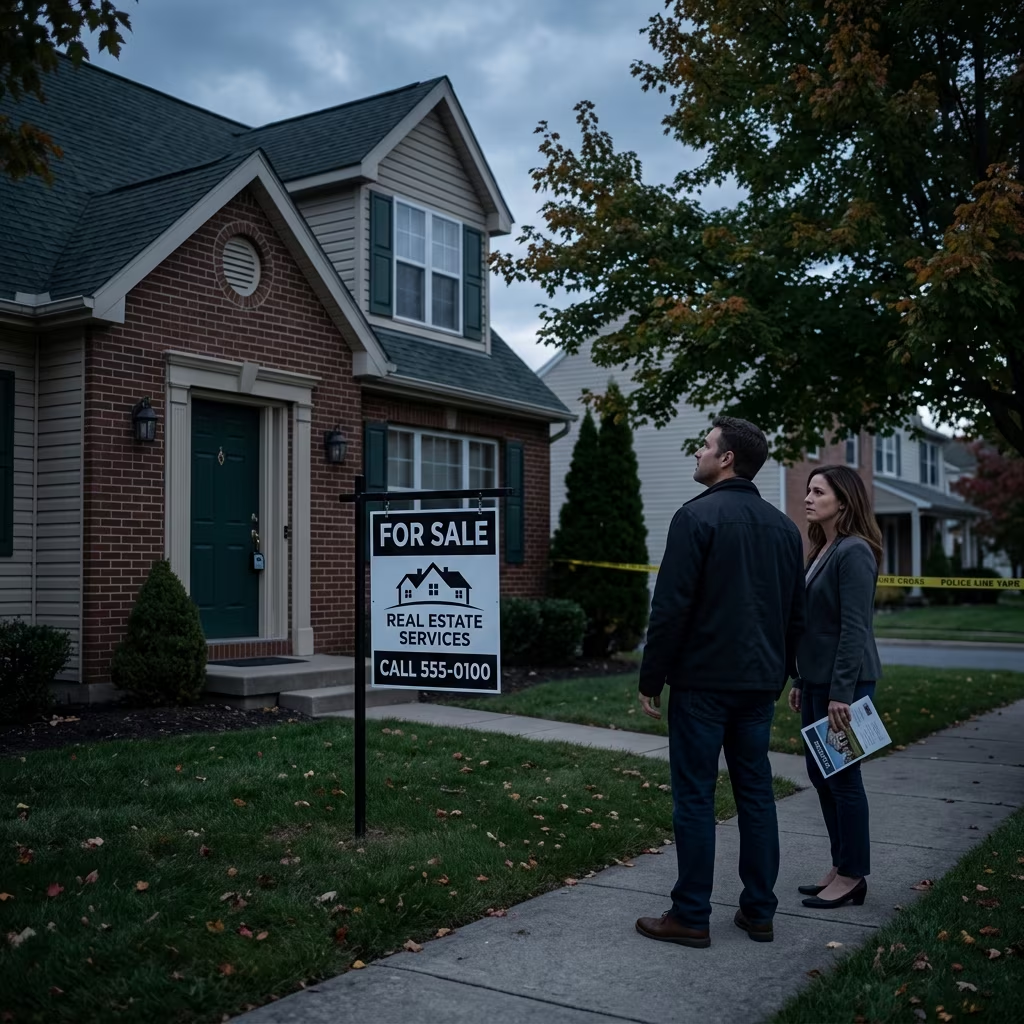
The sale of a home is usually about location, price, and physical condition. But what happens when a property carries a disturbing past, such as a murder‑suicide? In Pennsylvania, the state’s highest court has ruled that such an event does not have to be disclosed as a legal matter of course, because it is treated as a psychological stigma rather than a physical defect.
This article explains what that means for buyers, sellers, and real estate professionals, using the Pennsylvania Supreme Court’s decision in Milliken v. Jacono as a focal point. While the case is specific to Pennsylvania, the reasoning illustrates broader tensions in real estate law between market expectations, moral intuitions, and legal obligations.
Understanding Material Defects vs. Psychological Stigmas
Most states, including Pennsylvania, require residential sellers to disclose certain problems with a property, typically referred to as material defects. These laws are designed to protect buyers from hidden issues that affect the safety, value, or usability of the home.
What is a Material Defect?
A material defect is generally understood as a significant problem with the property’s condition that:
- Has a substantial impact on the property’s value or desirability;
- Poses a safety or health risk;
- Is not readily observable to a typical buyer;
- Relates to the physical structure, systems, or environmental conditions.
Examples often include:
- Serious foundation cracks or structural instability;
- Chronic water intrusion, toxic mold, or termite damage;
- Defective electrical systems posing fire hazards;
- Known environmental contamination (e.g., leaking underground tanks).
What is a Psychological Stigma?
A psychological stigma describes non-physical information about a property that some buyers find deeply troubling, even though it does not alter the building’s physical condition. In the context of housing, this can include:
- A prior murder‑suicide or other violent crime in the home;
- A history of being used for illegal activities, such as drug manufacturing;
- Association with notorious individuals or high-profile scandals;
- Claims that the property is “haunted” or otherwise disturbing.
Psychological stigmas can affect how buyers perceive value, but they are not defects in the structure or systems themselves. The Pennsylvania Supreme Court specifically emphasized that a tragic event in a house “does not affect the quality of the real estate,” which is what seller disclosure duties are designed to address.
The Milliken v. Jacono Case: Key Facts and Holding
Milliken v. Jacono arose from the sale of a home in Pennsylvania where a prior owner had committed a murder‑suicide inside the house. The buyer later learned of the event through a neighbor and claimed she would not have bought the home—or would have paid less—had she known the history.
Core Legal Questions
The case presented two central legal questions to the Pennsylvania Supreme Court:
- Does a prior murder‑suicide inside a home constitute a material defect under Pennsylvania’s Real Estate Seller Disclosure Law (RESDL)?
- Did the seller or broker have a duty to disclose this history, and could failure to do so support claims of fraud, negligent misrepresentation, or violations of consumer protection law?
The Supreme Court’s Decision
The Pennsylvania Supreme Court held that a murder‑suicide inside the home is a psychological stigma, not a material defect, and therefore does not need to be disclosed under the RESDL.
| Issue | Court’s View |
|---|---|
| Is murder‑suicide a material defect? | No. It is a psychological stigma, not a physical defect. |
| Duty to disclose under RESDL? | No duty to disclose purely psychological stigmas. |
| Fraud or misrepresentation for nondisclosure? | No fraud or negligent misrepresentation because no material fact was misrepresented. |
| Consumer protection claims (UTPCPL) | No duty to disclose under the statute for this type of stigma. |
The Court stressed several points in reaching its conclusion:
- Disclosure laws focus on observable physical conditions, not subjective reactions to events.
- It would be extremely difficult to define and police a consistent duty to disclose every possible disturbing event that might affect some buyers’ perceptions.
- Information about a notorious murder‑suicide was publicly accessible and therefore discoverable by a reasonably diligent buyer.
How Pennsylvania’s Disclosure Law Works
Pennsylvania’s Real Estate Seller Disclosure Law requires sellers of residential real estate to provide a written disclosure of known material defects. A standard form is commonly used in transactions, addressing structural, mechanical, and environmental aspects of the property.
Scope of Required Disclosures
Under Pennsylvania law and practice, sellers must disclose known material defects relating to:
- Structural components (roof, foundation, walls);
- Systems (plumbing, electrical, heating and cooling);
- Water problems, mold, or pest infestations;
- Environmental or safety issues (e.g., radon, asbestos, lead-based paint).
The statute does not expressly require disclosure of psychological stigmas such as prior crimes or deaths in the home. The Supreme Court confirmed that purely psychological stigmas fall outside the scope of mandatory disclosure.
Voluntary Disclosure and Its Limits
In Milliken, the seller used a relatively broad disclosure form and shared more information than strictly required about some aspects of the property. The buyer argued that by voluntarily disclosing more, the seller had expanded their legal duty and should have included the murder‑suicide as well.
The Court rejected this argument, explaining that voluntarily sharing extra information does not create new, involuntary obligations to disclose every possible stigma. In other words, being candid about one category of facts does not legally force the seller to disclose unrelated psychological stigmas.
Implications for Sellers and Real Estate Professionals
The ruling provides clarity for Pennsylvania sellers and licensees dealing with properties that may be considered psychologically stigmatized.
What Sellers Are Not Required to Disclose
Absent a specific question from the buyer or a contractual obligation, Pennsylvania sellers are generally not required to disclose:
- Prior murder‑suicide or other violent crimes at the property;
- Suicide, natural death, or accidental death in the home;
- Reputation-based stigmas, such as alleged hauntings.
These events may still affect market value, but they are not treated as material defects under the RESDL.
Professional Judgment and Ethics
Real estate agents and brokers must navigate both legal rules and professional norms. Trade groups in Pennsylvania emphasize that:
- There is no automatic duty to inquire about stigmatizing events when listing a property.
- If an agent learns of such an event, they should discuss disclosure options with the seller and ensure both parties are comfortable with the chosen approach.
- If a seller’s decision about disclosure conflicts with the agent’s comfort or risk tolerance, the agent can decline the listing.
Transparency may sometimes be chosen for business or ethical reasons, even when not legally required. However, the Court’s ruling confirms that failure to disclose psychological stigmas alone will not typically support legal claims of fraud or misrepresentation in Pennsylvania.
Practical Guidance for Homebuyers in Pennsylvania
For buyers who care deeply about a property’s history, the Milliken decision offers a clear takeaway: you must ask if you want this information.
Questions Buyers Should Consider Asking
Buyers who want to avoid psychologically stigmatized properties can take proactive steps:
- Directly ask the seller or listing agent:
“Has there been any homicide, suicide, or other violent crime on this property?” - Follow up with questions about other disturbing events, such as major drug activity or notorious public incidents.
- Request written answers or include disclosure requirements in any offers.
Under Pennsylvania law, when a buyer asks a direct question, the seller and agent are legally obligated to answer truthfully. A false answer could support claims of fraud or misrepresentation.
Using Contract Language to Make Stigmas Material
One strategy is to make psychological stigmas contractually material. Some Pennsylvania practitioners recommend adding specific language to the agreement of sale, stating that:
- The buyer’s offer is conditioned on truthful disclosure of any known homicide, suicide, or other violent crime in the home;
- Nondisclosure of such events will be treated as a material misrepresentation;
- The buyer has the right to terminate the contract if later information contradicts the seller’s statements.
With such clauses, a seller’s failure to disclose a known stigmatizing event can be treated as a breach of contract or fraud, even though the law alone does not classify the event as a material defect.
Independent Research and Due Diligence
Buyers can also investigate property history independently:
- Search local news archives for the property address;
- Check public court records or police reports where available;
- Speak discreetly with neighbors or nearby businesses about the property’s past.
The Pennsylvania Supreme Court noted that the murder‑suicide in Milliken was widely reported and therefore discoverable through public sources. This reinforces the expectation that buyers have some responsibility for conducting their own research, especially about non-physical matters.
Comparative Perspective: Other Jurisdictions and Trends
Pennsylvania’s approach is not universal. Some jurisdictions explicitly treat certain psychological stigmas differently, and courts elsewhere have at times suggested that nondisclosure of a murder‑suicide can create liability.
In earlier litigation in Pennsylvania before the Supreme Court’s final ruling, a lower appellate court indicated that a murder‑suicide might constitute a material defect if it significantly affected property value under the RESDL. The Supreme Court ultimately rejected that reasoning, but the earlier view illustrates how judges may disagree about the legal significance of such events.
Nationally, states vary in whether they require disclosure of deaths, crimes, or other stigmas, and some have statutes expressly limiting liability for failure to disclose such information. Buyers and sellers transacting across state lines should therefore seek local legal guidance to understand the specific rules that apply.
Frequently Asked Questions (FAQs)
Do Pennsylvania sellers have to disclose a murder‑suicide that occurred inside the home?
No. Under the Pennsylvania Supreme Court’s decision in Milliken v. Jacono, a murder‑suicide is considered a psychological stigma, not a material defect, so there is no automatic duty to disclose it under the Real Estate Seller Disclosure Law.
If I ask directly whether a crime occurred in the house, must the seller answer truthfully?
Yes. While sellers need not volunteer stigmatizing information, they must answer direct questions truthfully. Providing false information in response to a buyer’s inquiry can support claims of fraud or misrepresentation.
Can I add contract terms requiring disclosure of homicide or suicide on the property?
Yes. Buyers can make psychological stigmas contractually material by including language in the purchase agreement that obligates the seller to disclose any known homicide, suicide, or violent crime and provides remedies if the seller fails to do so.
Are real estate agents required to investigate whether a home is stigmatized?
No. Pennsylvania real estate professionals are not required to proactively investigate whether stigmatizing events occurred. However, if they know of such events, they should discuss disclosure options with the seller and may decline the listing if they are uncomfortable with nondisclosure.
Does this decision mean psychological stigmas never matter legally?
No. Psychological stigmas can still influence market value, negotiations, and contract terms. They may also become legally relevant if misrepresented after a buyer specifically asks, or if the parties agree to treat them as material through contract language.
References
- Milliken v. Jacono, J-87-2013 Majority Opinion — Supreme Court of Pennsylvania. 2014-07-21. https://www.pacourts.us/assets/opinions/Supreme/out/J-87-2013mo%20-%201018811082429662.pdf
- Psychological Stigmas Are Not Material Defects, No Duty To Disclose — Scolieri Law. 2014-08-06. https://scolierilaw.com/pennsylvanias-seller-disclosure-law-clarified-psychological-stigmas-are-not-material-defects-no-duty-to-disclose/
- Disclosure of Murder Selling Your House in Pennsylvania — Klenk Law. 2014-08-05. https://www.klenklaw.com/blog/pennsylvania-disclosure-murder-requirements-selling-property-home/
- Murder-suicide does not have to be disclosed in house sale, Pa. high court says — WHYY (NPR Member Station). 2014-08-04. https://whyy.org/articles/murder-suicide-does-not-have-to-be-disclosed-in-house-sale-pa-high-court-says/
- Murder-Suicide In A House Needn’t Be Disclosed By Seller To Buyer — Fox Rothschild LLP via Mondaq. 2014-08-12. https://www.mondaq.com/unitedstates/real-estate/331762/pa-supreme-court-murder-suicide-in-a-house-neednt-be-disclosed-by-seller-to-buyer
- Murder-suicide disclosure: implications of the court’s decision — Pennsylvania Association of Realtors. 2014-08-05. https://www.parealtors.org/blog/implications-murder-suicide-disclosure/