
Mortgage Protections for Servicemembers and Veterans
Understand how federal laws and VA programs can shield your home and lower costs when military service affects your mortgage payments.
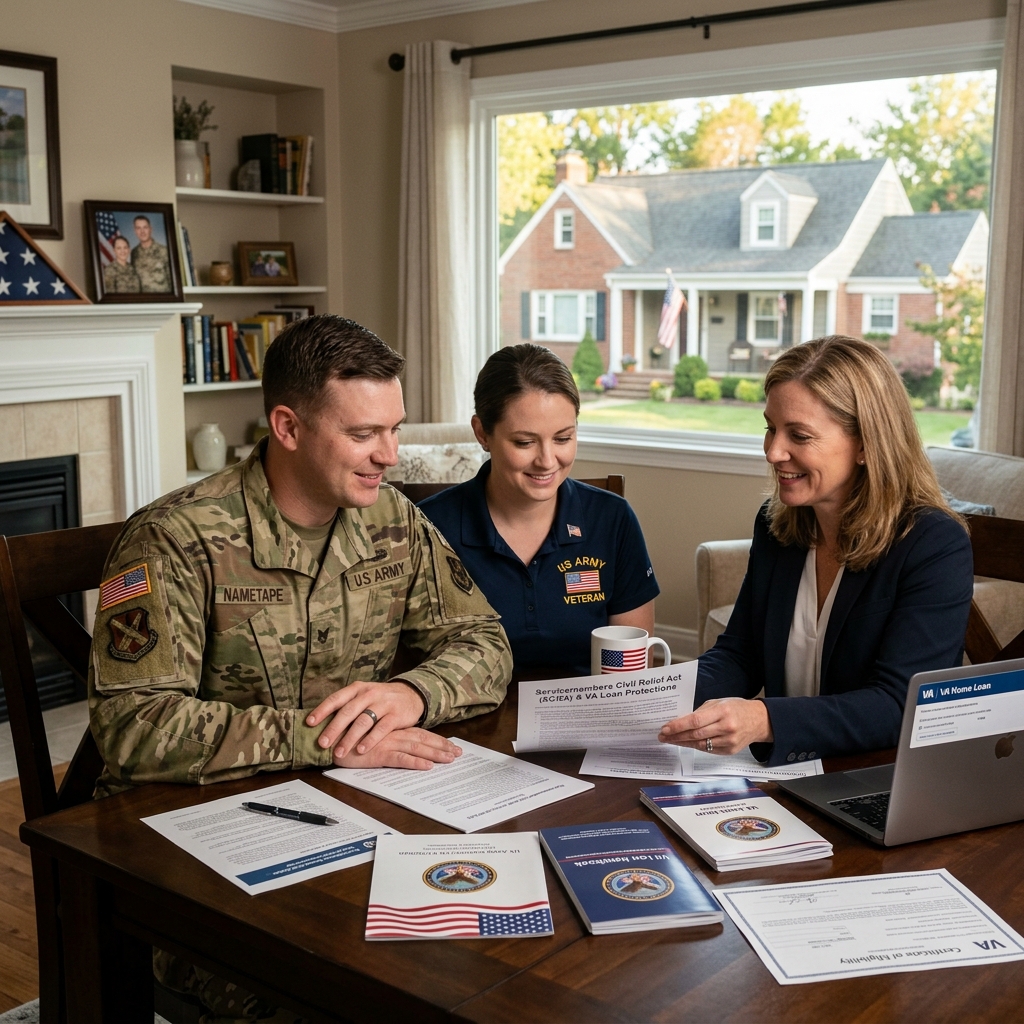
Your current or prior military service unlocks important legal protections and housing assistance benefits that can make it easier to keep your home or recover from financial hardship related to service.
This guide explains those protections in practical terms, focusing on how they apply to your mortgage, what steps you can take if you fall behind, and which agencies and programs can help.
Why Military Service Changes Your Mortgage Rights
Servicemembers and veterans often face unique financial pressures: deployments, frequent moves, sudden changes in income, and injuries or disabilities connected to service. Because of this, federal law gives you extra safeguards that civilian borrowers do not have.
- Servicemembers Civil Relief Act (SCRA) – Limits interest rates, restricts foreclosures, and protects against certain legal actions while you are on active duty and for a period afterward.
- Department of Veterans Affairs (VA) home loan program – Offers guarantees, refinancing options, and loss-mitigation tools specific to VA-backed mortgages.
- Consumer financial protections – Federal consumer protection agencies monitor how mortgage companies treat servicemembers and can take action if your rights are violated.
Understanding these tools can help you respond quickly if you have trouble paying your mortgage or are threatened with foreclosure.
Core Legal Protections Under the SCRA
The Servicemembers Civil Relief Act (SCRA) is a federal law designed to reduce financial stress when you enter active military service. It applies to many types of obligations, including mortgages taken out before you entered service.
1. Court Order Required Before Foreclosure
If you obtained your mortgage before starting active duty, the SCRA requires your lender to obtain a court order before foreclosing on your home during your period of service and for one year afterward.
- The mortgage must have been originated prior to your military service for this protection to apply.
- Non-judicial (out-of-court) foreclosures are generally prohibited unless a judge has reviewed the case and authorized the action.
- Courts have authority to delay (“stay”) proceedings if your service affects your ability to participate in the case.
If you receive a foreclosure notice and you are serving or recently separated, it is critical to inform the court and the lender of your military status and request SCRA protections.
2. Interest Rate Cap on Pre-Service Mortgage Debt
The SCRA caps the interest rate on certain debts, including qualifying mortgages, at 6 percent when they were incurred before you entered military service.
- The cap applies during your period of military service and for one year after leaving active duty.
- Any interest above 6 percent must generally be forgiven, not just deferred.
- You typically need to notify your lender in writing and provide a copy of your orders to invoke this protection.
Reducing your interest rate can lower your monthly mortgage payment and make it easier to stay current while you serve.
3. Protection Against Default Judgments and Evictions
The SCRA also shields you from certain legal actions taken without your knowledge.
- Default judgments: If a creditor sues you and you cannot appear because of military service, the court must review your status and may appoint a guardian ad litem to protect your interests.
- Evictions: Landlords generally must obtain a court order to evict active duty servicemembers or their dependents from a residence.
While these protections are broader than mortgages alone, they can indirectly impact your ability to maintain housing stability.
Mortgage Options for Veterans and Servicemembers
In addition to SCRA protections, you may be eligible for specialized mortgage products and assistance programs through the Department of Veterans Affairs (VA) and lenders that work with military families.
VA-Backed Home Loans
VA home loans help eligible servicemembers, veterans, and some surviving spouses buy, build, or refinance a home under favorable terms.
| Feature | Typical Benefit |
|---|---|
| Down payment | Often no down payment required, subject to loan limits and lender standards. |
| Mortgage insurance | No private mortgage insurance (PMI) requirement, which can lower monthly costs. |
| Eligibility | Available to qualifying veterans, active duty servicemembers, and some surviving spouses. |
| VA guarantee | VA guarantees part of the loan, reducing lender risk and supporting more favorable terms. |
While the VA does not itself lend money in most cases, it sets standards and provides guarantees that shape how private lenders structure these loans.
Interest Rate Reduction Refinance Loan (IRRRL)
If you already have a VA-backed mortgage, you may be eligible for an Interest Rate Reduction Refinance Loan (often called a VA streamline refinance).
- Allows you to replace your existing VA loan with a new one at a lower interest rate when market conditions are favorable.
- Generally requires that you currently live in the home or have lived in it previously.
- Can reduce monthly payments and, in some cases, help stabilize your budget after service-related income changes.
Refinancing is not right for everyone, but understanding this option can be valuable if mortgage rates fall or your current payment is difficult to sustain.
What to Do If You Are Struggling With Mortgage Payments
Financial difficulty is common during deployment, after separation from service, or following a major life event such as injury or disability. If you are behind or expect to fall behind on your mortgage, prompt action is crucial.
Step 1: Review Your Military-Related Protections
- Confirm whether your mortgage was originated before your active duty service to determine SCRA eligibility for foreclosure and interest rate protections.
- Check your current duty status and service dates to see how long your protections apply, including any post-service extension.
- Gather documentation such as orders, discharge papers, and loan statements before contacting your lender.
Step 2: Contact Your Mortgage Servicer
Mortgage servicers generally must work with homeowners to explore loss mitigation options, especially when protected by federal laws and VA programs.
- Explain that you are a servicemember or veteran and reference any SCRA or VA protections you believe apply.
- Ask about available options, which may include repayment plans, loan modifications, or temporary forbearance.
- Document all communications, including dates, names, and summaries of conversations.
Step 3: Explore VA and Nonprofit Assistance
The VA provides dedicated housing assistance resources that can help you understand your options and coordinate with your lender.
- VA loan technicians may work with borrowers whose VA-backed loans are delinquent to explore alternatives to foreclosure.
- Veteran-focused legal and housing organizations can explain SCRA rights, fair housing protections, and state-level benefits.
- Consumer protection agencies, including federal regulators, accept complaints if you believe your mortgage company is not honoring your rights.
Using these resources can improve your chances of avoiding foreclosure and keeping your home.
Additional Protections Related to Disability and Fair Housing
Many veterans live with service-connected disabilities that can affect their housing needs. Federal fair housing laws offer protections against discrimination and support reasonable accommodations.
- Fair Housing Act: Prohibits discrimination in housing based on disability, among other protected characteristics.
- Reasonable accommodations: Housing providers may need to adjust rules or policies to allow veterans with disabilities full use of their homes, such as permitting service animals or accessible parking.
- Reasonable modifications: Structural changes, such as installing ramps or grab bars, can be requested when disability-related and necessary.
These protections complement mortgage-specific rights by helping ensure that your home environment works for your health and daily life.
Quick Reference: Key Rights at a Glance
- Foreclosure Protections: Court order generally required for pre-service mortgages during active duty and for one year after.
- Interest Rate Relief: Cap at 6 percent on qualifying pre-service debt during and after military service.
- VA Home Loan Benefits: Access to VA-backed purchase and refinance loans, often with favorable terms.
- VA IRRRL (Streamline Refinance): Potentially lower interest and payments for existing VA loans.
- Fair Housing Protections: Anti-discrimination and accommodation rights for veterans with disabilities.
Frequently Asked Questions (FAQs)
Does the SCRA apply to every mortgage I have?
No. The SCRA protections described here typically apply to obligations that were incurred before you entered active military service, including mortgages. If you took out a loan after starting active duty, other protections may still apply, but the interest rate cap and foreclosure rules may be different.
How do I request the 6 percent interest rate cap?
You generally must send written notice to your lender, along with a copy of your military orders. The creditor must then reduce the interest rate to no more than 6 percent for the covered period and forgive interest above that cap. Check with your lender for any specific forms they require.
Can my lender foreclose while I am deployed?
If your mortgage was obtained before you entered service, your lender generally cannot foreclose without a court order during your service and for one year afterward. If you receive foreclosure notices while deployed, contact a legal assistance office, the VA, or a housing counselor immediately.
What if I already have a VA loan and my payments are too high?
You may be eligible for an Interest Rate Reduction Refinance Loan (IRRRL) to lower your interest rate or monthly payment. You should review current market rates and discuss options with a lender and, if necessary, a VA loan technician.
Are veterans with disabilities protected against housing discrimination?
Yes. Veterans with qualifying disabilities are protected under federal fair housing laws, which prohibit disability discrimination and require reasonable accommodations and modifications when necessary to ensure equal use of a dwelling.
Where can I get help if my rights are violated?
If you believe a lender, landlord, or mortgage servicer is ignoring your SCRA or fair housing rights, you can contact the U.S. Department of Justice, the Department of Veterans Affairs, or a qualified legal aid organization for assistance and possible enforcement.
References
- Protections for Servicemembers and Veterans — Consumer Financial Protection Bureau. 2024-03-01. https://www.consumerfinance.gov/housing/housing-insecurity/help-for-homeowners/protections-for-servicemembers-and-veterans/
- Financial and Housing Rights — U.S. Department of Justice, Civil Rights Division. 2023-06-15. https://www.justice.gov/servicemembers/financial-and-housing-rights-0
- VA Housing Assistance — U.S. Department of Veterans Affairs. 2024-02-20. https://www.va.gov/housing-assistance/
- Housing Protections for Servicemembers Check-Sheet — Fair Housing Center of Central Indiana. 2025-10-01. https://www.fhcci.org/wp-content/uploads/2025/10/Housing-Protections-for-Servicemembers-Check-Sheet.pdf
- Complying with Laws Protecting Veterans & Military Servicemembers — The Habitat Group. 2022-11-10. https://www.thehabitatgroup.com/articles/7168
- Why Fair Housing Protections Are Essential for Veterans with Disabilities — Equal Housing Center. 2023-09-05. https://www.equalhousing.org/fair-housing-topics/why-fair-housing-protections-are-essential-for-veterans-with-disabilities/
Similar Articles








Read full bio of Sneha Tete




