Producing moonshine, the high-proof distilled spirit often associated with clandestine operations, remains largely prohibited under U.S. federal law without proper permits. While a handful of states permit limited personal production, violations can lead to severe penalties including fines, imprisonment, and property forfeiture. This article delves into the regulatory framework, historical origins, state-by-state rules, risks involved, and lawful paths forward for those intrigued by distillation.
Defining Moonshine and Its Cultural Roots
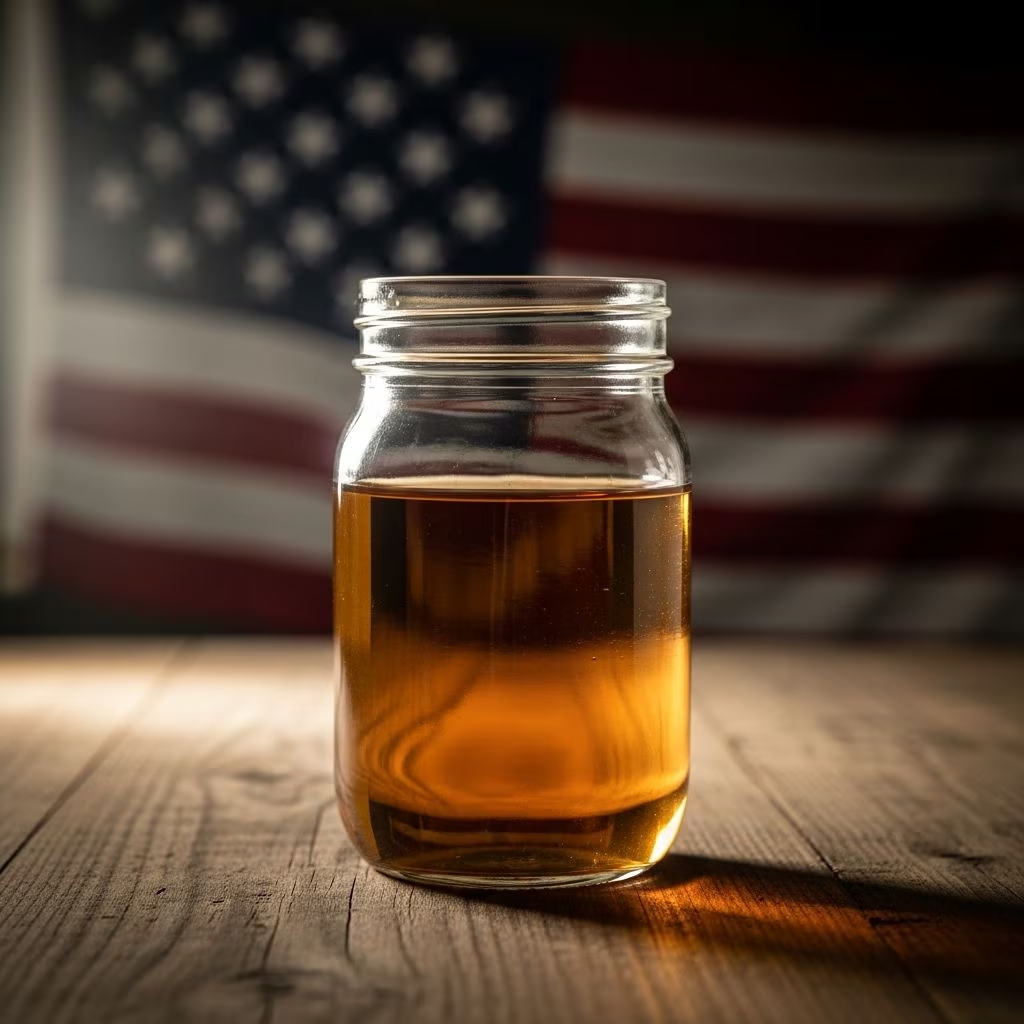
Moonshine refers to unaged, high-proof liquor typically produced from corn mash through distillation, historically crafted in secret to evade authorities. The term evokes images of nighttime operations under moonlight to avoid detection, a practice rooted in early American frontier life where settlers distilled spirits for personal use and trade.
Today, commercial brands market ‘legal moonshine’ using traditional methods but under licensed operations, lending the product an air of rebellion while complying with regulations. However, home production without authorization crosses into illegality, driven by concerns over taxation, safety, and public health.
Federal Regulations Governing Distillation
Under federal law, distilling alcohol at home for beverage consumption is strictly banned, regardless of quantity or intent to sell. The Alcohol and Tobacco Tax and Trade Bureau (TTB), part of the U.S. Department of the Treasury, enforces these rules through 26 U.S.C. § 5601, which criminalizes unregistered stills set up for alcohol production.
Key prohibitions include:
- Operating a still without a distilled spirits permit.
- Producing ethanol for drinking without federal approval.
- Failing to register distilling equipment intended for alcohol.
Stills under 1 gallon don’t require serial numbers if not used for alcohol, but any distillation for consumption demands permits. Fuel alcohol production is allowable with a TTB fuel permit, but agents may inspect to ensure no diversion to beverages.
Penalties for federal violations encompass up to 5-10 years imprisonment, fines exceeding $10,000, still seizure, and property forfeiture. Tax evasion charges amplify consequences during large-scale operations.
State-Level Variations in Moonshine Legality
While federal law sets a baseline prohibition, states impose their own rules, with a few carving out exceptions for personal use. Most states mirror or exceed federal restrictions, classifying unlicensed distillation as a felony.
| State | Status | Key Restrictions |
|---|---|---|
| Alaska | Legal | Personal use only; no sales or transport. |
| Arizona | Legal | Requires permit and still registration for personal use. |
| Maine | Legal | Up to 24 proof gallons per adult per year. |
| Massachusetts | Legal | Personal use on own property; transport implies intent to sell. |
| Missouri | Legal | Up to 200 gallons annually for personal use. |
| New Hampshire | Legal | From 100/200 gallons of beer/wine per person/household yearly. |
| North Dakota | Legal (Limited) | Up to federal allowance (effectively zero gallons). |
| All Others (e.g., California, New York) | Illegal | No personal production allowed; mirrors federal ban. |
This table summarizes 2026 data; always verify current statutes as laws evolve. In permissive states, exceeding limits or selling triggers federal intervention.
Historical Context: From Prohibition to Modern Enforcement
Moonshining surged during the Civil War era when the Revenue Act of 1862 imposed excise taxes on spirits to fund the Union effort. Distillers in Appalachia and the South resisted, birthing a culture of evasion that persists in folklore.
Prohibition (1920-1933) under the 18th Amendment intensified illegal production, with bootleggers supplying demand until repeal. Post-1933, focus shifted to taxation, enforced initially by the Bureau of Alcohol, Tobacco, Firearms and Explosives (ATF), now primarily state agencies alongside TTB.
Unlike homebrewing beer or wine—legal since 1978—spirits distillation remains off-limits federally due to higher excise revenues and distillation’s risks, such as methanol production if improperly done.
Dangers Beyond Legality: Health and Safety Risks
Illicit moonshine poses significant hazards. Improper distillation can yield methanol, causing blindness, organ failure, or death. Lead contamination from makeshift stills (e.g., car radiators) leads to poisoning.
Fire risks from volatile vapors are acute; explosions have destroyed homes. Law enforcement raids add dangers of armed confrontations. Even in legal states, consumers must ensure safe practices to avoid health issues.
Penalties for Getting Caught: What to Expect
Consequences vary by scale and jurisdiction:
- First-time small-scale offenders: Misdemeanor charges, fines $1,000-$5,000, still confiscation.
- Commercial operations: Felony, 5+ years prison, $250,000+ fines, asset forfeiture.
- Repeat or sales-related: Federal charges, up to 10 years, lifetime bans on alcohol handling.
ATF/TTB stings target unregistered stills via tips or surveillance. Defenses may hinge on proving non-beverage use, but courts rarely sympathize with ‘personal use’ claims absent permits.
Legal Alternatives for Distillation Enthusiasts
Permits offer legitimacy:
- Fuel Alcohol Permit: Free from TTB for ethanol fuel; no beverage use.
- Distilled Spirits Plant Permit: Costly ($1,000+ fees), for commercial production.
Non-alcohol distillation is unrestricted: essential oils, water, perfumes. Homebrewing beer/wine (up to 200 gallons/household) provides legal fermentation fun. Craft distilleries welcome tours and classes.
Owning stills is legal if not used for alcohol; register if TTB inquires.
Common Misconceptions Debunked
- ‘Small stills are okay’: No; any alcohol distillation needs permits regardless of size.
- ‘Personal use is fine federally’: False; beverage distillation banned outright.
- ‘It’s just tradition’: Cultural appeal doesn’t override law.
Frequently Asked Questions (FAQs)
Is it ever legal to distill moonshine at home in the US?
Yes, in limited states like Alaska and Missouri for personal use only, with strict caps. Federally, no without permits.
What happens if I own a still but don’t use it for alcohol?
Legal; stills for non-beverage purposes (oils, fuel with permit) are permitted.
Can I sell homemade moonshine legally?
No, sales require federal and state liquor licenses, extensive compliance.
How do authorities detect illegal distilling?
Through odors, tips, utility spikes, or equipment purchases; raids follow.
What’s the difference between moonshine and legal white whiskey?
Legal versions from permitted distilleries pay taxes and meet safety standards.
Navigating Compliance: Steps for Aspiring Distillers
Research local laws via state revenue departments. Apply for TTB permits online. Consult attorneys for border-line cases. Join legal brewing communities for guidance. Prioritize safety with proper equipment.
Enthusiasm for distillation thrives legally through permitted channels, preserving craft without legal peril.
References
- Moonshine Legal States 2026 — World Population Review. 2026. https://worldpopulationreview.com/state-rankings/moonshine-legal-states
- Why Is Moonshine Illegal? — North Stills. Accessed 2026. https://www.northstills.com/why-is-moonshine-illegal/
- Moonshine — Wikipedia. Accessed 2026. https://en.wikipedia.org/wiki/Moonshine
- Is Moonshine Illegal? (2023) — Clawhammer Supply. 2023. https://www.clawhammersupply.com/blogs/moonshine-still-blog/is-moonshine-illegal
- 26 U.S. Code § 5601 – Criminal penalties — U.S. Government Publishing Office (via Cornell Law). Current as of 2026. https://www.law.cornell.edu/uscode/text/26/5601