
Mold-Related Illnesses and Home Health Risks
Understand how indoor mold affects health, how to reduce exposure, and when medical help is needed.
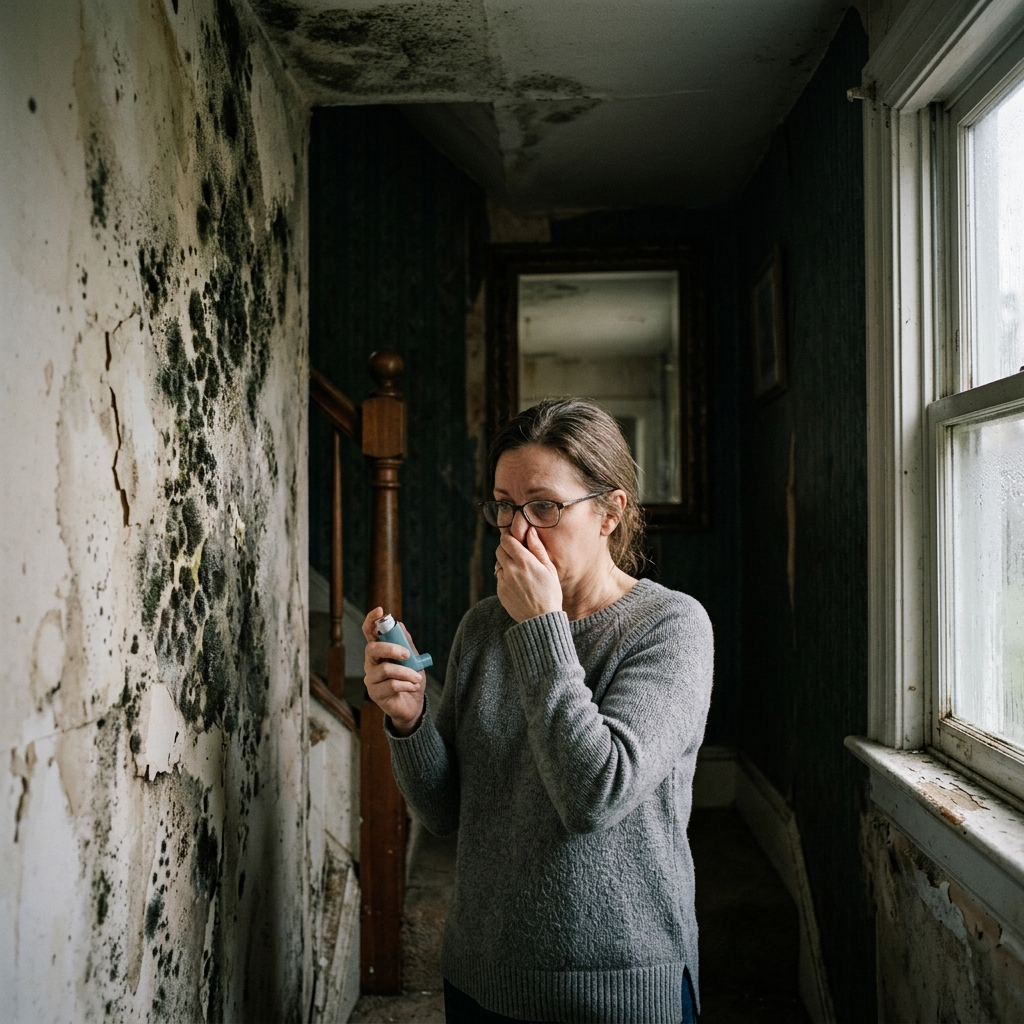
Can Mold in a Home Make People Sick?
Mold can affect health in different ways, depending on the type of mold, the amount of exposure, and a person’s sensitivity. Public health and medical sources agree that indoor mold may trigger allergy-like symptoms, worsen asthma, and irritate the eyes, nose, throat, and skin. In some situations, repeated exposure to damp indoor environments has also been linked to more serious lung inflammation.
The most important point is that mold is usually a moisture problem first and a health issue second. If a home has a hidden leak, poor ventilation, or persistent dampness, mold can spread behind walls, under flooring, and inside HVAC systems. That creates ongoing exposure that may continue until the source of moisture is fixed.
Common Health Effects Linked to Mold
Many people notice symptoms soon after spending time in a moldy building. The symptoms often resemble seasonal allergies or a mild respiratory infection. According to major health sources, common reactions include the following:
- Stuffy or runny nose
- Sneezing
- Coughing
- Wheezing
- Itchy, red, or watery eyes
- Sore throat
- Skin irritation
People with asthma or mold allergy may have more noticeable symptoms because mold spores can act as triggers. The EPA notes that mold can cause asthma attacks in people with asthma who are allergic to mold, while the American Lung Association lists worsening asthma, coughing, sneezing, and nasal congestion among common effects.
When Mold Exposure Becomes More Serious
Most healthy people do not develop a severe infection from ordinary household mold exposure, but some exposures deserve special attention. Researchers and medical institutions have reported that damp indoor mold can be associated with inflammatory lung disease, including hypersensitivity pneumonitis, which is an immune reaction in the lungs. This condition is different from a simple allergy because it can involve deeper inflammation and breathing problems.
People with weakened immune systems face a different type of risk. The CDC explains that invasive mold infections can affect blood vessels, deep tissues, or organs, and they are more likely to occur in people whose immune defenses are impaired. Those individuals should avoid participating in mold cleanup and should seek medical guidance quickly if they suspect serious exposure.
Who Is Most Vulnerable to Mold Problems?
Some people are more likely than others to react to indoor mold. Risk is higher for people with asthma, mold allergy, chronic lung disease, or weakened immune systems. Very young children, older adults, and people with ongoing respiratory conditions may also be more affected because their bodies have less reserve when breathing becomes difficult.
That said, even people without known health conditions may notice symptoms if the exposure is intense or long-lasting. A musty odor, visible staining, or repeated dampness should never be ignored, because the longer mold remains in place, the more difficult it becomes to control the source and limit exposure.
How Mold Usually Enters the Home
Mold does not appear by chance. It grows where water is present. Common entry points include roof leaks, plumbing leaks, basement seepage, condensation on windows, poor bathroom ventilation, and excess indoor humidity.
Typical trouble spots include bathrooms, laundry areas, around sinks, under cabinets, near windows, and inside air-conditioning or heating systems. In many homes, the first visible sign is a dark patch on drywall, a fuzzy area on grout, or a persistent musty smell. In some cases, the real source is hidden behind walls or under flooring, which means surface cleaning alone will not solve the problem.
What Mold-Related Symptoms Can Look Like
Mold symptoms can be frustrating because they often overlap with other common problems. A person may think they have a cold, a sinus infection, or seasonal allergies when the real trigger is a damp indoor environment. Harvard Health reports that prolonged exposure to indoor mold may contribute to asthma, lung inflammation, and even cognitive or mood-related complaints.
Because symptoms are nonspecific, the pattern matters. If congestion, coughing, or eye irritation improves when a person leaves the building and returns when they come back, indoor exposure becomes more suspicious. That pattern is especially important for people living or working in buildings with water damage, flooding history, or recurring leaks.
Prevention: The Best Strategy Is Controlling Moisture
The most effective way to reduce mold is to prevent it from growing in the first place. Multiple health authorities recommend keeping indoor humidity below 50 percent, fixing leaks quickly, improving ventilation, and drying wet materials as soon as possible.
- Repair leaks promptly in roofs, walls, pipes, and appliances.
- Use exhaust fans in bathrooms and kitchens.
- Run a dehumidifier in damp rooms or basements.
- Direct water away from the foundation using proper drainage and gutters.
- Keep indoor humidity in check with a hygrometer if needed.
- Clean and dry wet surfaces fast after spills or water intrusion.
These steps matter because mold spores are common in the environment, but they need moisture to grow. Reducing dampness helps interrupt that cycle before colonies spread.
How to Handle Small Amounts of Mold Safely
Small areas of mold on hard surfaces can often be cleaned by homeowners if the source of moisture has been addressed. The EPA and the American Lung Association recommend using soap and water or a mild detergent, scrubbing the area, and drying it completely afterward. Health sources also advise wearing gloves, goggles, and ventilation protection when cleaning mold.
Porous materials are different. Carpet, ceiling tiles, insulation, or drywall that has been soaked may need to be removed and discarded because they are difficult to clean thoroughly. If the mold area is large, if sewage or floodwater is involved, or if the cause is unclear, professional remediation is the safer option.
When Professional Help Is a Better Choice
Not every mold problem is a simple weekend project. Professional help is usually wise when mold covers a large area, when there is hidden damage, when mold keeps returning, or when anyone in the home has asthma or immune suppression. If the problem was caused by contaminated water, the cleanup may require specialized equipment and disposal procedures.
Professional inspectors can sometimes identify the moisture source that a homeowner cannot see. That may include a slow leak in a wall cavity, a damaged roof membrane, a clogged condensate drain, or poor airflow in an attic or crawl space. Until the source is fixed, mold cleanup is only temporary.
How Doctors Evaluate Mold-Related Health Concerns
Doctors usually begin by asking about symptoms, environmental exposure, and whether symptoms improve away from the building. In straightforward cases, the issue may be managed as an allergy or asthma flare. In more complex cases, a clinician may consider whether damp-building exposure is contributing to a lung condition such as hypersensitivity pneumonitis.
Medical evaluation becomes especially important if a person has shortness of breath, persistent coughing, chest tightness, fever, or worsening asthma. Severe or persistent symptoms should not be assumed to be “just mold” without a proper medical assessment, because multiple respiratory illnesses can look similar.
Practical Questions People Often Ask
| Question | Helpful answer |
|---|---|
| Is all mold dangerous? | Not all mold causes illness, but any indoor mold suggests excess moisture and can still trigger symptoms in sensitive people. |
| Can mold symptoms go away on their own? | Symptoms may improve after leaving the exposure, but they often return if the source of moisture and mold remains. |
| Should I remove moldy materials myself? | Only small, surface-level problems on hard materials are usually appropriate for DIY cleanup; damaged porous materials often need replacement. |
| When should I call a doctor? | Seek medical care if symptoms are severe, long-lasting, or include breathing trouble, chest pain, fever, or worsening asthma. |
FAQs About Mold and Health
Can mold make you feel tired or foggy?
Some people report fatigue or brain fog in damp environments, and Harvard Health notes that prolonged indoor mold exposure may be linked with cognitive and mood issues. Because these symptoms have many causes, they should be evaluated in context rather than assumed to be mold alone.
Does black mold cause unique symptoms?
Health sources generally do not treat “black mold” symptoms as a separate category from other mold reactions. Symptoms more commonly relate to allergy, irritation, or asthma than to a specific color of mold.
Can mold cause a lung infection?
People with weakened immune systems can develop invasive mold infections, which are serious and require prompt medical care. For most people, the more common problem is irritation, allergy, or inflammatory lung response rather than infection.
How can I lower my risk at home?
Fix leaks, keep humidity under control, ventilate bathrooms and kitchens, clean wet surfaces quickly, and remove materials that cannot be dried properly.
References
- Household mold linked to inflammatory lung disease — UT Southwestern Medical Center. 2025-07-01. https://www.utsouthwestern.edu/newsroom/articles/year-2025/july-household-mold-inflammatory-lung-disease.html
- Mold in the home: Identifying and treating the issue to prevent health problems — Harvard Health Publishing. 2025-??-??. https://www.health.harvard.edu/healthy-aging-and-longevity/mold-in-the-home-identifying-and-treating-the-issue-to-prevent-health-problems
- Can mold cause health problems? — U.S. Environmental Protection Agency. 2024-??-??. https://www.epa.gov/mold/can-mold-cause-health-problems
- Mold — American Lung Association. 2024-??-??. https://www.lung.org/clean-air/indoor-air/indoor-air-pollutants/mold
- About Invasive Mold Infections — Centers for Disease Control and Prevention. 2024-??-??. https://www.cdc.gov/fungal/about/about-invasive-mold-infections.html
- Mold allergy – Symptoms & causes — Mayo Clinic. 2024-??-??. https://www.mayoclinic.org/diseases-conditions/mold-allergy/symptoms-causes/syc-20351519
- Black Mold Exposure: Symptoms, Risks & Treatment — Cleveland Clinic. 2024-??-??. https://my.clevelandclinic.org/health/diseases/24862-black-mold
Similar Articles








Read full bio of Sneha Tete


