
Modernizing Laws to Combat Dangerous Swatting Hoaxes
Swatting turns false emergency calls into armed police raids; modern laws are racing to catch up with this deadly digital-age crime.
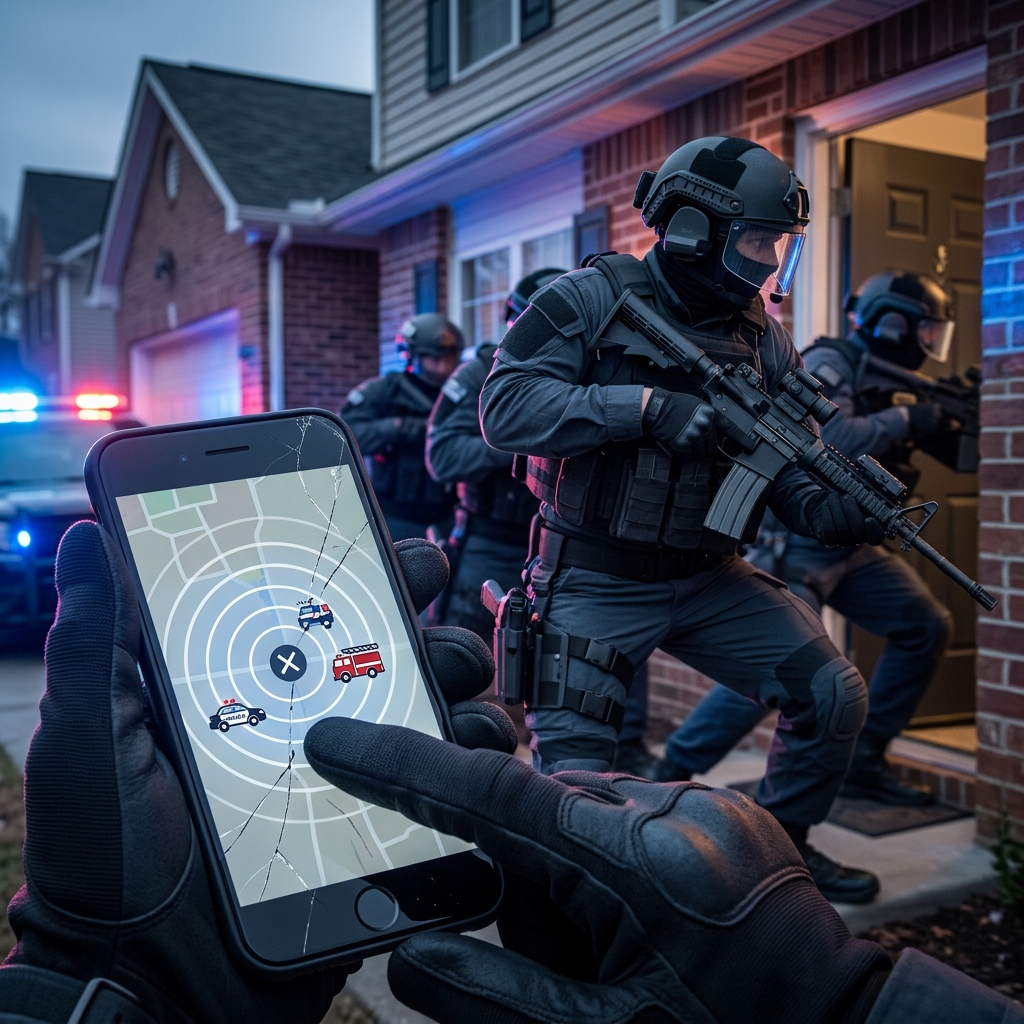
Swatting has emerged as one of the most alarming forms of online-enabled harassment, turning false emergency reports into real-world armed police responses. While existing criminal laws do punish many aspects of swatting, lawmakers and law enforcement agencies are debating whether targeted reforms are necessary to address its unique risks and interstate nature.
What Is Swatting and Why Is It So Dangerous?
Swatting is the act of making a deliberately false, high-risk emergency report to prompt a heavily armed law enforcement response, often involving tactical units such as SWAT teams. The caller typically claims an active shooter, hostage situation, bomb threat, or similar violent crisis at a victim’s location.
The goal is to cause chaos, fear, and potential harm to the victim and responding officers. According to the U.S. Department of Homeland Security, swatting often relies on open-source information and social engineering to identify targets and craft plausible scenarios for law enforcement.
Common Features of a Swatting Incident
- False report of a severe, ongoing threat (e.g., gunfire, explosives, or hostages).
- Use of technology to obscure caller identity, such as spoofed phone numbers or VOIP services.
- Requests for an extreme response, such as deploying tactical units or evacuating buildings.
- Targeting individuals, schools, public officials, or sensitive facilities.
Because officers must assume the reported threat is real, they often arrive with weapons drawn and heightened alert. That creates a substantial risk of injury or death if anyone makes a sudden move, appears to be armed, or if officers misinterpret the situation.
Swatting in the Context of Existing Criminal Law
Despite its relatively recent association with online communities and live-streaming culture, swatting is generally not a legal grey area. Federal law and most state statutes already criminalize false emergency reports, hoaxes, and attempts to hinder or misdirect law enforcement.
Federal Criminal Statutes That Can Apply
Congress has not enacted a standalone federal statute titled “swatting,” but several statutes can be used to prosecute swatting behavior, particularly when it crosses state lines.
- False information and hoaxes (18 U.S.C. § 1038) — This statute covers false reports of criminal activity or terrorism that can lead to emergency responses or government action.
- Threats and interstate communications statutes — Various provisions apply when false reports involve threats, use interstate communications, or interfere with public safety.
Under the hoax statute, penalties scale with the harm caused:
- Up to five years in prison for a basic hoax that triggers emergency response.
- Up to 20 years if serious bodily injury results.
- Life imprisonment if death results from the hoax.
This tiered structure means serious swatting incidents can already carry penalties comparable to other violent felonies.
State Criminal Laws and Penalty Variations
States typically criminalize false reports, misuse of emergency services, and threats, though swatting-specific language is not always present. Penalties vary widely:
| Jurisdiction | Approach to Swatting | Illustrative Penalties |
|---|---|---|
| California | False emergency reports can be misdemeanors; certain hoaxes (e.g., bomb threats) can be treated as “wobbler” offenses (misdemeanor or felony). | Up to three years in prison when serious injury or death results from a swatting-related offense. |
| Texas | False emergency reports are misdemeanors except when serious harm is foreseeable; swatting that elicits emergency response can be a felony. | Felony penalties when emergency response is triggered or serious harm is expected. |
| North Carolina | General false-report statute applies; no dedicated swatting law. | Class 2 misdemeanor for most false reports; enhanced to Class H felony for false reports about a missing child. |
| New Jersey | Specific provisions for false reports involving bomb threats, active shooters, or hostage situations. | Five to ten years in prison when a false report leads to immediate or heightened police response; ten to twenty years if someone is killed. |
These examples show that some states already treat swatting-type hoaxes very seriously, while others rely on more generic false-report statutes that may not fully capture the risk or cost of a large tactical response.
Emerging Legislative Responses to Swatting
As swatting incidents have risen, legislators at both the federal and state levels have proposed and enacted laws specifically aimed at this crime. The focus is often on strengthening penalties, clarifying definitions, and ensuring restitution for public safety costs.
Recent Federal-Level Efforts
Members of Congress have introduced measures seeking to explicitly prohibit swatting hoaxes and standardize penalties, particularly for interstate incidents. These proposals often build upon existing hoax statutes by naming swatting and creating clearer tiers of punishment.
One notable example is the Preserving Safe Communities by Ending Swatting Act, introduced by U.S. senators in 2025. The proposal would:
- Explicitly expand federal criminal hoax law to cover swatting hoaxes as a distinct category.
- Impose steep penalties, including up to 20 years in prison if serious injury results.
- Reinforce federal jurisdiction over interstate swatting incidents that cross state boundaries.
Supporters argue that naming and defining swatting in federal law would improve deterrence, assist prosecutors, and underscore the seriousness of the crime.
State-Level Reforms and Trends
Since around 2013, states have increasingly updated their criminal codes to address swatting-related behavior directly. A policy review from the Council of State Governments notes that at least 25 states have enacted legislation to increase penalties for swatting or closely related false-report crimes.
Examples of State Initiatives
- Pennsylvania: Proposed legislation would make swatting a felony and allow courts to order those convicted to reimburse state and local agencies for the full cost of their emergency response.
- Indiana: A 2025 legislative update specifies that hindering a “law enforcement process” includes causing officers to be dispatched based on false reports, enhancing certain offenses to felony-level penalties when the false report would cause a reasonable person to feel terrorized or threatened.
- Florida: In 2024, Florida strengthened penalties for swatting by increasing felony charges for false reports intended to trigger tactical responses, reflecting a broader trend toward treating swatting as a serious crime rather than a prank.[10]
These reforms generally share common objectives:
- Recognize swatting explicitly in statutory language.
- Scale penalties according to actual or potential harm.
- Require restitution for the significant financial cost of high-intensity responses.
- Support coordinated data collection and intelligence-sharing on swatting patterns.
Are Existing Laws Enough, or Do We Need New Ones?
A central policy question is whether current criminal statutes already provide sufficient tools to prosecute swatting, or whether dedicated swatting laws are necessary. Legal commentators often note that false-report and hoax statutes technically cover much of the behavior. However, there are several reasons reform efforts continue.
Key Arguments That Existing Laws Are Adequate
- Broad coverage: Nearly every state criminalizes filing false reports intended to induce police action, and federal hoax law applies to serious swatting incidents.
- Tiered penalties already exist: Many statutes scale punishment up when serious injury or death results, reducing the need for special swatting categories.
- Judicial flexibility: Prosecutors can combine multiple charges (e.g., threats, misuse of 911, interference with law enforcement) in severe cases.
Why Lawmakers Still Push Swatting-Specific Statutes
- Clarity for law enforcement and courts: Naming swatting in law reduces ambiguity and helps agencies track incidents consistently.
- Reflecting modern risks: Traditional false-report provisions may not fully acknowledge the unique dangers of tactical responses triggered by sophisticated digital hoaxes.
- Interstate coordination: Swatting often crosses state lines, with perpetrators relying on online platforms and spoofed numbers. Dedicated federal provisions can facilitate cross-jurisdictional investigations.
- Restitution and cost recovery: High-profile reforms explicitly authorize recovery of costs for multi-agency, multi-hour responses, ensuring taxpayers are not left bearing the financial burden.
As a result, the trend is toward a hybrid approach: continued use of general false-report statutes, combined with targeted legislative updates that explicitly address swatting and similar digitally enabled threats.
Practical Challenges in Prosecuting Swatting
Even with strong statutes, swatting cases present practical investigative and prosecutorial hurdles. Many perpetrators use technology to conceal their identities, route calls through foreign providers, or mask locations.
Investigative Obstacles
- Caller anonymity: Use of spoofing, VOIP services, and anonymizing tools complicates attribution.
- Cross-border issues: Calls may originate from different states or countries than the target location, triggering multi-jurisdictional investigations.
- Evidence preservation: Rapid response scenarios can make it difficult to preserve digital records and communication data critical to proving deliberate deception.
Legal and Procedural Questions
- Choice of law: For interstate incidents, prosecutors must determine which state’s laws apply or whether to proceed under federal statutes.
- Appropriate charge level: Some jurisdictions still classify basic false reports as misdemeanors, which may not reflect the gravity of a large tactical deployment.
- Sentencing consistency: With significant variation among states, similar swatting cases can result in markedly different sentences.
Prevention, Detection, and Policy Best Practices
While criminal penalties are central to deterrence, effective policy also requires prevention strategies and training for call-takers and officers. The Department of Homeland Security and other agencies have issued guidance to help recognize and manage potential swatting incidents.
Recognizing Potential Swatting Calls
According to federal guidance, certain warning signs can indicate a call may be a swatting attempt:
- Extreme requests for aggressive law enforcement action without clear corroborating evidence.
- Inconsistent details or narratives that change under modest questioning.
- Calls originating from suspicious, untraceable, or spoofed numbers.
- Reports involving well-known public figures, schools, or prominent facilities with no prior context.
Operational Recommendations for Law Enforcement
- Cautious assessment: Approach unusual or uncorroborated emergencies with heightened situational awareness while still ensuring safety.
- Coordination through fusion centers: Reporting swatting incidents to fusion centers allows intelligence-sharing and identification of patterns across jurisdictions.
- Use of virtual command systems: Providing updates to federal systems such as the FBI’s Virtual Command Center can help track related incidents and suspects.
- Robust documentation: Thorough records of calls, response decisions, and outcomes support both prosecution and future training.
How Communities and Individuals Can Reduce Swatting Risk
Although swatting is initiated by offenders, certain practices can reduce the likelihood or impact of an incident, especially for high-risk targets such as content creators, public officials, or schools.
- Limit public exposure of sensitive information: Avoid publishing home addresses, detailed floor plans, or personal contact numbers that could be misused.
- Coordinate with local law enforcement: High-profile individuals or institutions can proactively inform local agencies of potential swatting risks so responders are aware of the possibility.
- Educate staff and students: For schools and workplaces, training on emergency procedures should include awareness that some reported incidents may be hoaxes, balanced with clear guidance to treat any threat seriously.
- Report suspicious online behavior: Threats or discussions of swatting in online spaces should be reported to platforms and, where credible, to law enforcement.
FAQs About Swatting and the Law
Is swatting always a felony?
Not always. In some states, a false emergency report may initially be charged as a misdemeanor, particularly if no one is harmed. However, many jurisdictions treat swatting that triggers an emergency response or foreseeable harm as a felony, and penalties can increase sharply when injury or death occurs.
Do we have a federal “anti-swatting” law?
There is no single federal statute named “anti-swatting,” but existing laws such as the false information and hoaxes statute (18 U.S.C. § 1038) already cover many swatting scenarios. Recent legislative proposals aim to explicitly reference swatting and expand these provisions.
Can swatters be forced to pay for the cost of the response?
Yes, in some jurisdictions. Proposed legislation in Pennsylvania and enacted laws in other states explicitly allow courts to require swatters to reimburse agencies for personnel, equipment, and related costs. Even where not specified, courts may order restitution under general sentencing or compensation statutes.
Why is swatting often associated with online communities?
Swatting gained notoriety in online gaming and streaming communities, where some individuals used it as a form of harassment or entertainment directed at visible targets. The combination of public visibility, easily accessible contact information, and real-time broadcasting made such communities particularly vulnerable, though swatting now affects schools, public officials, and private citizens more broadly.
What should I do if I suspect a swatting attempt?
Law enforcement guidance recommends remaining calm, assessing the situation, and immediately informing appropriate authorities if an emergency appears unusual or lacks clear evidence. Agencies should document suspected swatting incidents, share information with fusion centers, and update federal systems to help identify broader patterns.
References
- Do Laws Need Updating to Stop ‘Swatting’ Crimes? — FindLaw. 2023-08-15. https://www.findlaw.com/legalblogs/technologist/do-laws-need-updating-to-stop-swatting-crimes/
- Swatting Crimes: Laws and Penalties — Nolo. 2022-11-30. https://www.nolo.com/legal-encyclopedia/the-crime-of-swatting-laws-and-penalties.html
- Your Safety Our Priority: Swatting — U.S. Department of Homeland Security. 2025-03-25. https://www.dhs.gov/sites/default/files/2025-04/25_0325_fps_swatting.pdf
- School Swatting: Overview of Federal Criminal Law — Congressional Research Service. 2023-04-26. https://www.congress.gov/crs-product/LSB11063
- Swatting: An Ill-Defined Crime with Potentially Deadly Consequences — UNC School of Government. 2018-01-03. https://nccriminallaw.sog.unc.edu/2018/01/03/swatting-ill-defined-crime-potentially-deadly-consequences/
- Sen. Rick Scott Introduces Legislation to Crack Down on “Swatting” Crimes — U.S. Senate. 2025-01-09. https://www.rickscott.senate.gov/2025/1/sen-rick-scott-introduces-legislation-to-crack-down-on-swatting-crimes
- Swatting: State Efforts to Prevent Political Violence — Council of State Governments. 2025-10-20. https://www.csg.org/2025/10/20/swatting-state-efforts-to-prevent-political-violence/
Similar Articles








Read full bio of Sneha Tete




