
Understanding Missouri Insurance Fraud Laws
Learn how Missouri defines insurance fraud, the penalties, and what to do if you see or experience suspected fraud.
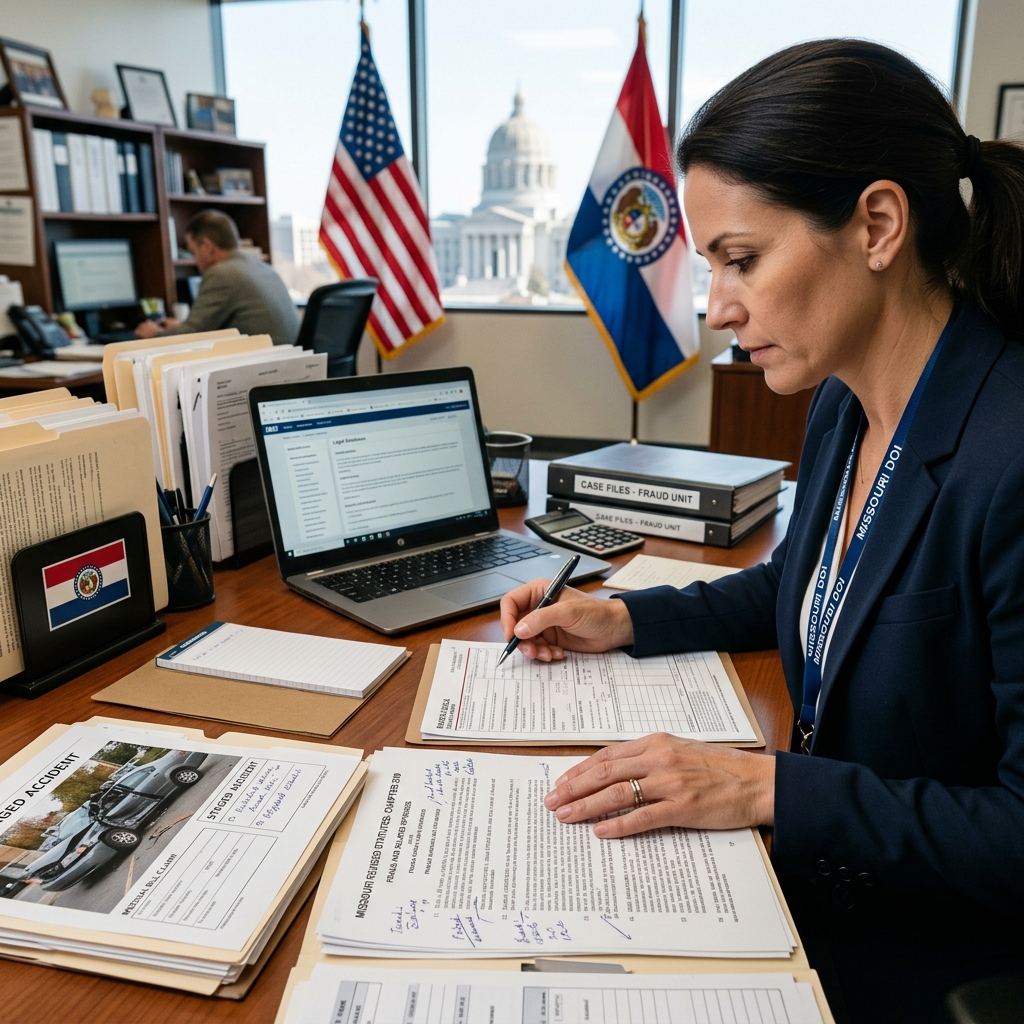
Insurance fraud is a serious crime in Missouri. State law treats it as a distinct offense, with penalties that can include felony charges, prison time, substantial fines, restitution to victims, and professional consequences for licensed individuals. Both policyholders and insurance professionals should understand how Missouri defines a fraudulent insurance act, what conduct is prohibited, and how to respond if fraud is suspected.
What Missouri Law Means by a “Fraudulent Insurance Act”
Missouri’s primary insurance fraud statute describes in detail what kinds of actions qualify as a fraudulent insurance act. In general terms, a person commits insurance fraud when they knowingly use false or misleading information in connection with an insurance policy or claim.
Under Missouri Revised Statutes section 375.991, a person can commit a fraudulent insurance act when they knowingly:
- Present or cause to be presented an oral or written statement to an insurer, broker, or agent that contains materially false information related to an insurance application, rating, or claim; or
- Conceal, for the purpose of misleading another, information about a fact that is material to the insurance application, rating, or claim.
The law applies to commercial and personal insurance and covers both paper and computer-generated documents, as well as other statements used to support a claim or application.
Key Elements the State Must Prove
To secure a conviction for a fraudulent insurance act in Missouri, prosecutors generally must show that:
- The person made or prepared a statement or document connected to insurance (such as an application, claim form, or supporting documentation);
- The statement contained a falsehood or omitted important facts that would be significant to the insurer’s decision;
- The false information or concealment was material (i.e., it could affect coverage, premiums, or payment of a claim); and
- The person acted knowingly and with the purpose of misleading or deceiving.
Negligent mistakes, confusion, or minor errors typically do not rise to the level of criminal insurance fraud. The law focuses on intentional deception.
Criminal Penalties for Insurance Fraud in Missouri
Missouri treats fraudulent insurance acts as serious crimes. The base offense is a felony, and the severity can increase for repeat offenders or when other criminal conduct is involved.
Felony Classes and Sentencing Ranges
Under section 375.991, the statute specifies how fraudulent insurance acts are classified:
- First offense: Class E felony.
- Subsequent offense: Class D felony if the person has a prior conviction for a fraudulent insurance act.
Under Missouri’s general felony sentencing rules, these classes carry the following potential prison terms:
| Offense Level | Classification | Typical Prison Range | Notes |
|---|---|---|---|
| First fraudulent insurance act | Class E Felony | Up to 4 years | May also include fines and restitution |
| Repeat fraudulent insurance act | Class D Felony | Up to 7 years | Applies when defendant has prior conviction for the same offense |
Courts can also impose fines in addition to, or instead of, prison time, depending on the circumstances and the applicable sentencing provisions.
Restitution Requirements
Missouri law requires courts to order restitution when someone is convicted of a fraudulent insurance act. Specifically, the court must direct the defendant to compensate:
- The insurer; and/or
- Any other person who suffered financial loss due to the fraud.
The judge determines the amount and method of restitution, which can include installment plans or other payment structures. Restitution is in addition to any criminal penalties, not a replacement.
Related Crimes and Enhanced Exposure
Insurance fraud may overlap with other offenses, particularly where electronic communication or large-scale schemes are involved. For example, when fraudulent insurance schemes use electronic communications, mail, or wire, defendants may face separate federal charges such as wire fraud, which can carry much higher maximum penalties than Missouri’s state insurance fraud statute.
Civil and Regulatory Consequences for Insurance Violations
In addition to criminal penalties, Missouri allows for civil penalties and regulatory sanctions related to insurance misconduct. These consequences often arise when insurance companies, agents, or other professionals violate state insurance rules.
Regulatory Oversight by the Missouri Department of Commerce and Insurance
The Missouri Department of Commerce and Insurance (DCI), formerly the Department of Insurance, oversees the insurance industry and has authority to investigate fraud and other violations. The department can:
- Review reports of suspected fraudulent claims from insurers;
- Conduct independent examinations of claims thought to involve deceit or intentional misrepresentation;
- Refer cases to prosecutors and licensing agencies when violations appear to have occurred.
Civil Penalties Against Insurers and Professionals
While Missouri’s criminal statute focuses on individuals committing fraudulent acts, insurance companies and licensed professionals can face regulatory actions, such as:
- Administrative fines, which may increase based on the severity and pattern of misconduct;
- Suspension or revocation of licenses for agents, brokers, or other insurance professionals;
- Orders to cease and desist from unfair or deceptive practices.
The National Association of Insurance Commissioners (NAIC) model laws provide guidance for states, including Missouri, on civil penalties, licensing sanctions, and mandatory antifraud statements on insurance forms. Missouri has enacted its own statutes and regulations consistent with these objectives.
Common Examples of Insurance Fraud in Missouri
Insurance fraud can occur in nearly every type of insurance product. In Missouri, prosecutors and regulators see recurring patterns in the cases they investigate.
Typical Fraud Scenarios
- Auto insurance fraud
Examples include staging collisions, exaggerating the extent of damage or injuries, or submitting fraudulent repair estimates. Some schemes involve multiple participants, such as drivers, passengers, and repair shops working together to inflate claims.
- Health insurance fraud
This category can involve billing for services that were never provided, upcoding to more expensive procedures, falsifying medical records, or using someone else’s insurance information without authorization.
- Workers’ compensation fraud
Fraud may occur when an employee exaggerates work-related injuries, continues to work elsewhere while claiming disability, or when an employer misrepresents payroll or job classifications to reduce premiums.
- Property insurance fraud
Common issues include inflating the value of stolen or damaged property, intentionally causing property damage (such as arson) and then filing a claim, or claiming pre-existing damage as new loss.
- Professional or provider fraud
Licensed professionals, including medical providers and insurance agents, can be involved in schemes that submit false claims, manipulate policy applications, or misappropriate premiums. These cases often lead to both criminal charges and licensing discipline.
“Soft” vs. “Hard” Fraud
Commentators sometimes distinguish between two broad forms of insurance fraud:
- Soft fraud: Exaggerating a legitimate claim or omitting minor facts to increase a payout (for example, overstating the value of items lost in a burglary).
- Hard fraud: Deliberately creating a fake loss or accident, such as staging a crash or intentionally damaging property to claim insurance benefits.
Missouri law does not formally use these labels, but either type can fall within the statutory definition of a fraudulent insurance act if the conduct is intentional and material.
How Insurance Fraud Is Investigated in Missouri
Investigations may begin with an insurer’s suspicion or a consumer complaint, and then expand to law enforcement or regulatory agencies.
Mandatory Reporting by Insurers
Missouri requires insurance companies that believe a fraudulent claim is being made to report their concerns to the Department of Commerce and Insurance within a specific time frame. Under section 375.992, insurers must:
- File a report within 60 days of receiving notice of a claim they believe involves fraud; and
- Provide information on a department-prescribed form, including details about the claim and parties involved.
The department reviews these reports and selects cases that warrant further investigation, then arranges independent examinations to determine whether fraud or misrepresentation exists.
Role of Law Enforcement and Prosecutors
Information gathered by the department may be shared with law enforcement, licensing boards, and prosecutors, who can bring criminal charges or administrative actions where warranted. Cooperation among agencies is important, because insurance fraud schemes can cross county or even state lines.
Evidence Used to Prove Fraud
In court, prosecutors must show not only that the claim or statement was false, but that the defendant acted knowingly and intended to deceive. Evidence in insurance fraud cases can include:
- Claim forms, applications, and supporting documents;
- Invoices, repair estimates, or medical bills;
- Medical records or expert testimony;
- Witness statements and surveillance;
- Electronic records, such as emails, texts, location data, and social media posts.
How to Report Suspected Insurance Fraud in Missouri
Missouri residents have several options to report insurance fraud, depending on the type of insurance and the parties involved.
General Consumer Complaints and Fraud Reports
If you believe you have been the victim of insurance fraud or have observed suspicious conduct, you can:
- Contact the Missouri Insurance Consumer Hotline for guidance and to make a report.
- Submit a complaint or inquiry through the Missouri Department of Commerce and Insurance’s consumer services division (details available on the department’s official website).
Medicare and Medicaid Fraud
- Medicare fraud
Beneficiaries can call their Medicare plan to question suspicious charges. If issues remain or if fraud is suspected, they may contact the state’s Senior Medicare Patrol (SMP) program, which helps older adults detect and report fraud.
- Medicaid and public assistance fraud
Suspected fraud involving Medicaid or other public assistance programs can be reported online or by contacting the appropriate Missouri regional office responsible for investigating these allegations.
Workers’ Compensation and Professional Licensing Issues
- Workers’ compensation fraud: Suspected fraud involving work-related injury claims or premium avoidance can be reported to the Missouri workers’ compensation fraud hotline.
- Licensed professionals: If you suspect a licensed provider (such as a doctor, chiropractor, or counselor) of committing insurance fraud, you may also file a complaint with the relevant professional licensing board, whose contact information is provided by the Missouri Division of Professional Registration.
Practical Tips to Avoid Insurance Fraud Problems
Consumers and professionals can take steps to reduce the risk of being drawn into fraudulent activity or facing accusations of insurance fraud.
For Policyholders and Claimants
- Be accurate and truthful on all applications and claim forms. Never exaggerate losses or injuries.
- Keep documentation of bills, receipts, contracts, and communications related to your claim.
- Review statements and explanations of benefits for unfamiliar charges or services you did not receive.
- Ask questions if someone suggests inflating a claim or omitting information. Decline to participate and, if appropriate, report the suggestion.
- Consult legal counsel if you are under investigation or unsure about how to respond to an insurer’s fraud inquiries.
For Insurance Professionals and Providers
- Implement written compliance policies that address fraud prevention and reporting obligations.
- Train staff to recognize red flags, such as inconsistent statements, altered documents, or patterns of suspicious claims.
- Use standardized forms with antifraud warnings, in line with NAIC model language and Missouri requirements.
- Report suspected fraudulent claims to the DCI within the required time frame and maintain detailed records of investigations.
- Seek legal advice when confronted with complex or large-scale suspected fraud schemes.
Frequently Asked Questions About Missouri Insurance Fraud Laws
Is every inaccurate statement on an insurance form considered fraud?
No. Missouri law focuses on statements that are knowingly false or involve intentional concealment of important facts. Honest mistakes, minor misunderstandings, or clerical errors generally do not amount to criminal insurance fraud, though correcting them promptly is important.
Can I go to jail for exaggerating a claim?
Yes, if the exaggeration is intentional and material. Knowingly inflating damages or injuries to obtain a higher payout can fall within the statutory definition of a fraudulent insurance act and may be charged as a felony, particularly if the amount is significant or part of a pattern.
What happens if my insurance company suspects me of fraud?
The insurer may investigate by reviewing documentation, interviewing witnesses, or using outside investigators. If the company believes a fraudulent insurance act may have occurred, it is required to report that suspicion to the Missouri Department of Commerce and Insurance, which can conduct its own investigation and refer the matter to law enforcement.
Do insurance companies themselves face penalties for fraud or misconduct?
Yes. Insurance companies and professionals can face regulatory sanctions such as civil penalties, license suspension or revocation, and compliance orders for violating insurance laws, unfair claims practices rules, or other regulatory requirements. In severe cases, individuals within an organization may also face criminal charges.
Who should I contact first if I think I am a victim of insurance fraud?
In most situations, starting with the Missouri Insurance Consumer Hotline or the consumer services division of the Department of Commerce and Insurance is appropriate. For specialized areas like Medicare, Medicaid, workers’ compensation, or professional misconduct, you may be directed to the specific agency or program that handles those issues.
References
- Revised Statutes of Missouri, Section 375.991 – Fraudulent insurance act — Missouri Revisor of Statutes. 2017-01-01. https://revisor.mo.gov/main/OneSection.aspx?section=375.991
- Revised Statutes of Missouri, Section 375.993 – Information relating to suspected fraudulent insurance acts — Missouri Revisor of Statutes. 2017-01-01. https://revisor.mo.gov/main/OneSection.aspx?section=375.993
- Missouri-Mandatory Reporting – Revised Statutes Section 375.992 — Coalition Against Insurance Fraud. 2021-05-01. https://insurancefraud.org/regulations/missouri-mandatory-reporting-revised-statutes-section-375-992/
- Missouri Insurance Fraud Laws — FindLaw. 2023-02-14. https://www.findlaw.com/state/missouri-law/missouri-insurance-fraud-laws.html
- Key Things to Know About Insurance Fraud — Flesner Wentzel (Missouri criminal defense resource). 2022-03-10. https://www.fjrcriminaldefense.com/key-things-to-know-about-insurance-fraud/
- Chapter 375 – Provisions relating to insurance companies and others — Missouri Revised Statutes via Justia. 2025-01-01. https://law.justia.com/codes/missouri/title-xxiv/chapter-375/
- Insurance Fraud Prevention Model Act — National Association of Insurance Commissioners (NAIC). 1995-10-01. https://content.naic.org/sites/default/files/model-law-680.pdf
Similar Articles








Read full bio of Sneha Tete




