
Mississippi Breathalyzer Refusal: License Suspension and Appeals
Learn how Mississippi’s implied consent law affects your license when you refuse a breathalyzer and what appeal options may exist.
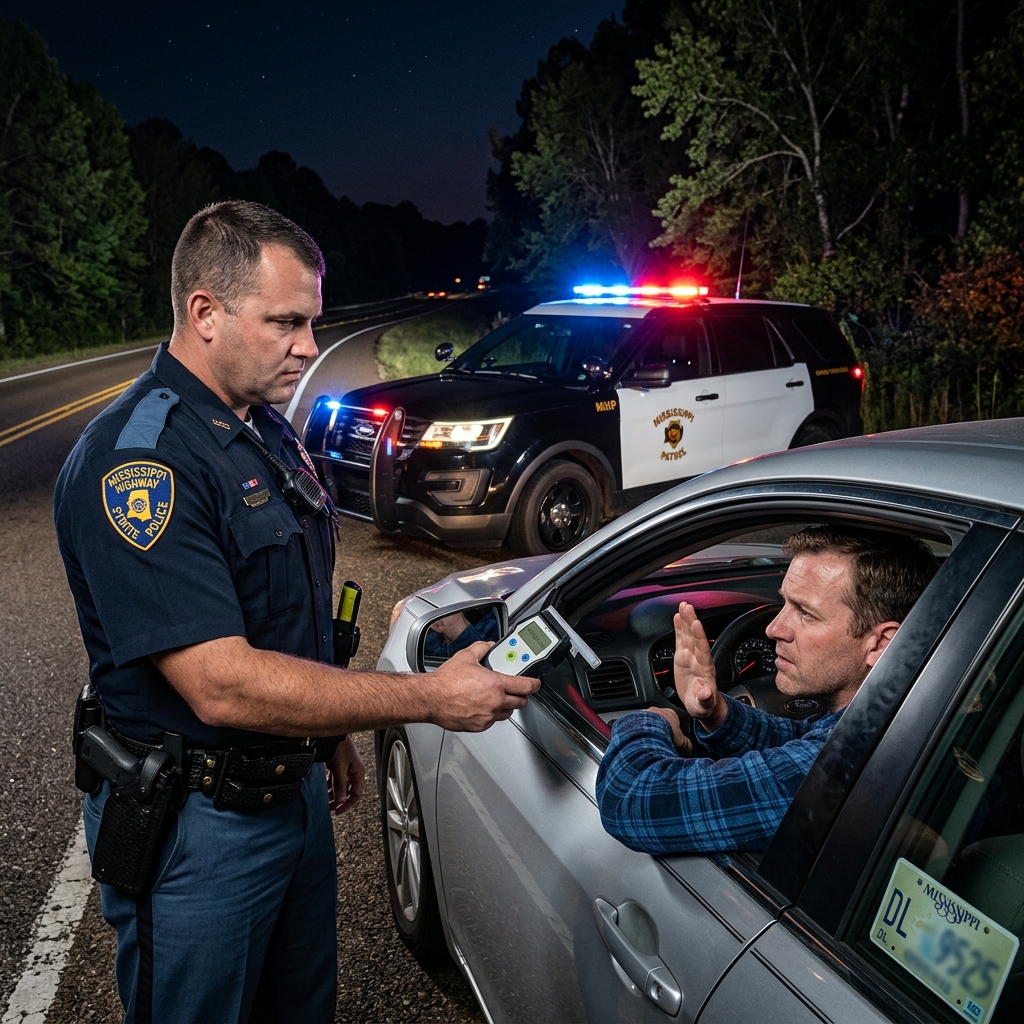
Mississippi treats driving as a state-granted privilege, not an absolute right. When you receive a driver’s license, you are deemed to have agreed in advance to certain rules, including submitting to chemical testing (breath, blood, or urine) when an officer has lawful grounds to suspect driving under the influence (DUI). This concept is known as implied consent, and refusing a breathalyzer can trigger significant license consequences even if you are never convicted of a criminal DUI offense.
This article explains what happens to your Mississippi driver’s license if you refuse a chemical test, how administrative suspensions differ from criminal DUI penalties, and what appeal or limited driving options may be available. It is general information, not legal advice, and speaking with a qualified Mississippi DUI attorney is strongly recommended if your license is at risk.
Mississippi’s Implied Consent Law in Plain Language
Under Mississippi law, anyone who drives on the state’s public roads is considered to have agreed to chemical testing when an officer lawfully requests it. This agreement is not optional once you are licensed; it is built into the privilege of driving.
In practice, implied consent means:
- Lawful basis required: The officer must have reasonable grounds and probable cause to believe you were operating a motor vehicle under the influence of alcohol or another impairing substance.
- Clear request for testing: The officer may ask for a breath, blood, or urine test to determine your level of impairment.
- Warning of consequences: Before a refusal suspension can be imposed, the driver must be informed that declining the test can lead to the loss of driving privileges.
If these conditions are met and you refuse, a separate administrative process begins that can suspend your license even if no DUI conviction ever occurs.
Administrative License Suspension for Refusing a Breathalyzer
Mississippi law provides a specific suspension schedule when someone refuses chemical testing after a lawful request. These penalties are implemented by the Department of Public Safety (DPS) and are independent of any criminal DUI case.
Standard Suspension Periods for Test Refusal
When a driver refuses a breath, blood, or urine test after a lawful request and proper warnings, DPS may suspend the driver’s license according to the following rules:
| Driver Status | Suspension Length for Refusal | Notes |
|---|---|---|
| Class R license, no prior DUI/non-adjudication | 90 days | Administrative suspension based solely on refusal. |
| Class R license, prior DUI or non-adjudication | 1 year | Previously impaired driving history increases suspension. |
| Commercial Driver’s License (CDL) | 1 year | CDL holders face stricter consequences. |
These suspensions are administrative. You do not need to be convicted of DUI for them to take effect, and they can still appear on your driving record even if your criminal charges are dismissed.
When the Suspension Starts
After an officer submits the required sworn report to DPS showing reasonable grounds, refusal, and proper warnings, DPS issues written notice of suspension. Under Mississippi law:
- The suspension typically takes effect 30 days after the date on the notice.
- During this 30-day window, you may have the right to seek an administrative review or court appeal, depending on the circumstances.
Missing early deadlines can result in automatic suspension, so prompt action is critical if you intend to challenge the refusal or request limited driving privileges.
Refusal vs. DUI Conviction: Two Separate Paths to Losing Your License
Mississippi has two different mechanisms that can take away your license:
- Administrative refusal suspension: Based on declining chemical testing after a lawful request, handled by DPS under implied consent statutes.
- Post-conviction DUI suspension: Imposed after a criminal DUI conviction or non-adjudication disposition under DUI statutes.
Typical DUI Conviction Suspensions
Post-conviction suspensions depend on how many prior offenses you have. According to Mississippi’s Driver Service Bureau:
- First DUI offense: About 120 days of suspension, unless the court authorizes an ignition interlock-restricted license.
- Second offense (within five years): Around 1 year of suspension.
- Third offense (within five years): Felony classification; suspension for the full period of the person’s sentence.
- Fourth or subsequent offense: Felony; suspension for the sentence period plus eligibility only for an interlock-restricted license for ten years after release.
These penalties are separate from test refusal suspensions. It is possible, for example, to face a 90-day refusal suspension and then an additional post-conviction suspension if you are later found guilty of DUI.
Appealing an Administrative Refusal Suspension
Mississippi law allows certain drivers to challenge or appeal an administrative license suspension based on breathalyzer refusal. The available options depend on whether your suspension arises from refusal alone or from a criminal conviction.
Requesting Administrative Review or Hearing
After you receive notice of intent to suspend for refusal, you may have a short time to request a review or hearing. Common features of this process include:
- Strict deadlines: Many Mississippi materials describe very short windows—often 10 days—to file a petition or request for hearing, sometimes referred to informally as a “10-day rule.”
- Temporary driving privileges: Filing a timely petition can sometimes result in a temporary license or extended driving rights while the matter is pending.
- Focused scope: The hearing typically examines whether the officer had lawful grounds, whether warnings were properly given, and whether a refusal actually occurred, rather than relitigating the entire DUI case.
Because the schedule and procedures can change and may depend on your specific paperwork, it is vital to review the notice you received and consult counsel quickly.
Appeal to Circuit Court
Mississippi law allows drivers to seek review in their local circuit court after an administrative decision on refusal. In general:
- You may file an appeal in the circuit court of your county of residence or another authorized location.
- The judge considers evidence in a non-jury hearing and may allow testimony from the arresting officer, the driver, and other relevant witnesses.
- The driver can attempt to show that the refusal suspension is unlawful due to lack of probable cause, defective warnings, or errors in the DPS record.
Importantly, this appeal avenue generally applies to administrative refusal suspensions. If your license was suspended as the result of a criminal DUI conviction, the rules for relief are different and may involve post-conviction procedures or separate appeals of the criminal judgment.
Limited Driving Options and Hardship Considerations
Losing your license, even temporarily, can make everyday life difficult, especially in areas without robust public transportation. Mississippi law provides limited options for some drivers to keep working or caring for family, but these options are narrow and subject to strict eligibility rules.
Ignition Interlock-Restricted License After DUI
For many post-conviction DUI suspensions, Mississippi allows courts to authorize an ignition interlock-restricted license, which permits limited driving if you install an approved device in your vehicle. This option:
- Applies primarily to post-conviction DUI suspensions, not all refusal-only suspensions.
- Requires installation and maintenance of a device that checks your breath for alcohol before the car will start.
- May involve additional fees, monitoring, and compliance conditions set by the court and DPS.
Hardship and Restricted Licenses in Refusal Contexts
Some Mississippi materials describe opportunities to seek a hardship or restricted license when a suspension would severely disrupt work, school, or essential medical care. However:
- Eligibility for hardship relief is typically limited and may not extend to all test refusal suspensions.
- Courts often require clear and convincing evidence, supported by documentation, that denial of driving privileges creates genuine hardship (such as job loss or inability to obtain medical treatment).
- Additional administrative steps—like alcohol evaluation or treatment recommendations—may be required before a restricted permit is considered.
Because these rules can be nuanced, drivers facing refusal suspensions should consult a Mississippi attorney familiar with current hardship and restricted license options.
Why Some Drivers Consider Refusing a Breathalyzer
People sometimes refuse a breathalyzer because they hope to avoid evidence of high blood alcohol content. However, under Mississippi’s implied consent law, refusal can have consequences nearly as serious as a failed test.
Key considerations include:
- Refusal is not a “free pass”: Your license can be suspended regardless of whether the DUI charge is ever proven.
- Refusal may be used as evidence: Prosecutors can sometimes argue that refusal indicates consciousness of guilt or concern about impairment, though the legal impact depends on the case.
- Long-term record implications: A refusal suspension can remain on your driving history and may affect future license decisions or insurance rates.
Because the choice to refuse or submit has both criminal and administrative consequences, drivers benefit from understanding the law beforehand and, when possible, obtaining legal advice immediately after an arrest.
Practical Steps If You Have Refused a Breathalyzer
If you recently refused a chemical test in Mississippi, the following practical steps may help protect your driving privileges:
- Read all paperwork carefully: Notices from DPS or law enforcement usually explain the anticipated suspension length and deadlines for response.
- Note key dates: Track the date on the suspension notice and any deadline to request a hearing or file a petition—many drivers lose rights simply by missing these early dates.
- Contact a DUI-focused attorney: Mississippi DUI law is technical, and experienced counsel can identify defenses related to probable cause, warnings, and documentation errors.
- Gather evidence: If you plan to challenge the suspension, consider preserving body-camera footage information, witness names, and any documents that show the timeline and content of the officer’s warnings.
- Avoid driving on a suspended license: Driving after your license is officially suspended can lead to additional charges and longer loss of driving privileges.
Frequently Asked Questions (FAQ)
1. Can my license be suspended even if my DUI charge is dismissed?
Yes. Mississippi’s administrative refusal suspension is separate from the criminal case. Your license can be suspended based solely on chemical test refusal under implied consent law, regardless of whether you are convicted of DUI.
2. How long do I have to appeal a refusal suspension?
Mississippi materials emphasize very short deadlines. Many describe about 10 days to file a petition or request a hearing after receiving notice of intent to suspend, and the suspension generally begins around 30 days after the notice date. Always confirm the exact deadline printed on your paperwork.
3. Can I challenge whether the officer had the right to request a test?
Yes. At an administrative hearing or in circuit court, drivers often dispute whether the officer had reasonable grounds and probable cause to request testing, whether the stop was lawful, and whether required warnings were provided. These issues can be central to overturning a refusal suspension.
4. Do commercial drivers face different refusal penalties?
Yes. Holders of a Mississippi commercial driver’s license (CDL) generally face a one-year suspension for chemical test refusal, which can be particularly serious for drivers who depend on a CDL for employment.
5. Is a hardship license available during a refusal suspension?
Options are limited. Some Mississippi provisions and practice materials suggest hardship or restricted driving relief may be available in certain circumstances, especially after DUI convictions, but many drivers with refusal suspensions will find that relief is narrow and highly fact-specific. A local attorney can advise whether any current hardship mechanisms apply to your situation.
6. Should I ever refuse a breathalyzer in Mississippi?
Whether to refuse or submit is a serious decision with both criminal and administrative consequences. Because Mississippi law imposes automatic license penalties for refusal and may allow prosecutors to use refusal as evidence, many people choose to seek legal advice as soon as possible after an arrest. This article cannot recommend a universal strategy; the best approach depends on your circumstances and current Mississippi law.
References
- Can I Appeal To Get My License Back After Refusing a Breathalyzer? — Super Lawyers / Thomson Reuters. 2023-08-01. https://www.superlawyers.com/resources/dui-dwi/mississippi/can-i-appeal-to-get-my-license-back-after-refusing-a-breathalyzer/
- DUI Department — Mississippi Department of Public Safety, Driver Service Bureau. 2024-01-15 (last updated). https://www.driverservicebureau.dps.ms.gov/DriverRecords/DUI_Department
- Senate Bill 2617 – Administrative License Suspension for Test Refusal (Section 63-11-23) — Mississippi Legislature Bill Status System. 2024-02-15. https://billstatus.ls.state.ms.us/documents/2024/html/SB/2600-2699/SB2617IN.htm
- Mississippi DUI Arrest: Driver’s License Suspension — Thomas V. Alonzo, Attorney at Law Blog. 2010-06-21. https://thomasvalonzo.com/blog/2010/06/mississippi-dui-arrest-drivers-license-suspension/
- Chemical Test Refusal Lawyer in Mississippi — Housley Law Firm. 2022-11-10. https://housleylaw.com/dui/chemical-test-refusal/
- DUI and Your Driver’s License — McCormick Law Firm, Jackson County Criminal Lawyer Blog. 2023-05-30. https://www.mccormick-lawfirm.com/blog/dui-and-your-drivers-license/
Similar Articles








Read full bio of medha deb




