
Missing Probation or Parole Check‑Ins: Legal Risks Explained
Understand what happens if you skip a probation or parole appointment, the penalties you could face, and how to protect your rights.
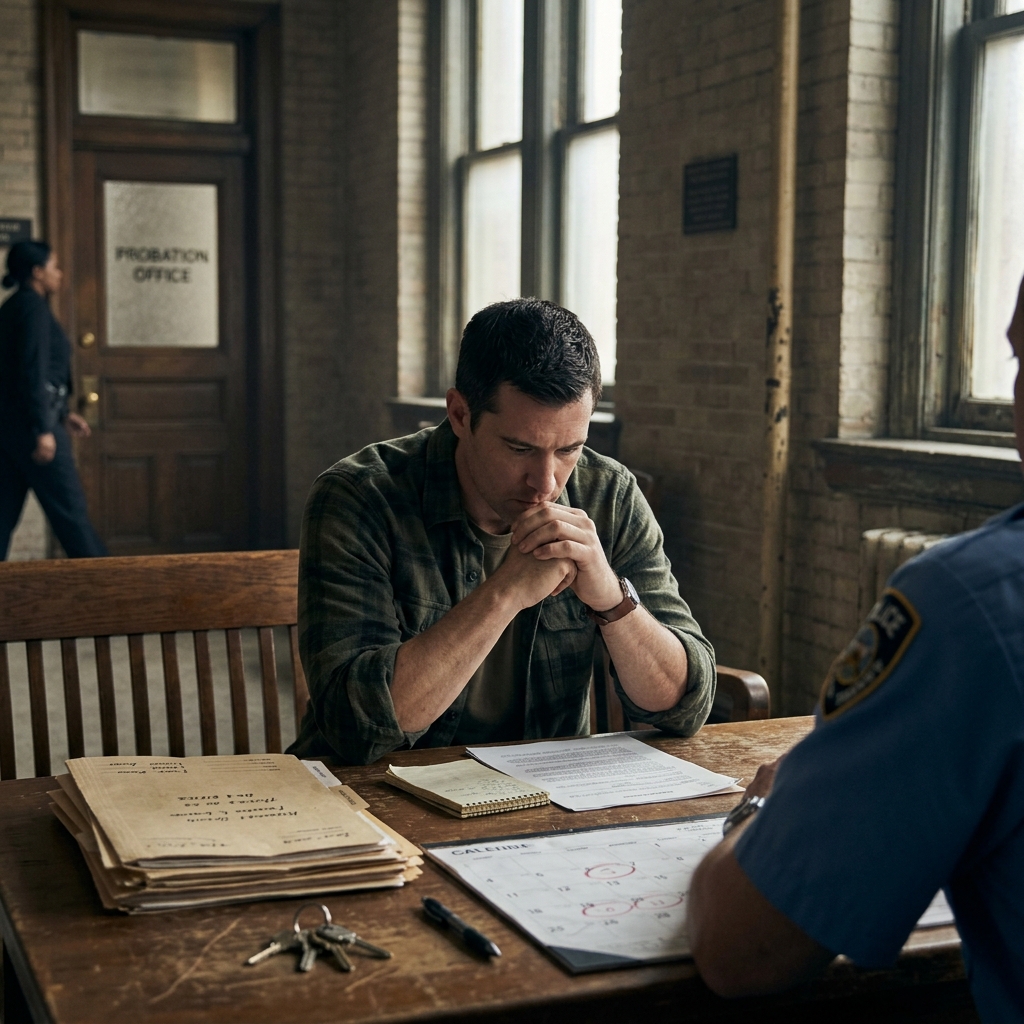
When you are on probation or parole, regularly reporting to your supervising officer is not optional; it is a core condition of your release from custody. Failing to show up for scheduled meetings can trigger violations, hearings, and in serious cases, a return to jail or prison.
This article explains what happens when you miss an appointment with a probation or parole officer, the potential penalties, and practical steps you can take if you have already failed to report or fear you might in the future.
Probation vs. Parole: Why Reporting Matters
Probation and parole are both forms of community supervision, but they arise at different stages of the criminal process and are managed somewhat differently.
| Feature | Probation | Parole |
|---|---|---|
| When it occurs | Imposed by a court as an alternative to jail or prison, or in addition to a short period of custody. | Granted after serving part of a prison sentence, typically by a parole board. |
| Purpose | Allows you to remain in the community under court‑ordered conditions instead of incarceration. | Helps you transition from prison back into society while reducing risk of reoffending. |
| Who supervises | Probation officers attached to the court or local corrections department. | Parole officers working for the state corrections or parole agency. |
| Typical reporting duty | Report to the probation officer as scheduled (often monthly or more frequently). | Report to the parole officer on a schedule set by the parole board or agency. |
Both systems rely on regular check‑ins to monitor compliance, address problems early, and document progress. Missing a meeting is considered a breach of your supervision terms, even if no new crime occurs.
What Counts as a Failure to Report?
Failure to report is usually treated as a technical violation of probation or parole, meaning you broke a supervision rule rather than committing a new criminal offense.
Common ways people fail to report include:
- Not appearing for a scheduled in‑person appointment with the officer.
- Missing a required kiosk, phone, or video check‑in.
- Failing to attend a mandated class, counseling session, or treatment meeting that is part of your conditions.
- Ignoring instructions to report after a change in address, employment, or contact information.
- Skipping multiple appointments in a row or disappearing from supervision entirely (sometimes called “absconding”).
In many jurisdictions, even a single missed appointment can be documented as a violation, though officers often have discretion in how severely they respond.
How Probation Officers Respond to Missed Check‑Ins
When you fail to report on probation, several things may happen, depending on the seriousness of the case, your history, and local law.
1. Informal Responses and Warnings
For a first or minor lapse, a probation officer may choose an informal response such as:
- A verbal or written warning about future compliance.
- Rescheduling the appointment and documenting the missed visit.
- Short‑term increased contact, such as temporary weekly check‑ins.
Some states explicitly allow officers to use alternative sanctions for low‑risk violations, such as brief jail stays, extra community service, or added treatment requirements. These measures are designed to correct behavior without immediately sending the case back to court.
2. Formal Violation Report and Court Involvement
If the officer believes the missed report is serious or part of a pattern, they may file a formal violation report with the court.
This typically involves:
- Preparing a written violation notice or affidavit describing the failure to report.
- Requesting a warrant or summons for you to appear at a probation violation hearing.
- Recommending a specific sanction or range of sanctions to the judge.
At this stage, your liberty is at risk. You may be arrested on a warrant and held in custody until the hearing, particularly if you have missed multiple appointments or appear to have absconded.
Probation Violation Hearings: What to Expect
A probation violation hearing is not a full criminal trial, but it is a formal court proceeding where a judge decides whether you violated your conditions and what happens next.
Lower Burden of Proof
In a new criminal case, the prosecution must prove guilt beyond a reasonable doubt. In many probation hearings, the standard is only a preponderance of the evidence, meaning the judge must be convinced it is more likely than not that you failed to report.
This lower threshold makes it easier for the government to establish a violation, especially when there are clear records showing missed appointments.
Your Rights at the Hearing
While procedures vary by state, you generally have some key rights:
- The right to notice of the alleged violation and the basis for it.
- The right to be heard and to present evidence, including explanations or documentation of emergencies.
- The right to counsel, and in many cases appointed counsel if you cannot afford a lawyer.
- The opportunity to challenge the accuracy of supervision records or officer testimony.
The judge will weigh both the evidence that you missed reporting and any mitigating circumstances you present, such as medical crises, transportation failures, or misunderstandings.
Possible Probation Penalties for Failure to Report
If the court finds a violation, it can impose a range of outcomes. Common options include:
- Extension of probation: Adding months or years to your supervision term.
- Stricter conditions: Imposing curfew, electronic monitoring, extra community service, or more frequent reporting.
- Short jail stays: A few days in county jail as a sanction for low‑risk violations.
- Treatment or counseling: Requiring substance use treatment, mental health services, or support group attendance.
- Revocation of probation: Terminating probation and ordering you to serve all or part of the original suspended sentence in jail or prison.
The judge’s decision often depends on factors such as how many times you have violated, whether there is a history of absconding, and the seriousness of the underlying offense.
Parole Violations for Failure to Report
Parole violations, including missed reporting, are handled through administrative processes and, in some states, formal hearings before a parole board or hearing officer.
Technical Parole Violations
Missing a check‑in with a parole officer is a classic example of a technical parole violation. Even without a new criminal charge, it signals non‑compliance with the conditions designed to support safe reentry.
Common responses to technical parole violations include:
- Verbal or written warnings for isolated, first‑time failures to report.
- Increased supervision, such as more frequent meetings or added conditions.
- Short‑term custody in jail or a correctional facility.
- Placement in intermediate sanction programs (for example, residential drug treatment or intensive supervision).
- Full revocation, which ends parole and returns the person to prison to serve the remainder of the sentence.
Some states have created structured guidelines or automated systems to categorize parole violations and recommend specific sanctions, making parole responses more uniform and sometimes more rigid.
Risk Factors That Increase Penalties
Not all failures to report are treated the same. Certain factors can push a missed appointment into more serious territory and increase the chances of harsh consequences.
- Repeated violations: Multiple missed check‑ins suggest a pattern of disregard for supervision and often lead to stricter penalties or revocation.
- Absconding: Disappearing from supervision, moving without notice, or avoiding contact for long periods is viewed as a major breach.
- New criminal charges: Being arrested for a new offense in addition to failing to report greatly increases the likelihood of incarceration.
- High‑risk underlying offense: Those convicted of serious or violent crimes may face less tolerance for technical violations.
- Past non‑compliance: A history of prior violations signals to courts and boards that intermediate measures have not been effective.
By contrast, a single, well‑documented missed appointment with prompt communication and a credible explanation is more likely to be addressed with warnings or modest sanctions.
Practical Steps if You Miss or Might Miss a Check‑In
If you have failed to report, or believe you will be unable to make a scheduled visit, prompt action can significantly improve your position.
1. Contact Your Officer Immediately
Reach out as soon as possible by phone, email, or the approved communication method. Explain why you missed the appointment or will be late, and request a new meeting time.
- Provide documentation of emergencies (hospital records, police reports, transportation breakdowns) when available.
- Avoid gaps in communication; silence can be interpreted as absconding.
2. Gather Evidence of Mitigating Circumstances
If your failure to report leads to a violation hearing, written proof can help show the judge or board that the missed appointment was not intentional or reckless.
- Medical records or notes for sudden illness or hospitalization.
- Proof of work obligations you could not change.
- Receipts or documentation for transportation failures.
- Any notices showing miscommunication or conflicting instructions.
3. Consider Legal Representation
A criminal defense lawyer experienced in probation or parole matters can help you understand local law, negotiate with officers, and present your case effectively at a hearing.
Legal counsel may be especially important if you have prior violations, face possible revocation, or are also charged with new crimes.
Frequently Asked Questions
Is missing one probation or parole appointment always a violation?
Missing a scheduled meeting typically qualifies as a technical violation because it breaks your reporting condition. However, officers often have discretion to respond with warnings or alternatives if the failure is minor and you otherwise comply with supervision.
Can I be sent to jail or prison just for failing to report?
Yes, in some situations. Courts and parole authorities can impose short jail stays or fully revoke probation or parole, resulting in incarceration, even for technical violations like failing to report. The likelihood increases if violations are frequent, combined with new offenses, or involve absconding.
What is the difference between a technical violation and a new law violation?
A technical violation involves breaking supervision rules (such as missing check‑ins, failing drug tests, or missing curfew), while a new law violation involves being arrested or charged with a separate criminal offense. New law violations almost always trigger more serious consequences.
Will my probation or parole automatically be revoked if I fail to report?
Not necessarily. Revocation is one possible outcome, but judges and parole boards often have intermediate options such as extending supervision, adding conditions, or imposing short custody stints. Your history and the details of the missed appointment play a major role in what is ultimately imposed.
What can I do to avoid future failures to report?
Maintain a written calendar of appointments, use reminders on your phone, and immediately inform your officer of any changes in address, employment, or contact information. If you anticipate a conflict, request a rescheduled appointment in advance rather than skipping the visit.
References
- Failure to Report to Probation or Parole Officer: What Can Happen? — FindLaw. 2022-09-01. https://www.findlaw.com/legalblogs/criminal-defense/failure-to-report-to-probation-or-parole-officer-what-can-happen/
- Failure to Report — Los Angeles County Probation Department. 2023-05-10. https://probation.lacounty.gov/failure-to-report/
- Florida Statutes § 948.06 — Florida Legislature, Online Sunshine. 2024-01-01. https://www.leg.state.fl.us/statutes/index.cfm?App_mode=Display_Statute&URL=0900-0999/0948/Sections/0948.06.html
- Violating Probation & Potential Legal Consequences — Justia. 2022-07-15. https://www.justia.com/criminal/parole-and-probation/probation-violations/
- One Size Fits None: How “Standard Conditions” of Probation Set People Up to Fail — Prison Policy Initiative. 2017-10-25. https://www.prisonpolicy.org/reports/probation_conditions.html
- The Consequences of a Parole or Probation Violation in California — Chambers Law Firm. 2023-03-20. https://www.chamberslawfirmca.com/the-consequences-of-a-parole-or-probation-violation-in-california/
- What Are the Possible Outcomes of Parole Violations? — Roth Davies, LLC. 2022-11-05. https://www.roth-legal.com/blog/what-are-the-possible-outcomes-of-parole-violations/
Similar Articles








Read full bio of medha deb




