
Minnesota Wills: Requirements, Options, and Practical Guidance
Understand how Minnesota will laws work so you can create a valid, effective plan for your property and loved ones.
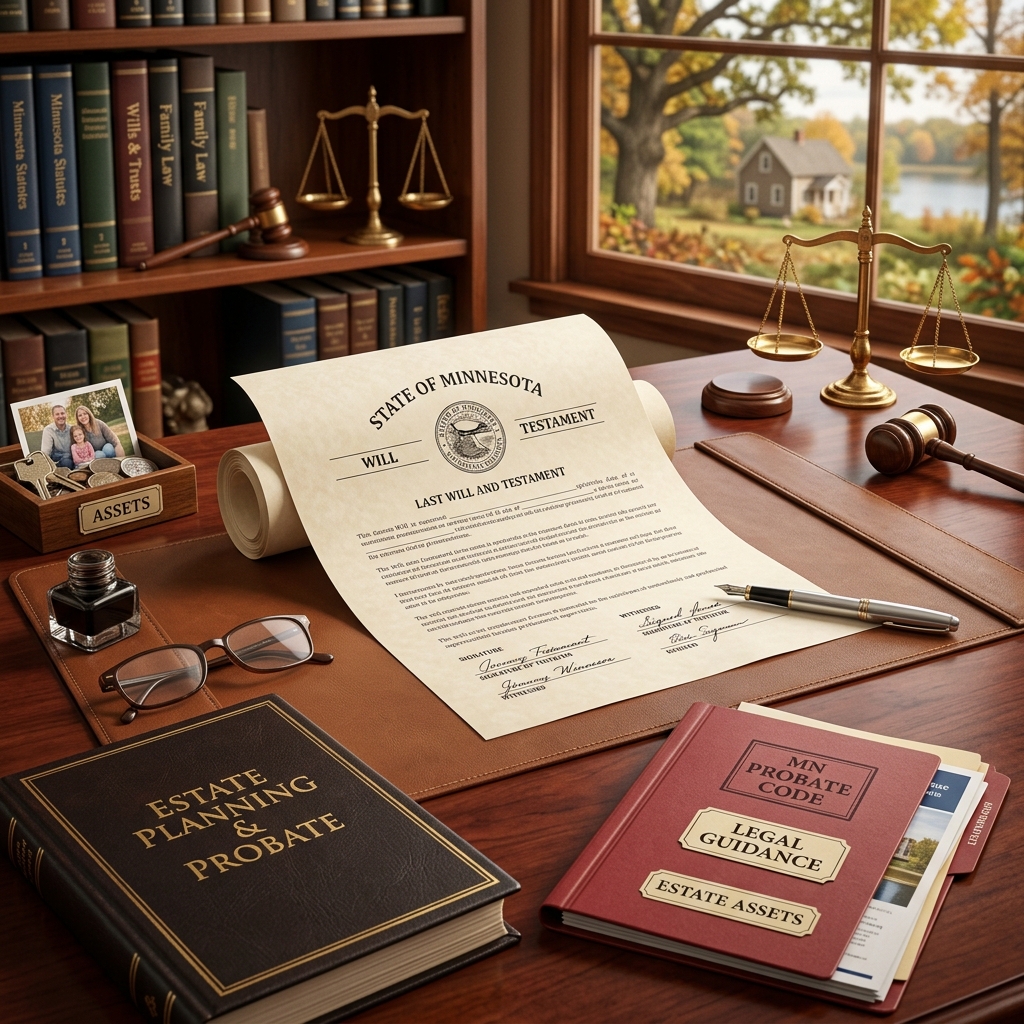
Creating a will is one of the most important steps in planning for the future. In Minnesota, specific laws govern how wills must be written, signed, and witnessed to be legally valid, and these rules affect how your property is handled after you die. This guide explains Minnesota will requirements, common types of wills, how probate works, and practical tips for putting a solid estate plan in place.
Why Having a Will Matters in Minnesota
A will is a legal document that tells the court how you want your property distributed after death and who should manage your estate. Without a will, Minnesota’s intestate succession laws decide who receives your assets, which may not match your wishes.
- Control over your property: You choose which beneficiaries receive specific assets.
- Choice of personal representative: You can name someone you trust to administer your estate.
- Protection for family members: You can provide for minor children and dependents in a structured way.
- Reduced conflict: Clear instructions can help reduce disputes among surviving relatives.
In Minnesota, people often assume that everything automatically goes to a surviving spouse or children. While the law does give priority to close relatives, the exact division of property can be more complex and may not reflect your preferences.
Core Legal Requirements for a Valid Minnesota Will
Minnesota law sets out basic requirements a will must meet to be valid. These rules are found in the Minnesota Statutes and are strictly applied by courts during probate.
Age and Mental Capacity
To make a will in Minnesota, the person creating it (the testator) must:
- Be at least 18 years old.
- Be of sound mind, meaning they understand the nature of their property, the effect of the will, and who would ordinarily be expected to inherit.
Capacity is judged at the time the will is signed. Questions about mental capacity often arise when someone has memory loss or cognitive decline, so careful documentation and witness testimony can be important if there is any doubt.
Writing and Signature Requirements
Under Minnesota law, a will must meet these formal conditions:
- In writing: The will must be in written form. Electronic wills are permitted under certain conditions, but traditional written documents remain common.
- Signed by the testator: The testator must sign the will, or another person may sign the testator’s name in the testator’s conscious presence and at their direction.
- Signed by at least two witnesses: Two individuals must sign within a reasonable time after witnessing the signing or the testator’s acknowledgment of the will.
Witnesses should be adults who are able to observe the signing process and later testify, if necessary, that the testator signed voluntarily and appeared to be of sound mind.
Witnesses and Beneficiaries
Minnesota requires two witnesses, but they do not have to be beneficiaries. However, using witnesses who do not receive gifts under the will (known as disinterested witnesses) can reduce potential challenges and conflicts. Many practitioners recommend:
- Choosing witnesses who are at least 18 years old.
- Avoiding witnesses who stand to inherit from the will.
- Having all parties sign in the same room and at roughly the same time.
Self-Proved Wills
Minnesota allows a will to be made “self-proved” by attaching notarized affidavits from the testator and witnesses. This can simplify the probate process because it reduces the need for witnesses to appear in court after the testator’s death.
Common Types of Wills Used in Minnesota
Not all wills look alike. Minnesota residents use a range of formats depending on family circumstances, asset levels, and estate planning goals.
Simple Wills
A simple will generally directs property to a small group of beneficiaries, often a spouse and children, without complex trust structures. Simple wills may be suitable when:
- Most assets are straightforward (e.g., personal property, bank accounts).
- There are no complicated tax or business issues.
- The family structure is relatively uncomplicated and there is little anticipated conflict.
Wills with Trust Provisions
More complex wills may include trust provisions to manage property for beneficiaries over time. For example:
- Spousal trusts: To provide income and asset protection for a surviving spouse.
- Children’s or contingent trusts: To hold property for minor or young adult children until they reach a specified age.
- Tax-oriented trusts: To help manage estate and gift tax exposure, often coordinated with other planning tools.
These arrangements are often grouped under “complex wills” and require careful drafting to ensure they work as intended with Minnesota law.
Electronic Wills
Minnesota has adopted legislation allowing electronic wills under the Uniform Electronic Wills Act. This reform permits certain wills to be executed electronically rather than on paper, if statutory safeguards are followed. Courts and legal practitioners are still developing best practices, and anyone considering an electronic will should ensure full compliance with Minnesota requirements.
How Probate Works for Wills in Minnesota
Probate is the court process that gives legal authority to transfer a deceased person’s property, whether they had a will or not. A will acts as instructions to the probate court, but does not itself avoid probate.
When Probate Is Required
In Minnesota, probate is generally required if the deceased owned:
- $75,000 or more in assets in their own name; or
- Any real estate solely in their name.
Some assets pass outside probate automatically, such as jointly owned property or accounts with designated beneficiaries.
Probate vs. Non-Probate Assets
| Type of Asset | Typical Transfer Method | Probate Involved? |
|---|---|---|
| Jointly owned real estate (joint tenancy) | Survivorship to the remaining joint owner | Usually no probate for that interest |
| Life insurance policies | Payout to named beneficiaries | No probate if beneficiary is named |
| Retirement accounts with beneficiary designations | Direct transfer to designated beneficiaries | Generally outside probate |
| Bank accounts solely in the decedent’s name | Distributed according to will or intestate law | Typically requires probate |
| Real property owned individually | Deed transferred under court authority | Probate usually required |
Role of the Personal Representative
The probate court appoints a personal representative (sometimes called an executor) to administer the estate. Their duties typically include:
- Identifying and collecting estate assets.
- Protecting and managing property during the probate process.
- Paying valid debts and expenses of the estate.
- Distributing remaining assets according to the will or, without a will, according to Minnesota law.
Probate can proceed formally, with more court involvement, or informally, with less oversight, depending on the complexity of the estate and whether disputes are anticipated.
Beyond a Will: Additional Minnesota Estate Planning Tools
While a will is central, Minnesota residents often use additional documents to address health care decisions, asset protection, and incapacity planning.
Revocable Living Trusts
A revocable living trust is a flexible tool that can hold assets during life and provide for their management and distribution after death.
- Assets titled in the name of the trust may avoid probate because the trust survives the grantor.
- Trusts can offer privacy because they are generally not part of public probate records.
- Trust provisions can protect beneficiaries from creditors or poor financial habits.
However, a trust does not replace all functions of a will. In Minnesota, people typically still use a “pour-over” will to transfer any remaining probate assets into the trust at death.
Health Care Directives and Powers of Attorney
Estate planning also addresses periods of incapacity, not just death. Common documents include:
- Health care directive: States medical treatment preferences and appoints someone to make health care decisions if you cannot.
- Durable power of attorney: Authorizes a trusted person to handle financial matters on your behalf.
- Supplemental designations such as guardianship preferences for minor children or conservator recommendations.
Can You Write Your Own Will in Minnesota?
Minnesota law does not require you to hire an attorney to prepare a will. Individuals can draft their own wills as long as they meet all legal requirements for validity. However, there are practical considerations to keep in mind.
Advantages and Risks of Do-It-Yourself Wills
Potential advantages of a self-prepared will include lower upfront costs and convenience. But risks can be significant if the document does not comply with Minnesota statutes or fails to address key issues.
- Common risks:
- Missing or unclear beneficiary provisions.
- Improper witnessing or signing procedures.
- Failure to coordinate the will with non-probate assets and beneficiary designations.
- Situations where professional help is strongly recommended:
- Blended families or complex family relationships.
- Ownership of a business or multiple real estate properties.
- Desire to include trusts or advanced tax planning.
Even when using online templates or forms, Minnesota residents should ensure that the will reflects their actual circumstances, uses clear language, and follows state-specific legal formalities.
Practical Steps to Create a Minnesota Will
The process of creating a will can be broken down into manageable steps. While the details vary by person, the following general outline is helpful:
- List your key assets. Include real estate, financial accounts, personal property of significant value, and business interests.
- Identify your beneficiaries. Decide who should receive which assets, and consider alternate beneficiaries if primary ones cannot inherit.
- Choose a personal representative. Select someone trustworthy and capable of handling detailed administrative work.
- Decide whether to include trusts. Consider trusts for minor children, beneficiaries with special needs, or long-term financial management.
- Draft the will document. Use clear language and structure that complies with Minnesota law, and coordinate it with other estate planning documents.
- Execute the will properly. Sign in the presence of two qualified witnesses, and consider making the will self-proved with notarized affidavits.
- Store and update the will. Keep the original in a safe but accessible place, inform your personal representative of its location, and review it periodically for needed updates.
Frequently Asked Questions About Minnesota Wills
Do handwritten wills count in Minnesota?
Minnesota requires that a will be in writing and signed by the testator and two witnesses. While handwritten wills may be possible if they meet all statutory witnessing and signing requirements, Minnesota does not recognize unwitnessed holographic wills, so a purely handwritten, unwitnessed document is not sufficient.
Can a will avoid probate in Minnesota?
No. A will is a set of instructions to the probate court and generally triggers probate rather than avoiding it. To minimize probate, many people use tools like revocable living trusts and beneficiary designations, combined with a will.
What happens if someone dies in Minnesota without a will?
When a person dies without a will, Minnesota’s intestate succession laws govern who inherits. Close family members such as a surviving spouse, children, or other relatives receive shares of the estate based on statutory rules and the composition of the estate.
How often should I update my Minnesota will?
Updates are advisable after major life events such as marriage, divorce, birth or adoption of a child, significant changes in assets, or relocation. Regular reviews help ensure that the will still reflects current wishes and law.
Is an electronic will right for me?
Electronic wills are now possible under Minnesota’s adoption of the Uniform Electronic Wills Act, but they involve specific requirements and may not yet be widely used in all circumstances. Individuals interested in this option should carefully follow statutory procedures and consider professional advice.
References
- Sec. 524.2-502 MN Statutes — Minnesota Office of the Revisor of Statutes. 2023-01-01. https://www.revisor.mn.gov/statutes/cite/524.2-502
- Establishing a Will — University of Minnesota Extension. 2022-08-01. https://extension.umn.edu/transfer-and-estate-planning/establishing-will
- Probate, Wills, & Estates — Minnesota Judicial Branch. 2023-05-01. https://mncourts.gov/help-topics/probate-wills-and-estates
- Wills, Trusts and Estate Planning – Minnesota State Law Library — Minnesota State Law Library. 2023-09-01. https://mncourts.libguides.com/willstrusts
- Can I Write My Own Will in Minnesota? — Law Offices of Clarence Patterson III. 2021-06-15. https://www.lawofficesofcp.com/articles/can-i-write-my-own-will-in-minnesota
- Minnesota Will Attorneys — Johnson/Turner Legal. 2022-04-01. https://johnsonturner.com/minnesota-estate-planning/wills/
- Common Questions About Wills — LawHelp Minnesota. 2020-02-01. https://www.lawhelpmn.org/self-help-library/fact-sheet/common-questions-about-wills
Similar Articles








Read full bio of Sneha Tete


