
Minnesota Employees and COVID‑19: Workplace Rights Guide
Understand how COVID‑19 interacts with Minnesota employment laws, including safety, leave, unemployment, and discrimination protections.
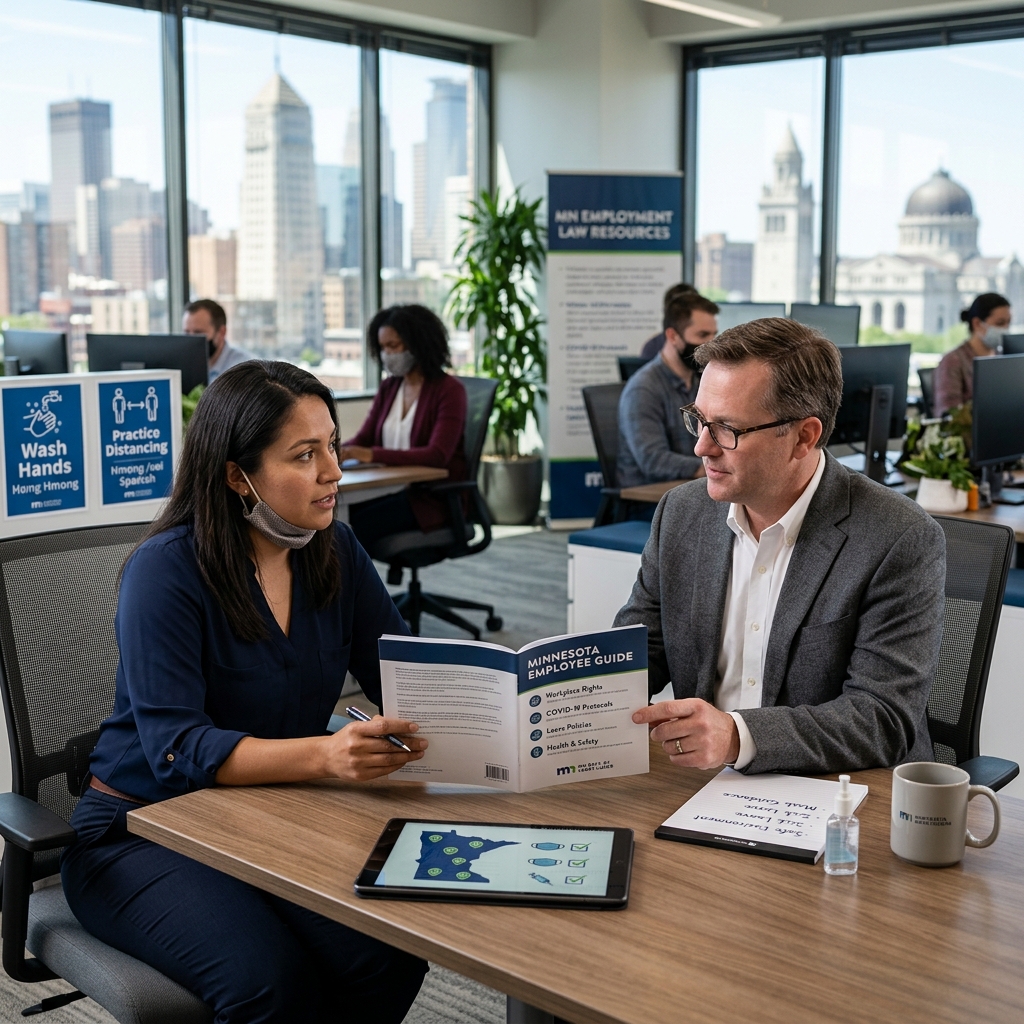
The COVID‑19 pandemic led to rapid changes in both federal and Minnesota employment laws. For workers, understanding how these changes affect job security, pay, health protections, and leave options is essential. This guide explains, in plain language, how COVID‑19 intersects with key Minnesota worker protections, and what practical steps employees can take when facing pandemic‑related issues at work.
1. The Legal Landscape: How COVID‑19 Affected Minnesota Workplaces
COVID‑19 did not create an entirely new legal system, but it triggered emergency laws, temporary federal programs, and guidance under existing Minnesota statutes. Several layers of rules may apply to a single situation:
- Federal relief laws, such as the Families First Coronavirus Response Act (FFCRA), established temporary paid leave for certain COVID‑19‑related reasons.
- Minnesota state health and labor laws were used and updated to clarify worker protections when an employee is exposed to or contracts COVID‑19.
- Local ordinances in cities like Minneapolis, St. Paul, and Duluth expanded or clarified sick and safe time usage for virus‑related absences.
Although some emergency provisions have expired, understanding how they operated helps employees recognize similar protections that continue through Minnesota health, safety, leave, and anti‑discrimination statutes.
2. Workplace Safety: Your Right to a Health‑Protected Job
Minnesota employers have a general duty to provide a workplace that is free from recognized hazards likely to cause serious harm. During the pandemic, that duty included reasonable steps to reduce COVID‑19 transmission under federal and state occupational safety guidance.
2.1 Safety Expectations During COVID‑19
While Minnesota’s Occupational Safety and Health Act (MNOSHA) was not rewritten specifically for COVID‑19, regulators emphasized that existing safety rules apply to infectious disease risks. In practice, this meant employers were expected to:
- Follow public health guidance on masking, distancing, and ventilation, as feasible.
- Develop procedures for symptomatic employees, positive tests, and notifications when exposure occurs.
- Communicate safety policies clearly and train employees on infection‑control measures.
Employees who believe conditions are unsafe may raise concerns to their employer or to MNOSHA, and certain forms of retaliation for reporting safety risks can be prohibited under occupational safety and whistleblower laws.
2.2 When You Are Asked to Work in Risky Conditions
COVID‑19 complicated the balance between an employer’s need to operate and an employee’s concern for personal and family health. During portions of the pandemic, Minnesota adjusted unemployment rules so that employees were not required to seek work that would pose a health risk to themselves or others. For some workers who were temporarily out of work, staying in contact with the employer was sufficient to meet unemployment “work search” requirements.
This approach recognized that in a public health emergency, refusing work that is reasonably believed to be unsafe may be treated differently than in ordinary circumstances, especially when public health directives support caution.
3. Paid Leave, Sick Time, and Taking Time Off for COVID‑19
Illness, quarantine, caregiving, and school closures were among the most disruptive employment issues during the pandemic. Several overlapping rules determine whether time off is paid, unpaid but protected, or potentially unprotected.
3.1 Using Existing Minnesota Sick and Safe Leave
Many Minnesota employees have access to sick and safe leave through local ordinances or employer policies. Public guidance clarified that accrued sick and safe leave could generally be used for a wide range of COVID‑19‑related reasons, including:
- Seeking screening or testing for COVID‑19.
- Quarantine or isolation due to symptoms, infection, or close contact.
- Caring for a family member who is ill or isolating.
- Staying home with children when schools or child care facilities are closed because of COVID‑19.
- Absences caused by workplace closure ordered by a public official due to the virus.
Employees covered by local sick and safe time laws are typically allowed to use their accrued hours for these purposes, and employers may not interfere with or retaliate against lawful use of such leave.
3.2 Federal Emergency Paid Leave (FFCRA)
The FFCRA was a federal law that temporarily required many employers with fewer than 500 employees to provide COVID‑19‑specific paid leave. While time‑limited, it illustrates how pandemic‑driven leave entitlements were structured.
| Type of FFCRA Leave | Duration | Pay Level | Key Eligibility Situations |
|---|---|---|---|
| Emergency paid sick leave | Up to 2 weeks (80 hours) | Full pay up to a daily and total cap for certain reasons; two‑thirds pay for caregiving reasons | Quarantine under government or health‑care advice; symptoms and seeking diagnosis; caring for quarantined individual or child due to school/child‑care closure. |
| Expanded family and medical leave | Up to 10 additional weeks | Two‑thirds pay, subject to daily and total limits | Employee employed at least 30 days and unable to work due to the need to care for a child whose school or child care is closed for COVID‑19 reasons. |
Although FFCRA mandates were temporary, they set expectations that employees facing virus‑related disruptions should not automatically bear the entire economic burden of staying home when public health measures require it.
3.3 State Health Law Protection When the Health Department Says Stay Home
Minnesota law provides specific protection when the state health authorities recommend that an employee isolate or quarantine due to infection or exposure. Under this law:
- If the Minnesota Department of Health (MDH) advises you to stay home because you have COVID‑19 or were exposed, your employer may not discharge, discipline, or penalize you for missing work for up to 21 workdays.
- This protection also applies if you must care for a minor or certain vulnerable adult family members when MDH recommends that they isolate or quarantine.
This safeguard focuses on employment status and discipline rather than guaranteeing pay. In other words, the law restricts adverse employment actions during the protected period when health officials direct you to stay home.
4. Workers’ Compensation and COVID‑19 Infections
Workers’ compensation benefits may be available when an employee contracts COVID‑19 as an occupational disease. Minnesota adopted special rules that make it easier for certain frontline workers to establish that the virus is work‑related.[10]
4.1 Presumption for Certain Frontline Workers
A Minnesota law effective April 2020 created a presumption that COVID‑19 is an occupational disease covered by workers’ compensation for specified employees, such as certain health‑care workers and first responders.[10] For these workers, it is presumed that the infection is job‑related if contracted in the course of employment, easing the burden of proof for benefits.
4.2 Proving Work‑Related COVID‑19 for Other Employees
For employees outside the defined frontline categories, COVID‑19 claims still may be compensable, but the worker must demonstrate that job duties caused or substantially contributed to the infection. Generally, Minnesota law requires proof by a “preponderance of the evidence” that the disease arose out of employment.
Importantly, workers who are quarantined but have not actually contracted the virus are typically not eligible for workers’ compensation solely due to quarantine status. Other forms of leave or unemployment may be more relevant for those situations.
5. Job Protection, Unemployment, and Anti‑Discrimination Rules
COVID‑19 highlighted the importance of basic job protections. Minnesota laws and temporary measures addressed three key areas: job protection when following health directives, access to unemployment benefits, and protection from discrimination for using those benefits or other public assistance.
5.1 Protection When You Follow Health Orders
Under Minnesota health law, if MDH recommends that you isolate or quarantine due to infection or exposure, your employer generally may not terminate, discipline, or otherwise penalize you for staying home during the legally protected period. This protection applies whether you are sick yourself or caring for certain family members who must isolate.
Employees who believe they were unlawfully disciplined or discharged for following MDH directives may have potential claims under state law and should consider preserving documentation, such as written recommendations, test results, and employer communications.
5.2 Access to Unemployment Insurance
Unemployment insurance (UI) played a critical role during COVID‑19 business closures and layoffs. Minnesota made temporary adjustments so that many workers affected by the pandemic could qualify more easily, including waiving some waiting periods and modifying job search requirements when seeking new work would pose health risks.
Employers are prohibited from discriminating against employees because they applied for or received unemployment benefits. Under the Minnesota Human Rights Act, it is unlawful to terminate or otherwise change an employee’s working conditions due to their use of UI or other public assistance.
5.3 Protection from Retaliation and Discrimination
Retaliation can take many forms, such as cutting hours, demoting, or firing an employee for asserting rights related to safety, health‑based leave, or unemployment benefits. Minnesota law restricts retaliation in several contexts:
- Employees protected by MDH quarantine or isolation recommendations cannot be penalized for complying.
- Employees cannot lawfully be punished solely because they seek or receive unemployment benefits or other public assistance.
- Local sick and safe time ordinances and state labor laws often contain explicit anti‑retaliation provisions.
Workers who suspect retaliation should document events carefully and may wish to consult legal advice or contact relevant enforcement agencies.
6. Practical Steps for Minnesota Employees Facing COVID‑19 Issues
Knowing your rights is only half the battle. The way you communicate with your employer and record events can significantly affect the outcome of any dispute. The following practical checklist can help you navigate pandemic‑related workplace challenges.
6.1 Before You Take Time Off
- Confirm the reason for leave: Is it illness, exposure, quarantine, caregiving, or school closure? Different laws may apply depending on the reason.
- Obtain documentation: Save MDH recommendations, test results, school or child‑care closure notices, and any written medical advice.
- Review available leave: Check your employer’s policies and any local sick/safe time rules that apply to your workplace.
- Communicate in writing: Email or message your supervisor or HR, clearly stating why you need leave and referencing public health recommendations where applicable.
6.2 While You Are Away from Work
- Keep copies of all employer communications, including approvals, denials, or warnings related to your absence.
- Maintain contact with your employer as required, especially if your absence is tied to temporary business closures or modified unemployment rules.
- Track how your pay, benefits, and schedule change during your absence to monitor for potential retaliation.
6.3 If You Experience Discipline or Job Loss
- Request written reasons for any disciplinary action or termination.
- Compare the employer’s explanation with your documentation, MDH directives, and applicable laws.
- Consider filing for unemployment if you are out of work and believe you meet eligibility criteria.
- If you suspect unlawful retaliation or discrimination, explore consultation with an employment attorney or relevant state agency.
7. Minnesota COVID‑19 Employment FAQs
Q1: Can my employer fire me if the Minnesota Department of Health tells me to quarantine?
Generally, no. Under Minnesota health law, if MDH recommends that you isolate or quarantine because of COVID‑19 infection or exposure, your employer may not discharge, discipline, or penalize you for missing work for up to 21 workdays. This protection also extends to certain caregiving situations.
Q2: I used unemployment benefits during COVID‑19. Can my employer treat me differently because of it?
No. Minnesota law prohibits employers from discriminating against employees because they applied for or received unemployment insurance or other public assistance. Changing your job conditions solely for that reason may violate the Minnesota Human Rights Act.
Q3: Does quarantine alone qualify me for workers’ compensation?
Quarantine by itself, without a confirmed work‑related COVID‑19 infection, generally does not qualify for workers’ compensation benefits. Workers’ compensation focuses on occupational disease or injury, and for COVID‑19, that typically requires proof of infection linked to work.
Q4: Are frontline health‑care workers treated differently for COVID‑19 workers’ compensation claims?
Yes. Minnesota enacted a presumption that certain frontline employees who test positive for COVID‑19 contracted the disease as an occupational illness covered by workers’ compensation.[10] That presumption reduces the burden of proof compared with other workers.
Q5: Can I use my sick leave if my child’s school closes due to a COVID‑19 outbreak?
In many cases, yes. Guidance under local sick and safe time rules indicates that accrued leave may be used when a child’s school or child care provider is closed because of COVID‑19, and similar caregiving situations were also covered under temporary federal programs like the FFCRA.
Q6: What if my workplace feels unsafe because of poor COVID‑19 precautions?
Employees may raise safety concerns with their employer and, if necessary, file complaints with occupational safety authorities. MNOSHA and federal OSHA guidance treat serious infectious disease risks as workplace hazards that employers must address reasonably. Retaliation for reporting safety concerns may be restricted under applicable laws.
References
- Worker protections related to COVID‑19 — Minnesota House Research Department. 2020-04-09. https://www.house.mn.gov/comm/docs/a1b18b25-1ac1-414d-82d7-9700d0745006.pdf
- Worker protections related to COVID‑19 — Minnesota Department of Labor and Industry / U.S. Compliance (summary). 2020-04-09. https://www.uscompliance.com/wp-content/uploads/2025/12/MN_worker_protections_related_to_COVID_19.pdf
- Minnesota Employment Law Update on the Novel Coronavirus (COVID‑19) — Littler Mendelson. 2020-03-26. https://www.littler.com/news-analysis/asap/minnesota-employment-law-update-novel-coronavirus-covid-19
- What Are My Rights as an Employee Under COVID‑19 Legislation? — Conard Nelson & Tewksbury, P.A. 2020-03-31. https://www.conardfirm.com/about-us/news-articles/what-are-my-rights-as-an-employee-under-covid-19-legislation.html
- Minnesota – Coronavirus State Actions — National Governors Association. 2020-03-16 (and subsequent updates). https://www.nga.org/updates/minnesota/
Similar Articles








Read full bio of medha deb




