
Systemic Bias: Minnesota Child Welfare Challenged
Exploring the civil rights challenge to Minnesota's child welfare system.
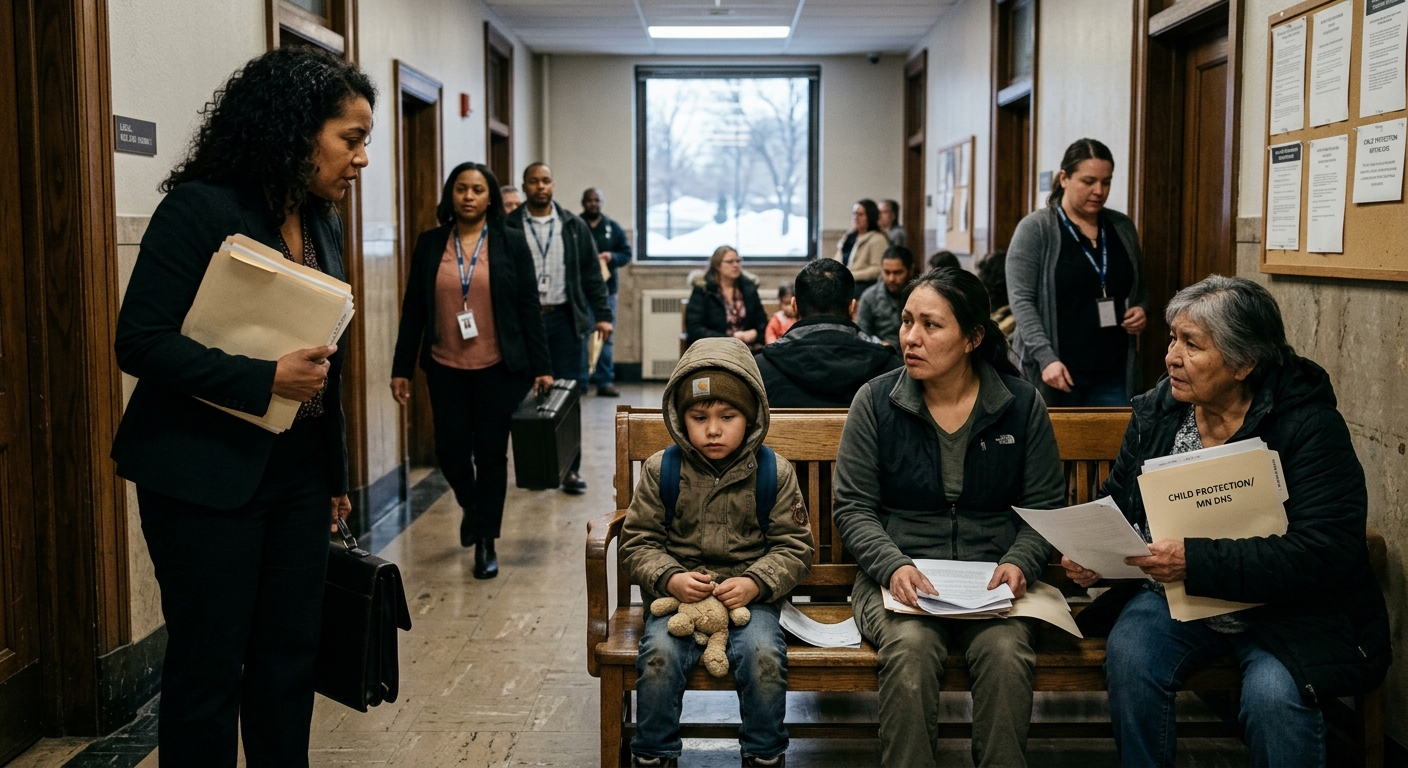
Child welfare systems in the United States were fundamentally established to serve as a protective shield for the most vulnerable members of society. By design, these agencies are tasked with intervening in situations of abuse and severe neglect to ensure the safety and well-being of children. However, a profound and troubling paradox has long existed within this framework. For decades, marginalized communities—particularly Black and Indigenous families—have reported devastating encounters with a system that often feels more punitive than protective. The intersection of race, poverty, and state intervention has culminated in a growing national outcry, demanding a structural overhaul of what many advocates now refer to as the “family policing system.”
Nowhere is this tension more palpable today than in the state of Minnesota. In a landmark move, civil rights organizations, spearheaded by the Minneapolis branch of the NAACP and the national advocacy group Children’s Rights, have mobilized to challenge the state’s child welfare practices at the highest federal level. By filing a formal civil rights complaint with the federal government, these advocates are not merely asking for procedural tweaks; they are invoking foundational civil rights law to demand an end to what they characterize as systemic, racially discriminatory practices that tear Black families apart at disproportionate rates.
The Anatomy of the Federal Civil Rights Complaint
The legal action taken against the state of Minnesota is both highly specific and deeply systemic. Filed directly with the U.S. Department of Health and Human Services (HHS) Office for Civil Rights, the complaint targets the Minnesota Department of Human Services, with a particular focus on the practices within the state’s two most populous jurisdictions: Hennepin and Ramsey counties. The core allegation asserts that the state’s child protective services operate in a manner that disproportionately and unfairly targets, investigates, and separates Black families, violating their fundamental civil rights .
At the heart of the advocates’ argument is the assertion that the child welfare apparatus frequently weaponizes poverty against Black communities. Routine struggles associated with economic hardship—such as housing instability, food insecurity, or a lack of access to affordable childcare—are frequently categorized by caseworkers as “neglect.” Instead of providing the necessary financial or social support to stabilize these families, the system’s default response often escalates to the most drastic intervention available: the removal of the child from the home. The complaint alleges that this aggressive posture is applied unevenly, with Black families facing a far lower threshold for state intervention and family separation than their white counterparts.
Furthermore, the complaint highlights the pervasive nature of over-surveillance in marginalized neighborhoods. Mandated reporting laws require professionals like teachers, medical staff, and social workers to report suspected abuse or neglect. However, inherent systemic biases often lead to a disproportionate number of unfounded reports being filed against Black parents. Once a family is in the system’s crosshairs, they are subjected to invasive investigations that can severely traumatize both the parents and the children, even if the allegations are ultimately unsubstantiated.
Statistical Realities: Quantifying Racial Disproportionality
To fully comprehend the gravity and necessity of this civil rights complaint, one must examine the empirical data that underpins it. Minnesota has historically maintained some of the starkest racial disparities in the nation regarding child welfare interventions. The disproportionality is not a marginal statistical error; it represents a vast, systemic chasm in how different demographic groups experience state authority.
According to data utilized by the Minnesota legislature to assess the state of child protection, the racial imbalances are severe. While African American children comprise approximately 10 percent of the state’s total child population, they account for roughly 26 percent of the children placed in out-of-home care . This means that a Black child in Minnesota is exponentially more likely to be removed from their family and placed into the foster care system than a white child.
| Demographic Group | Percentage of Total MN Child Population | Percentage in Out-of-Home Placement (Foster Care) |
|---|---|---|
| African American Children | ~10% | ~26% |
| White Children | ~65% | ~45% |
| American Indian Children | ~2% | ~20% (Historically disproportionate) |
These numbers represent more than just demographic data; they represent thousands of disrupted childhoods. Researchers have extensively studied these disparities to determine whether they are simply a reflection of higher rates of actual maltreatment within certain communities, or if bias plays a role. Comprehensive studies on child protective services decision-making reveal that even when accounting for risk factors and case characteristics, implicit bias significantly influences caseworker assessments. Black children are frequently rated as being at a subjectively higher risk of harm by caseworkers, leading to higher rates of case substantiation and family separation compared to white families in nearly identical circumstances .
Title VI of the Civil Rights Act: The Legal Framework
The legal foundation anchoring the NAACP and Children’s Rights complaint is Title VI of the Civil Rights Act of 1964. This landmark piece of legislation strictly prohibits discrimination on the basis of race, color, or national origin in any program or activity that receives federal financial assistance . Because state child welfare agencies rely heavily on federal funding—specifically through Title IV-B and Title IV-E of the Social Security Act, which disburse billions of dollars for child welfare services and foster care maintenance—they are legally bound by the anti-discrimination mandates of Title VI.
The U.S. Department of Health and Human Services (HHS), through its Office for Civil Rights (OCR), is the primary federal body responsible for enforcing Title VI compliance within state social service agencies. In 2016, the Department of Justice and HHS issued joint guidance explicitly reminding state child welfare systems of their obligations under civil rights laws . The guidance clarified that systemic practices resulting in the unjustifiable, disproportionate removal of minority children, or the failure to provide equitable, culturally responsive reunification services, constitutes a violation of federal law.
By invoking Title VI, advocates are bypassing traditional state-level appellate courts—which often defer to the subjective judgments of local family court judges—and are instead triggering a federal administrative review. If the HHS OCR determines that Minnesota’s Department of Human Services is in violation of Title VI, the federal government possesses the authority to mandate sweeping, legally binding corrective action plans. In the most extreme scenarios of non-compliance, the federal government could theoretically withhold critical funding, though the primary goal is generally achieving negotiated, systemic reform.
The Intersection of Poverty, Bias, and “Neglect”
A critical theme in the discourse surrounding the Minnesota complaint is the dangerous conflation of poverty with neglect. Child maltreatment is broadly categorized into two main areas: physical/sexual abuse, and neglect. While instances of severe abuse are relatively rare and cross all socio-economic boundaries, the vast majority of child welfare cases are opened under the umbrella of “neglect.”
Neglect is a legally murky and highly subjective category. It is often defined by a parent’s failure to provide adequate food, clothing, shelter, or supervision. Consequently, families experiencing deep poverty are inherently more vulnerable to being labeled as neglectful. When a family cannot afford to repair a broken heater, or when a single mother is forced to leave her children unsupervised because she cannot afford childcare during her required shift at work, the state often responds by prosecuting the family in family court rather than providing financial assistance.
Implicit bias exacerbates this poverty penalty. When affluent or white families face crises, they are frequently offered grace, community resources, or voluntary services. When Black families face similar economic crises, they are more frequently met with suspicion, formal investigations, and the removal of their children. The trauma inflicted by this separation is profound. Children removed from their homes suffer immense psychological distress, disruptions to their education, and a loss of community ties. Furthermore, the foster care system itself is fraught with instability, and children who age out of the system face statistically grim outcomes regarding homelessness, incarceration, and educational attainment.
Legislative Momentum: Minnesota’s Policy Pivot
While the federal civil rights complaint demands immediate investigative accountability, it is important to note that the state of Minnesota has recently recognized the unsustainable nature of its current system. In an effort to self-correct and mitigate these severe racial disparities, the state legislature passed the Minnesota African American Family Preservation and Child Welfare Disproportionality Act (MAAFPCWDA) .
This progressive legislative framework, which began a phase-in program in Hennepin and Ramsey counties in early 2025, represents a significant paradigm shift. The Act is conceptually inspired by the federal Indian Child Welfare Act (ICWA) but tailored to address the specific crisis facing African American and other disproportionately impacted families. Key provisions of the MAAFPCWDA include:
- Active Efforts Requirement: Mandating that child welfare agencies must demonstrate they have made “active efforts” to provide resources and preventative services to keep families together before initiating any out-of-home placement.
- Cultural Competency: Requiring mandatory, rigorous cultural competency and anti-bias training for all child welfare professionals operating in the state.
- Data Transparency: Establishing strict requirements for the disaggregation and public reporting of child welfare data by race, ethnicity, and socio-economic status to continually monitor disparities .
- Advisory Council: The creation of a dedicated African American Child and Family Well-Being Advisory Council to ensure continuous community input and oversight regarding child protection policies.
While advocates applaud the passage of the MAAFPCWDA as a vital step forward, they maintain that the federal complaint remains entirely necessary. Legislation can take years to fully implement and change ingrained agency cultures. The Title VI investigation serves as a crucial enforcement mechanism to ensure that the spirit of the new law translates into actual, verifiable changes in how Black families are treated on the ground.
National Implications for Child Protective Services
The civil rights challenge unfolding in Minnesota is not occurring in a vacuum; it is the tip of the spear in a burgeoning national movement to reimagine child safety. For decades, the dominant child welfare ideology has relied heavily on the threat of family separation as a deterrent to maltreatment. However, a growing consensus among social workers, legal scholars, and civil rights advocates suggests that this punitive model does more harm than good, particularly in marginalized communities.
If the HHS Office for Civil Rights takes decisive action against Minnesota, it will set a monumental legal precedent. Child welfare agencies in states like New York, California, and Texas—which also struggle with massive racial disparities—will be put on notice. It signals a shift wherein systemic racial bias in family courts and social service agencies will no longer be treated as an unfortunate, passive byproduct of societal inequality, but rather as an active, prosecutable violation of federal civil rights law.
The ultimate goal of this advocacy is to transition the system from one of “family regulation” and surveillance to one of genuine “family support.” Advocates argue that the billions of dollars currently spent on foster care maintenance and family court litigation should be redirected into community-based preventative services, direct financial assistance, mental health support, and affordable housing initiatives. By addressing the root causes of family instability—namely poverty and a lack of community resources—society can protect children much more effectively than by tearing their families apart.
Frequently Asked Questions
What is the basis of the NAACP’s civil rights complaint against Minnesota?
The complaint alleges that Minnesota’s child welfare system, specifically in Hennepin and Ramsey counties, violates Title VI of the Civil Rights Act by utilizing federal funds to operate a system that disproportionately and unfairly targets, investigates, and separates Black families compared to white families.
What does Title VI of the Civil Rights Act prohibit?
Title VI explicitly prohibits any program or activity that receives federal financial assistance from discriminating against individuals on the basis of race, color, or national origin. Because state child protection agencies receive federal funding, they must comply with this law.
How does poverty influence child welfare investigations?
A majority of child welfare cases are opened due to “neglect,” which is often heavily intertwined with symptoms of poverty (such as lack of food, inadequate housing, or inability to afford childcare). Critics argue the system frequently punishes parents for being poor by removing their children rather than providing them with economic support.
What is the MAAFPCWDA?
The Minnesota African American Family Preservation and Child Welfare Disproportionality Act is a recently passed state law aimed at reducing racial disparities. It requires agencies to make “active efforts” to keep families together, mandates cultural competency training, and establishes advisory councils to oversee equity in child protection.
References
- Title VI Child Welfare Guidance — Department of Justice. 2016-10-19. https://www.justice.gov/crt/fcs/TitleVI-ChildWelfare
- Protection from Discrimination in Child Welfare Activities — U.S. Department of Health and Human Services (HHS). 2023-08-08. https://www.hhs.gov/civil-rights/for-individuals/special-topics/child-welfare/index.html
- MAAFPCWDA | Minnesota Department of Children, Youth, and Families — Minnesota Government. 2024-01-01. https://mn.gov/dcyf/child-safety-permanency/maafpcwda/
- Why MN Needs An African American Family Preservation and Child Welfare Disproportionality Act — Minnesota House of Representatives. 2021-01-01. https://www.house.mn.gov/comm/docs/Why_MN_Needs_An_African_American_Family_Preservation_and_Child_Welfare_Disproportionality_Act.pdf
- Examining Racial Disproportionality in Child Protective Services Case Decisions — PubMed Central (PMC). 2015-08-11. https://www.ncbi.nlm.nih.gov/pmc/articles/PMC4760882/
Similar Articles








Read full bio of Sneha Tete


