
Minnesota Car Crash Laws: Complete Guide For 2025
Essential guide to Minnesota's car accident regulations, no-fault insurance, immediate actions, and compensation pathways for crash victims.
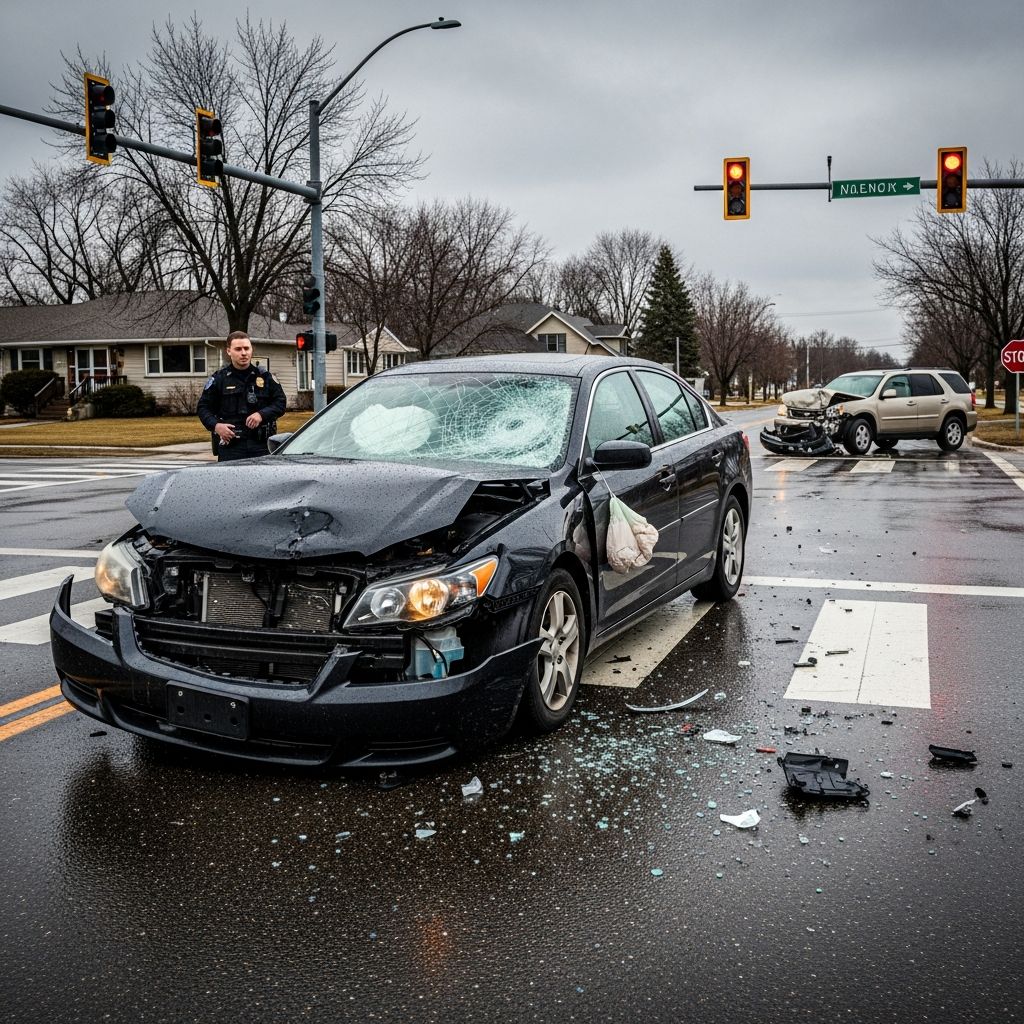
Minnesota operates under a no-fault insurance framework that prioritizes quick access to medical and economic benefits after vehicle collisions, regardless of fault determination.
Immediate Response Protocols After a Collision
When involved in a car crash in Minnesota, swift and methodical actions are crucial to ensure safety, comply with state mandates, and preserve evidence for potential claims. First, assess for injuries among all parties and call 911 if anyone requires medical aid or if the incident involves significant damage. Minnesota Statute requires drivers to remain at the scene, particularly if injuries, fatalities, or property damage exceeding $1,000 occur, with failure to do so potentially leading to hit-and-run charges.
Once safe, relocate vehicles to avoid further hazards if no severe injuries prevent this. Exchange essential details with the other driver, including names, contact information, insurance particulars, vehicle details, and license numbers. Document the scene thoroughly by photographing vehicle positions, damage, road conditions, traffic signals, and any visible injuries. These records prove invaluable later. Summon law enforcement to generate an official police report, which serves as critical evidence in insurance disputes or legal proceedings.
- Prioritize personal and public safety by activating hazard lights and using reflective triangles if stalled on roadways.
- Avoid admitting fault or discussing the incident details beyond basic facts with other parties or witnesses.
- Seek prompt medical evaluation, even for minor symptoms, as delayed injuries like whiplash or concussions commonly manifest post-crash.
Navigating Minnesota’s No-Fault Insurance System
Minnesota’s no-fault system mandates Personal Injury Protection (PIP) coverage on every auto policy, providing immediate benefits without fault attribution. This covers medical costs, lost wages, essential services, and funeral expenses up to statutory limits, ensuring injured parties access care without delay.
The minimum PIP requirement stands at $40,000 per accident: $20,000 for medical expenses (including mileage to treatments) and $20,000 for non-medical losses like wage replacement and household help. Benefits initiate from the injured person’s own policy, bypassing the at-fault driver’s insurer initially. This structure alleviates financial burdens during recovery, contrasting tort-based systems where payments hinge on liability proof.
Drivers can opt for enhanced PIP with higher caps, but basic coverage suffices for compliance. Exemptions apply narrowly to vehicles like antiques or farm equipment. Claims demand timely notification and documentation, such as medical bills, employment verification for wage claims, and service logs for replacements.
| Coverage Type | Minimum Limit | What It Covers |
|---|---|---|
| Medical Expenses | $20,000 | Hospital bills, doctor visits, rehab, mileage to care |
| Non-Medical (Wage Loss, etc.) | $20,000 | Lost income, replacement services, funeral costs |
| Total per Accident | $40,000 | Combined benefits per person |
Thresholds for Pursuing Liability Claims
While PIP handles initial economic losses, Minnesota permits bodily injury claims against at-fault parties once specific injury thresholds are met. Claimants must demonstrate permanent injury, significant scarring, or economic losses surpassing $4,000 to step outside no-fault protections. These “serious injury” criteria prevent minor claims from clogging courts while allowing substantial cases to seek full compensation including pain and suffering.
PIP exhausts first; only residual damages trigger third-party liability pursuits. This hybrid model balances speedy benefits with accountability for negligence. Insurers scrutinize claims rigorously, often requiring independent medical exams to validate threshold satisfaction.
Fault Determination and Comparative Negligence Rules
Minnesota employs modified comparative fault, where victims recover damages if their fault share is under 50% (recently adjusted from 51%), with awards reduced proportionally. For instance, 30% at-fault plaintiffs receive 70% of verified damages. This incentivizes careful driving while not wholly barring partially responsible claimants.
Fault hinges on evidence like police reports, witness accounts, dashcam footage, and expert reconstructions. Traffic violations, such as running reds or speeding, bolster negligence arguments.
Distracted Driving Regulations and Crash Liability
Minnesota’s hands-free law (Statute 169.475) prohibits handheld device use while driving, mandating hands on the wheel except for minimal permitted actions. Violations incur fines escalating with repeats or injury involvement, and citations often establish negligence per se in civil suits—presuming fault for breaching safety statutes.
In crashes tied to phone distractions, violators face heightened liability, amplifying compensation for victims via proof of causation. Dashcam or officer observations frequently secure these claims.
Required Insurance Minimums and Uninsured Protections
Beyond PIP, Minnesota mandates $30,000/$60,000 bodily injury liability, $10,000 property damage, $25,000/$50,000 uninsured/underinsured motorist coverage, and $40,000 PIP. These ensure recourse against uncovered losses from non-compliant or absent insurers drivers.
Uninsured motorist provisions activate when at-fault parties lack coverage, mirroring liability limits for medical, wages, and pain damages.
Statute of Limitations for Injury Claims
Claims against at-fault insurers must file within two years of the accident, while PIP disputes allow six years. Prompt action preserves evidence and rights, as delays risk denials or barred recovery.
Common Pitfalls and Strategic Advice
Avoid pitfalls like delaying medical care, which insurers exploit to dispute causation, or signing hasty insurer settlements relinquishing future claims. Engage legal counsel early for complex cases involving disputes or thresholds. Lawyers negotiate optimal settlements, counter lowball offers, and litigate if needed.
- Never provide recorded statements sans attorney guidance.
- Track all expenses meticulously for reimbursement.
- Consult specialists for lingering symptoms to build threshold cases.
Frequently Asked Questions
What should I do right after a Minnesota car crash?
Check for injuries, call 911 if needed, secure the scene, exchange info, document everything, report to police, seek medical help, and notify your insurer promptly.
How does PIP insurance function in Minnesota crashes?
PIP delivers no-fault benefits from your policy for medical ($20k min), wages ($20k min), services, covering losses irrespective of blame, with minimum $40k total.
Can I sue the at-fault driver after using PIP?
Yes, upon meeting injury thresholds like permanent harm or $4k+ costs exceeding PIP, for pain, full wages, etc.
What if the other driver lacks insurance?
Your uninsured motorist coverage ($25k/$50k min) compensates as if they were insured.
Does partial fault bar my Minnesota claim?
No, recover if under 50% at fault, reduced by your percentage under comparative negligence.
Recent Legislative Updates on Reporting
Pending bills like SF 2643 propose refining accident reporting, potentially easing local authority thresholds for minor incidents.
References
- Personal Injury Protection (PIP) Law in Minnesota – Complete Guide — Hazen Tech. 2024. https://hazentech.com/blogs/pip-law-in-minnesota/
- Understanding Minnesota’s Hands-Free Law: What Happens After a Violation Causes an Accident? — Injury Law MN. 2024. https://injurylawmn.com/understanding-minnesotas-hands-free-law-what-happens-after-a-violation-causes-an-accident/
- Understanding Your Rights After a Vehicle Accident in Minnesota — Sieben Edmunds. 2024. https://siebenedmunds.com/understanding-your-rights-after-a-vehicle-accident-in-minnesota/
- How Minnesota’s No-Fault or PIP Insurance Works After a Car Accident — BK Law Group. 2024. https://bk-lawgroup.com/blog/how-minnesotas-no-fault-or-pip-insurance-works-after-a-car-accident/
- What to Do After a Traffic Accident in Minnesota? — Santana Law PLLC. 2026. https://www.santanalawpllc.com/blog/what-to-do-after-a-traffic-accident-in-minnesota/
- Understanding Minnesota’s No-Fault Insurance System — Know Your Rights. 2024. https://www.knowyourrights.com/blog/understanding-minnesotas-no-fault-insurance-system/
- Minnesota Triennial Highway Safety Plan FY24-FY26 — Minnesota Legislature. 2024. https://www.lrl.mn.gov/docs/2024/other/241192.pdf
Similar Articles








Read full bio of Sneha Tete


