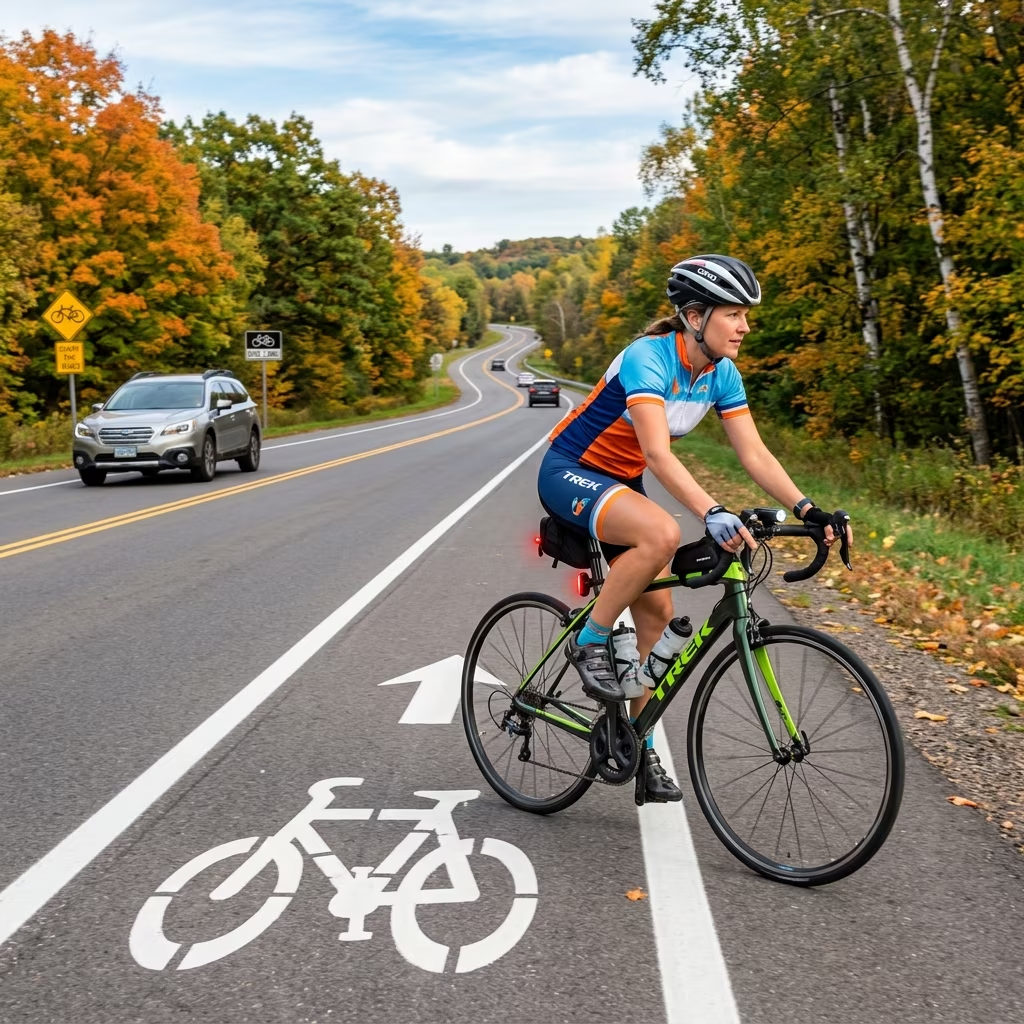
Bicycling is an important part of transportation and recreation in Minnesota, but once you ride in or near traffic, you are no longer just a recreational user—you are operating a vehicle under state law. Understanding how traffic rules apply to bicycles will help you ride more safely, avoid tickets, and protect your rights if a crash occurs.
This guide explains, in plain language, how Minnesota bicycle laws work: where you may ride, how you must position yourself on the road, what equipment is required, and how motorists must treat bicyclists. It is based on Minnesota statutes and official guidance, synthesized into a practical, easy-to-use resource.
1. How Minnesota Law Treats Bicycles
In Minnesota, a bicycle is generally treated as a vehicle when it is operated on public roads. This means bicyclists have both rights and duties similar to drivers of cars. You are expected to obey most of the same rules that apply to motor vehicles, but there are also provisions tailored to the way bicycles operate.
1.1 Core legal status of bicyclists
- Same rights as drivers: You may use most public roads (with some exceptions such as certain limited-access highways).
- Same duties as drivers: You must obey traffic signals, stop signs, right-of-way rules, and other road regulations.
- Vehicle classification: Many traffic violation provisions—including those involving stop signs, traffic signals and school buses—apply to bicycles because they are considered vehicles.
For practical purposes, if you are riding on the roadway or shoulder, assume you must follow the same core rules as motorists unless the law clearly says otherwise.
1.2 Where bicycles are generally allowed
State law and official guidance confirm:
- Most public roads: Bicycles may use ordinary streets and many rural roads, sharing lanes with motor vehicles.
- Road shoulders: Bicyclists are allowed to ride on shoulders and must travel in the same direction as adjacent traffic.
- Sidewalks and crosswalks: State law does not impose a blanket ban on sidewalk riding, but business districts and local ordinances may restrict it.
When in doubt, check local city or county rules; state statutes establish the baseline, but local governments can impose more specific sidewalk and path regulations.
2. Positioning Yourself on the Road
Choosing where to ride within the roadway is one of the most important safety decisions a bicyclist makes. Minnesota law provides guidance on lane position that balances safety and traffic flow.
2.1 Riding with traffic, not against it
- Ride in the same direction as traffic: Whether you are in a travel lane or on a shoulder, you must move in the same direction as motor vehicles.
- No wrong-way riding: Riding against traffic increases crash risk and violates Minnesota law on proper direction of travel.
2.2 Staying to the right—but with important exceptions
Minnesota statute requires bicyclists on roads to ride as close to the right-hand curb or edge as the rider judges to be safe. The key concept is safety, not squeezing as far right as physically possible.
Official summaries and guidance emphasize that you should ride as close as practicable, not necessarily as close as possible, to the right edge of the road.
Common situations where moving away from the far-right edge may be appropriate include:
- Passing parked or stopped vehicles to avoid opening doors or sudden movements into your path.
- Avoiding hazards such as debris, uneven pavement, storm drains, or narrow lanes that do not leave enough room for a motorist to pass safely within the same lane.
- Preparing for a left turn and needing to merge toward the center of the roadway.
- Riding at the normal speed of traffic, when you may lawfully use the full lane.
2.3 Sharing lanes and riding two abreast
When multiple bicyclists ride together on a roadway or shoulder, Minnesota law addresses how they may share the lane.
- Single lane use: Riders must operate within a single travel lane and may not “split” lanes between traffic streams.
- Riding two abreast: Bicyclists may ride side by side within one lane but must not impede the normal and reasonable movement of traffic.
- Yielding when necessary: If riding two abreast causes congestion behind you, it is good practice—and consistent with the law’s intent—to single up or allow vehicles to pass where safe.
2.4 Table: Lane positioning options
| Riding situation | Recommended lane position (under Minnesota law) |
|---|---|
| Low-speed neighborhood street, light traffic | Near the right edge if safe, but may take more of the lane to avoid parked cars or hazards. |
| Narrow lane where a car cannot pass within the lane safely | Use more of the lane to prevent unsafe close passing; motorists should pass only when they can safely change lanes. |
| Approaching an intersection to turn left | Merge toward the center or left-turn lane like any vehicle preparing for a left turn. |
| Riding on a paved shoulder next to a higher-speed road | Ride on the shoulder in the same direction as traffic; stay clear of the travel lane unless necessary for safety or turning. |
| Group ride on a rural road | Riders may go two abreast within one lane but should avoid blocking traffic and allow safe passing opportunities. |
3. Intersections, Signals and Special Situations
Bicyclists must navigate intersections and respond to traffic control devices just like other road users. Certain scenarios—such as school buses and crosswalks—carry specific legal duties.
3.1 Stop signs and traffic signals
- Stop signs: Bicyclists must slow and come to a complete stop at stop signs when other vehicles are present and obey right-of-way rules.
- Traffic lights: Cyclists must obey red, yellow, and green signals in the same manner as drivers of motor vehicles.
Even when an intersection appears clear, treating stop signs and signals seriously reduces crash risk and reinforces your rights if a collision occurs.
3.2 Crosswalks and pedestrian priority
When you ride into or through a crosswalk, your legal status can resemble that of a pedestrian.
- Crosswalk use: Bicyclists may enter crosswalks without dismounting and walking, and must yield right-of-way to pedestrians as required by law.
- Sidewalk-to-road transitions: A bicyclist riding on a sidewalk or crossing a roadway in a crosswalk has rights and duties similar to a pedestrian in that situation, including yielding where required.
3.3 School buses: stop arm and flashing red lights
When a school bus displays a stop arm and flashing red lights, Minnesota law requires vehicles to stop and wait until the signal is withdrawn. Because bicycles are classified as vehicles, this rule applies to bicyclists as well.
- Stop your bicycle when the bus’s stop arm is extended and red lights flash.
- Remain stopped until the lights stop flashing and the stop arm is retracted.
- Be especially careful around children exiting or entering the bus.
4. Sidewalks, Bike Lanes and Parking Rules
Many riders are unsure when they may legally use sidewalks and how bike lanes, shoulders, and parking rules interact. Minnesota law and local guidance clarify these areas.
4.1 Sidewalk riding
State law does not completely prohibit sidewalk riding, but it restricts it in certain areas and leaves room for local rules.
- Business districts: Riding on sidewalks is generally prohibited in business districts, which typically consist of blocks where more than half of the frontage is used for business.
- Local ordinances: Cities like Minneapolis have additional restrictions, including bans on sidewalk riding in specified areas (for example, parts of downtown and university campuses).
- Pedestrian priority: When sidewalk riding is allowed, bicyclists must yield to pedestrians, give an audible signal when passing if needed, and approach intersections cautiously.
4.2 Bike lanes and shoulders
Where explicit bike lanes exist, they are designed for bicycle use and offer greater separation from motor traffic. On roads without dedicated lanes, shoulders often serve a similar function.
- Bike lanes: Motor vehicles may not drive in or use bicycle lanes to pass other vehicles on the right; these lanes are reserved for cyclists.
- Road shoulders: When used, bicyclists must ride in the same direction as adjacent vehicular traffic and maintain awareness of turning movements from driveways and intersections.
4.3 Parking bicycles
Parking rules are designed to keep sidewalks and roadways clear for other users while allowing reasonable bicycle storage.
- On sidewalks: State law allows sidewalk parking unless prohibited locally, provided bicycles do not impede normal pedestrian movement.
- On roadways: Bicycles may be parked where vehicle parking is allowed, as long as they do not obstruct legally parked cars or traffic.
5. Required Equipment and Night Riding
Proper equipment helps you comply with the law and significantly improves safety, particularly at night. Minnesota statutes specify certain equipment requirements for bicycles.
5.1 Brakes
- Functional brake system: Every bicycle must have a brake (or fixed gear system) capable of causing the braked wheel to skid on dry, level pavement.
- Fixed-gear compliance: A properly set up fixed-gear bicycle that can make the rear wheel skid satisfies the brake requirement.
5.2 Lights and reflectors for night riding
Riding at night or in low-visibility conditions requires specific lighting and reflective equipment.
- Front light: A white lamp visible from at least 500 feet to the front is required when operating a bicycle at night.
- Rear reflector: A red reflector approved by the Department of Public Safety must be visible from 100 to 600 feet to the rear when illuminated by vehicle headlights.
- Alternative configuration: A bicycle with both front and rear lamps visible from at least 500 feet satisfies the statutory lighting requirements.
- Reflective surfaces: When lighting conditions are insufficient, reflective surfaces visible from 600 feet under low-beam headlights are required if lamps are not used.
These rules are minimum standards; additional reflective clothing or lights can provide extra safety beyond what the law requires.
6. Conduct Rules: Carrying Loads, Passengers and Motor Vehicles
Beyond how you position yourself and equip your bike, Minnesota law also addresses how many people and what kinds of loads a bicycle may carry, as well as how bicyclists must interact with motor vehicles.
6.1 Carrying passengers and cargo
- Passenger limits: A bicycle may carry only the number of people for which it is designed and equipped (for example, a tandem or a bike with a properly installed child seat).
- Using both hands: You may not carry loads that prevent you from keeping both hands on the handlebars or interfere with your ability to brake properly.
6.2 Interacting with motor vehicles
Safe passing distance and avoiding dangerous behaviors are critical for reducing crash risk.
- No clinging: Bicyclists may not cling to, hold onto, or attach themselves to moving motor vehicles.
- Safe passing: Motorists in Minnesota must leave at least three feet of clearance when passing a bicycle.
- Dooring prohibition: Motor vehicle occupants must not open doors until it is reasonably safe and does not interfere with traffic, which includes bicyclists; opening a door into a cyclist’s path can be a violation.
7. Common Misconceptions and Legal Myths
Many bicyclists and drivers hold beliefs about bicycle law that do not match Minnesota statutes or official guidance. Clearing up these misconceptions helps everyone share the road more safely.
- “Cyclists must ride on the sidewalk.”
In reality, Minnesota law does not require sidewalk riding and in many cases discourages it because of safety risks for both bicyclists and pedestrians. - “Bicycles are not real vehicles.”
Legally, bicycles operated on public roads are vehicles, and riders have many of the same rights and responsibilities as drivers. - “Taking the lane is always illegal.”
Bicyclists may use the full lane when traveling at the normal speed of traffic, passing, avoiding hazards, or when the lane is too narrow to share safely. - “Sidewalk riding is always banned.”
State law permits sidewalk riding outside business districts unless local ordinances say otherwise. Where allowed, riders must yield to pedestrians and ride carefully. - “Cyclists don’t have to stop for school buses.”
Because bicycles are vehicles, riders must obey school bus stop-arm and red-light signals just as drivers do.
8. Practical Tips to Avoid Traffic Violations
Although this guide focuses on legal rules, the same behaviors that prevent tickets also keep you safer on the road. These practical tips align with Minnesota law and common enforcement priorities.
- Signal your turns: Use hand signals when turning or changing lanes, unless both hands are needed to control the bicycle safely.
- Be predictable at intersections: Obey signals and stop signs, position yourself clearly for the direction you intend to go, and avoid sudden weaving between lanes.
- Use lights at dusk and dawn: Even before full darkness, turning on front and rear lights improves visibility and prepares you for rapidly changing light conditions.
- Check local rules: Before riding in unfamiliar cities or campuses, review local sidewalk and path regulations to avoid inadvertent violations.
- Maintain your equipment: Ensure brakes, tires, and lighting are functional; equipment violations can lead to citations and undermine your safety claims if a crash occurs.
9. FAQs: Minnesota Bicycle Law
9.1 Do I need a driver’s license to ride a bicycle on public roads?
No. Minnesota does not require a driver’s license to operate a bicycle, even on public roads where cycling is permitted.
9.2 Are bicycles allowed on all roads?
Generally yes. Bicycles may use most public roads, but certain limited-access highways may restrict bicycle traffic. Always look for posted signs indicating bans or special rules.
9.3 Is lane-splitting between lines of cars legal for bicyclists?
No. Riding between lanes of moving or stopped vehicles, commonly called lane-splitting, is not permitted for bicyclists in Minnesota.
9.4 Am I required to wear a helmet?
Minnesota state law does not require adults to wear bicycle helmets, though many authorities strongly recommend them for safety. Local rules or policies (for example, youth programs) may differ.
9.5 What happens if I get a traffic ticket while riding my bike?
In most situations, traffic citations issued for violations committed on a bicycle are separate from your motor vehicle driving record and may not affect your driver’s license status. However, fines and obligations associated with the citation still apply.
9.6 Are there special rules for electric bicycles?
Yes. Electric-assisted bicycles must meet certain technical limits—such as a maximum assisted speed and motor wattage—and riders must follow the same basic traffic laws as traditional bicyclists. Check current state guidance for details on age limits and equipment standards.
References
- Minnesota Statutes, Section 169.222 – Operation of Bicycle — Minnesota Revisor of Statutes. 2023-01-01. https://www.revisor.mn.gov/statutes/cite/169.222
- Minnesota Bicycle Laws Summary — Minnesota Department of Transportation (MnDOT). 2016-01-01. https://www.dot.state.mn.us/bike/documents/safety-education/bike-law-summary.pdf
- Bicycle and Pedestrian Laws — Minnesota Department of Public Safety, Office of Traffic Safety. 2022-06-01. https://dps.mn.gov/divisions/ots/safe-driving-information-and-laws/traffic-safety-laws/bicycle-and-pedestrian-laws
- Minnesota Bike Law FAQ — Bicycle Alliance of Minnesota (BikeMN). 2021-05-01. https://www.bikemn.org/mn-bicycling-handbook/minnesota-bike-law-faq/
- Minnesota Bicycle Laws — Bike Law. 2020-09-01. https://www.bikelaw.com/laws/minnesota/
- Bicycle Riding – Rules and Safety — City of Minneapolis. 2023-04-01. https://www.minneapolismn.gov/getting-around/bicycling/bike-safety-rules/bike-riding/
- 25 Minnesota Bicycle Law FAQs — SiebenCarey Law Firm. 2021-08-01. https://www.knowyourrights.com/blog/25-minnesota-bicycle-law-faqs/